How Much Does It Cost to Rent a Scissor Lift? 2026 Price Guide
Published
Category
Guide
Scissor lift rental runs $150–$300 a day for a 19 ft electric and $250–$450 for 26 ft rough-terrain. Weekly rates, hidden fees and the rent-vs-buy break-even.
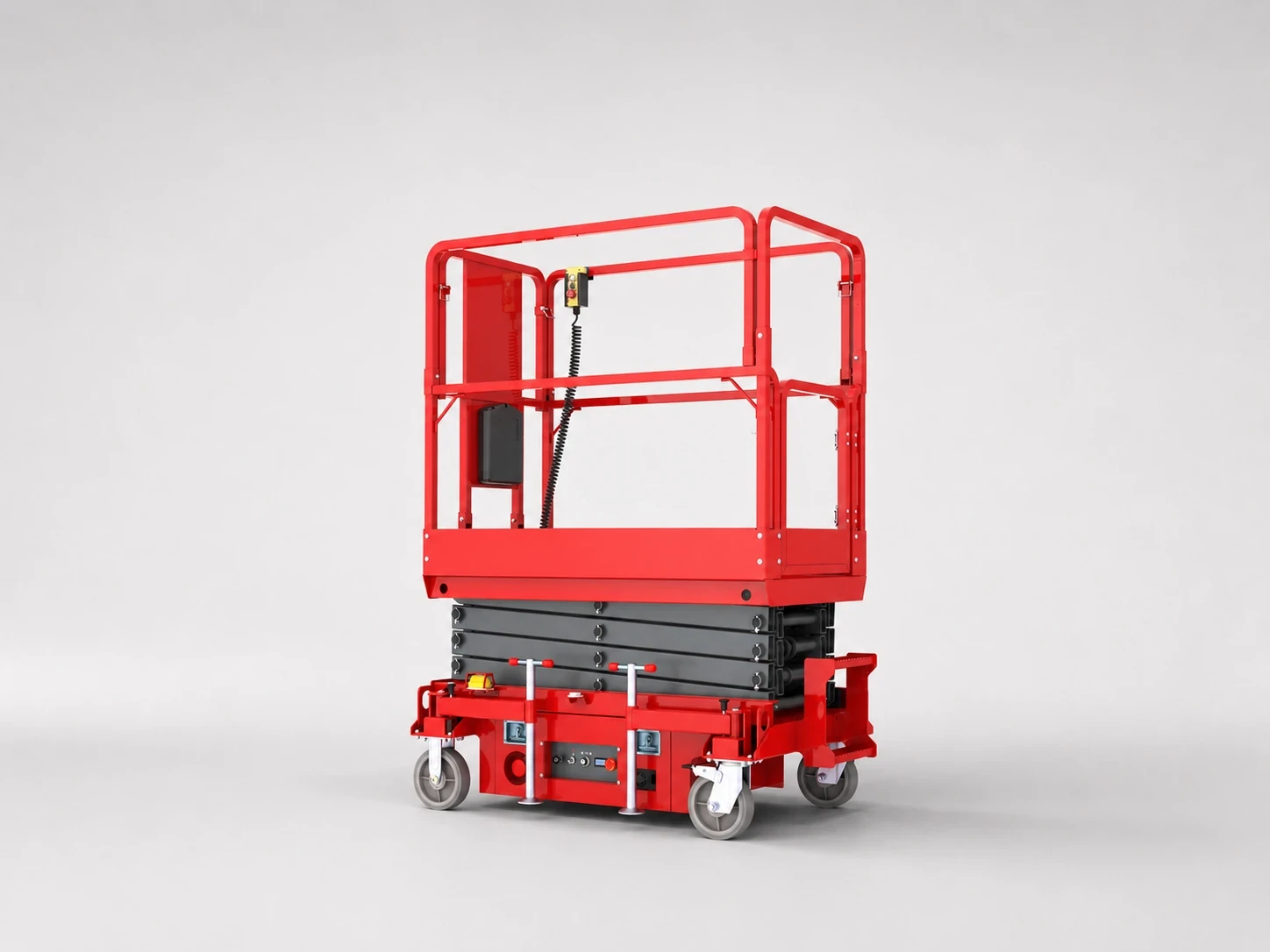
A 19 ft electric scissor lift rents for roughly $150–$300 per day in the United States in 2026. A 26 ft rough-terrain unit runs $250–$450 per day, and a 32–40 ft machine $400–$800 per day.
Week rates usually land near three times the day rate, not seven. Month rates usually land near three times the week rate. That single fact changes how most contractors should plan a two-week job.
Everything below is indicative US ranges for 2026. They are not quotes. Rental pricing varies by metro, by season, by machine age and by how much of the order you are willing to negotiate — but the bands are narrow enough to budget against.
Two things move the number more than anything else: the class of machine (slab electric versus rough-terrain) and the length of the rental. A 26 ft slab machine on a monthly rate can cost less per week than a 19 ft machine rented by the day.
This guide breaks down what each class costs, what drives the price, which fees hide outside the headline rate, and where renting stops making sense and buying starts.
Quick Answer: Rental Rates by Machine Type
The table below is the fastest way to sanity-check a quote. If a number sits far outside its band, there is usually a reason worth asking about — old inventory, a delivery distance, or a minimum charge.
19–20 ft electric slab (indoor)
The most common rental in the category. Narrow enough for most warehouse aisles, light enough for a standard goods lift, and cheap enough to rent on a day rate without a purchase order.
Expect $150–$300 per day, $450–$800 per week, $1,100–$1,900 per month. Machines this size are also the ones most likely to be available same-day, which is part of what you are paying for.
26 ft electric and rough-terrain
The crossover class. An electric 26 ft slab machine is an indoor tool; a 26 ft rough-terrain unit is a different asset with different tyres, different weight and a different rate.
Electric: $200–$350 per day. Rough-terrain: $250–$450 per day. Weekly $700–$1,200, monthly $1,700–$2,800.
32–40 ft rough-terrain
This is where transport becomes a real line item. A 40 ft unit typically needs a heavier trailer, a wider gate and a spotter who has done it before.
Expect $400–$800 per day, $1,100–$2,000 per week, $2,600–$4,500 per month.
Daily, weekly and monthly multipliers
A week at seven times the day rate is a bad deal. Most yards price a week at 3–3.5× the day rate and a month at 3–3.5× the week rate.
That means a five-day rental is almost always cheaper on a weekly rate, and a three-week rental is often cheaper on a monthly rate. Ask for both, every time.
Machine class | Day | Week | Month | Typical use |
|---|---|---|---|---|
19–20 ft electric slab | $150–$300 | $450–$800 | $1,100–$1,900 | Warehouse pick faces, ceiling grid, retail fit-out |
26 ft electric slab | $200–$350 | $600–$1,000 | $1,500–$2,400 | Indoor MEP, mezzanine work, high bays |
26 ft rough-terrain | $250–$450 | $700–$1,200 | $1,700–$2,800 | Site work, slab pours, exterior cladding |
32–40 ft rough-terrain | $400–$800 | $1,100–$2,000 | $2,600–$4,500 | Steel erection, facade access, large industrial |
Machine height is not the same as the height you can work at. A 19 ft platform typically gives about 25 ft of working height once the operator is included, which is why working height rather than platform height is the number to quote to a rental desk.
What Drives the Price
Six variables explain almost all of the variance between two quotes for the same nominal machine.
Machine size and platform height
Price rises roughly with platform height, but not linearly. The jump from 19 ft to 26 ft is modest; the jump from 26 ft to 40 ft is steep because the machine gets wider, heavier and harder to transport.
Deck size matters too. A wider deck on the same height class carries a premium and may not fit your aisle — the numbers are in the scissor lift size chart, and they are worth checking before you accept an upgrade.
Capacity is the other half of that check. A wider deck that cannot carry the load you planned is not an upgrade: scissor lift load capacity depends on deck size, extension use and how the weight is distributed, not on the headline number alone.
Electric vs rough-terrain vs towable
Rough-terrain machines cost more to rent because they cost more to own: heavier axles, larger tyres, more maintenance, and higher transport cost to and from site.
Towable units are the cheapest to move and the slowest to work from. The trade-offs between electric, semi-electric and rough-terrain types show up directly in the rate card.
Rental duration
Duration is the lever you control. Moving from daily to weekly typically cuts the effective daily cost by half; moving from weekly to monthly cuts it again.
If your schedule is uncertain, ask what a month would cost before you commit to two weeks. The difference is often smaller than the penalty for extending a weekly rental twice.
Location and market
The same 26 ft machine rents for less in a market with ten yards competing than in a market with two. Metro labour rates, yard density and local construction volume all feed into the rate.
Remote areas add a second effect: fewer machines, longer delivery distances, and less willingness to discount a short rental.
Delivery distance and access
Delivery is usually priced per mile beyond a free radius, and it is charged both ways. A site with a narrow gate, a soft verge or a low canopy can turn a standard drop into a two-person job with a smaller truck.
Access is a dimension problem before it is a logistics problem. Whether a scissor lift fits through a door turns on the stowed width and height of the specific model, not on the doorway you remember from last year.
Access problems are also where damage claims start, which is why the walk-around at delivery matters more than the paperwork.
Season and demand
Spring and summer are the tight season for exterior work. Rates in a busy metro can move 10–20% between February and June, and availability — not price — becomes the constraint.
Indoor work in winter is the opposite: yards are quiet, and a monthly rate in January is often the best deal of the year.
Driver | Effect on rate | What to do about it |
|---|---|---|
Platform height | Rises steeply above 26 ft | Confirm the working height you actually need before stepping up a class |
Rough-terrain vs slab | +30–60% for the same height | Rent rough-terrain only if the ground demands it |
Duration | Weekly and monthly rates cut effective daily cost | Price the next tier up before signing a daily rate |
Location | ±20% between metros | Get three quotes in competitive markets |
Delivery distance | $75–$250 each way beyond the free radius | Ask for the free radius in writing |
Season | 10–20% swing | Book exterior work early or shift indoor work to winter |

Rental Structures Compared
Daily, weekly and monthly
Day rates suit one-off tasks under four hours. Week rates suit most fit-out work. Month rates suit anything that will run longer than about two and a half weeks.
The trap is a "week" that starts on a Friday and charges a full week for two working days. Ask when the clock starts and whether weekends count.
Rent-to-own
Some yards apply part of the rental against a purchase. The terms vary widely: it may apply only to new machines, only above a minimum rental period, or only at list price.
Rent-to-own is worth asking about when you expect to need the machine for six months or more. It is rarely worth it for a single project.
Bare rental vs operated
Bare rental gives you the machine; you supply the operator and the insurance. Operated rental includes an operator and usually shifts liability for operation to the supplier.
Operated rates run far higher — often 2–3× bare rental — but they remove the certification question and the labour scheduling problem. For short, high-risk work, that can be the cheaper option overall.
Structure | Typical shape | Best for | Watch out for |
|---|---|---|---|
Daily | 1 day, 8 hours | Short punch-list work | Overtime hours, delivery charged separately |
Weekly | 3–3.5× day rate | Most fit-out and MEP work | Weekend start dates |
Monthly | 3–3.5× week rate | Projects over ~3 weeks | Minimum term and early-return penalties |
Rent-to-own | Portion of rental credited | Long, repeated need | Credit applies at list price only |
Operated | 2–3× bare rate | Short, high-risk, or no certified operator | Operator availability, day-rate minimums |
The Costs That Don't Appear in the Headline Rate
The advertised day rate is rarely what you pay. These five items routinely add 15–30% to the invoice.
Delivery and pickup
Typically $75–$250 each way inside a metro, more beyond it. On a one-day rental of a small machine, delivery can exceed the rental itself.
Damage waiver and insurance
Usually 8–15% of the rental. A damage waiver is not insurance — it typically covers minor damage and excludes theft, misuse and rollover. Check what your own policy already covers before paying twice.
Cleaning and charging fees
Machines returned dirty or with a flat battery can attract $50–$150 in cleaning or recharge fees. Concrete dust, paint overspray and drywall mud are the usual culprits.
Late return and minimum charges
Most contracts bill a full day for a machine returned a few hours late, and some apply a minimum rental period of a week regardless of use. Read the return clause before you plan the pickup.
Operator certification and training
Rental does not confer competence. Operator training and familiarisation are your cost, and the pre-use inspection obligations stay with the operator even on a bare rental — the checks are set out in OSHA's scissor lift inspection requirements.
Extra | Typical charge | How to avoid it |
|---|---|---|
Delivery / pickup | $75–$250 each way | Ask for the free radius; collect yourself if you have a suitable trailer |
Damage waiver | 8–15% of rental | Check your own cover first; waivers usually exclude theft and rollover |
Cleaning / charging | $50–$150 | Return it as clean and charged as you received it |
Late return | Full day or hourly penalty | Confirm the return cut-off time and the weekend rule |
Training | Varies by provider | Certify operators once, not per rental |

Rent vs Buy: Where the Break-Even Sits
Renting is the right answer until the machine stops being occasional. The question is where that line falls for your utilisation, not for the industry average.
A worked example: 12 weeks of rental vs purchase
Take a 26 ft rough-terrain unit at $900 per week, rented for 12 weeks with four delivery/pickup pairs at $150 each.
Rental: 12 × $900 = $10,800. Delivery: $1,200. Total: $12,000.
Purchase: a new 26 ft rough-terrain machine typically lands at $18,000–$26,000; a used unit at $9,000–$15,000. Add maintenance, storage and insurance at roughly 10–15% of the purchase price per year.
At 12 weeks, renting and used purchase are close, but rental carries no residual value risk and no storage cost. Past roughly 20–25 weeks of use in a year, ownership starts to win clearly.
When renting is the right answer
Rent when utilisation is under about 20 weeks a year, when the machine class changes between jobs, when storage and transport are problems, and when you need a machine this week rather than next quarter.
Renting also transfers the maintenance burden. Your team's only obligation is the pre-use check; the service schedule sits in the maintenance schedule on the yard's side of the counter.
When buying wins
Buy when you run multiple sites with the same class of machine, when rental availability is the bottleneck, or when the machine is core to how you deliver work.
The other ownership case is fleet standardisation: buying one model in quantity keeps spares, training and trailers common, which is where choosing a compact scissor lift as a platform rather than as a one-off purchase starts to pay.
Scenario | Rent | Buy (used) | Buy (new) |
|---|---|---|---|
12 weeks, one project | $12,000 | $9,000–$15,000 + running cost | $18,000–$26,000 + running cost |
20 weeks, rolling sites | ~$20,000 | Break-even zone | Still behind |
40 weeks, year-round | ~$40,000 | Clearly ahead | Ahead if financed |
4 weeks, one-off | ~$4,000 | No | No |
If your comparison is against the smaller single-operator class rather than a scissor lift, the same maths applies with different numbers: rental versus buying a single man lift follows the same utilisation threshold.
How to Get a Better Rate
Move up a duration tier
Ask what the week costs when you need four days, and what the month costs when you need three weeks. The answer is frequently cheaper than the tier below.
Book outside the season
January and February pricing for indoor work is the softest of the year. If the schedule allows, shifting a fit-out into winter is a straightforward saving.
Collect it yourself
If you have a trailer rated for the machine and someone competent to load it, self-collection removes the largest fixed fee on a short rental.
Bundle the order
Two machines and a light tower on one contract gives the yard more room than three separate day rentals, and delivery consolidates into one trip.
Red Flags in Rental Quotes
Five clauses worth reading twice before you sign.
A day rate that excludes delivery on a one-day rental. The invoice can double after the machine is booked.
A damage waiver described as insurance. It is a contractual waiver with exclusions, not a policy.
No stated return cut-off time. You need to know whether a 9 a.m. Monday return bills Friday or Monday.
A minimum term hidden in the terms. Some contracts charge a full week regardless of when the machine comes back.
No documented walk-around at delivery. Existing damage found at return is your problem unless it was recorded on handover.
Frequently Asked Questions
How much does it cost to rent a scissor lift for a day?
In the US in 2026, a 19 ft electric slab machine is typically $150–$300 per day, a 26 ft rough-terrain unit $250–$450, and a 32–40 ft machine $400–$800. Delivery is usually charged separately.
Is it cheaper to rent weekly or monthly?
Both, depending on duration. A week typically costs 3–3.5× the day rate and a month 3–3.5× the week rate, so effective daily cost falls at each tier. Anything over about two and a half weeks is usually cheaper on a monthly rate.
Does the rental include delivery?
Usually not. Expect $75–$250 each way inside a metro, and more beyond the free radius. Self-collection removes the charge if your trailer and loading plan are adequate.
Do I need certification to operate a rented scissor lift?
Yes in practice. Rental does not confer competence — operators should be trained and familiarised on the specific model, and the pre-use inspection remains the operator's responsibility even on a bare rental.
What happens if I return the machine late?
Most contracts bill a full additional day for a late return, and some apply a minimum rental period. Confirm the cut-off time and the weekend rule before the rental starts.
Is rent-to-own worth it?
Only if you expect to need the machine for six months or more and the credit applies at a realistic purchase price. For a single project, a straight rental is usually cheaper and simpler.
Can I rent a scissor lift for outdoor work?
Yes, but the machine must be a rough-terrain or towable unit rated for the surface. Slab machines are for firm, level indoor floors and will not perform on gravel, mud or slopes.
At what point does buying beat renting?
As a rule of thumb, when you need the same class of machine for more than 20–25 weeks in a year. Below that, rental usually wins once storage, maintenance and residual value are counted.
Conclusion: Rent the Machine, Not the Surprise
The headline rate is the easy part. The number that matters is the total: rental tier, delivery both ways, waiver, and the cleaning charge you avoid by returning it tidy.
Ask two questions before you sign — what does the next duration tier cost, and what is excluded from this rate. Those two answers separate a $600 week from a $900 one.
For buyers moving from occasional rental to ownership, WIZPLUSLIFT builds semi-electric and electric scissor lifts in the compact classes that dominate rental fleets, including the CKJC-Y semi-electric scissor lift platform. If you are modelling a purchase against your rental spend, send us your utilisation and duty cycle and we will size the machine against it.