How Much Does a Single Man Lift Cost? Rental vs. Buying Price Guide
Published
Category
Single Man Lift
How much does a single man lift cost? Compare daily, weekly, and monthly rental rates, new and used purchase options, and long-term ownership costs.
How much does a single man lift cost? The answer depends on the lift type, working height, rental period, equipment condition, and whether you plan to rent or purchase the machine.
For short-term maintenance projects, renting a single man lift can reduce the initial financial commitment and eliminate some responsibilities associated with long-term ownership. For warehouses, factories, and facilities that regularly need elevated access, purchasing a lift may offer better long-term value, greater equipment availability, and more control over maintenance scheduling.
However, the lowest advertised rental rate or purchase price does not always represent the lowest total cost. Delivery charges, rental extensions, battery maintenance, spare parts, equipment downtime, and resale value can all influence the final decision.
This guide compares single man lift rental costs, purchase considerations, new versus used equipment, and total cost of ownership. It also explains how to determine whether renting or buying makes more financial sense for your application.
How Much Does It Cost to Rent a Single Man Lift?
Single man lift rental rates vary according to equipment type, working height, rental duration, location, and local availability. Rental companies may offer daily, weekly, and monthly pricing, but the available models and actual rates depend on the market being served.
A push-around lift is generally positioned manually before use, while a self-propelled lift has a powered drive system that allows the operator to move the machine under its specified operating conditions. These equipment types should not be assumed to have equivalent rental prices.
Daily Single Man Lift Rental Cost
Daily rental is often worth considering for short maintenance jobs, inspections, lighting replacement, and other projects that can be completed within a limited period.
A short rental may be practical when the equipment is needed only occasionally and purchasing a machine would leave it unused for much of the year.
Before selecting a daily rental, consider the following costs and restrictions:
Daily base rental rate.
Delivery and collection charges.
Minimum rental period.
Required deposit or insurance arrangements.
Applicable damage waiver or other fees.
Charges for exceeding the agreed return time.
A low daily rate may not provide the lowest total cost if transportation charges are high or the project takes longer than expected.
Weekly Single Man Lift Rental Cost
Weekly rental can be suitable for installation projects, scheduled facility maintenance, warehouse improvements, and jobs expected to continue for several days.
Compare the total weekly rate with the cost of extending a daily rental. Some rental providers offer a lower average daily rate for longer rental periods.
Also check the contract's treatment of weekends, holidays, delivery delays, early returns, and additional rental days.
If the project schedule is uncertain, request both weekly and monthly quotations before committing. This makes it easier to evaluate the cost of a potential delay.
Monthly Single Man Lift Rental Cost
Monthly rental may be appropriate when a project needs access equipment for several weeks or when a business wants to evaluate its equipment requirements before purchasing.
Longer rental periods can reduce the average daily rental cost, depending on the supplier's pricing structure. However, the total monthly bill may still include delivery, damage protection, taxes, or other contract-specific charges.
Monthly rental may be attractive when:
Equipment requirements are temporary.
The project duration is uncertain.
A suitable machine is available locally.
The business wants to avoid long-term ownership responsibilities.
Maintenance or service support is included in the rental agreement.
For ongoing, repeated use, compare the cumulative rental cost with a realistic estimate of ownership costs.
Single Man Lift Rental Price Examples
The following prices are examples published by 'BigRentz' for push-around single man lifts. They provide a reference for how rental cost can vary with equipment height and rental duration.
Push-Around Lift Type | Daily Rental | Weekly Rental | Monthly Rental |
|---|---|---|---|
15-foot lift | $57 | $169 | $407 |
30-foot lift | $113 | $266 | $578 |
These are published examples, not guaranteed quotations or nationwide averages. Actual rental prices can change according to location, equipment availability, rental duration, and supplier terms.
Important: These figures relate to push-around equipment. They should not be used as direct price estimates for self-propelled single-mast lifts, which have different configurations and operating capabilities.
For an accurate rental comparison, request a local quotation that specifies the machine type, working height, rental period, delivery charges, and all additional fees.

How Much Does a Single Man Lift Cost to Buy?
The purchase price of a single man lift depends on the single man lift's configuration and the requirements of the buyer.
Unlike a rental quotation, which usually focuses on a defined period of use, a purchase quotation must account for the equipment itself and any additional items required to put it into service.
Manufacturers may offer different working heights, load capacities, drive systems, battery configurations, and platform arrangements. Customization, order quantity, packaging, and shipping arrangements may also affect the final price.
Because these variables differ substantially between products, buyers should avoid relying on one generic online price as the cost of every single man lift.
New Single Man Lift Purchase Cost
Buying a new single man lift gives the purchaser a defined machine configuration and an opportunity to confirm technical requirements before the order is placed.
When requesting a quote, compare:
Maximum working height and platform height.
Rated platform capacity.
Push-around or self-propelled configuration.
Overall width, length, and stowed height.
Platform size and any extension platform.
Battery and charger specifications.
Safety features and operating documentation.
Warranty coverage and spare-parts availability.
Packaging, shipping, and delivery terms.
A compact machine may have a lower initial price than a more complex model in some comparisons, but the equipment category alone does not determine cost. Two machines with similar working heights may have different capacities, drive systems, battery configurations, and platform dimensions.
For overseas buyers, the quotation should also clarify which costs are included in the manufacturer's price and which are payable separately.
Used Single Man Lift Purchase Cost
A used single man lift may offer a lower initial purchase cost, particularly when the buyer needs equipment for limited duties or has a constrained capital budget.
However, the price of used equipment depends heavily on the machine's age, operating history, maintenance records, battery condition, structural condition, and availability of replacement parts.
Before purchasing used equipment, check:
Maintenance and repair records.
Mast, lifting mechanism, and structural components.
Battery condition and charging performance.
Joystick, controls, electrical connections, and displays.
Emergency-stop and emergency-lowering functions.
Rated capacity and equipment identification labels.
Availability of the operator's manual and service documentation.
Remaining parts support and warranty terms.
A used lift that requires significant repairs shortly after purchase can become more expensive than expected.
For this reason, compare the initial price together with the machine's condition, likely maintenance requirements, expected service life, and resale value.
What Is Included in a Single Man Lift Purchase Price?
Not every quotation includes the same items. Before comparing offers, confirm whether the quoted price covers the complete configuration required for your application.
Cost Item | What to Confirm |
|---|---|
Base equipment | Exact model and standard configuration |
Battery and charger | Included specifications and compatibility |
Optional equipment | Platform extensions or other selected options |
Packaging | Export packaging and handling arrangements |
Freight | Shipping method and delivery destination |
Import charges | Applicable customs duties, taxes, and destination fees |
Warranty | Coverage, exclusions, and warranty period |
Spare parts | Availability, pricing, and lead times |
Documentation | Operating manuals and applicable product documentation |
After-sales support | Technical assistance and service arrangements |
For B2B buyers, a complete quotation makes it easier to compare suppliers on a consistent basis. A lower equipment price may not be the lowest delivered cost if important accessories, packaging, or freight charges are excluded.

Single Man Lift Rental vs. Buying: Which Is Cheaper?
There is no universal answer to whether renting or buying a single man lift is cheaper. The decision depends on how frequently the equipment will be used, how long it will be required, and how much the business would spend on ownership.
Rental is often worth evaluating for occasional or short-term work. Purchasing may become more attractive when the same type of lift is needed regularly over an extended period.
When Renting a Single Man Lift Makes Sense
Rental can be a practical choice when:
The project lasts only a few days or weeks.
Equipment requirements change between projects.
The business does not need a machine on a continuous basis.
A suitable rental unit is available near the job site.
The business prefers not to manage long-term equipment maintenance.
Temporary demand does not justify an additional owned machine.
Rental also lets a business select different models for different jobs, provided those models are available and meet the work requirements.
However, frequent rental can introduce scheduling risks. Equipment availability, delivery timing, rental extensions, and repeated transportation charges may complicate project planning.
When Buying a Single Man Lift Makes Sense
Purchasing may deserve closer evaluation when the equipment is needed frequently or for recurring work across the same facility.
Potential benefits include:
Greater control over equipment availability.
Less dependence on rental inventory.
More predictable access to a familiar machine.
The ability to plan maintenance around operating schedules.
Potential resale value at the end of the ownership period.
Opportunities to standardize equipment across a fleet.
Ownership also creates responsibilities. The business must plan for inspections, maintenance, charging, storage, repairs, and equipment downtime.
Buying therefore makes the most sense when the expected operational value justifies the total cost of ownership.
Rental vs. Purchase Cost Comparison
Factor | Renting | Buying |
|---|---|---|
Initial financial commitment | Rental charges and possible deposit | Purchase price and delivery |
Payment structure | Daily, weekly, or monthly | Upfront or agreed financing terms |
Equipment availability | Depends on rental inventory | Available when owned and serviceable |
Maintenance responsibilities | Defined by rental contract | Primarily managed by the owner or service provider |
Flexibility | Useful when requirements change | Best when requirements are relatively predictable |
Long-term cost | Can accumulate with repeated rental | Depends on utilization, maintenance, and resale value |
Resale value | No ownership asset at the end of rental | Potential recovery of part of the purchase cost |
Use the same time period and the same operating requirements when comparing these options. Otherwise, the comparison may favor one option simply because different assumptions were used.

How to Calculate the Rental vs. Purchase Break-Even Point
A break-even analysis estimates when cumulative rental costs become comparable with the net cost of ownership.
Start with two formulas:
Total Rental Cost
Rental charges + delivery and collection + applicable fees + extension charges.
Net Ownership Cost
Purchase price + delivery and setup + charging and operating costs + maintenance and repairs + downtime costs − resale value.
For example, assume a business receives a purchase quotation for a specific lift and separate quotations for daily, weekly, and monthly rental. The business should compare the expected cost over the same ownership or project period, rather than comparing the purchase price with one day's rental.
Include the expected frequency of use, maintenance, storage, and resale value. Where equipment financing is involved, include the relevant financing costs in the comparison.
A simple estimate can help narrow the options, but it should not replace a detailed cash-flow analysis when the equipment represents a significant investment.
The key principle: The point at which buying becomes more economical depends on the actual purchase price, utilization, rental rate, ongoing costs, and expected resale value. There is no single number of rental days that applies to every single man lift.

New vs. Used Single Man Lift: Which Should You Choose?
The choice between new and used equipment depends on budget, reliability requirements, expected utilization, and the buyer's ability to assess equipment condition.
Advantages of Buying New
New equipment allows buyers to confirm the selected configuration before delivery and establish warranty and service terms with the supplier.
It may be particularly suitable when a business expects regular use, needs a specific working height or capacity, or wants consistent equipment specifications across multiple sites.
A new purchase can also be useful for distributors and OEM buyers who need a defined product configuration, documentation, and long-term parts support.
However, buyers should still evaluate the total delivered cost and confirm what the warranty actually covers.
Advantages and Risks of Buying Used
Used equipment can reduce the upfront purchase price and may be suitable for businesses with limited utilization or a lower capital budget.
The main risk is uncertainty about condition and remaining service life. A machine with an attractive purchase price may require battery replacement, electrical repairs, or other maintenance before it can be used reliably.
Before committing, review inspection records, test the machine under the approved procedure, and have qualified personnel assess any suspected defects.
Do not assume that a used lift is safe or economical simply because it powers on and raises its platform during a brief demonstration.
Which Is Better for B2B Buyers?
A new lift may be attractive for frequent use, predictable maintenance planning, or fleet standardization. A used lift may be worth considering when the condition is verifiable and the projected savings remain meaningful after expected repairs.
The decision should be based on documented condition and lifecycle cost, not price alone.
What Factors Affect Single Man Lift Cost?
Several equipment characteristics and purchasing conditions influence the final price. Understanding these factors helps buyers compare quotes more accurately.
Working Height
Working height is one of the first specifications to establish. Models with different height capabilities may use different mast structures, lifting components, and platform configurations.
Confirm whether the supplier lists platform height or working height. These measurements are not interchangeable.
Push-Around vs. Self-Propelled Design
Push-around models are manually repositioned, while self-propelled models include a powered drive system.
A self-propelled configuration may be useful when an operator needs to travel between multiple work locations. A push-around machine may be suitable for certain stationary or lower-intensity tasks.
The more appropriate choice depends on the work pattern, access requirements, and productivity needs—not simply the lowest purchase price.
Rated Load Capacity
The platform must support the operator and all permitted tools and materials. Higher capacity requirements can affect the equipment configuration and available model selection.
Never compare equipment on working height alone. Confirm the rated load for the actual model and any separate limit for an extension platform.
Battery and Power System
Battery type, battery capacity, charger specifications, charging time, and usage patterns influence operating costs.
For electric equipment, estimate how often the machine will be charged and how its operating cycle fits the work schedule. Battery maintenance and replacement should also be included in a long-term cost estimate.
Use the battery specifications and charging procedures provided by the manufacturer.
Machine Dimensions and Maneuverability
Overall width, length, stowed height, turning requirements, and platform dimensions affect whether a lift can access the work area.
A machine that cannot pass through a doorway or maneuver through a warehouse aisle may be unsuitable regardless of its price or working height.
Measure the full route before ordering and confirm the required configuration with the supplier.
Brand, Warranty, and Spare Parts
Warranty terms, parts availability, technical documentation, and after-sales support can affect the cost of operating equipment over time.
For overseas purchases, confirm replacement-part lead times, technical support arrangements, and the process for handling warranty claims before making a decision.
Shipping, Delivery, and Import Costs
For international B2B buyers, the equipment price is only one component of the final expenditure.
Consider export packaging, freight, insurance where applicable, customs duties, destination taxes, unloading, and local delivery.
Request clear Incoterms and a written breakdown of charges when comparing manufacturer quotations. This helps prevent an apparently low purchase price from becoming a higher delivered cost.
What Is the Total Cost of Owning a Single Man Lift?
Total cost of ownership, or TCO, evaluates what a business spends over the period it uses the equipment rather than focusing only on the purchase price.
For a single man lift, an estimate may include:
Initial purchase price.
Packaging, freight, and delivery.
Charging and operating costs.
Routine maintenance and inspections.
Replacement parts and repairs.
Equipment downtime.
Financing costs, where applicable.
Resale value at the end of ownership.
A practical planning formula is:
Total Cost of Ownership = Purchase Price + Delivery + Operating Costs + Maintenance + Repairs + Downtime Costs − Resale Value
The exact calculation depends on the business's accounting method and operating assumptions. Include financing costs consistently if comparing financed equipment with rental.
Maintenance and Repair Costs
Routine maintenance helps identify potential problems before they lead to more serious failures. The required work depends on the model and its operating conditions.
When evaluating ownership costs, ask the manufacturer for the recommended maintenance schedule and identify which parts may require periodic replacement.
For used machines, consider the current condition and the possibility of additional maintenance during the expected ownership period.
Charging and Operating Costs
For electric lifts, energy costs depend on battery specifications, charging arrangements, and usage patterns.
The cost may be modest relative to other ownership expenses, but regular charging and battery maintenance should still be included in the operating plan.
Downtime Costs
When a lift is unavailable, a job may be delayed or workers may need alternative access equipment.
Estimate downtime using the likely effect on the work schedule, not an arbitrary flat amount. Businesses with frequent use may place greater value on service support and replacement-part availability.
Resale Value
Resale value can reduce the net cost of ownership, but it should be estimated conservatively.
The eventual resale price will depend on condition, maintenance history, age, demand, and parts availability. Do not assume that the equipment will retain a fixed percentage of its original price.
How to Choose the Right Single Man Lift for Your Budget
The best purchase is not necessarily the cheapest machine. It is the machine that meets the task requirements without adding unnecessary cost or operating limitations.
For Occasional Indoor Maintenance
If the equipment is needed only for occasional jobs, compare local rental options first.
Look at the complete rental charge, including delivery and return costs, and confirm the required height and access dimensions before booking.
For Frequent Warehouse and Facility Maintenance
If teams frequently perform overhead inspections, lighting work, or routine maintenance, consider comparing repeated rental costs with ownership.
A self-propelled single-mast lift may be appropriate when the job requires regular movement between work areas. Evaluate the machine's footprint, working height, rated load, battery configuration, and maintenance requirements.
For Long-Term Fleet or Distributor Purchases
For multiple units or recurring purchases, assess the benefits of standardized specifications and a consistent parts supply.
Ask the supplier to confirm available configurations, quantity pricing, packaging, warranty terms, delivery arrangements, and technical support.
For distributors, the purchase decision should also account for target customer requirements and the availability of replacement parts in the intended market.
Pre-Purchase Checklist
Before approving a purchase, confirm:
Required working height and platform height.
Maximum platform load and permitted occupancy.
Push-around or self-propelled configuration.
Machine width, length, and stowed height.
Doorway, aisle, and elevator clearance.
Battery and charging requirements.
Expected annual utilization and ownership period.
Maintenance, repair, and parts support.
Freight, taxes, and delivery arrangements.
Total cost of ownership compared with rental alternatives.
Completing these checks makes it easier to select a machine that fits both the worksite and the budget.
Why Consider WIZPLUSLIFT for Your Single Man Lift Purchase?
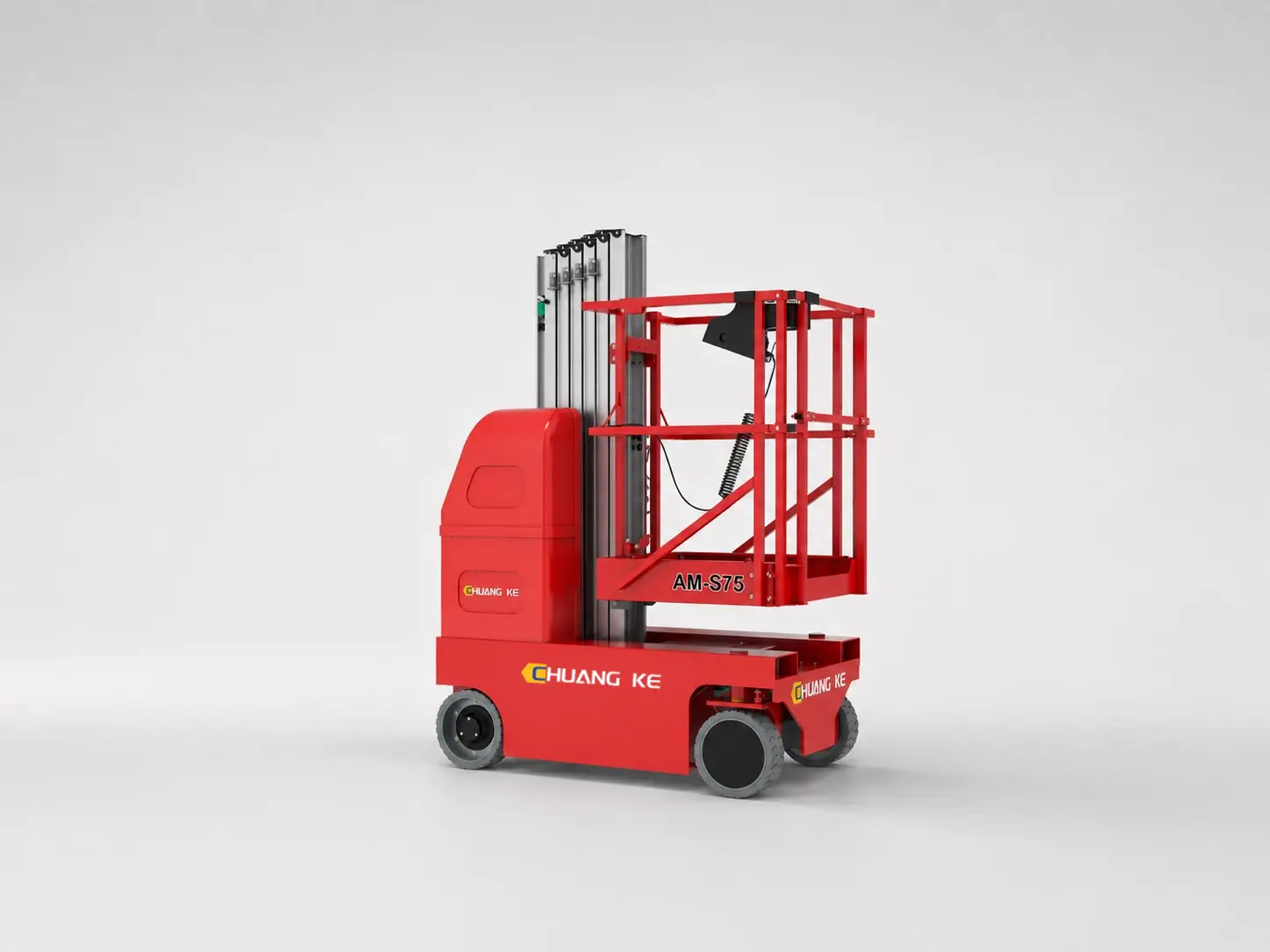
For businesses considering ownership, WIZPLUSLIFT offers the AM-S self-propelled single-mast lift platform for indoor access applications.
According to the official AM-S product page, the series has working heights from 8,000 to 9,500 mm and a compact footprint of 1,500 mm in length by 800 mm in width.
The published specifications also list a safe working load of 159 kg for the AM-S series and an extendable platform load capacity of 113 kg. Confirm the exact model and applicable platform configuration before ordering.
These specifications may be relevant to warehouses, factories, retail facilities, and building maintenance operations where compact equipment and powered repositioning are important.
For buyers evaluating long-term ownership, the next step is to compare the required working height, rated load, access dimensions, battery configuration, delivery terms, and after-sales support.
Request a quote for the WIZPLUSLIFT AM-S series with your required working height, platform load, application, purchase quantity, and delivery destination to obtain pricing for the intended configuration.
Frequently Asked Questions About Single Man Lift Costs
How much does a single man lift cost?
There is no universal price for every single man lift. Purchase and rental costs depend on equipment type, working height, rated capacity, configuration, location, rental duration, and delivery requirements. Request a quotation for the exact model and intended use.
How much does it cost to rent a single man lift per day?
BigRentz publishes example daily rental rates of $57 for a 15-foot push-around lift and $113 for a 30-foot push-around lift. These prices are examples rather than nationwide averages, and actual rates vary by location, availability, and rental terms.
How much does it cost to rent a single man lift per month?
Monthly rental cost depends on the machine type, working height, location, availability, and rental provider. The published BigRentz examples list $407 per month for a 15-foot push-around lift and $578 per month for a 30-foot push-around lift. Confirm current pricing and additional fees before budgeting.
Is it cheaper to rent or buy a single man lift?
Renting can be more economical for occasional or short-term work because it avoids a large initial purchase. Buying may become more attractive when the equipment is used regularly over a longer period. Compare total rental charges with the net ownership cost over the same time period.
How much does a used single man lift cost?
Used-equipment prices vary according to model, age, condition, operating history, battery state, and maintenance records. Rather than relying on a generic price estimate, request current listings for comparable equipment and account for likely repair costs.
What is included in a single man lift purchase price?
The quote may cover the equipment and standard configuration, but battery, charger, accessories, export packaging, shipping, taxes, warranty, and service support can be treated differently by each supplier. Obtain a written breakdown before comparing offers.
What affects the price of a single man lift the most?
Important factors include working height, rated load, push-around or self-propelled design, battery configuration, machine dimensions, equipment condition, order quantity, and shipping arrangements. The relative impact depends on the models being compared.
How do I calculate the break-even point between renting and buying?
Estimate total rental charges over the expected use period, including delivery and additional fees. Then calculate ownership costs, including purchase, delivery, operating expenses, maintenance, repairs, downtime, and resale value. Buying may be financially preferable when its net cost is lower for the same requirements and time period.
Is a self-propelled single man lift more expensive than a push-around lift?
The powered drive system changes the equipment configuration, but actual prices depend on the model, height, load capacity, and supplier. Compare equivalent technical specifications and operating capabilities before drawing a cost conclusion.
Where can I get a quote for a single man lift?
Contact the equipment manufacturer or a local rental provider with your required working height, rated load, machine type, use frequency, worksite dimensions, and delivery destination. These details make it easier to provide a suitable model and accurate quotation.
Source:
BigRentz Push-Around Single Man Lift Rental. Prices were checked on October 16, 2026.
Conclusion: Is Renting or Buying a Single Man Lift Better?
The right decision depends on how often the equipment is needed, the duration of the project, and the cost of operating and maintaining the machine.
Renting is worth considering for temporary jobs, uncertain demand, and occasional maintenance. Buying deserves closer evaluation when the same equipment is needed regularly and the business can support inspection, maintenance, charging, and storage.
For either option, compare the total cost rather than focusing only on the advertised daily rate or initial purchase price. Include delivery, applicable fees, operating expenses, maintenance, downtime, and expected resale value.
WIZPLUSLIFT's AM-S self-propelled single-mast lift platform is one option for businesses evaluating equipment ownership for indoor access applications. Review the AM-S single-mast lift specifications and request a quote based on your required working height, platform load, configuration, and delivery destination.