Blog
Electric Scissor Lift Working Height: How to Choose the Right Size
Published
Category
Small Scissor Lift
Learn how to choose the right electric scissor lift working height based on platform height, load capacity, platform size, clearance, and application.
Choosing the correct electric scissor lift working height is one of the most important decisions when purchasing or renting mobile lifting equipment. A lift that is too short may not reach the work area, while a machine that is unnecessarily large can create problems with door access, maneuverability, transportation, floor loading, and equipment cost.
The key is to choose an electric scissor lift based on the actual height of the work, not simply the height of the platform.
For contractors, facility managers, warehouse operators, rental companies, distributors, and industrial buyers, the selection process should consider several factors together: working height, platform height, load capacity, platform dimensions, machine width, operating environment, drive system, and available clearance.
This guide explains the difference between platform height and working height, shows how to determine the size of electric scissor lift you need, and provides practical examples using WIZPLUS electric scissor lift models.
What Is Electric Scissor Lift Working Height?
Electric scissor lift working height refers to the approximate maximum height at which an operator can perform work from the elevated platform.
It is different from platform height.
Platform height is the height of the platform floor above the ground when the machine is raised.
Working height considers the operator's reach above the platform.
A commonly used rule of thumb is:
Working Height ≈ Platform Height + Operator Reach
Some manufacturers and rental companies use approximately 2 m or 6 ft of operator reach when giving a general estimate. However, the exact definition can vary between manufacturers, so buyers should use the rated working height published for the specific electric scissor lift model when making a final selection.
For example, a WIZPLUS model with a maximum platform height of 5,800 mm has a published maximum safe working height of 7,800 mm. The 7,800 mm figure should be used when evaluating whether the machine can reach the required work area.
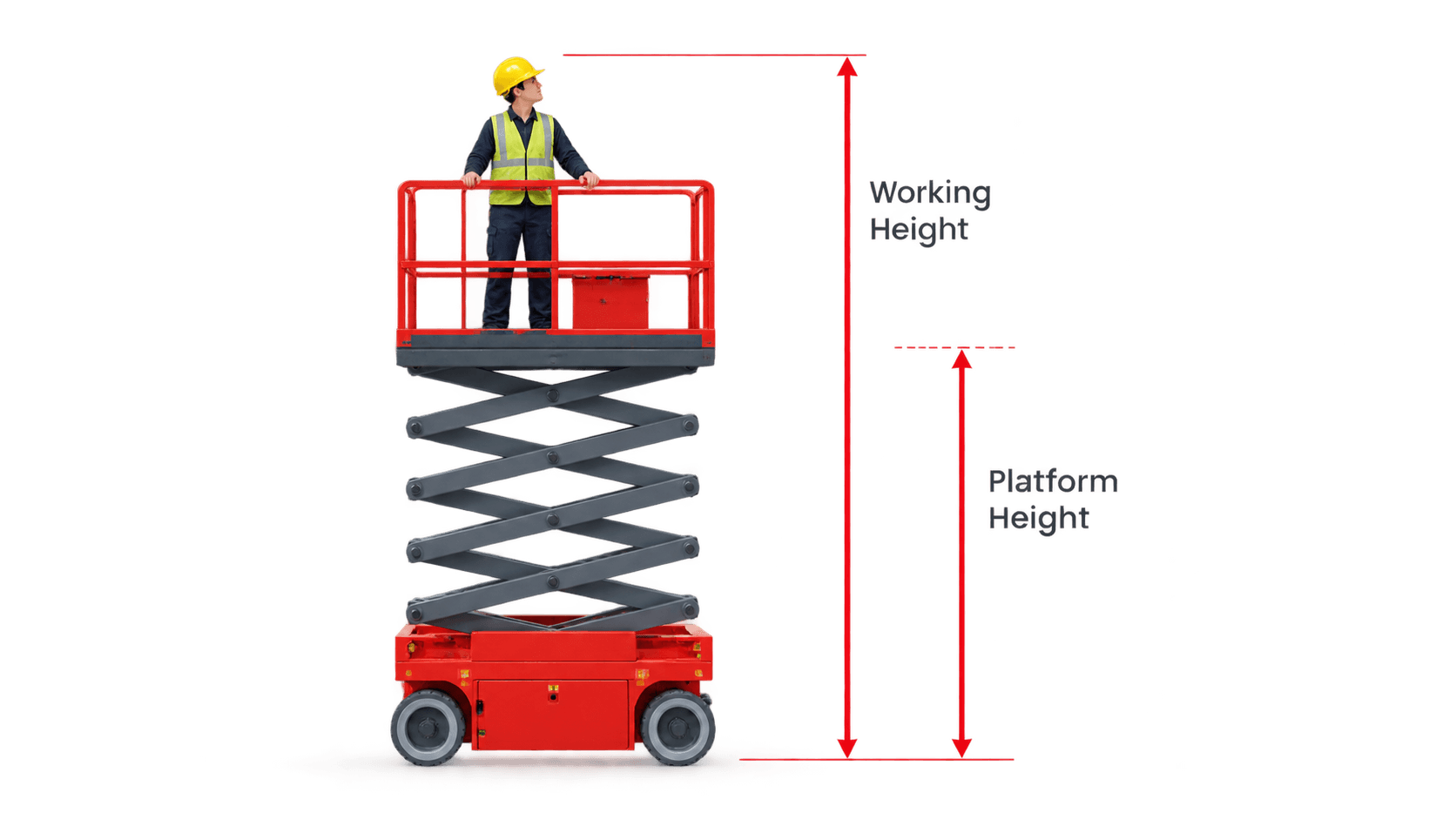
Platform Height vs. Working Height
These two specifications are often confused when comparing scissor lifts.
Specification | Meaning | Why It Matters |
|---|---|---|
Platform Height | Height of the platform floor | Determines the operator's standing position |
Working Height | Approximate maximum working reach | Helps determine whether the machine can reach the task |
Overall Height | Maximum physical height of the machine | Important for overhead clearance |
Lowered Height | Machine height when lowered | Important for transportation and doorway access |
Platform Length | Length of the working platform | Affects available workspace |
Platform Width | Width of the working platform | Affects operator space and machine footprint |
A lift's working height should never be treated as the same measurement as its platform height.
For equipment procurement, the better question is:
“How high do I need the operator to work?”
rather than:
“How high does the platform need to go?”
This distinction helps buyers avoid selecting an electric scissor lift that is either too small for the application or unnecessarily large. WIZPLUS also recommends considering the intended application, required working height, safe working load, platform dimensions, operating environment, access width, and power requirements when selecting lifting equipment.
How to Calculate the Required Electric Scissor Lift Working Height
Before choosing a machine, determine the actual height of the task.
Step 1: Measure the Work Point
Measure from the floor or supporting surface to the highest point where work must be performed.
Examples include:
Ceiling lights
HVAC equipment
Electrical cable trays
Pipes and conduits
Fire protection systems
Warehouse lighting
Signs
Building services
Equipment mounted at height
Do not automatically use the building's total ceiling height.
The work point may be considerably lower.
For example, if a lighting fixture is installed 6 m above the floor, you need to select a machine that provides sufficient working height for the operator to reach the fixture safely.
Step 2: Determine the Required Platform Height
As a general planning estimate, platform height can be approximately calculated by subtracting the operator's expected reach from the required working height.
For example:
Required working height: 6 m
Approximate operator reach: 2 m
Estimated platform height: 4 m
However, this is only a preliminary calculation. The final selection should always be based on the manufacturer's published working-height specification for the exact model.
Step 3: Check the Actual Manufacturer Specification
Once you have calculated the approximate requirement, compare it with the equipment specification.
This matters because different manufacturers may use different definitions or assumptions when stating working height.
A professional buyer should therefore compare:
Required working height → Manufacturer-rated working height → Platform height → Overall dimensions
rather than comparing a single height number.
Electric Scissor Lift Working Height Chart
The following chart provides a practical starting point for selecting an electric scissor lift. Actual equipment selection should be based on the manufacturer's specifications and the site's conditions.
Approx. Work Height | Typical Platform Height Range | Common Applications |
|---|---|---|
5–6 m | 3–4 m | Indoor maintenance, lighting, electrical work |
6–7 m | 4–5 m | Warehouse maintenance, installation, commercial buildings |
7–8 m | 5–6 m | Industrial maintenance, construction, facility services |
8–10 m | 6–8 m | High-level installation and industrial applications |
10–13 m | 8–11 m | Large industrial facilities and construction |
13–16 m | 11–14 m | High-level construction and industrial maintenance |
The numbers above are intended for planning and comparison, not as a substitute for a model's rated working height.
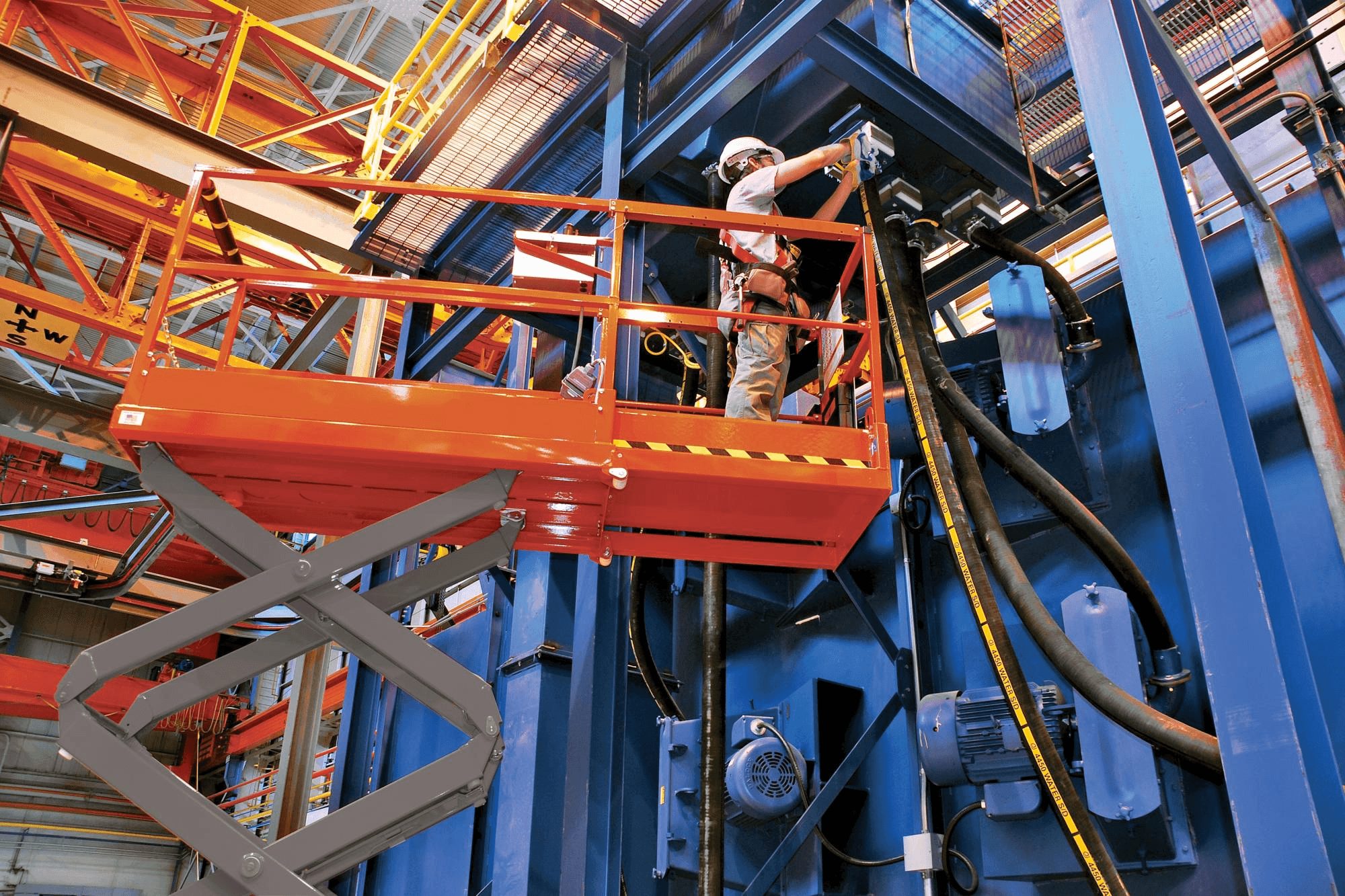
For example, WIZPLUS currently offers compact electric scissor lifts with maximum safe working heights from 5,000 to 6,800 mm, a 7858EH model with a 7,800 mm maximum safe working height, and CKJC-HD models covering approximately 8,000–15,800 mm.
What Size Electric Scissor Lift Do You Need?
The right size depends on both the height of the task and the physical conditions of the worksite.
For 5–6.8 m Working Height
For lower-level elevated work, a compact electric scissor lift can provide a practical combination of reach and maneuverability.
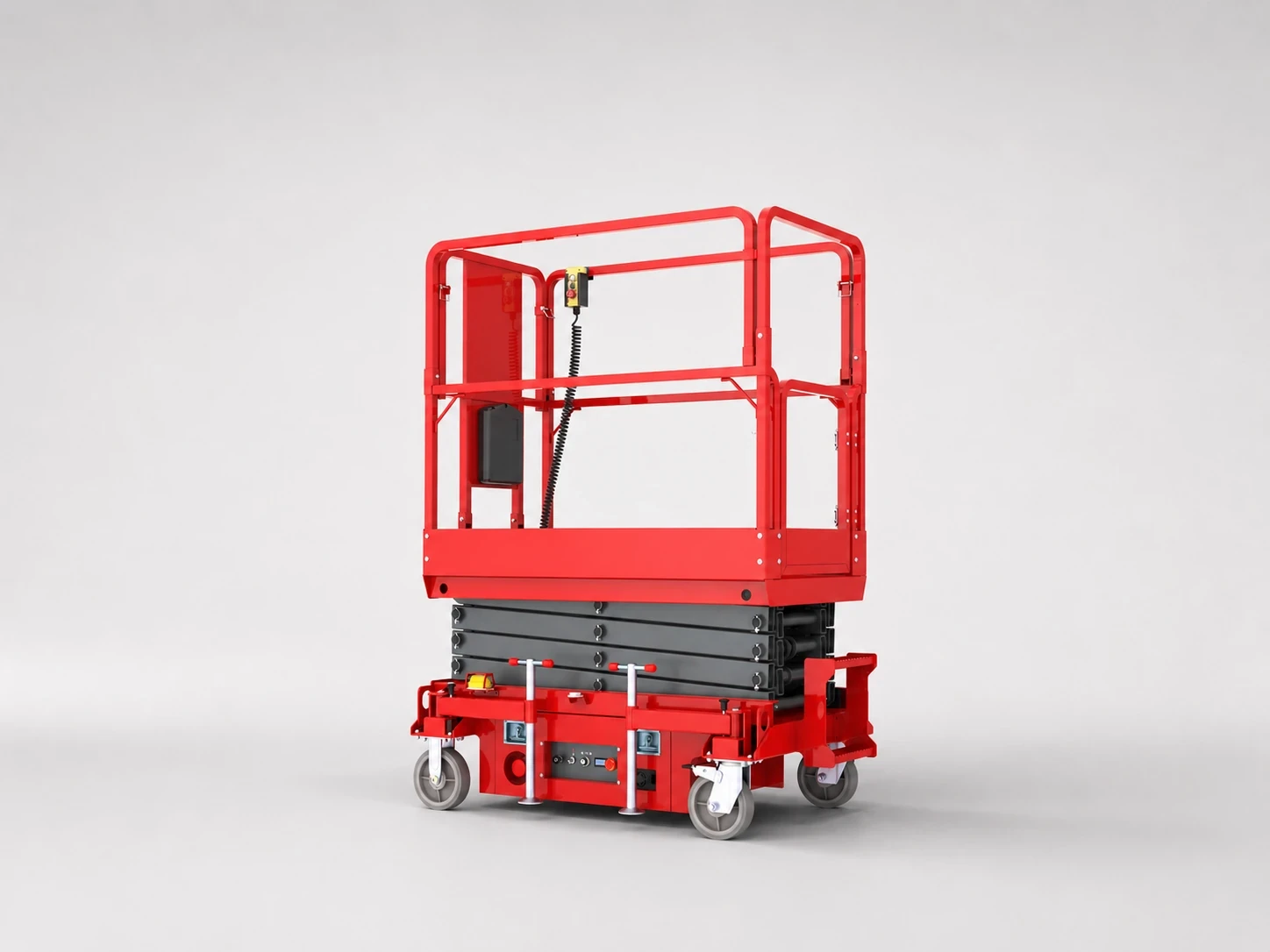
WIZPLUS CKJC-EH models provide maximum safe working heights ranging from 5,000 to 6,800 mm, with maximum platform heights from 3,000 to 4,800 mm depending on configuration.
The series is designed with a compact 760 mm overall width, making it suitable for applications where access space is limited. WIZPLUS lists applications including maintenance, installation, and industrial work.
Typical applications include:
Warehouse lighting maintenance
Retail store maintenance
Electrical installation
Ceiling work
Factory servicing
Commercial building maintenance
For Narrow Indoor Areas
When working inside offices, warehouses, shopping centers, or other confined facilities, machine width can become as important as working height.
WIZPLUS CKJC-EW electric scissor lifts use a compact chassis and universal-wheel configuration. The product page lists an 800 mm operating width and 360-degree maneuverability, allowing the equipment to work in narrow aisles, doorways, and service corridors.
This type of machine is particularly relevant when buyers need:
Electric power + compact dimensions + easy positioning
A smaller machine may be more productive than a larger lift if the larger machine cannot access the work area.
For Around 7.8 m Working Height
WIZPLUS's 7858EH is positioned between compact lower-height models and higher-working-height hydraulic-drive models.
The model has a published maximum safe working height of 7,800 mm and maximum platform height of 5,800 mm. Its overall width is 810 mm, while the platform is listed at 1,670 × 740 mm.
This configuration can be useful for projects requiring more working space and reach while still requiring relatively compact machine dimensions.
Potential applications include:
Construction
Equipment installation
Industrial maintenance
Warehouse operations
Facility servicing
For 8–16 m Working Height
For higher-level work, a larger electric scissor lift may be required.
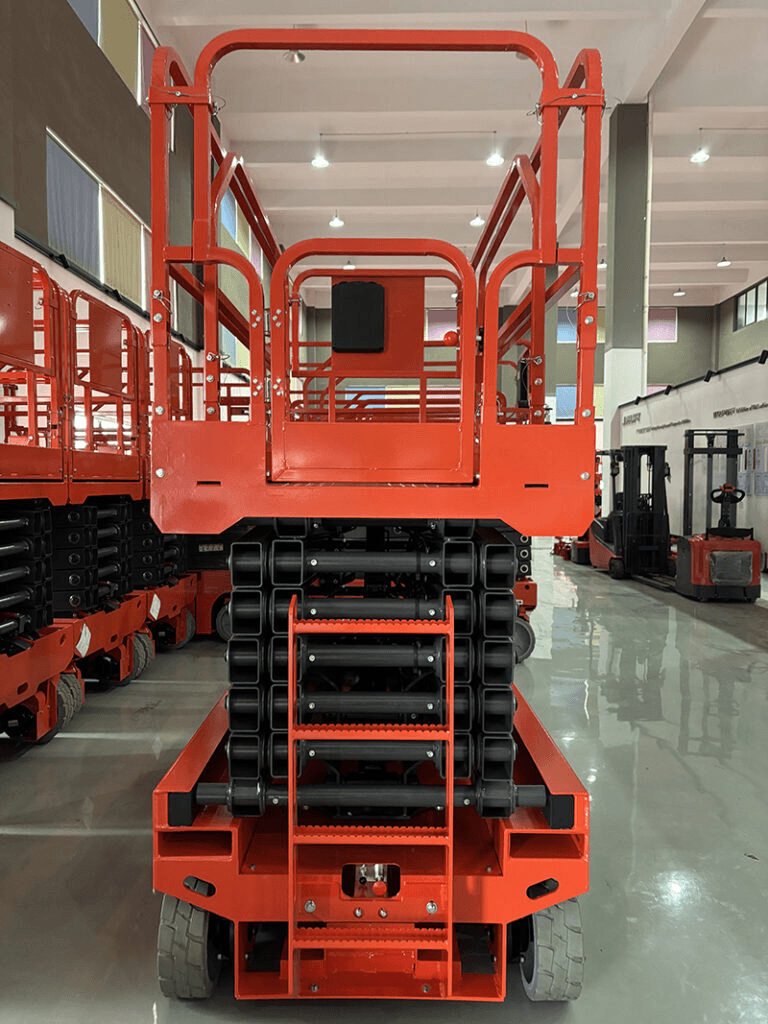
WIZPLUS CKJC-HD models provide maximum safe working heights from approximately 8,000 to 15,800 mm, with maximum platform heights from 5,800 to 13,800 mm depending on model. The series is equipped with hydraulic drive and hydraulic steering and is designed for demanding construction and maintenance applications.
The CKJC-HD series also lists:
Up to 320 kg safe working load
900 mm extension deck
Full-height drive capability
24 V / 3.0 kW electric hydraulic drive
Solid non-marking tires
Emergency descent system
Tilt alarm
Automatic braking
Hydraulic hose burst protection
These specifications make the series suitable for buyers who need higher vertical access while maintaining an electric power system.
Do Not Choose an Electric Scissor Lift by Height Alone
Working height is important, but it is not the only specification that determines whether a lift will work on your site.
A machine may have enough height but still be unsuitable because it is too wide, too heavy, or has insufficient platform capacity.
Load Capacity
Platform capacity should include the total permitted load of:
Operators + tools + equipment + materials
Never choose a lift based only on the weight of the operator.
The rated capacity is specific to the machine and configuration. Higher working height does not automatically mean higher or lower capacity.
For this reason, buyers should check the exact manufacturer's specification rather than applying a general assumption.
Platform Size
Platform dimensions affect how efficiently operators can work.
A larger platform can provide more room for:
Two operators
Hand tools
Installation equipment
Replacement components
Small materials
However, increasing platform size can also increase the overall machine footprint.
The correct platform size depends on the actual work task.
Machine Width
For indoor applications, machine width can be critical.
Before ordering an electric scissor lift, measure:
Door openings
Warehouse aisles
Elevator entrances
Corridors
Production areas
Turning spaces
WIZPLUS compact electric scissor lift models are designed around narrow chassis dimensions, including 760 mm overall width on the CKJC-EH series.
Lowered Height
A machine may have the correct working height and still be difficult to transport if the lowered configuration does not fit through the available access route.
Check the:
Lowered machine height + doorway height + transportation route
before purchase.
The WIZPLUS 7858EH, for example, lists a folded guardrail height of approximately 1,770 mm and a guardrail-removed height of approximately 1,300 mm.
Operating Environment
The working surface should be considered together with the machine specification.
Compact electric scissor lifts are commonly used for indoor applications and suitable level surfaces. Outdoor operation depends on the specific model and its rated conditions.
WIZPLUS describes the 7858EH as suitable for indoor facilities and level outdoor sites.
For any outdoor application, buyers should confirm the manufacturer's requirements for ground conditions, slope, wind, weather, and machine configuration.
Electric Scissor Lift for Indoor Applications
Electric scissor lifts are often selected for indoor work because they do not use a combustion engine during normal operation.
Typical applications include:
Warehouses
Electric scissor lifts can support:
High-level lighting maintenance
Electrical installation
Sprinkler system servicing
Facility repairs
Ceiling inspection
For warehouse applications, machine width, turning space, floor condition, and working height should all be checked.
Factories
Industrial facilities may need elevated access for:
Production equipment
Ventilation systems
Electrical systems
Lighting
Pipes
Machinery maintenance
A stable work platform can allow operators to bring tools and equipment to the working position instead of repeatedly climbing and descending.
Retail and Commercial Buildings
Shopping centers, office buildings, hotels, and retail stores often require maintenance at height while operating in relatively confined spaces.
In these applications, buyers may prioritize:
Compact width + electric power + low-noise operation + maneuverability
rather than simply choosing the machine with the greatest maximum height.
Electric Scissor Lift for Outdoor Applications
Not every electric scissor lift is suitable for every outdoor worksite.
Outdoor conditions may include:
Uneven ground
Slopes
Debris
Drainage openings
Surface changes
Wind
Traffic
Overhead obstacles
OSHA advises employers to assess site conditions, select appropriate equipment, use firm and level surfaces, follow manufacturer instructions, and account for hazards such as holes, slopes, debris, overhead objects, and electrical sources.
Therefore, outdoor suitability should always be verified from the specific machine's published requirements.
Electric Scissor Lift Working Height and Overhead Clearance
A machine with enough working height may still be unsuitable if overhead clearance has not been checked.
Before operating an electric scissor lift, identify the lowest overhead obstruction, not just the highest point of the ceiling.
Potential obstacles include:
Structural beams
Sprinkler systems
HVAC ducts
Lighting fixtures
Pipes
Cable trays
Door frames
Warehouse structures
Electrical lines
OSHA specifically identifies overhead objects and ceiling contact as hazards associated with scissor and aerial lift operation.
The equipment therefore needs to be selected based on both:
How high you need to work
and
How much overhead clearance you have
How to Select an Electric Scissor Lift Step by Step
A simple purchasing process can reduce specification errors.
1. Define the Required Work Height
Measure the actual work point.
Do not simply use the building's total height.
2. Check the Manufacturer's Working Height
Compare the required height with the rated maximum safe working height of the model.
3. Calculate the Total Platform Load
Include operators, tools, materials, and equipment.
4. Measure the Access Route
Check doors, corridors, elevators, aisles, and turning areas.
5. Check Platform Size
Determine how much space operators need to perform the task.
6. Check the Working Surface
Confirm whether the equipment is appropriate for the intended floor or outdoor surface.
7. Check Stowed Dimensions
Make sure the machine can be transported and stored efficiently.
8. Compare Drive and Steering Systems
Determine whether manual positioning, electric travel, hydraulic steering, or another configuration is appropriate.
9. Review Safety and Service Requirements
Check emergency descent, braking, alarms, guardrails, inspection requirements, manuals, spare parts, and technical support.
10. Request the Exact Model Specification
For B2B procurement, never make a final purchasing decision from a generic product category alone.
Ask the manufacturer or supplier to confirm the exact:
Working height
Platform height
Platform capacity
Platform dimensions
Overall width
Overall height
Machine weight
Power system
Battery
Gradeability
Indoor/outdoor suitability
Certifications
Delivery requirements
WIZPLUS Electric Scissor Lift Working Height Options
WIZPLUS provides several electric scissor lift configurations for different access requirements.
WIZPLUS Model / Series | Maximum Safe Working Height | Maximum Platform Height | Main Positioning |
|---|---|---|---|
CKJC-EW | 5,000–6,800 mm | 3,000–4,800 mm | Compact indoor access |
CKJC-EH | 5,000–6,800 mm | 3,000–4,800 mm | Compact electric lift with hydraulic steering |
7858EH | 7,800 mm | 5,800 mm | Higher reach with compact platform |
CKJC-HD | 8,000–15,800 mm | 5,800–13,800 mm | Higher working height and demanding applications |
The WIZPLUS product range is intended to cover different combinations of working height, machine footprint, mobility, and application requirements rather than offering only one standard electric scissor lift configuration.
For buyers who need a customized configuration, WIZPLUS also states that selected products can be configured around factors such as platform height, load capacity, power system, branding, manuals, and packaging requirements.
Why Working Height Matters for B2B Buyers
For distributors and equipment procurement teams, the working height specification affects much more than whether the machine can reach a particular ceiling.
It influences:
Product positioning
Customer application range
Rental fleet flexibility
Transportation requirements
Warehouse compatibility
Equipment utilization
Product selection across multiple markets
For example, a distributor serving customers with applications between 5 m and 7 m may benefit from compact electric models, while customers working at 12–16 m may require a significantly larger machine.
A product portfolio covering several working-height categories can therefore help suppliers serve a broader range of applications.
Common Electric Scissor Lift Selection Mistakes
Choosing Platform Height Instead of Working Height
A buyer sees a required 6 m work height and assumes that a 6 m platform is necessary.
That can lead to unnecessary oversizing.
Always compare the actual required working height with the manufacturer's rated working height.
Choosing the Highest Model Available
Higher is not automatically better.
A larger machine may have greater dimensions and weight and may be unsuitable for narrow indoor areas.
Ignoring Machine Width
A lift that cannot pass through the doorway cannot complete the job.
Measure the tightest point on the transportation and operating route.
Ignoring Total Platform Load
Operators are not the only load.
Tools, equipment, and materials must be included within the manufacturer's rated capacity.
Ignoring the Operating Surface
A lift suitable for a finished indoor floor should not automatically be assumed to be suitable for uneven outdoor terrain.
Always verify the specific model's application requirements.
Electric Scissor Lift Safety and Working Height
Working at height requires more than choosing an adequate lift.
OSHA identifies falls, tip-overs, structural failure, crushing hazards, electrical hazards, and contact with overhead objects among the risks associated with scissor lift operation. Employers should ensure appropriate training, inspection, maintenance, worksite assessment, and adherence to manufacturer instructions.
Important practices include:
Inspect the equipment before use.
Follow the manufacturer's operating instructions.
Do not exceed the rated platform capacity.
Keep the guardrail system in place.
Do not stand on guardrails.
Avoid unsafe leaning or overreaching.
Check the surface before positioning the lift.
Identify overhead hazards.
Keep appropriate clearance from electrical hazards.
Use only trained and authorized operators.
The exact regulatory requirements vary by country, state, industry, and application, so project-specific regulations should also be reviewed.
Frequently Asked Questions About Electric Scissor Lift Working Height
What is the working height of an electric scissor lift?
Working height is the approximate maximum height at which an operator can perform work from the platform. It is generally greater than platform height because it accounts for the operator's reach. The exact calculation should be confirmed from the manufacturer's specifications.
How do I calculate the working height of a scissor lift?
As a preliminary estimate, working height can be considered as platform height plus the operator's practical reach. A commonly used planning assumption is approximately 2 m or 6 ft of reach, but the manufacturer's rated working height should be used for final equipment selection.
What size electric scissor lift do I need for a 6 m ceiling?
Start by determining the actual height of the work point rather than using the ceiling height alone. A model with a maximum safe working height around 6–7 m may be suitable for many 6 m applications, depending on the task, clearance, capacity, and exact manufacturer specification.
WIZPLUS offers electric scissor lift models with maximum safe working heights from 5,000 to 6,800 mm in its compact range.
What size scissor lift do I need for 8 m working height?
For an 8 m working requirement, select a model whose published maximum safe working height meets or exceeds the actual work height while also checking load capacity, machine width, platform dimensions, and operating conditions.
WIZPLUS's CKJC-HD range begins at approximately 8,000 mm maximum safe working height.
Is platform height the same as working height?
No. Platform height describes the elevation of the platform floor, while working height represents the approximate height at which an operator can perform work. They should be treated as separate specifications.
Can electric scissor lifts be used outdoors?
Some electric scissor lift models can be used on suitable outdoor surfaces, but outdoor suitability depends on the specific model and operating conditions. WIZPLUS lists its 7858EH as suitable for indoor facilities and level outdoor sites.
What else should I check besides working height?
Also check:
Safe working load
Platform dimensions
Overall width
Overall height
Lowered height
Machine weight
Drive system
Steering system
Battery and charging
Ground conditions
Safety systems
Certifications
Spare-parts and technical support
How much weight can an electric scissor lift hold?
Capacity varies by model. For example, WIZPLUS's CKJC-HD series specifies a safe working load of up to 320 kg, while other models have different rated capacities. Always use the capacity specified for the exact model and configuration.
Electric Scissor Lift Selection Checklist
Before requesting a quotation, prepare the following information:
Requirement | Information to Confirm |
|---|---|
Working Height | Maximum height of the actual work point |
Platform Height | Required operator standing height |
Load | Operators + tools + materials |
Platform Size | Required working space |
Machine Width | Narrowest doorway or aisle |
Overall Height | Lowest overhead clearance |
Operating Surface | Indoor floor, concrete, asphalt, etc. |
Mobility | Manual, electric drive, hydraulic steering |
Power | Voltage, battery and charging requirements |
Application | Maintenance, installation, construction, warehouse, etc. |
Quantity | Number of machines required |
Market | Destination country and applicable requirements |
Providing these details helps a manufacturer identify the appropriate equipment configuration more efficiently.
Conclusion
Choosing an electric scissor lift working height should begin with the actual work requirement, not simply the maximum platform height.
First determine the height of the task. Then compare the required reach with the manufacturer's rated working height. After that, evaluate load capacity, platform dimensions, machine width, clearance, operating surface, drive system, battery requirements, and safety features.
For lower-height indoor applications, a compact electric scissor lift may provide the best combination of access and maneuverability. For higher-level construction and industrial work, a larger hydraulic-drive electric scissor lift may be more appropriate.
WIZPLUS offers electric scissor lift configurations covering approximately 5–6.8 m, 7.8 m, and 8–15.8 m maximum safe working heights, giving B2B buyers multiple options for different working environments and access requirements.
When comparing electric scissor lifts, the best specification is not simply the one with the greatest height. It is the configuration that matches the required working height, platform capacity, access space, operating environment, and application.
Need an electric scissor lift for a specific working height? Contact WIZPLUS with your required working height, load capacity, platform size, application, and destination country for a model recommendation.
Other Blogs