Blog
Small Scissor Lift Buying Guide: How to Choose the Right Compact Lift for Your Application
Published
Category
Small Scissor Lift
Looking for a small scissor lift? This buying guide explains working height, load capacity, electric models, applications, and how to choose the right compact lift for your business.
Choosing the right lifting equipment is essential for businesses that need safe and efficient access to elevated working areas. A small scissor lift provides a compact, stable, and cost-effective solution for applications where traditional lifting equipment is too large or ladders cannot provide sufficient safety.
From warehouse maintenance and electrical installation to retail facility repairs and factory operations, compact lifting platforms are becoming increasingly popular because they offer excellent maneuverability while maintaining professional-grade lifting performance.
However, selecting the right small scissor lift requires careful consideration of several factors, including working height, load capacity, platform size, power system, operating environment, and maintenance requirements.
This complete buying guide explains everything you need to know before purchasing a small scissor lift and helps you choose the right model for your specific application.
What Is a Small Scissor Lift?
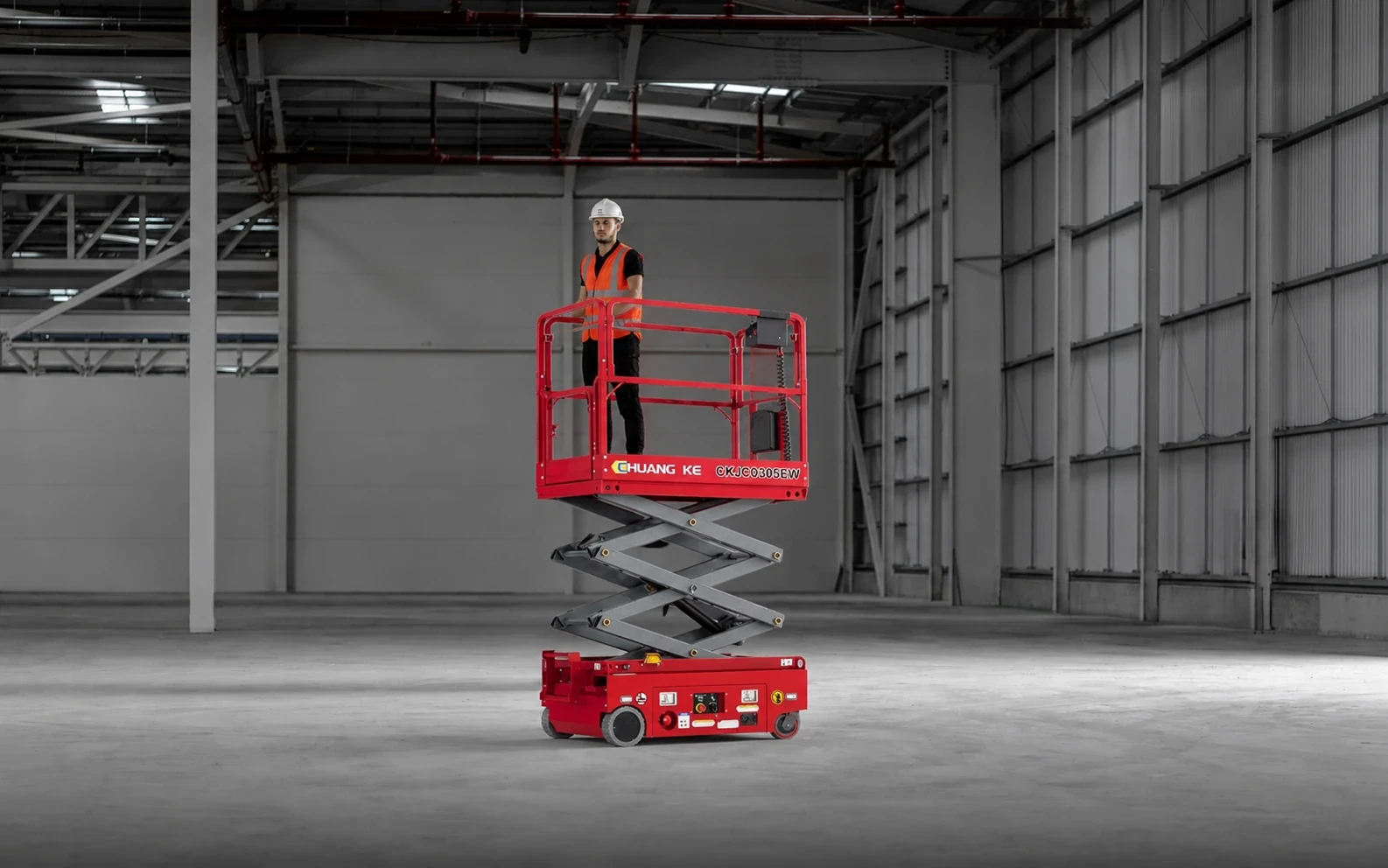
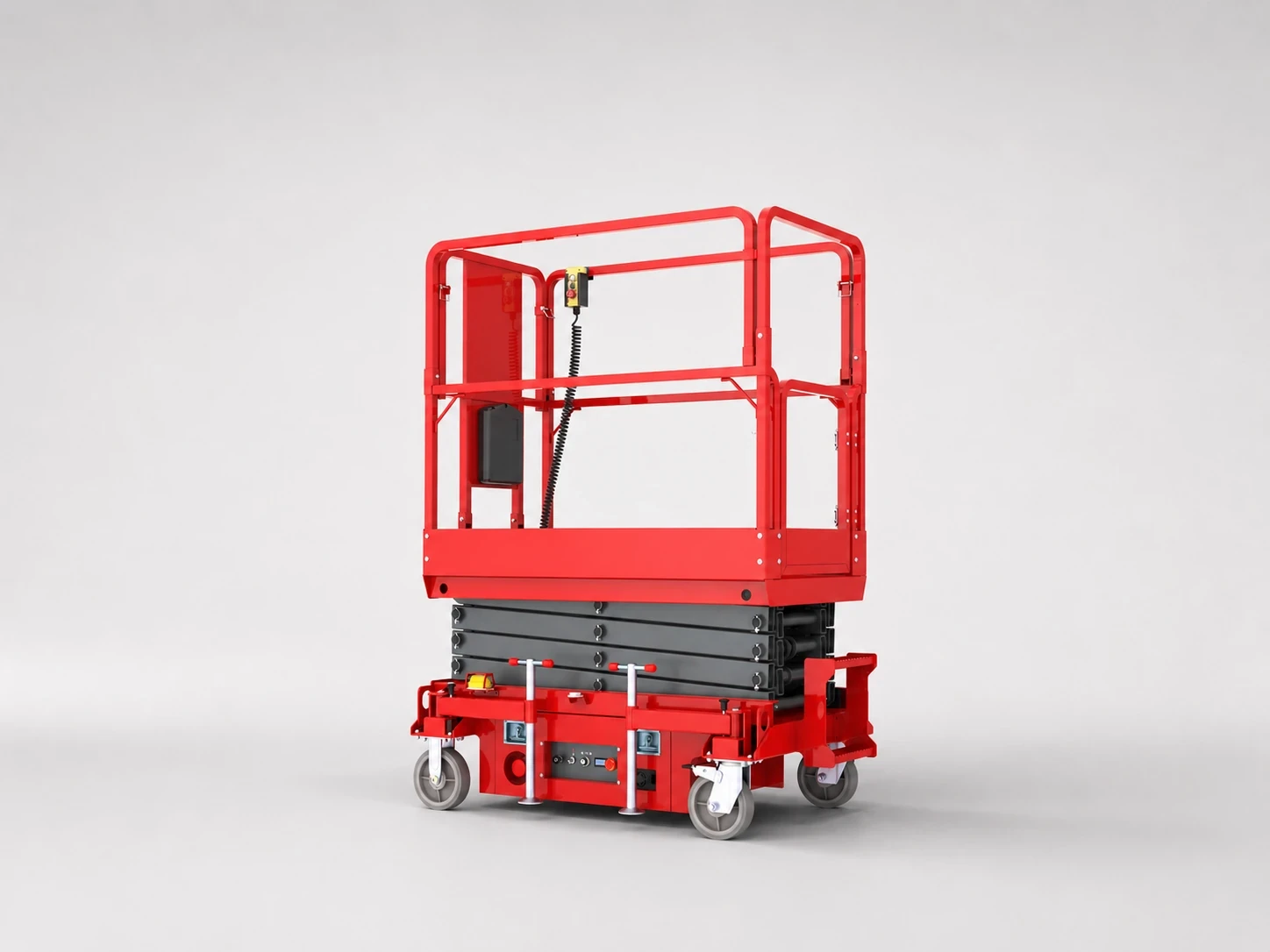
A small scissor lift is a compact aerial work platform designed to safely lift workers, tools, and equipment to elevated working positions. Unlike ladders or scaffolding, a scissor lift provides a stable working platform that allows operators to work comfortably with both hands.
The lifting mechanism consists of interconnected folding supports arranged in a “scissor” structure. When the hydraulic or electric lifting system activates, these supports extend vertically, raising the platform smoothly.
Small scissor lifts are typically designed for:
Indoor maintenance work
Warehouse operations
Electrical installation
Lighting replacement
Equipment inspection
Retail facility maintenance
Factory production line servicing
Compared with standard large scissor lifts, small models focus on:
Compact dimensions
Easy transportation
Narrow aisle operation
Lower operating cost
Improved indoor usability
For companies that require frequent low-to-medium height access, a small scissor lift can significantly improve workplace efficiency and safety.
How Does a Small Scissor Lift Work?
The operating principle of a small scissor lift is based on vertical expansion of the scissor mechanism.
The main components include:
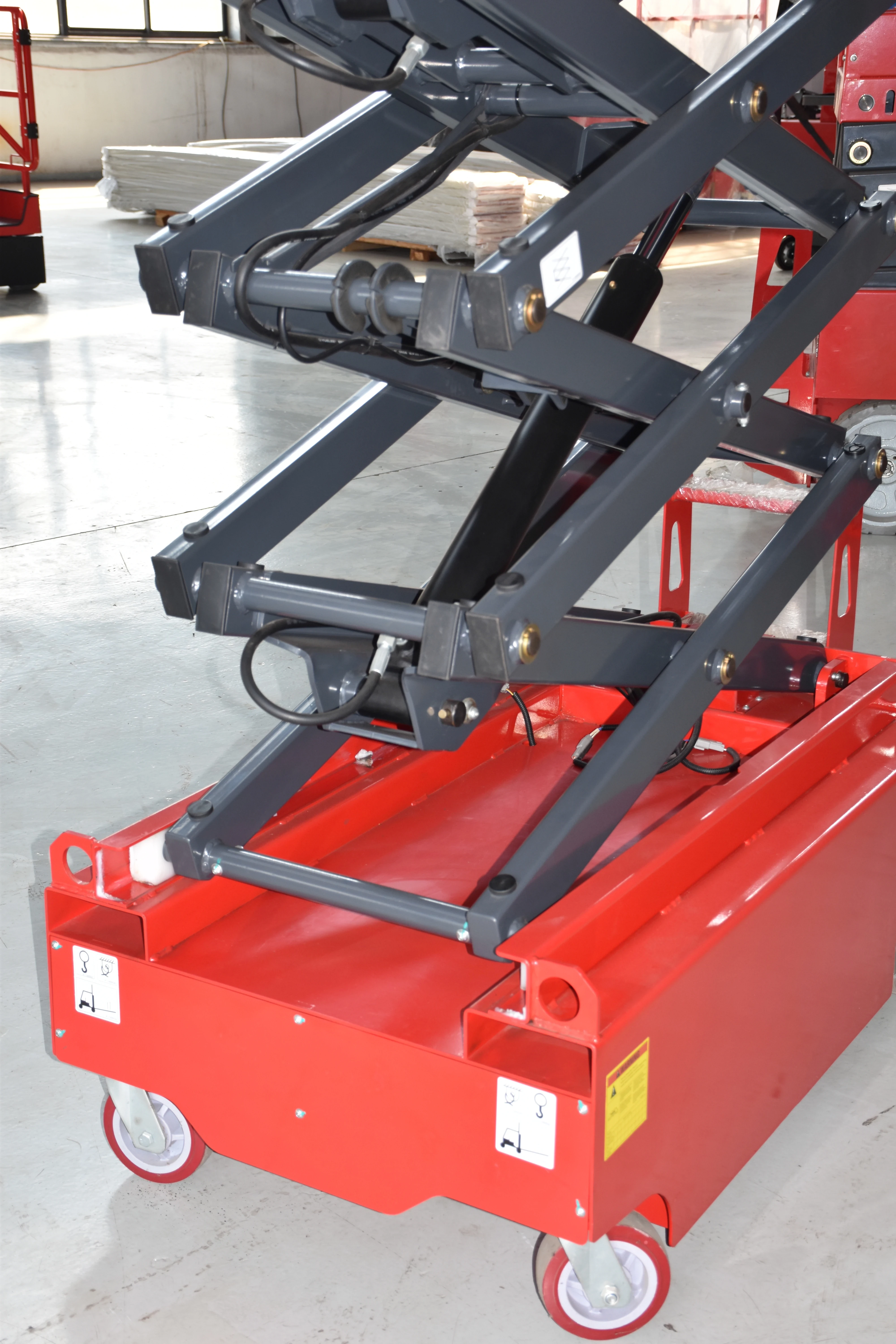
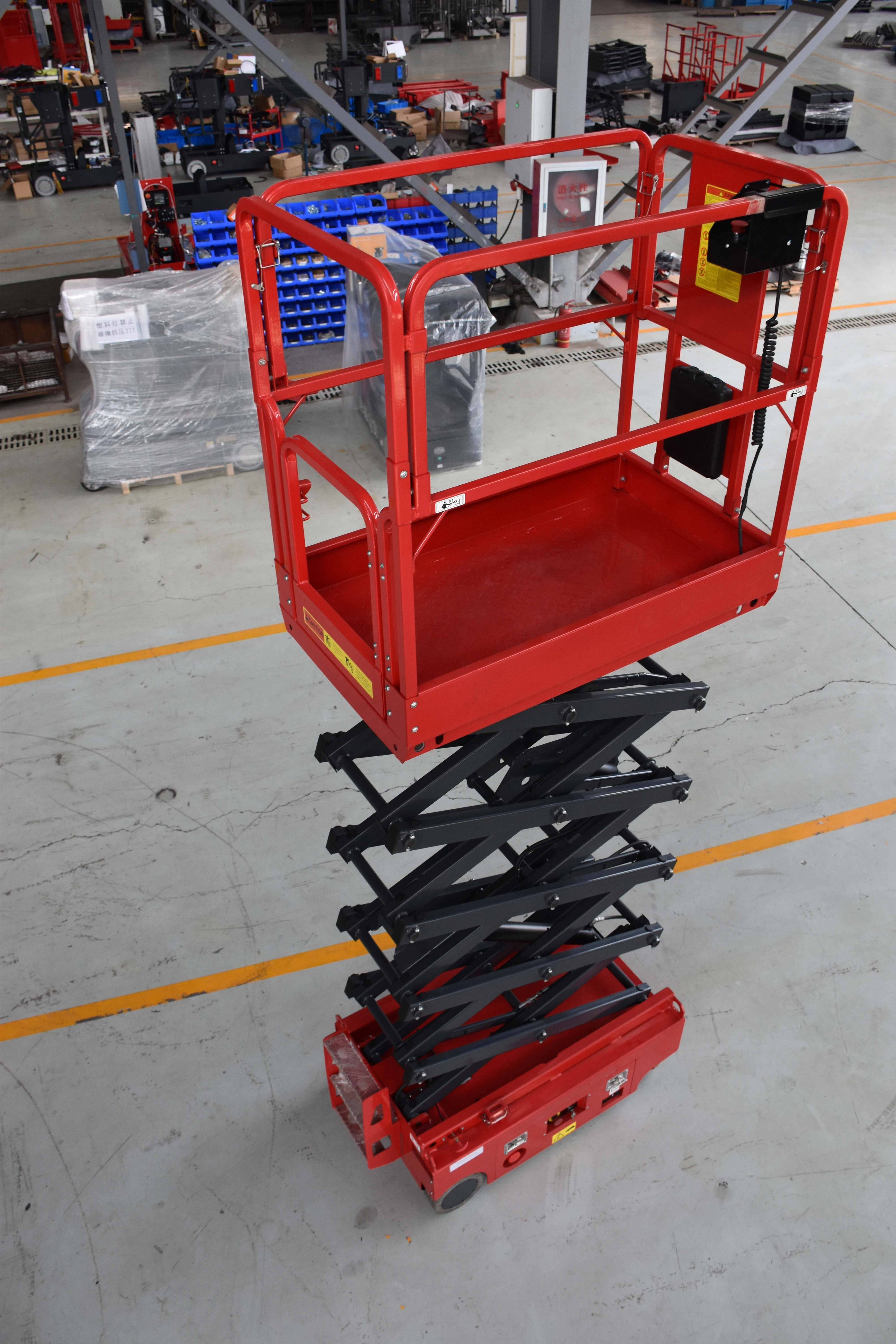
Scissor Arm Assembly
The crossed support arms provide vertical lifting movement while maintaining platform stability.
The design allows the machine to:
Support heavy loads
Maintain balance during lifting
Provide smooth vertical movement
Hydraulic or Electric Lifting System
Most small scissor lifts use either hydraulic or electric-powered lifting systems.
A hydraulic system uses pressurized hydraulic oil to extend the lifting cylinders, while electric models use battery-powered motors and hydraulic pumps.
Electric systems are increasingly popular because they offer:
Low noise operation
Zero emissions
Lower maintenance requirements
Better indoor performance
Working Platform
The platform provides a safe area for operators and tools.
Important platform features include:
Safety railing
Anti-slip floor surface
Emergency stop controls
Extension platform options
A larger platform improves productivity because workers can carry more tools and equipment during maintenance tasks.
Types of Small Scissor Lifts
Small scissor lifts are available in several configurations depending on application requirements.
Understanding the differences between models helps buyers select the most suitable solution.
Small Electric Scissor Lift
A small electric scissor lift is one of the most common choices for indoor applications.
These models use battery power and are designed for environments where low noise and clean operation are important.
Typical applications include:
Warehouses
Shopping malls
Hospitals
Workshops
Industrial facilities
Advantages of electric small scissor lifts:
Quiet Operation
Electric motors produce significantly less noise compared with combustion-powered equipment, making them suitable for indoor environments.
Zero Emissions
Because they do not produce exhaust gases, electric models can operate safely in enclosed spaces.
Easy Maintenance
Electric drive systems usually require less maintenance compared with fuel-powered machines.
Mini Scissor Lift
A mini scissor lift is an ultra-compact lifting solution designed for restricted spaces.
Mini models are commonly used where:
Doorways are narrow
Working areas are crowded
Equipment needs frequent relocation
Typical applications include:
Office buildings
Supermarkets
Hotels
Small factories
Commercial maintenance
The main advantage of a mini scissor lift is mobility.
Operators can move the equipment easily between different working areas without requiring large transportation vehicles.
Semi-Electric Small Scissor Lift
A semi-electric small scissor lift combines manual movement with electric lifting.
This design is suitable for businesses looking for:
Lower purchase cost
Simple operation
Reliable lifting performance
Semi-electric models are often used in:
Small warehouses
Maintenance departments
Workshops
Storage facilities
They provide an economical alternative for companies that do not require continuous heavy-duty operation.
Compact Hydraulic Scissor Lift
Compact hydraulic scissor lifts use hydraulic power systems to provide stable lifting performance.
They are suitable for applications requiring:
Higher load capacity
Frequent operation
Industrial environments
Hydraulic systems are known for:
Strong lifting force
Reliable performance
Long service life
Small Scissor Lift Applications
The demand for small scissor lifts continues to grow because many industries require safe elevated access without using oversized equipment.
Warehouse Maintenance
Warehouses often require workers to access:
High shelves
Lighting systems
HVAC equipment
Electrical installations
Inventory areas
A compact scissor lift allows operators to move quickly through warehouse aisles while maintaining a safe working position.
Compared with ladders, small scissor lifts provide:
Greater stability
Larger working area
Better worker productivity
Factory and Industrial Maintenance
Manufacturing facilities frequently require elevated access for:
Machine inspection
Equipment repair
Production line maintenance
Cable installation
A small scissor lift is ideal because it can operate inside production environments without occupying excessive floor space.
Retail Store Maintenance
Retail businesses use compact lifting platforms for:
Lighting replacement
Shelf installation
Decoration work
Sign maintenance
Because stores often have limited space, a small electric scissor lift provides an efficient solution without disrupting daily operations.
Electrical and Facility Maintenance
Maintenance teams often need safe access to:
Ceiling lights
Electrical systems
Ventilation equipment
Security cameras
Small scissor lifts allow technicians to work at height while keeping tools nearby.
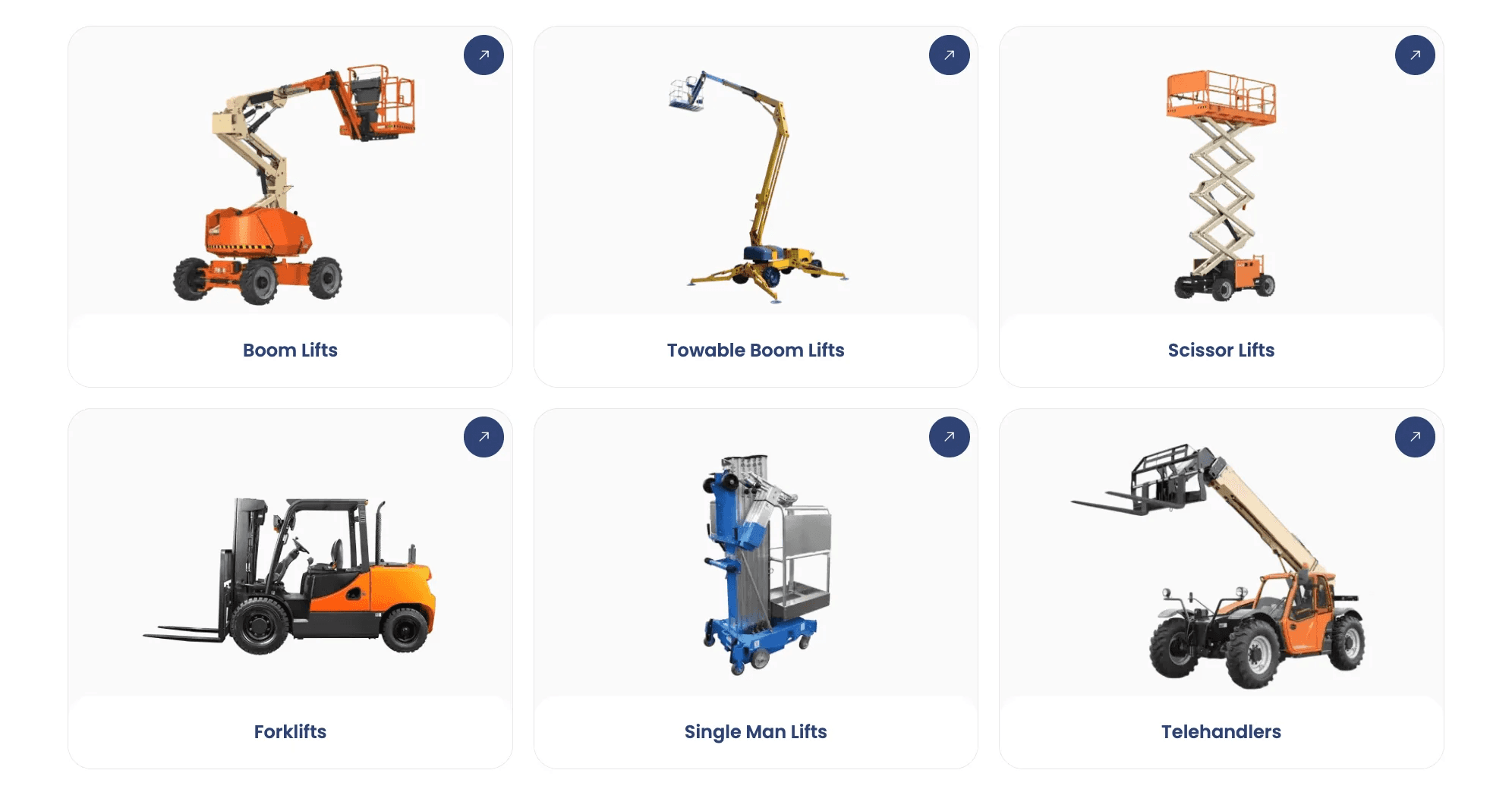
Small Scissor Lift vs Ladder vs Scaffold: Which Access Solution Is Better?
When businesses need to work at height, choosing the correct access equipment directly affects safety, efficiency, and operating costs.
Traditional solutions such as ladders and scaffolding are still widely used, but they have limitations compared with modern lifting platforms.
A small scissor lift provides a safer and more productive alternative for many low-to-medium height applications.
Feature | Small Scissor Lift | Ladder | Scaffold |
|---|---|---|---|
Worker stability | High | Low | Medium |
Working space | Large platform area | Very limited | Large |
Worker movement | Easy on platform | Restricted | Limited |
Tool storage | Available | Difficult | Available |
Setup time | Fast | Very fast | Slow |
Safety protection | Guardrails included | Limited | Depends on installation |
Productivity | High | Low | Medium |
Advantages of Using a Small Scissor Lift Instead of a Ladder
Ladders are simple and inexpensive, but they are not always suitable for professional maintenance work.
A small scissor lift provides several advantages:
Improved Worker Safety
A ladder requires workers to maintain balance while reaching, bending, or carrying tools.
A small scissor lift provides:
Guardrails around the platform
Stable working surface
Emergency stop controls
Secure elevated positioning
This reduces the risk associated with working at height.
Higher Productivity
Workers using ladders frequently need to:
Climb down
Move the ladder
Reposition equipment
Carry tools separately
With a small scissor lift, operators can:
Raise the platform once
Bring tools onto the platform
Complete multiple tasks from one position
This improves efficiency, especially in warehouses and industrial facilities.
Small Scissor Lift vs Scaffold
Scaffolding provides a large working area but requires significant preparation.
Compared with scaffolding, a compact scissor lift offers:
Faster Setup
Scaffolding may require:
Assembly
Inspection
Adjustment
Removal after work
A small scissor lift can usually be operated immediately after positioning.
Better Mobility
Scaffolding is generally fixed in one location.
A portable scissor lift can be moved between different work areas, making it more suitable for:
Maintenance teams
Service companies
Facility management
How to Choose the Right Small Scissor Lift
Selecting the correct model requires evaluating your working environment and operational requirements.
The following factors should be considered before purchase.
1. Determine the Required Working Height
Working height is one of the most important specifications when selecting a small scissor lift.
Buyers should understand the difference between:
Platform Height
The actual height that the platform can reach.
Working Height
The maximum height a worker can safely reach while standing on the platform.
For example:
A lift with a 5-meter platform height may provide approximately 7 meters of working height depending on operator reach.
Before purchasing, measure:
Ceiling height
Installation height
Maintenance area height
Choosing a machine with excessive height capability increases cost, while insufficient height reduces usability.
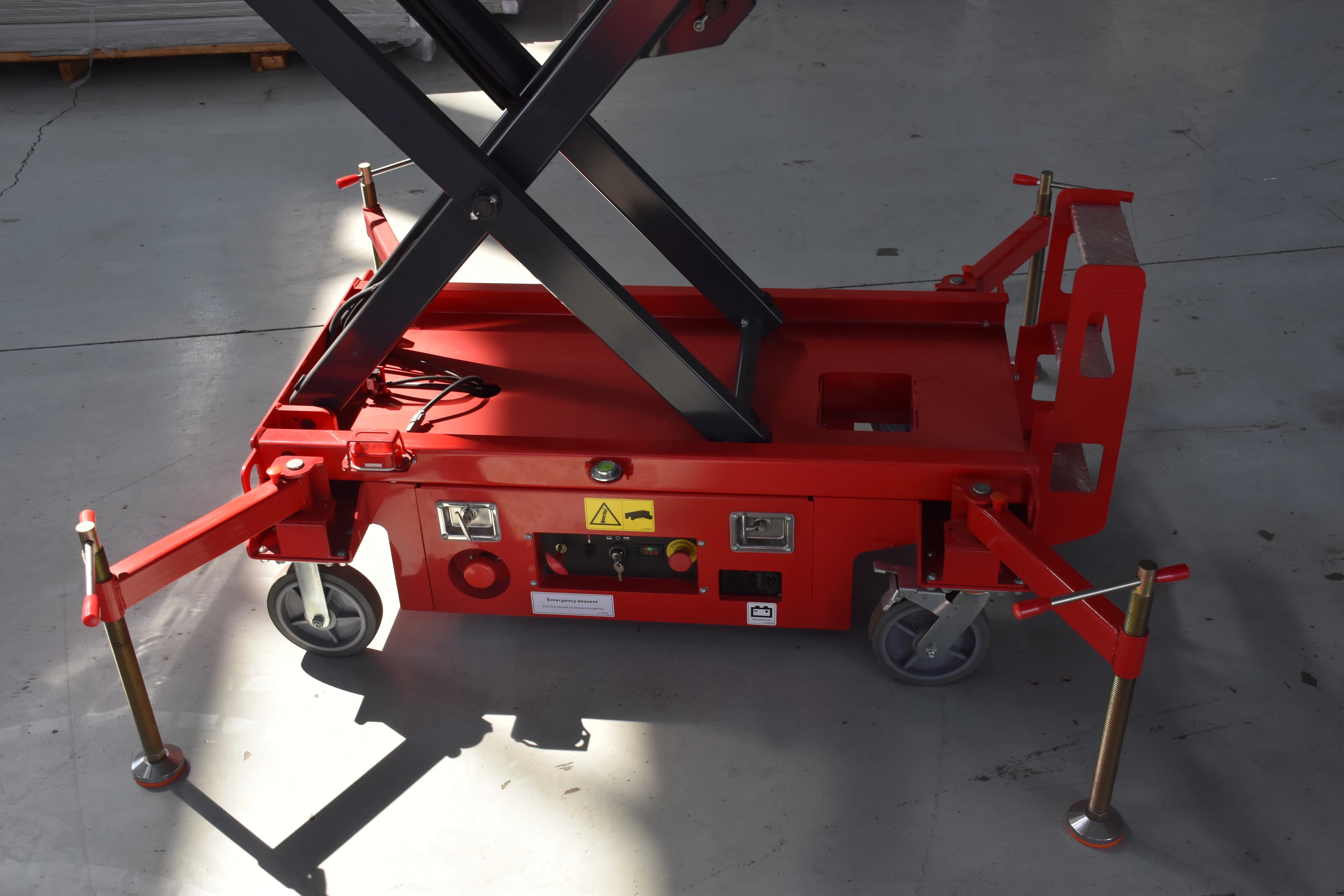
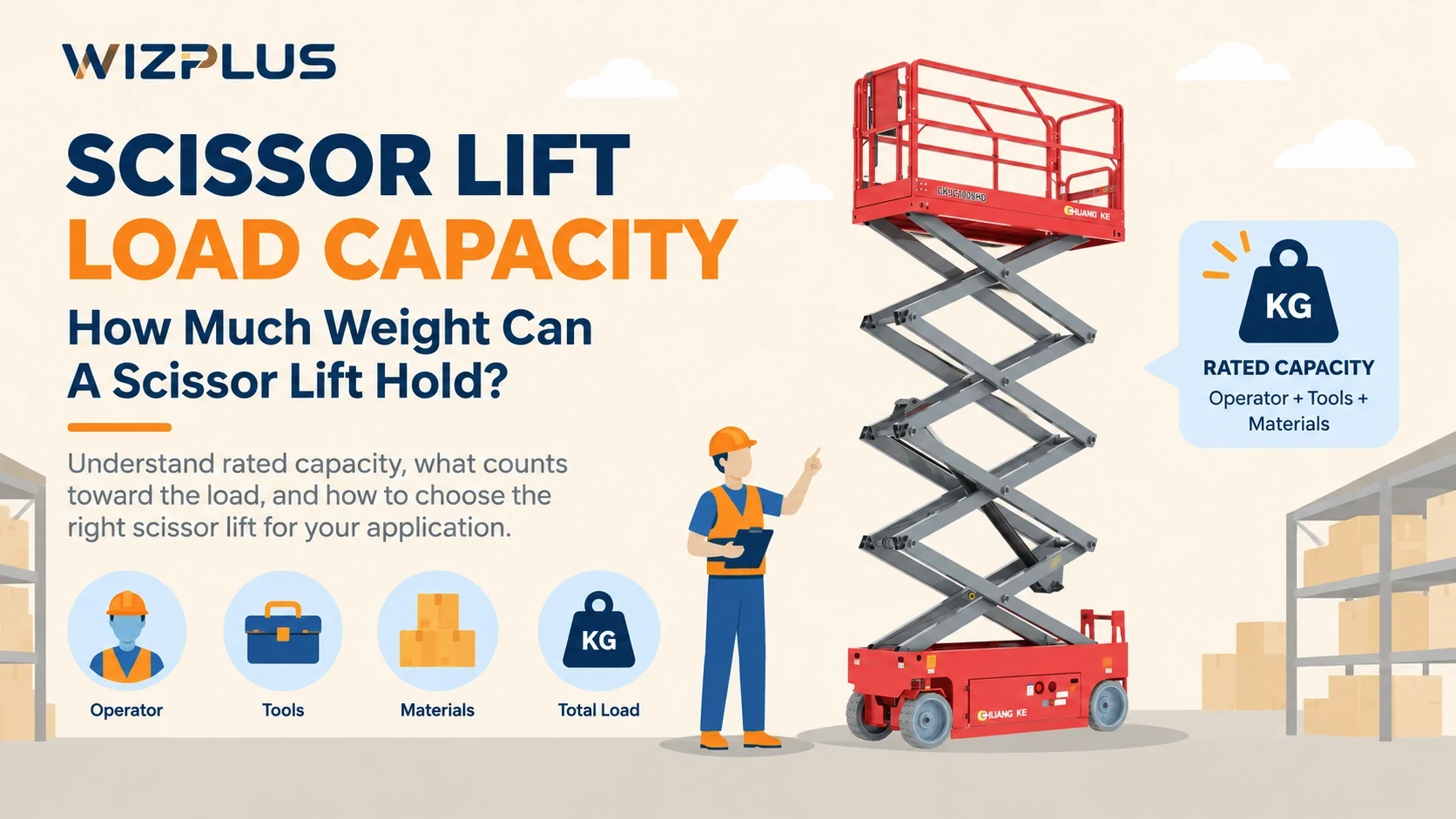
2. Check Load Capacity Requirements
The rated load capacity determines how much weight the lift can safely support.
The total load includes:
Operator weight
Tools
Spare parts
Equipment
Common small scissor lift capacities include:
150 kg
200 kg
300 kg
500 kg
For maintenance applications, buyers should consider future needs rather than only current requirements.
A slightly higher capacity model may provide better flexibility.
3. Consider Platform Size
Platform dimensions directly affect operator comfort and productivity.
A larger platform allows workers to carry:
Tools
Testing equipment
Replacement parts
Maintenance materials
However, compact platforms provide better maneuverability in:
Narrow aisles
Small rooms
Crowded facilities
The correct balance depends on your application.
4. Measure Machine Width and Access Space
One of the biggest advantages of a small scissor lift is its compact size.
Before buying, check:
Door width
Elevator dimensions
Warehouse aisle width
Transportation limitations
A compact model should easily move through your working environment.
Typical considerations include:
Narrow passage operation
Turning radius
Storage space
Transportation method
5. Choose Electric or Hydraulic Power
The power system affects performance, maintenance, and operating environment.
Electric Small Scissor Lift
Best for:
Indoor applications
Warehouses
Commercial buildings
Quiet environments
Advantages:
Low noise
Zero emissions
Easy charging
Lower maintenance
Hydraulic Small Scissor Lift
Best for:
Industrial applications
Heavy-duty operation
Frequent lifting cycles
Advantages:
Strong lifting force
Reliable performance
High durability
Important Small Scissor Lift Specifications Buyers Should Compare
Before purchasing a small scissor lift, professional buyers should compare technical specifications carefully.
Specification | Why It Matters |
|---|---|
Platform height | Determines maximum elevated position |
Working height | Defines actual working capability |
Rated load capacity | Determines safe lifting weight |
Platform size | Affects worker productivity |
Machine width | Determines accessibility |
Battery capacity | Influences operating time |
Charging time | Affects daily efficiency |
Drive system | Determines mobility performance |
Gradeability | Shows ability on slopes |
Indoor vs Outdoor Small Scissor Lift Selection
The working environment has a major influence on the correct model choice.
Indoor Small Scissor Lift
Indoor applications usually require:
Compact dimensions
Low noise operation
Non-marking wheels
Electric power
Common industries:
Warehouses
Shopping centers
Factories
Hospitals
Workshops
Outdoor Small Scissor Lift
Outdoor applications require additional considerations:
Weather protection
Ground conditions
Stability requirements
Tire selection
If the lift will be used outdoors regularly, buyers should confirm that the machine specifications match the environment.
Maintenance Requirements for Small Scissor Lifts
Proper maintenance improves safety, reliability, and equipment lifespan.
Regular inspections should include:
Hydraulic System
Check:
Oil leakage
Cylinder condition
Hydraulic pressure
Battery System
For electric models:
Check battery condition
Maintain charging cycles
Keep terminals clean
Safety Components
Inspect:
Emergency stop button
Guardrails
Limit switches
Platform controls
Mechanical Components
Check:
Scissor arms
Pins and bushings
Wheels
Fasteners
A preventive maintenance program helps reduce unexpected downtime.
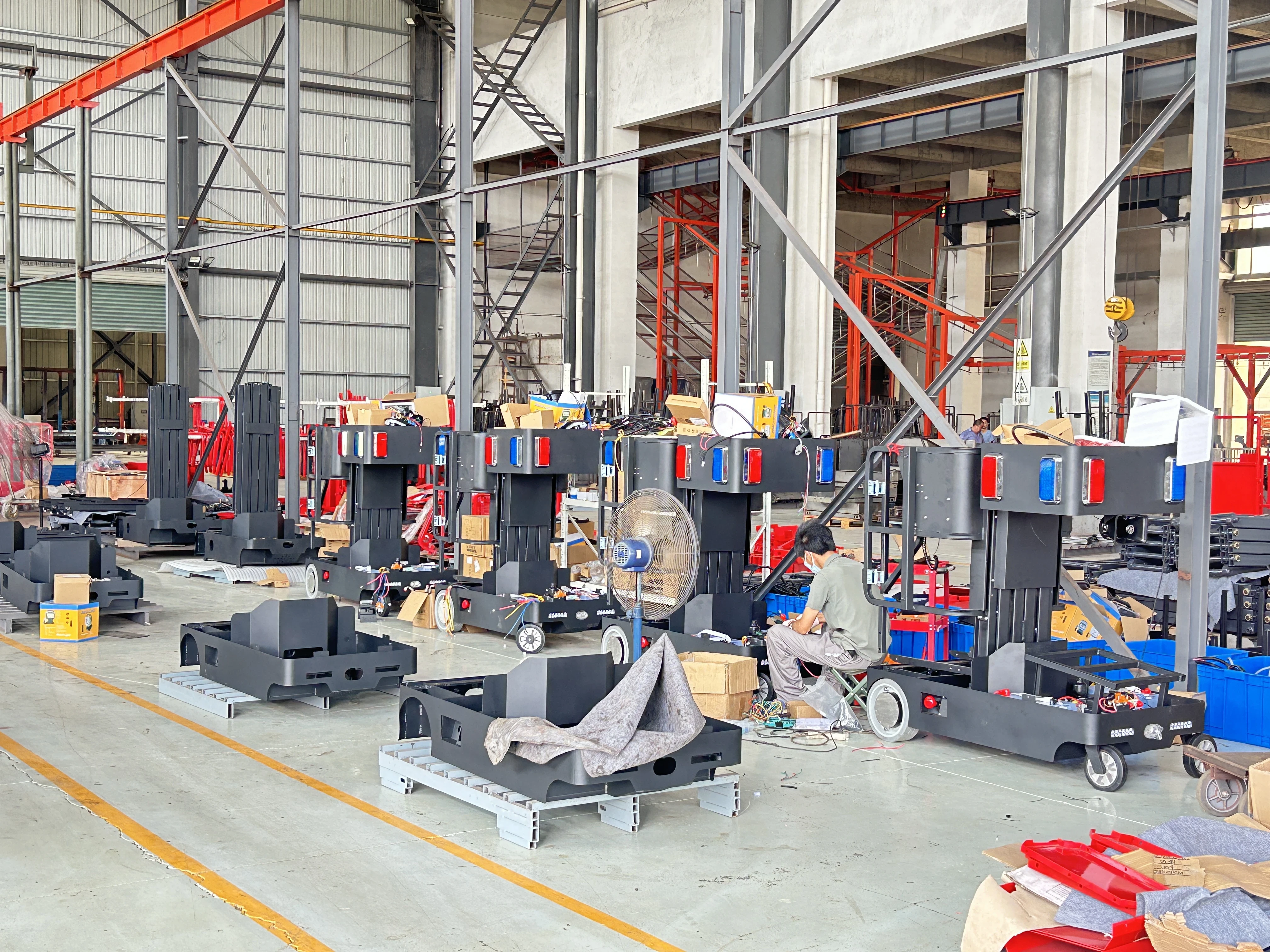
How to Select a Reliable Small Scissor Lift Manufacturer
Choosing the right small scissor lift manufacturer is just as important as choosing the right machine model. A reliable supplier can provide better product quality, technical support, spare parts availability, and long-term cooperation.
For businesses purchasing equipment for professional use, the lowest initial price should not be the only consideration. Product reliability, manufacturing capability, safety standards, and after-sales service all affect the total cost of ownership.
When evaluating manufacturers, buyers should consider the following factors.
1. Manufacturing Experience and Product Expertise
A professional manufacturer should have experience designing and producing aerial work platforms and lifting equipment.
Important indicators include:
Years of manufacturing experience
Product development capability
Factory production capacity
Quality control procedures
International export experience
Manufacturers specializing in lifting equipment usually have better understanding of:
Structural safety requirements
Hydraulic systems
Electrical control systems
Platform design
Workplace safety standards
2. Product Range and Customization Capability
Different industries require different lifting solutions.
A capable supplier should provide multiple options, including:
Small electric scissor lifts
Compact scissor lifts
Semi-electric scissor lifts
Customized lifting platforms
Customization options may include:
Platform dimensions
Working height
Load capacity
Battery configuration
Wheel options
Color and branding
For distributors and equipment rental companies, OEM capability is especially important because product specifications may need to match different markets.
3. Safety Features and Quality Control
Safety is the most important consideration when purchasing lifting equipment.
A professional small scissor lift should include essential safety features such as:
Emergency stop button
Platform safety railing
Overload protection
Emergency lowering system
Safety limit switches
Non-slip platform surface
Manufacturers should also have quality inspection procedures covering:
Welding quality
Hydraulic performance
Electrical testing
Load testing
Final machine inspection
4. Spare Parts and After-Sales Support
A lifting machine is a long-term investment.
Before purchasing, buyers should ask suppliers about:
Spare parts availability
Technical support
Maintenance guidance
Warranty policy
Operator manuals
Reliable after-sales support helps reduce downtime and improves equipment service life.
Why Choose WIZPLUS Small Scissor Lift Solutions?
WIZPLUS provides compact lifting equipment designed for professional applications requiring safe and efficient elevated access.
Our small scissor lift solutions are suitable for:
Industrial maintenance
Warehouse operations
Commercial facilities
Equipment servicing
Indoor installation work
WIZPLUS focuses on providing practical lifting solutions with:
Compact Design
Small scissor lifts are designed for environments where space is limited.
Benefits include:
Easy movement
Efficient storage
Access through narrow areas
Electric Lifting Solutions
Electric models provide:
Quiet operation
Clean indoor performance
Lower operating costs
Reduced maintenance requirements
OEM and Customized Solutions
For distributors and international customers, WIZPLUS can support customized requirements including:
Product configuration
Technical specifications
Branding solutions
Application-specific designs
Frequently Asked Questions About Small Scissor Lifts
What is a small scissor lift used for?
A small scissor lift is used for safe elevated access in applications such as warehouse maintenance, factory servicing, electrical installation, retail maintenance, and facility management.
It provides a stable working platform that allows operators to work safely at height while carrying tools and equipment.
What is the difference between a small scissor lift and a mini scissor lift?
A small scissor lift is a general term for compact aerial lifting equipment.
A mini scissor lift usually refers to a smaller and more lightweight model designed for extremely limited spaces.
Both are designed for mobility and easy operation, but mini models usually prioritize compact dimensions.
How high can a small scissor lift reach?
The working height depends on the specific model.
Small scissor lifts are commonly available with working heights ranging from approximately:
3 meters
5 meters
6 meters
8 meters
The correct height should be selected according to the actual application requirements.
How much weight can a small scissor lift hold?
Load capacity depends on the design and model.
Common capacities include:
150 kg
200 kg
300 kg
500 kg
Buyers should consider both workers and tools when selecting capacity.
Are small scissor lifts suitable for indoor use?
Yes. Many small electric scissor lifts are specifically designed for indoor applications.
They are commonly used in:
Warehouses
Shopping centers
Factories
Workshops
Commercial buildings
Electric models are preferred indoors because they operate quietly and produce no exhaust emissions.
How often should a small scissor lift be maintained?
Maintenance frequency depends on usage conditions and manufacturer recommendations.
Regular inspections should include:
Hydraulic system checks
Battery inspection
Safety device testing
Mechanical component inspection
Preventive maintenance helps ensure safe and reliable operation.
Other Blogs