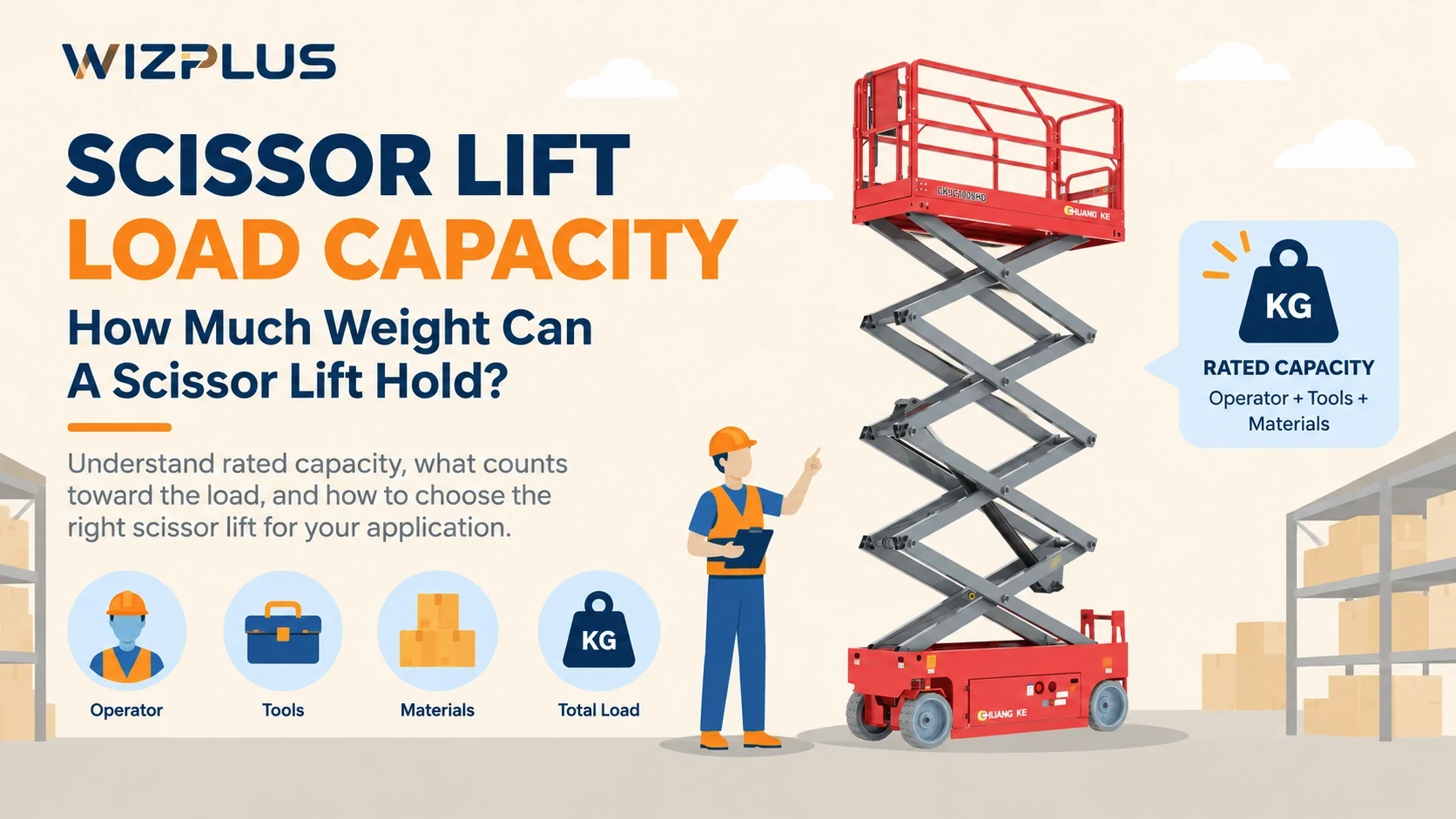
OSHA Scissor Lift Inspection Requirements: What Should Be Checked?
Published
Category
Small Scissor Lift
Learn OSHA scissor lift inspection requirements, including competent-person inspections, pre-shift checks, defect identification, maintenance, and safety procedures.
A scissor lift is a mobile work platform used to raise workers and permitted materials vertically for construction, maintenance, installation, warehouse, and facility operations. Because the machine combines elevation, mobility, and mechanical lifting systems, regular inspection is an essential part of safe operation.
For U.S. construction worksites, OSHA generally treats scissor lifts as scaffolds rather than aerial lifts. OSHA's scissor-lift guidance identifies 29 CFR 1926.20(b), 1926.21, 1926.451, 1926.452(w), and 1926.454 as relevant construction requirements. Under 29 CFR 1926.451(f)(3), scaffolds and scaffold components must be inspected for visible defects by a competent person before each work shift and after any occurrence that could affect structural integrity.
An inspection should not be confused with routine maintenance or a generic walk-around. A proper inspection should identify visible defects, verify that critical components and controls are in suitable condition, and determine whether the equipment can safely be placed into service.
Important: This article is an educational guide focused primarily on OSHA requirements applicable to construction. OSHA rules can differ depending on the industry, work activity, equipment, and jurisdiction. Employers should review the current OSHA standards, applicable state-plan requirements, the equipment manufacturer's instructions, and their own safety procedures before operating a scissor lift.
What Are OSHA's Scissor Lift Inspection Requirements?
Inspection Before Each Work Shift
For construction scaffolds, OSHA 29 CFR 1926.451(f)(3) requires a competent person to inspect the scaffold and its components for visible defects before each work shift. The same inspection requirement applies after an occurrence that could affect the scaffold's structural integrity.
This is one of the most important points for anyone searching for an “OSHA scissor lift inspection checklist.”
The requirement is not simply:
“Check the machine once a day.”
The OSHA construction rule is specifically tied to each work shift and requires inspection by a competent person.
Inspection After an Event That Could Affect Structural Integrity
An additional inspection is required after an occurrence that could affect the scaffold's structural integrity.
Examples of situations that may warrant additional inspection include a significant impact, collision, tip-over event, suspected overload, structural damage, or another incident that could reasonably have affected the machine. These examples are practical triggers, not an exhaustive OSHA list.
The equipment should not simply return to normal operation because it appears undamaged from a distance. A competent person should determine whether the equipment remains safe for use.
Additional Manufacturer Inspection Procedures
OSHA's scissor-lift guidance also recommends regular maintenance and following the manufacturer's inspection and maintenance instructions. OSHA notes that manufacturer instructions will generally address items such as testing controls and components before each use, checking guardrail systems, and verifying that brakes hold the lift in position.
This creates an important distinction:
OSHA inspection requirements establish regulatory obligations applicable to the worksite.
Manufacturer inspection procedures provide equipment-specific checks and operating requirements.
A professional inspection program should address both.
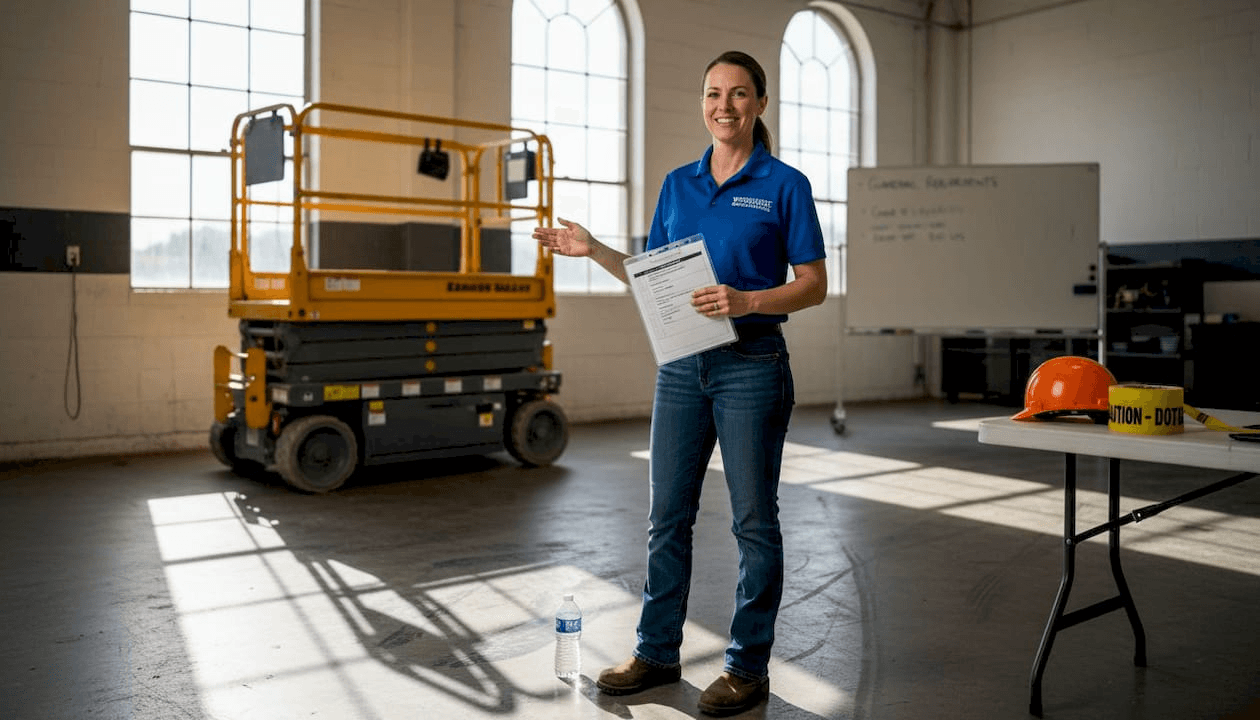
Who Can Inspect a Scissor Lift?
What Is a Competent Person?
OSHA defines a competent person in 29 CFR 1926.32(f) as someone who can identify existing and predictable hazards in the surroundings or working conditions that are hazardous to employees and who has authorization to take prompt corrective measures to eliminate them.
For the construction scaffold inspection requirement, the person performing the inspection must have the competence required for the task.
This is different from simply assigning any employee to complete a checklist.
What Should a Competent Person Be Able to Identify?
For a scissor-lift inspection, the competent person should be able to recognize problems involving the equipment and work environment, including relevant:
Structural defects
Damaged guardrails
Unsafe platform conditions
Problems affecting stability
Defective controls
Equipment damage
Visible hydraulic or electrical problems
Conditions that could affect safe operation
The employer is responsible for establishing an inspection program that complies with applicable OSHA requirements and for ensuring the appropriate personnel are designated.
What Should Be Checked During a Scissor Lift Inspection?
OSHA does not publish one universal item-by-item “scissor lift inspection checklist” that replaces the manufacturer's inspection procedure. OSHA's scissor-lift guidance instead directs employers to properly maintain equipment, follow manufacturer instructions, and inspect relevant controls and components.
A practical inspection should therefore be based on the specific machine's manual and can include the following areas.
Structural Components
Inspect accessible structural components for visible damage such as:
Cracks
Deformation
Bent members
Excessive corrosion
Loose or missing fasteners
Damaged welds
Abnormal wear
Other conditions that could affect structural integrity
The inspection should pay particular attention to components involved in lifting and supporting the platform.
A defect that affects structural strength is not a cosmetic issue. OSHA 1926.451(f)(4) requires a damaged or weakened scaffold part that does not meet the applicable strength requirements to be repaired, replaced, adequately braced, or removed from service until repaired.
Scissor Arms and Lifting Mechanism
The scissor mechanism is central to the machine's ability to raise and support the platform.
Inspect for visible:
Damage
Cracks
Deformation
Abnormal wear
Loose components
Damaged pins or connections
Hydraulic leaks where applicable
Conditions inconsistent with the manufacturer's instructions
Do not place hands or tools into moving mechanisms while the equipment is operating.
Inspection and maintenance procedures involving access to hazardous moving parts should follow the manufacturer's service instructions and the employer's applicable energy-control procedures.
Platform
The platform should be checked for:
Structural damage
Excessive deformation
Damaged decking
Loose components
Accumulated debris
Problems with the access gate
Problems with platform extensions, where fitted
OSHA's scaffold rules also prohibit working on platforms that are cluttered with debris or other unnecessary materials.
A clean platform helps reduce slip and trip hazards and makes defects easier to identify.
Guardrails
Guardrails are a critical fall-protection component.
OSHA's scissor-lift guidance instructs workers to verify that the guardrail system is in place before working on the scissor lift and to remain on the work platform rather than standing on the guardrails.
Inspection should therefore check for:
Missing sections
Loose connections
Damaged rails
Bent rails
Damaged access gates
Missing or damaged components
Unauthorized modifications
For construction scaffolds, the applicable guardrail provisions are found in 29 CFR 1926.451(g).
Wheels, Tires, and Casters
The condition of wheels or tires can affect machine movement and stability.
Check for visible:
Cuts
Damage
Excessive wear
Missing components
Abnormal deformation
Problems identified by the manufacturer
The exact inspection criteria depend on the wheel and tire design.
Brakes
Brake operation is an important inspection point because the machine must be capable of remaining in its intended position.
OSHA's scissor-lift guidance specifically notes that manufacturer maintenance and inspection instructions generally include verifying that brakes, once set, will hold the scissor lift in position.
Any brake problem should be addressed according to the manufacturer's instructions before the equipment is used.
Steering and Drive System
For self-propelled electric scissor lifts, inspect the:
Steering controls
Drive controls
Directional controls
Drive wheels
Braking system
Travel controls
Emergency controls
Operators should identify abnormal response, unusual noise, or other conditions indicating that the equipment may not be operating correctly.
The exact functional tests should be performed according to the manufacturer's procedure.
Controls and Control Systems
OSHA's scissor-lift guidance specifically recommends testing and inspecting controls and components before each use as part of the manufacturer's maintenance and inspection procedures.
Depending on the equipment, relevant controls may include:
Platform controls
Ground controls
Lift controls
Drive controls
Steering
Emergency stop
Emergency lowering
Horn
Alarm functions
Other safety-related controls
An operator should never bypass or disable a safety device simply because it is preventing normal operation.
Hydraulic System
Hydraulic components should be inspected on machines equipped with hydraulic systems.
Look for visible:
Fluid leaks
Damaged hoses
Damaged fittings
Abnormal connections
Signs of component deterioration
If a hydraulic problem could affect safe lifting or holding of the platform, the machine should not be placed into service until it has been appropriately evaluated and repaired.
Electrical System
For electric scissor lifts, inspect accessible electrical components according to the manufacturer's procedure.
Areas may include:
Battery condition
Cables
Connectors
Charging components
Visible wire damage
Electrical control components
Emergency controls
Operators should not perform unauthorized electrical repairs.
Electrical maintenance should be performed by appropriately qualified personnel following the manufacturer's service procedures and applicable requirements.
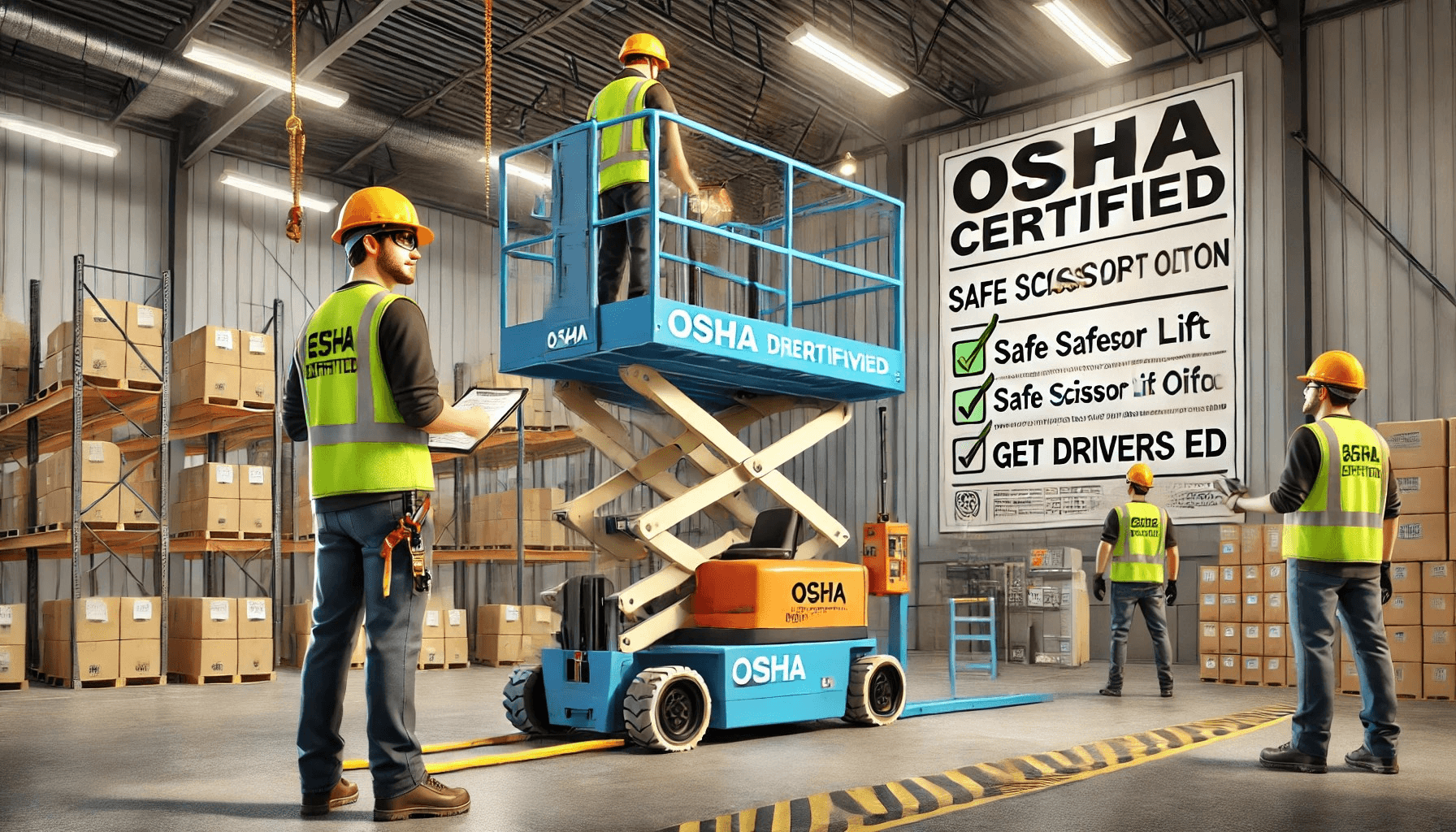
How Often Should a Scissor Lift Be Inspected?
Before Each Work Shift
For construction scaffolds, OSHA requires inspection by a competent person before each work shift.
This should be treated as a regulatory minimum where the construction scaffold requirements apply.
Before Each Use
OSHA's scissor-lift eTool states that manufacturer maintenance and inspection instructions will generally include testing and inspecting controls and components before each use.
This is why operators should not interpret “before each work shift” as permission to ignore the manufacturer's pre-use checks.
A company operating multiple shifts or multiple operators should establish procedures that clearly explain:
Who checks the machine → when it is checked → what is checked → how defects are reported → who authorizes return to service
After an Incident or Structural Event
Under 1926.451(f)(3), an additional inspection is required after an occurrence that could affect structural integrity.
Employers should also follow the manufacturer's instructions for post-impact, malfunction, or other equipment-specific inspection requirements.
During Planned Maintenance
Inspection is different from preventive maintenance.
Routine maintenance may include tasks specified by the manufacturer based on:
Operating hours
Calendar intervals
Battery condition
Hydraulic system requirements
Wear components
Service intervals
A professional maintenance program should combine regulatory inspection requirements with the manufacturer's maintenance schedule.
What Happens If a Defect Is Found?
Do Not Continue Operating the Machine
The correct response to a safety-critical defect is not to continue operating while “being careful.”
OSHA 1926.20(b)(3) prohibits the use of machinery, tools, materials, or equipment that does not comply with applicable requirements. Such equipment must be identified as unsafe, rendered inoperable, or physically removed from the place of operation as appropriate.
Repair or Replace the Defective Component
For scaffolds, OSHA 1926.451(f)(4) requires damaged or weakened components that do not meet the applicable strength requirements to be repaired, replaced, adequately braced, or removed from service until repaired.
The actual repair method should follow the manufacturer's requirements and be performed by appropriately qualified personnel.
Verify Before Returning to Service
After repair, the equipment should be returned to service only after the required checks have been completed.
A practical process is:
Defect identified → Equipment removed from service → Repair completed → Required inspection/testing → Equipment returned to service
This provides a clear chain of responsibility and reduces the risk of a known defect being overlooked.
OSHA Scissor Lift Inspection Checklist
The following checklist can be used as a practical starting point. It is not a substitute for the inspection procedure supplied with a specific machine.
Inspection Area | What to Check |
|---|---|
Structural frame | Cracks, deformation, corrosion, damaged welds |
Scissor mechanism | Damage, abnormal wear, loose components |
Platform | Damage, decking condition, cleanliness |
Guardrails | Rails, connections, gate, missing components |
Wheels/tires | Damage, wear, condition |
Brakes | Correct operation |
Steering | Correct response |
Drive system | Proper operation |
Controls | Platform and ground controls |
Emergency stop | Function according to manufacturer procedure |
Emergency lowering | Function according to manufacturer procedure |
Hydraulic system | Leaks, hoses, fittings where applicable |
Battery | Condition, connections, charging equipment |
Electrical system | Visible damage and loose connections |
Alarms | Applicable audible/visual warnings |
Labels | Safety and operating information legible |
Platform load | Within rated capacity |
Worksite | Surface, overhead and surrounding hazards |
Travel path | Clear and suitable for the equipment |
OSHA's own scissor-lift guidance specifically identifies control/component checks, guardrail condition, and brake performance as examples of inspection and maintenance activities, while the applicable scaffold standard establishes the competent-person inspection requirement.
What Should Operators Check Before Starting Work?
Check the Machine
Before entering the platform, the operator should become familiar with the machine's condition and the manufacturer's inspection procedure.
Pay particular attention to:
Visible structural damage
Guardrails
Platform
Controls
Brakes
Wheels or tires
Battery or power system
Hydraulic components where applicable
Safety devices
Check the Work Area
The machine itself may be in good condition while the worksite is unsafe.
OSHA advises employers using scissor lifts to assess the worksite and implement controls addressing fall protection, stabilization, and positioning.
The work-area inspection should consider:
Holes
Pits
Slopes
Uneven surfaces
Overhead obstructions
Electrical hazards
Other vehicles
Pedestrians
Debris
Environmental conditions relevant to the equipment
How Does an OSHA Inspection Differ From a Routine Pre-Use Check?
OSHA Regulatory Inspection
For construction scaffolds, the OSHA requirement under 1926.451(f)(3) is an inspection by a competent person for visible defects before each work shift and after certain events that could affect structural integrity.
Operator Pre-Use Check
A manufacturer's operating procedure may call for additional checks before each use. OSHA's scissor-lift guidance specifically notes that manufacturer inspection instructions generally include testing controls and components before each use.
Preventive Maintenance
Preventive maintenance is performed according to the manufacturer's recommended intervals and service procedures.
The three should work together rather than being treated as interchangeable:
OSHA inspection requirements + operator checks + manufacturer preventive maintenance
Does OSHA Require an Inspection Checklist?
OSHA Specifies the Inspection Requirement
OSHA requires the inspection of applicable scaffolds and components for visible defects by a competent person before each work shift and after an occurrence that could affect structural integrity.
However, OSHA does not prescribe one universal checklist containing every component of every scissor lift.
The appropriate inspection procedure must account for the actual equipment.
Manufacturer Instructions Matter
OSHA's scissor-lift guidance specifically tells employers to follow manufacturer instructions and notes that inspection and maintenance instructions generally cover controls, components, guardrails, and brakes.
This is particularly important for electric scissor lifts because machine configurations can differ substantially.
Should Scissor Lift Inspections Be Documented?
OSHA's Construction Scaffold Rule Does Not Establish a Universal Documentation Requirement
OSHA's enforcement guidance for Subpart L explains that 1926.451(f)(3) requires the inspection but does not itself require the competent person to document the inspection findings.
That does not mean records are unnecessary in every workplace.
Employers may choose to maintain inspection records as part of their safety management system, fleet management program, rental process, or maintenance documentation.
What Should a Company Record?
A practical inspection record can include:
Equipment identification
Date
Shift
Operating location
Inspector
Inspection findings
Defects identified
Corrective action
Repair status
Return-to-service authorization
The exact recordkeeping requirements can depend on the employer's industry, company procedures, applicable regulations, and equipment program.
Scissor Lift Inspection for Rental Companies and Fleet Operators
Why Fleet Inspection Requires Additional Planning
For rental companies and companies operating multiple lifts, the challenge is not only inspecting one machine but maintaining consistent inspection procedures across a fleet.
A fleet inspection program can standardize:
Inspection forms
Defect categories
Maintenance intervals
Service records
Operator reporting
Spare-parts management
Repair authorization
Return-to-service procedures
Before Sending Equipment to a Customer
A rental or equipment company should also verify the machine according to its own fleet-management and manufacturer procedures before release.
The exact process will vary by company and equipment model.
What Should U.S. Buyers Ask a Scissor Lift Manufacturer?
For B2B purchasers, inspection requirements should be considered before the machine is ordered.
Request the Operator Manual
The manual should explain the manufacturer's operating, inspection, maintenance, and safety procedures for the specific model.
Request the Maintenance Schedule
The buyer should understand which service tasks are required and at what intervals.
Confirm Safety-Critical Components
Ask the manufacturer for information about the machine's:
Guardrail system
Brakes
Emergency stop
Emergency lowering system
Alarms
Rated capacity
Structural components
Battery system
Hydraulic system where applicable
Ask About Spare Parts
For overseas buyers, spare-parts availability can directly affect equipment uptime.
A supplier should be able to identify commonly serviced components and provide appropriate parts information.
How WIZPLUS Can Support Scissor Lift Inspection Programs
For manufacturers supplying electric scissor lifts to overseas B2B customers, inspection support should begin with accurate technical documentation.
WIZPLUS buyers can use the machine's model-specific information to establish procedures covering:
Pre-use checks
Working-height limits
Load capacity
Platform configuration
Controls
Battery systems
Safety devices
Maintenance
Spare parts
The exact inspection and maintenance procedure should always be based on the individual WIZPLUS model and its manufacturer's documentation rather than a generic scissor-lift checklist.
This is particularly relevant for WIZPLUS's different electric scissor lift configurations, because compact indoor machines and higher-working-height hydraulic-drive models can have different components and operating requirements.
Common Scissor Lift Inspection Mistakes
Treating the Inspection as a Quick Visual Walk-Around
A superficial check may miss problems with controls, brakes, guardrails, structural components, or other safety-critical equipment.
Using the Same Checklist for Every Model
Different machines can have different drive systems, hydraulic systems, controls, battery configurations, and safety devices.
The checklist should match the equipment.
Ignoring Manufacturer Instructions
OSHA's scissor-lift guidance specifically directs employers to follow manufacturer instructions.
Continuing to Use Equipment With Known Defects
Known safety defects should be addressed before the machine is returned to service.
Failing to Reinspect After a Significant Event
An incident that could affect structural integrity requires attention under the applicable OSHA scaffold inspection requirement.
Confusing OSHA Inspection With Preventive Maintenance
An inspection determines whether visible defects or unsafe conditions are present.
Preventive maintenance addresses scheduled service tasks intended to keep the equipment in proper operating condition.
Both are necessary components of responsible equipment management.
Frequently Asked Questions About OSHA Scissor Lift Inspection
How often does OSHA require a scissor lift to be inspected?
For construction scaffolds, OSHA 1926.451(f)(3) requires inspection by a competent person before each work shift and after any occurrence that could affect structural integrity.
Does OSHA require a scissor lift inspection before every use?
OSHA's construction scaffold provision specifies inspection before each work shift. Separately, OSHA's scissor-lift guidance states that manufacturer inspection instructions will generally include testing and inspecting controls and components before each use. Operators should therefore follow both the applicable OSHA requirements and the manufacturer's instructions.
Who can inspect a scissor lift?
For the construction scaffold inspection required by 1926.451(f)(3), the inspection must be performed by a competent person. OSHA defines a competent person as someone capable of identifying existing and predictable hazards and authorized to take prompt corrective action.
What should be checked on a scissor lift?
A practical inspection should consider the platform, guardrails, structural components, scissor mechanism, controls, brakes, wheels or tires, drive and steering systems, battery and electrical components, hydraulic components where applicable, safety devices, and worksite conditions. The exact checklist should follow the manufacturer's instructions.
What happens if a defect is found?
Unsafe equipment should be identified and removed from service or otherwise rendered inoperable as appropriate. OSHA 1926.20(b)(3) prohibits the use of machinery or equipment that does not comply with applicable requirements.
Does OSHA require inspection records for scissor lifts?
The construction scaffold inspection requirement itself does not establish a universal requirement for documenting the findings of the competent-person inspection. OSHA enforcement guidance states that 1926.451(f)(3) does not require documentation. Employers may nevertheless maintain records as part of their safety and equipment-management programs.
Does an inspection replace preventive maintenance?
No. Inspection and maintenance serve different purposes. Inspection identifies defects and unsafe conditions, while preventive maintenance follows a scheduled service program to keep equipment in proper working condition.
Are scissor lifts regulated as aerial lifts by OSHA?
For construction, OSHA generally distinguishes scissor lifts from aerial lifts covered by 29 CFR 1926.453 and addresses scissor lifts through applicable scaffold requirements. OSHA's scissor-lift eTool identifies Subpart L provisions including 1926.451 and 1926.452(w).
Can an operator repair a defective scissor lift?
Repairs should be performed according to the manufacturer's requirements and by personnel with the appropriate skills and authorization. Operators should report defects rather than attempting unauthorized repairs.
Conclusion
An effective OSHA scissor lift inspection program is more than a checklist. It is a structured process for identifying visible defects, evaluating equipment condition, recognizing worksite hazards, and preventing unsafe equipment from being placed into service.
For construction operations, the central OSHA requirement is clear: applicable scaffolds must be inspected for visible defects by a competent person before each work shift and after any occurrence that could affect structural integrity. Damaged or weakened components must be properly repaired, replaced, adequately braced, or removed from service until repaired.
At the equipment level, operators and maintenance personnel should also follow the manufacturer's inspection and maintenance procedures. OSHA's own scissor-lift guidance specifically points to checking controls and components, guardrails, and brakes, while emphasizing proper maintenance and compliance with manufacturer instructions.