Vertical Mast Lift vs Scissor Lift: Which One Do You Actually Need?
Published
Category
Guide
Compare vertical mast lifts and scissor lifts on footprint, doorway clearance, height, floor loading and total cost, plus a ten-minute choice checklist.
Vertical mast lift or scissor lift?
Both machines raise a person to height, but they are not interchangeable. A vertical mast lift is a single-column platform built to reach one point through a narrow opening. A scissor lift is a wide, stable deck built to work across an area. Choose the mast lift when access and footprint decide the job, and the scissor lift when deck space and load decide it.
That sounds simple, and usually it is. Confusion starts when the two are compared on working height alone: a 6 m mast lift and a 6 m scissor lift are not the same tool at two prices. They differ in envelope, floor loading, running cost and failure mode.
The distinction matters more than it used to: facilities teams service equipment in tighter corridors, retailers reach signage without closing the shop floor, and warehouses add racking to space never designed for a lift. The real question is less "how high" than "how do I get there".
This guide compares the two designs on the factors that decide a purchase: structure, footprint and doorway clearance, height and capacity, floor loading and environment, cost over the life of the machine, and the jobs where each one wins. It ends with a ten-minute checklist.
One note on numbers: both categories span many models, and only the datasheet for the exact machine settles a dimension. The figures below are planning ranges and industry-typical values, described that way on purpose.

What Actually Separates a Vertical Mast Lift from a Scissor Lift?
The two machines share a platform, a control box and a guardrail. Everything below the deck is a different answer to the same question.
One Column Instead of a Stack of Scissor Arms
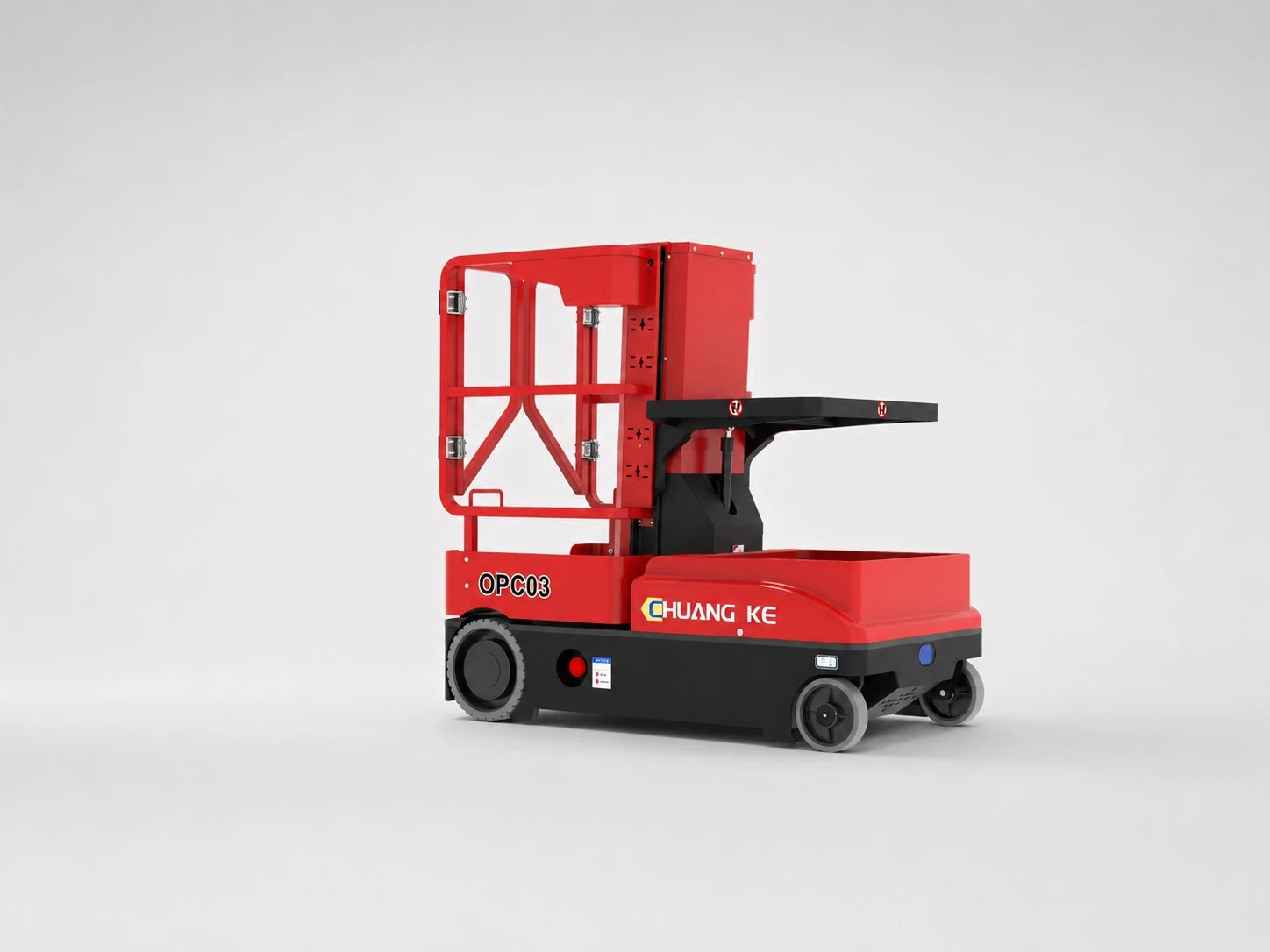
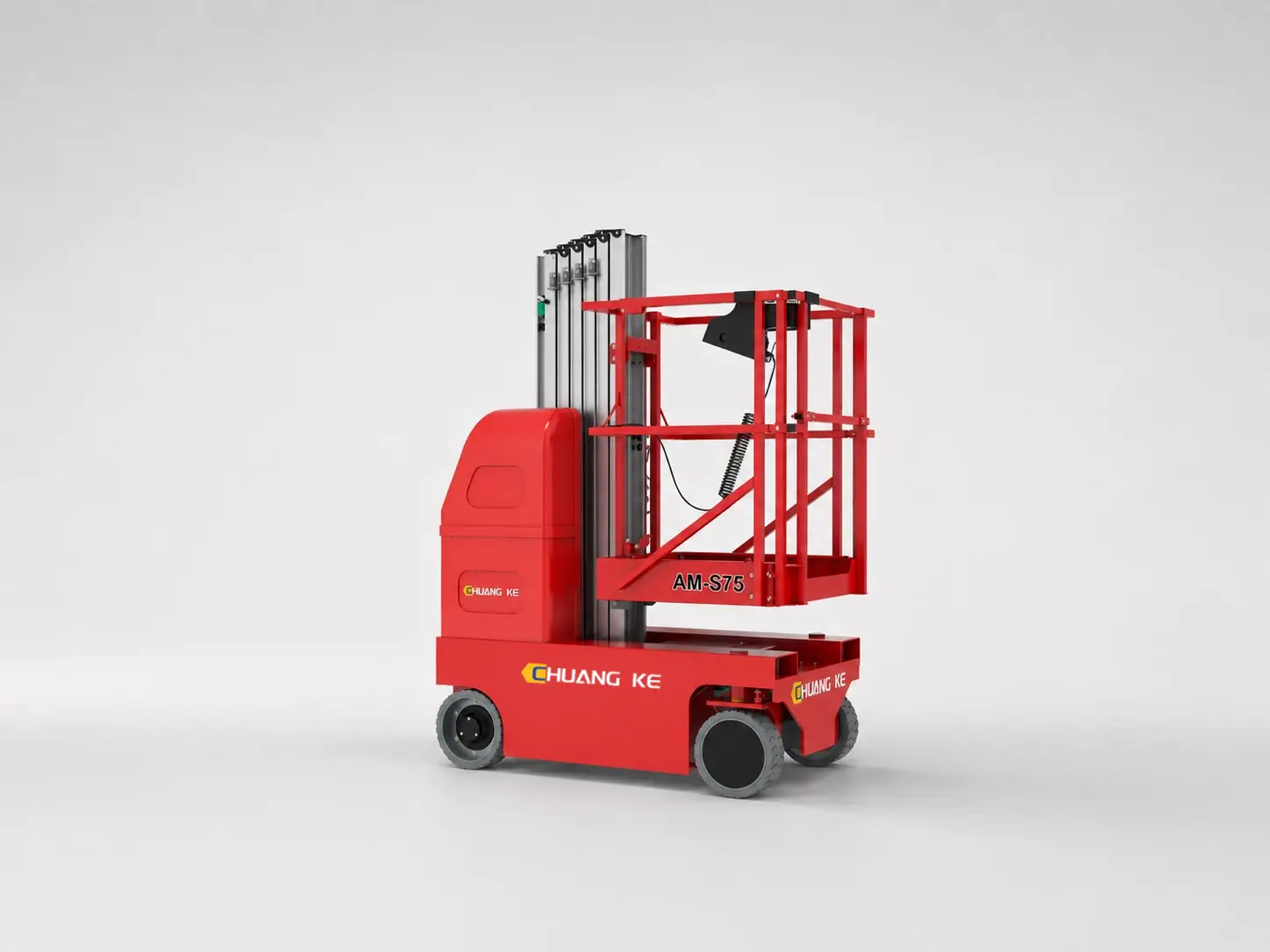
A vertical mast lift raises its platform along a single vertical column — usually a telescoping mast of two or three sections, driven by a hydraulic ram or a screw. The lift force runs straight up the column, so the structure can be narrow, light and tall at once. That is why a mast lift stands on a footprint barely larger than its platform.
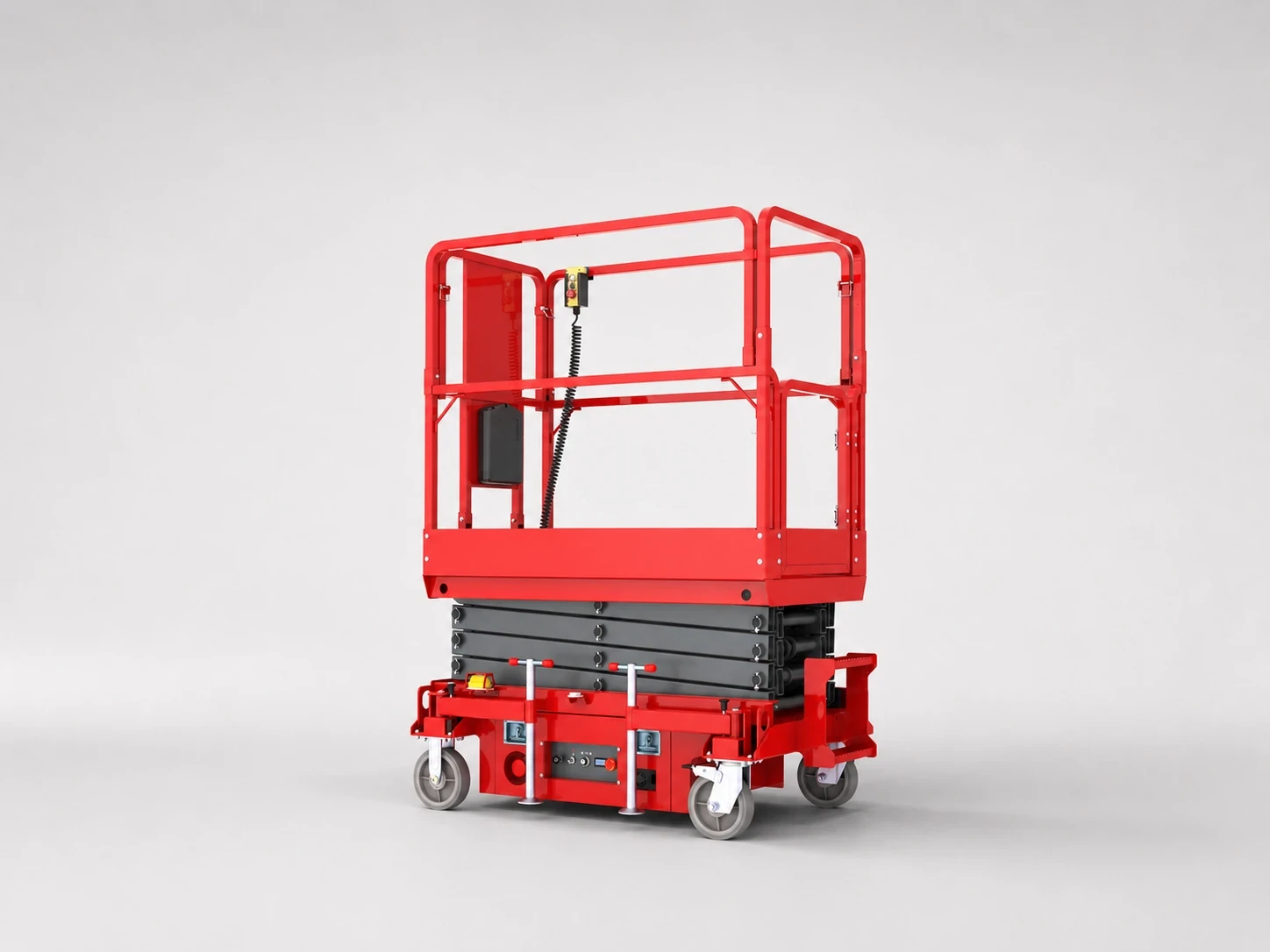
A scissor lift carries the deck on crossed arm pairs. Each pair adds height, and each pair also adds length and weight to the stowed machine. The stack is what gives the scissor lift its generous deck and its stiffness — and why it is long, heavy and slow to reposition.
How the Load Path Changes the Machine
On a scissor lift the load travels from the deck through arm pins into a wide chassis, spreading weight across four wheels and a large footprint. That is good for floor pressure and stability on a level slab.
On a mast lift the load travels down one column into a compact base, and the machine resists overturning with its own weight and, on some models, outriggers. Efficient, but it concentrates force — which matters for wheel loading on suspended floors and stability on slopes.
What That Means When You Are Standing on It
A single-column platform moves a little at full height. Some sway is normal and accounted for in the rating, but it is noticeable when you hold a drill steady at 6 m. A scissor deck is far stiffer, which is why two-handed work usually feels better on one.
Neither behaviour is a defect: the mast lift buys access with movement, the scissor lift buys stillness with footprint.
Doors and gates decide more projects than working height does, and whether a scissor lift fits through a door comes down to measuring the opening rather than the doorway.
Size, Footprint and Doorway Clearance
Clearance is a dimension problem, and single man lift width, weight and doorway clearance are the three numbers that decide whether a route is usable.
Most of these decisions are made here, not in the height column. If the machine cannot reach the work, its working height is irrelevant.
Footprint and Turning
A vertical mast lift typically occupies under 1.5 m² on compact models and can turn within its own footprint, because the drive wheels sit close together. That lets one be walked through a shop floor, into a goods lift and down a service corridor.
A scissor lift spreads its base to keep the deck stable at height, so the footprint grows with deck size. Typical compact electric models need roughly 1.5–3 m², and larger decks need considerably more. Turning takes a real aisle, and repositioning means lowering, driving, raising again.
Getting Through Openings
This is the strongest single argument for a mast lift. A standard internal door is often around 0.9 m clear, and a passenger lift door is not much wider. Many compact mast lifts pass through openings of that order, some with the mast folded or the guardrail lowered. A scissor lift of comparable height is usually wider than the door and cannot follow the work inside.
Clearance is not only width. Check stowed height against the opening, the threshold and any ramp, and whether the floor beyond takes the wheel load. A 20 mm threshold is nothing to a scissor lift and a real obstacle to a narrow mast lift.

The Comparison Table
These ranges describe typical machines in each class — planning references, not specifications for a particular model.
What it decides | Vertical mast lift | Scissor lift | Why it matters |
|---|---|---|---|
Footprint | Typically 0.8–1.5 m² | Typically 1.5–3 m², more on large decks | How much usable floor you give up |
Machine width | Often 0.7–1.0 m | Often 0.8–1.5 m | Doorway and aisle access |
Passes a 0.9 m door | Usually possible on compact models | Usually not | The main reason buyers choose a mast lift |
Turning | Close to its own footprint | Needs a real aisle | How the machine moves between tasks |
Deck area | Typically 0.6–1.0 m² | Typically 1–3 m² | One worker and a bag, or two and their tools |
Machine weight | Often 300–800 kg | Often 800–3,000 kg | Floor loading, transport, trailer choice |
Typical working height | Roughly 3–8 m | Roughly 4–14 m | Where each class runs out of range |
Rated capacity | Often 100–150 kg | Often 230–500 kg | People, tools and material |
Setup time | Seconds; some models need outriggers | Seconds on level ground, minutes on uneven ground | Matters at one-point-per-hour jobs |
Read it as a filter, not a scorecard. If a doorway or goods lift is on the route, the scissor lift is out before price enters the conversation.
A single-column machine's limit is mast stability rather than motor power, which is why the maximum height a vertical lift can reach tops out earlier than a scissor lift's.
Height and Capacity: Where Each Type Stops
The two classes overlap between roughly 4 m and 8 m of working height, and that overlap is where most comparisons happen. Above and below it, the choice is usually obvious.
Working Height and Platform Height
Datasheets quote platform height and working height, and they are not the same number. Working height is usually taken as platform height plus about 2 m, an industry convention for reach. A machine rated at 5 m platform height is a 7 m working-height machine, and a worker on it reaches roughly that far.
Compact scissor lifts commonly cover 4–10 m of working height, large slab and rough-terrain models go beyond that, and vertical mast lifts typically cover 3–8 m. If your work is consistently above 8 m, you are shopping for a scissor lift, a boom lift or a dedicated high-reach platform.
Rated Capacity and Deck Area
Capacity and deck size travel together. A scissor lift rated for two people and 300 kg needs a deck that holds them safely, plus tools and material, and a base wide enough to keep that deck stable. A mast lift rated for one person and a tool bag stays small because its load is small.
The practical question is what you carry up, not just who goes up. One worker with a 40 kg compressor, a toolbox and a length of conduit is already outside the comfortable envelope of a small mast lift, even when the numbers allow it. Awkward loads also change the wind profile.
What Happens at the Top of the Range
Near maximum height every lift becomes more sensitive. A mast lift at full extension sways more and reacts to a shift in the operator's weight. A scissor lift stays stiff, but its base carries a taller stack and the wind and floor requirements tighten.
The honest answer to "can it go to maximum height" is "yes, under the conditions in the manual". If a task needs full height all day, buy a size up.
Point loading, not total machine weight, is the usual failure mode, so load capacity and floor loading need checking before a deck machine is specified.
Floor Loading and the Working Environment
This is the part buyers skip, and the part that generates the most expensive surprises. A lift that is safe on a concrete slab is not automatically safe on a mezzanine, a tiled shop floor or gravel.
Point Load vs Distributed Load
A scissor lift spreads its weight across a long base and large tyres. A mast lift puts its weight into a smaller contact patch. On a ground-bearing slab neither is a problem. On a suspended floor, mezzanine or rooftop, a mast lift's concentrated load can exceed the slab's local capacity even when the machine's total weight is lower.
Ask for the wheel or castor load, not just machine weight, and pass those figures to whoever owns the structural question. If the answer is unclear, specify load-spreading pads rather than guess.
Indoor Surfaces: Slab, Mezzanine, Tiles
Warehouse slabs and plant floors are usually straightforward. Retail floors are not: tile, stone and resin finishes can be marked by small hard wheels carrying a concentrated load, and thresholds and kick plates are trip hazards. Non-marking wheels and lower ground pressure are worth specifying.
Mezzanines add the edge as a second constraint: working near an open edge or floor cut-out needs the manufacturer's minimum distance and usually a physical barrier.
Outdoor, Uneven Ground and Wind
A compact electric mast lift is an indoor machine unless the model is specified otherwise: small wheels, a narrow base and a high column make it sensitive to slope, soft ground and wind. A rough-terrain scissor lift is a different proposition — wider base, higher ground clearance, a deck that stays level.
If the job is a loading dock, a yard or compacted gravel, choose for the ground first. Neither class substitutes for a boom lift when the terrain is genuinely rough.
Noise, Emissions and Sensitive Environments
Both classes come in electric versions, and electric is the default indoors in shops, hospitals, food production and cleanrooms. Engine-driven scissor lifts exist for outdoor site work but are the wrong choice inside an occupied building.
Check two more things: whether the hydraulics suit food or pharma areas, where a leak is a contamination event, and how loud the pump is. A mast lift with a small hydraulic unit is usually the quieter of the two.
Purchase price is only part of it: rental versus buying a single man lift is a utilisation question before it is a cash question.
Cost and Total Cost of Ownership
Purchase price is the easiest number to compare and the least useful on its own. The two classes differ in what they consume after the invoice.
Purchase Price and the Configuration Trap
A compact vertical mast lift is usually the cheaper machine at comparable height, because it uses less steel, one hydraulic circuit and a smaller drive. A scissor lift carries more structure, more hydraulic capacity and a larger deck, and the price reflects it.
The trap is configuration. A base mast lift may need outriggers, a tiltable base or a trailer, and those options close the gap quickly. A base scissor lift may need non-marking tyres, a deck extension or a specific charging setup. Compare configured prices for the task.
Maintenance, Consumables and Downtime
Both machines are mechanically simple, and the maintenance burden is mostly battery, hydraulics and tyres. The differences are in access: a mast lift has fewer rams and pins, while a scissor lift has more pivot points and wear surfaces to inspect. The heavier machine also wears wheels and brakes faster.
Downtime rarely appears in the spreadsheet, yet if the machine is your only access to a production line, a two-day hydraulic repair is a two-day stoppage. Buy the machine you can service locally.
Where the Total Cost of Ownership Turns
Cost item | Vertical mast lift | Scissor lift |
|---|---|---|
Purchase price | Usually lower at the same height | Usually higher; rises with deck size |
Battery and charging | Smaller battery, lower replacement cost | Larger bank, higher replacement cost |
Hydraulic service | Fewer rams and seals | More pins, rams and wear points |
Tyres and brakes | Light wear, cheap to replace | Heavier machine, faster wear |
Transport | Often fits a van or small trailer | Needs a trailer or a truck with a ramp |
Task cost | Low per task in tight access, high if the deck is too small | Low per task on open floors, high where it cannot reach |
The task-cost line decides most purchases. A cheaper machine needing two people and a longer setup for every task is not cheaper, and a larger machine that cannot reach the work is a storage problem.
Make sure every quote uses the same measure — working height versus platform height differ by roughly the operator's height, which is often enough to change the model class.
Matching the Machine to the Job
The pattern across these requests is consistent: access decides first, deck size second, height third.
Warehouses and Racking
In a warehouse the choice follows the aisle. Maintenance above racking — a sprinkler head, a light fitting, a damaged upright — favours a compact mast lift that walks in, raises and leaves without blocking the aisle. Picking across a rack face, or work needing two people and material on the deck, favours a scissor lift.
For order picking specifically, neither is the ideal tool: a dedicated order picker is designed for the man-up, pick-and-place pattern.
Retail, Signage and Store Fit-Out
This is mast lift territory almost by default. A store that trades during the work cannot lose an aisle to a scissor lift, and a standard service door will not admit one. Signage, high glazing, ceiling services and re-lamping all suit a compact single-column machine that moves between departments in minutes.
Check floor finish, door thresholds and pump noise during trading hours; non-marking wheels and a low-noise hydraulic unit are worth specifying.
Facilities Maintenance and Plant Rooms
Plant rooms and service corridors are the classic tight-access case: narrow doors, low headroom, equipment packed against the walls. A mast lift is often the only powered option that fits. Where the task is servicing one unit at height — an air handler, a valve bank, a filter frame — the single-point reach is an advantage rather than a limitation.
If the team also covers ceilings across large open areas, a scissor lift earns its place as a second machine; forcing one machine to serve both patterns produces a lift that is mediocre at everything.
Construction, Yards and Rough Ground
On a site, choose by ground condition and duration. Slab work inside a building under construction suits a scissor lift — wide deck for material, stiff enough for two trades. Finished yards and docks suit a rough-terrain scissor lift. A compact mast lift belongs indoors on hard level floors.
The Ten-Minute Decision Checklist
Work through these in order. The first "no" usually ends the comparison.
Does the machine have to pass a door, a goods lift or a corridor? Measure the clear opening and the stowed height.
How many people, and how much material, must be on the platform at once?
What is the highest point you must reach, and is it comfortably inside the range?
What is the floor, and who owns the structural question? Get wheel loads, not machine weight.
Is the work indoors, outdoors, or both? Check slope, surface and wind exposure.
How many locations per day, and how long does repositioning take at each?
Who services the machine locally, and what is the lead time on a hydraulic part?
Could a ladder or mobile scaffold do the task, and is that acceptable under your safety policy?
If the answers point to a single-column machine, the vertical mast lift range is the place to start, and the vertical mast lift videos show the footprint difference in an aisle faster than any dimension sheet.
If the answers point to a deck, the cost and application trade-off is laid out in single man lift versus scissor lift, and the team can confirm the fit.
Capacity, height and application are the three questions that decide the class, and buying a single man lift is mostly about the order in which you answer them.
Frequently Asked Questions
Is a vertical mast lift the same as a single man lift?
Largely, yes. "Single man lift" is a market term for a one-person platform, and vertical mast lifts are its most common form. Some single man lifts use other mechanisms, so check the structure, not the label.
Can a vertical mast lift fit through a standard door?
Many compact models can, and it is one of their main selling points. A typical internal door is around 0.9 m clear, so the machine's width, stowed height and the threshold all need checking against the datasheet. Measure the narrowest opening on the actual route.
Which is cheaper to buy, a mast lift or a scissor lift?
A compact vertical mast lift is usually cheaper at comparable working height, because it uses less structure, one lifting column and a smaller battery. Add outriggers, a tiltable base or a trailer and the gap narrows quickly. Compare configured machines for your task.
Can a scissor lift reach the same height as a mast lift?
Yes, and higher. Scissor lifts commonly cover working heights well beyond the typical mast lift range. The overlap is roughly 4 m to 8 m of working height, where both classes can do the job and access decides.
Are vertical mast lifts stable at full height?
Yes, when used as specified — level load-bearing ground, within rated capacity, outriggers deployed where required. A single-column platform sways more than a scissor deck, and that movement is part of the design. Stability problems come from misuse: slopes, soft ground, wind and overload.
Can I use a scissor lift outdoors?
Only a model rated for it. Rough-terrain scissor lifts have wider bases, larger tyres and higher ground clearance, and are built for compacted surfaces and gentle slopes. A standard indoor electric scissor lift should not go onto gravel or unlevel ground.
How many people can each machine carry?
It depends on the model's rated capacity and deck area, not the class. Most compact mast lifts are rated for one person plus tools; most scissor lifts for two or more. Follow the capacity plate on the specific machine.
Which is better for maintenance work?
Tight spaces, single points, one technician: the mast lift. Large ceiling areas, or work with tools spread out: the scissor lift. Many facilities teams need both, and renting the second machine for peaks is often cheaper than buying it.
At the deck end, electric scissor lift working height narrows the shortlist faster than any other single number.
Conclusion: Start With the Doorway, Then the Deck
The vertical mast lift versus scissor lift question is usually settled by geometry, not height or price. If the work sits behind a standard door, in a live aisle or in a plant corridor, the single-column machine is the only one that gets there. If it needs a deck, two people and material, the scissor lift is the right tool and its footprint is the cost of doing the job properly.
Before you request quotes, collect the five numbers that decide it — narrowest opening, stowed height, highest reach, platform load and floor rating — and compare configured machines against them. That short list eliminates one class faster than any specification sheet.
WIZPLUSLIFT manufactures vertical mast lifts, single man lifts and electric scissor lifts for warehouse, retail, facility and construction work. If you are still deciding, send us your route dimensions, working height and floor details and we will tell you which class fits — and if neither does, we will say so.