How Many People Can Fit on an Electric Scissor Lift?
Published
Category
Small Scissor Lift
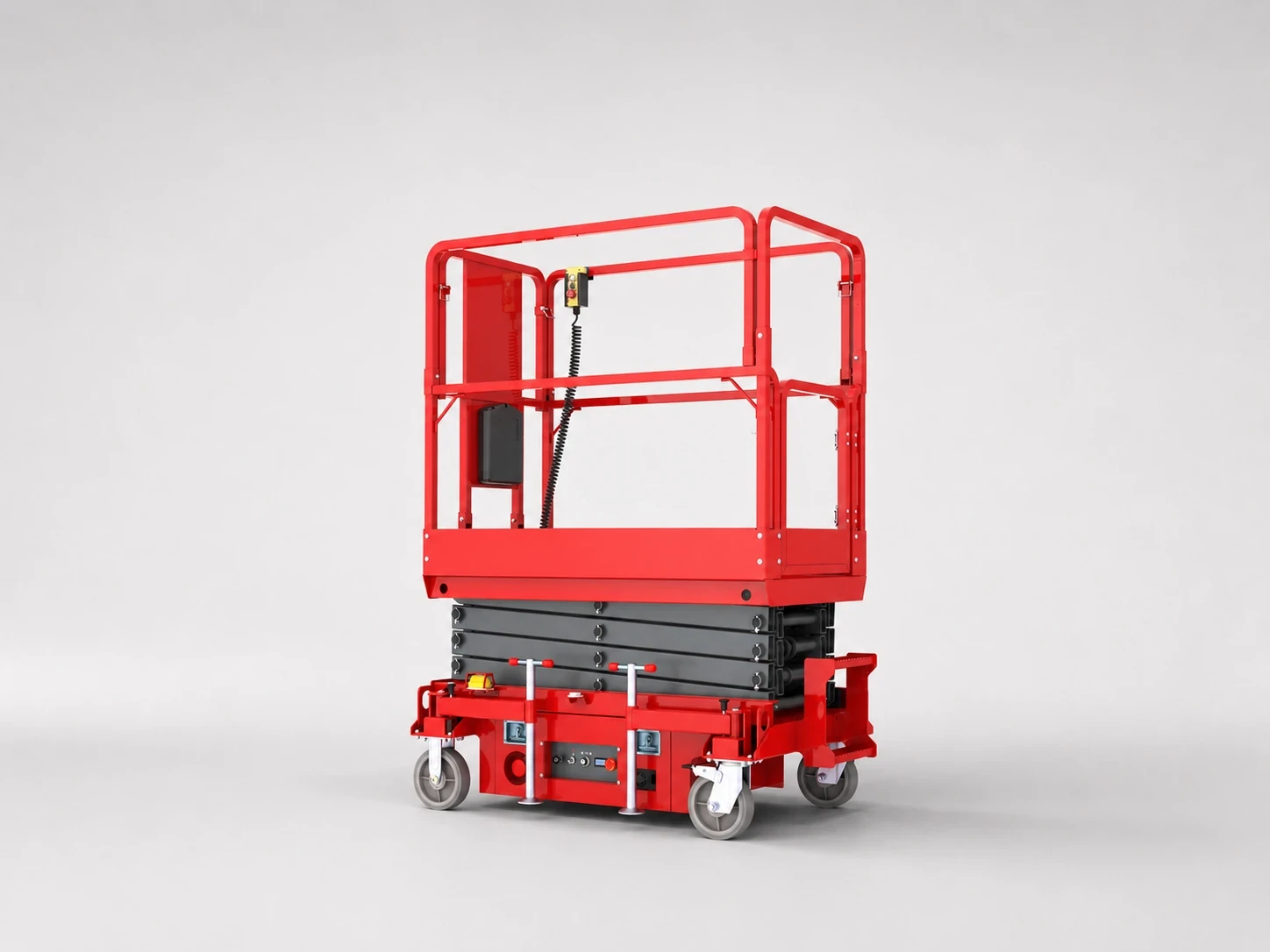
Scissor lifts are rated by load, not headcount: a 19 ft electric takes two people, a 26-32 ft deck takes three, once tools, PPE and materials are counted.
How many people can fit on an electric scissor lift? The honest answer is that no manufacturer publishes a "person limit" — they publish a rated load, and the number of people is whatever that load allows after you subtract tools, materials and equipment.
In practice, the answer lands in a narrow range. A typical 19 ft electric slab scissor lift rated at 230–250 kg carries two people and a modest tool load. A 26–32 ft machine with an extension deck, rated at 320–450 kg, carries three. Only the larger deck machines comfortably carry four, and even then the load calculation has to be done, not assumed.
That is why the question is worth answering carefully. Overloading is one of the few failure modes on a scissor lift that the operator controls entirely, and it rarely announces itself — the machine lifts, the platform feels normal, and the margin that was designed in is quietly gone.
This guide sets out how the number is actually calculated, what changes it on real jobs, what the standards do and do not say, and the mistakes that put crews over the limit without anyone noticing.
The Short Answer: Load Capacity Sets the Number
Why There Is No Universal Person Limit
A scissor lift is rated for a mass, not a headcount. Two people at 65 kg with hand tools and a bucket of fixings may weigh less than one person at 110 kg carrying a 40 kg panel.
Manufacturers avoid publishing person counts because the variables are outside their control: body weight, tools, materials, environmental load from wind, and how the load is distributed across the deck.
What the Data Plate Actually Says
Every machine carries a data plate showing the rated load — usually in kilograms and pounds — plus the maximum number of occupants permitted by the manufacturer for that configuration, and often a maximum wind speed.
Read all three numbers together. A plate that says 240 kg and two persons means two people regardless of how much margin you think is left; the occupant limit is a separate constraint, not a synonym for the weight limit.
A Quick Capacity Table
The ranges below are typical for the class, not promises for a specific model. Always use the plate on the machine in front of you.
Machine class | Typical rated load | Practical occupant count | What usually limits it |
|---|---|---|---|
19–20 ft electric slab | 230–250 kg | 2 people + light tools | Deck area and rated load |
26 ft electric, single deck | 230–320 kg | 2 people + tools | Rated load, not deck size |
26–32 ft with extension deck | 320–450 kg | 3 people | Extension deck rating |
32–40 ft rough terrain | 450–680 kg | 3–4 people | Wind and floor loading |
How to Calculate It for Your Job
The calculation takes about two minutes and settles most arguments on site. Do it before the crew climbs on, not after.
Step 1: Read the Rated Load
Find the plate on the machine, not the brochure. Rental fleets often contain several variants of the same model, and the load rating on a scissor lift can differ between them by 50 kg or more.
Note the number and the occupant limit. If the plate is unreadable or missing, the machine should not be used — that is a documentation failure, not a detail.
Step 2: Subtract Tools, Materials and PPE
Everything that goes up comes off the allowance. That includes hand tools, fixings, a bucket of compound, panels, cable drums, the operator's harness and lanyard, and anything a second trade has left on the deck.
A realistic allowance is 20–30 kg for a two-person fit-out task and considerably more for anything involving panels or ductwork.
Step 3: Divide by a Realistic Body Weight
Use 80 kg per person as a planning figure, not 65 kg. The difference matters more than it sounds, as the worked example below shows.
Item | Mass | Running total |
|---|---|---|
Rated load, 19 ft slab machine | 240 kg | 240 kg available |
Two operators at 80 kg | 160 kg | 80 kg left |
Tool bags, fixings, drill | 25 kg | 55 kg left |
Harnesses, lanyards, PPE | 5 kg | 50 kg left |
A third person at 80 kg | 80 kg | 30 kg over the limit |
Two people with tools on a 240 kg machine leaves roughly 50 kg of margin. A third person does not fit, even though the deck looks wide enough for three.
Don't Forget Point Loading
Rated load is a distributed figure. Four people standing together at one end of the deck is a different structural situation from four people spread out, and a single heavy item concentrated on one corner is worse again.
Where the load cannot be spread — a cable drum, a compressor, a stack of panels — check with the supplier rather than assuming the total is the only number that matters.

What Changes the Number in Practice
Platform Size and Deck Layout
A large deck does not increase capacity; it increases the temptation. Deck dimensions and rated load are listed separately on the scissor lift size chart, and the smaller number governs.
Layout matters too: a deck with the control box in the middle and guardrails on three sides effectively has less usable standing area than its length suggests.
Extension Decks and Roll-Out Sections
Extension decks usually carry a lower load rating than the main platform, and the plate often states it separately. Standing on the roller section to reach a soffit is exactly the case where people exceed the rating without thinking about it.
Indoor Versus Outdoor and Wind Exposure
Outdoor use introduces wind, and most plates state a maximum wind speed. Wind acts on the occupants and the material they are holding, so a platform that is compliant indoors can be outside its limits in a car park.
Rough-terrain machines are built for this, but the difference between electric, semi-electric and rough-terrain types is stability and surface capability, not permission to overload.
Task Type: Overhead Drilling Versus Carrying Materials
Two people drilling overhead is a light load. Two people carrying a 60 kg duct section is not, and neither is one person plus a stack of boards. The task, not the headcount, sets the mass.
Fall Protection Anchor Points
Harnesses and lanyards add mass and, more importantly, change how people move on the deck. Anchorage points are rated individually; clipping two people to a single point rated for one is the same class of error as overloading the deck.

What the Standards Say
OSHA and ANSI A92: Load-Based, Not Headcount-Based
US requirements for mobile elevating work platforms are written in terms of rated capacity and manufacturer instructions, not a fixed number of occupants. The general duty to keep equipment within its rated limits sits behind almost every citation.
The OSHA scissor lift safety requirements that operators are trained on are largely about respecting those limits, along with inspection, training and fall protection.
Manufacturer Instructions Override General Advice
Where a manufacturer specifies an occupant count, a maximum wind speed, or a restriction on using the extension deck while raised, that instruction governs. Generic advice from a forum or a supplier's sales sheet does not.
Where Inspectors Actually Look
In practice, an inspector or safety officer checks three things: the data plate is legible and matches the machine, the operators are trained and recorded, and the platform is in a condition consistent with its rating — no bent guardrails, no missing gate, no deformed deck.
Common Mistakes That Overload a Lift
Counting Body Weight Only
The most common error is treating the rating as a people allowance and forgetting that tools, materials and PPE all count. On a 240 kg machine, tools alone can consume a fifth of the capacity.
Ignoring the Tools
A drill, a bag of fixings, a laser level, a hoover and two toolboxes add up faster than most crews expect. Weigh a typical kit once — the number is usually surprising.
Crowding During a Lift or Install
The moment a panel or a beam needs guiding into place, a third and fourth person tends to step on. That is precisely when the machine is already carrying its heaviest load.
Using the Extension Deck as Extra Standing Room
The extension is for reach, not for accommodating another person. Its lower rating is there for a reason, and it is usually the first part of the platform to be overloaded.
Mistake | What it looks like on site | Consequence |
|---|---|---|
Body weight only | "It's only two of us" | 10–20% of capacity used by kit |
Crowding at install | Four people to guide one panel | Peak load at the worst moment |
Extension as standing room | Third person on the roller deck | Local overload, deck deformation |
Point loading | Compressor in one corner | Structural stress beyond rated figure |
What This Means When Buying
Single-Person Versus Two-Person Versus Multi-Person Machines
If the work is genuinely one person with a small kit, a compact machine is lighter, cheaper and easier to move. If two trades must work together, deck size and rated load become the selection criteria, not working height alone.
That trade-off is the same one that separates a single man lift from a scissor lift: one is built for a person, the other for a person and their task.
Deck Size, Guardrails and Gate Configuration
Check the number of entry gates and where they sit. A single gate on the long side forces everyone to move through the same corner, which concentrates load and slows the job.
Guardrail height and the folding mechanism decide how easy it is to get the machine through an opening — worth checking against the doorway and clearance dimensions of the access route before the machine arrives.
Questions to Ask a Supplier
Ask for the rated load and occupant limit per configuration, the extension deck rating, the maximum wind speed, and whether the platform can be raised with the extension deployed.
A supplier who answers those four questions with numbers is easier to work with than one who answers with adjectives. The compact scissor lift buying guide covers the rest of the specification conversation.
Working Height Still Matters
Capacity is only half the decision. Choosing the right electric scissor lift working height usually fixes the machine class, and the class fixes the capacity range you are choosing from.
When the Machine Is a Rental
Most crews meet their first scissor lift on a rental lot, and rental fleets are where capacity assumptions go wrong most often.
Why Rental Plates Differ From the Brochure
A rental fleet buys the same model in several configurations over several years. A 26 ft machine from 2019 and one from 2025 can carry different rated loads, and the extension deck option changes the figure again.
That is why the plate on the machine, not the model name on the invoice, is the number to plan around.
What to Check at Handover
Before the machine leaves the yard, confirm three things: the plate is legible and matches the unit, the occupant limit is stated, and the extension deck rating is recorded if the machine has one.
It is also worth photographing the plate. If a dispute arises later about how many people were on the platform, the photograph settles what the machine was rated for on the day.
Ask for the Manual, Not Just the Keys
The operator manual carries the configuration-specific limits that the plate compresses into one line. Rental companies hold it; asking for it takes a minute and answers most of the questions in this article for your specific machine.
Frequently Asked Questions
How many people can stand on a 19 ft electric scissor lift?
Typically two, on a machine rated 230–250 kg, provided the tool load stays modest. Three people is almost always over the limit once tools and PPE are counted, even though the deck may physically accommodate them.
Is there a legal maximum number of people on a scissor lift?
There is no single national headcount. US requirements are written around rated capacity and manufacturer instructions, so the plate and the manual define the limit for that machine.
Does the rated load include tools?
Yes. Rated load covers everything on the platform — occupants, tools, materials and PPE. It is a total mass, not a people allowance.
How much does one person count for in the load calculation?
Use 80 kg as a planning figure. Using 65 kg flatters the margin and is one of the reasons crews overestimate how many people fit.
Can I put three people on a 26 ft scissor lift?
Only if the plate permits three occupants and the total mass, including tools, stays under the rated load. Many 26 ft machines are rated for two occupants regardless of the weight margin.
Does the extension deck reduce the load rating?
Usually yes, and the plate normally states the extension rating separately. Treat the extension as reach, not as extra standing room.
What happens if a scissor lift is overloaded?
The machine may still lift, which is what makes overloading dangerous. Consequences range from reduced stability and structural stress to guardrail deformation and, in the worst case, tip-over.
How do I know the capacity if the data plate is missing?
Do not use the machine. A missing or illegible plate is a documentation failure, and the capacity cannot be assumed from the model name alone.
Conclusion: It's a Load Calculation, Not a Headcount
The number of people who fit on an electric scissor lift is whatever the rated load allows after tools, materials and PPE are subtracted — and whatever the occupant limit on the plate permits, if that is lower.
Two people on a 19 ft slab machine is the normal answer. Three requires a bigger rating, usually an extension-deck model. Four belongs to large-deck machines and heavier-duty work, and even then the calculation has to be done.
WIZPLUSLIFT builds electric and semi-electric scissor lifts with rated loads and deck configurations for different crew sizes.