Single Man Lift vs. Scissor Lift: Key Differences, Applications, and Costs
Published
Category
Single Man Lift
Compare single man lifts vs. scissor lifts by working height, platform size, load capacity, applications, and cost to choose the right lift for your job.
Choosing between a single man lift and a scissor lift depends on more than working height. Equipment buyers must consider platform size, rated load capacity, maneuverability, operating environment, productivity, maintenance requirements, and total cost of ownership.
A single man lift, when referring to a self-propelled single-mast lift platform, is generally designed for compact vertical access and individual maintenance tasks. A scissor lift uses a crossed-beam lifting mechanism to raise a platform vertically and can offer a larger working area and higher load capacity, depending on the model.
For warehouses, factories, retail facilities, commercial buildings, and industrial maintenance projects, both machines can provide practical alternatives to ladders and other temporary access methods. However, they are not interchangeable in every situation.
This guide compares single man lifts and scissor lifts in terms of design, dimensions, working height, platform capacity, applications, safety considerations, purchase costs, and long-term operating expenses. It also examines representative WIZPLUSLIFT models to help distributors, rental companies, contractors, and facility managers make an informed purchasing decision.
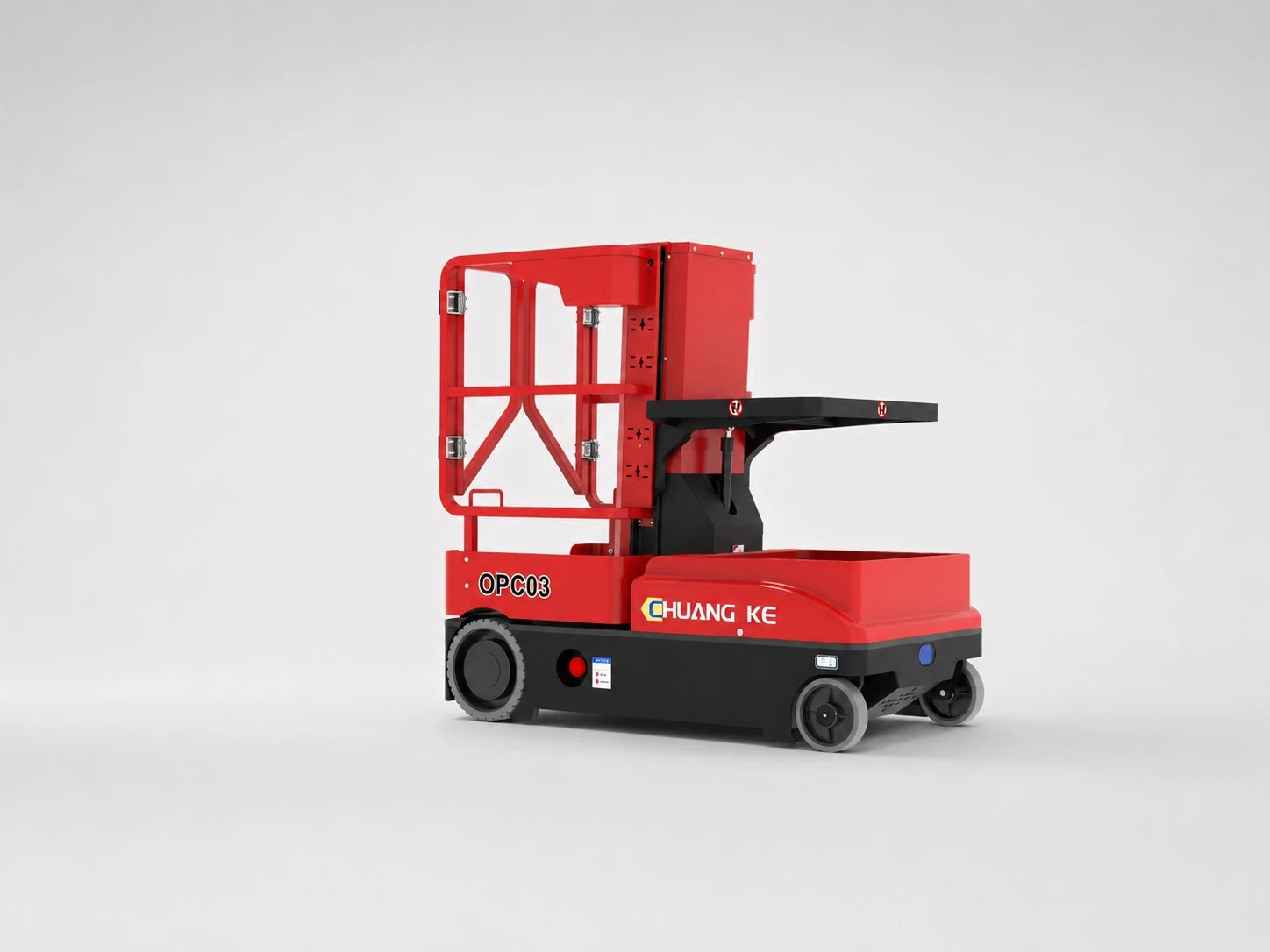
What Is a Single Man Lift?
A single man lift is a personnel access platform designed primarily to position an operator at an elevated work location. The term is used broadly in the equipment market, so buyers should confirm the machine's actual lifting mechanism, platform configuration, and rated capacity.
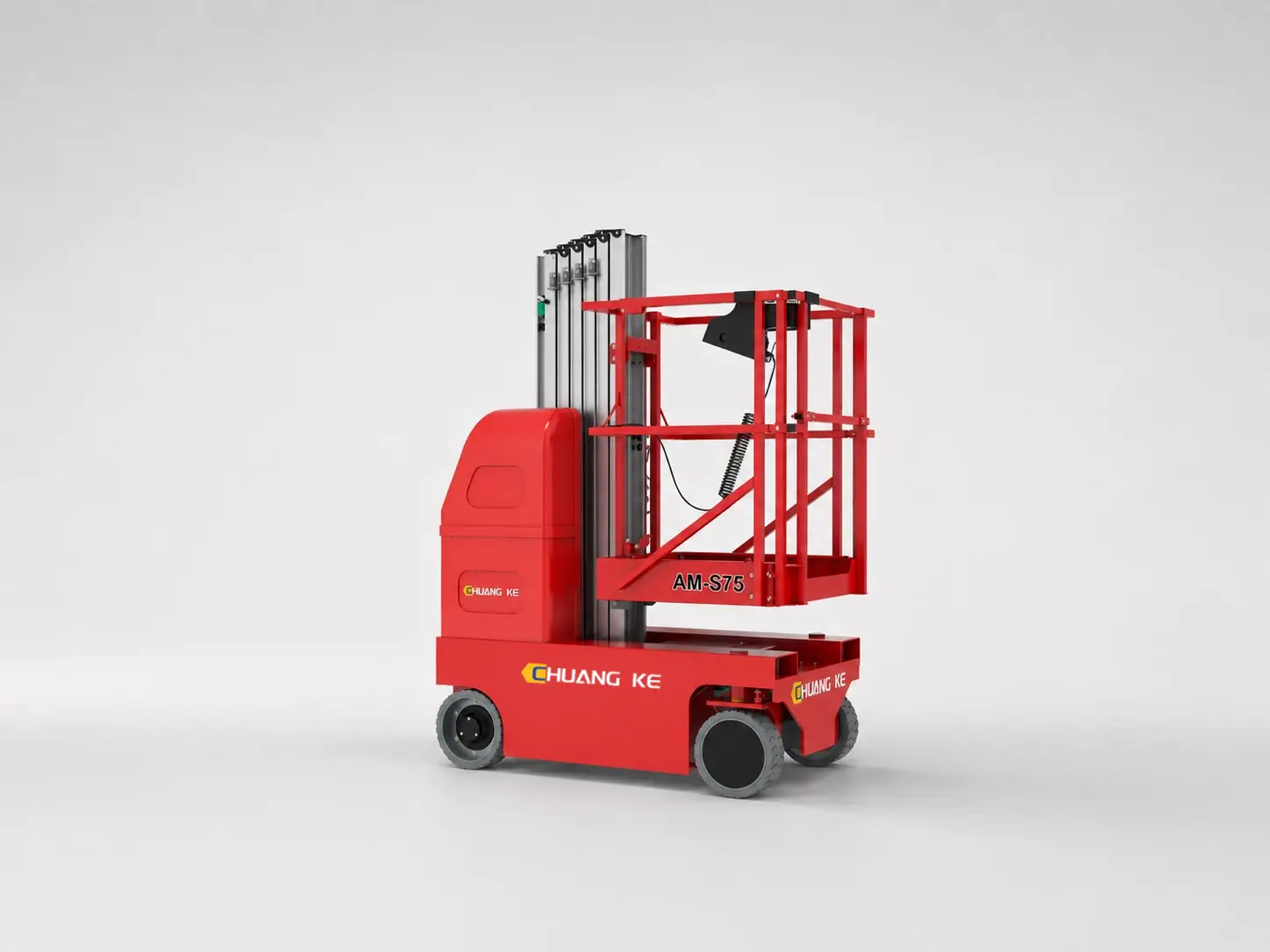
In this article, single man lift refers specifically to a self-propelled single-mast personnel lift, such as the WIZPLUSLIFT AM-S series.
How Does a Single Man Lift Work?
A single-mast lift uses a vertical mast assembly to raise and lower its platform. In a self-propelled configuration, an electric drive system allows the operator to move the machine around the work area.
The main components typically include:
Mast assembly: Provides vertical guidance and supports the lifting mechanism.
Work platform: Positions the operator at the required height.
Electric drive system: Allows the machine to travel under its specified operating conditions.
Battery and charging system: Supplies electrical power for lifting and movement.
Control system: Provides platform and ground-level operating functions.
Safety systems: Help control movement and support safe operation according to the manufacturer's design.
The exact components and operating features depend on the model.
Key Characteristics of a Single Man Lift
A self-propelled single-mast lift is often suitable for indoor environments where floor space and maneuverability are important.
For example, WIZPLUSLIFT's AM-S series has a published footprint of 1,500 mm in length and 800 mm in width. Its listed working heights range from 8,000 to 9,500 mm, depending on the model.
The AM-S series is designed for indoor applications such as warehouse operations, factory maintenance, retail facilities, and commercial building maintenance.
Its compact dimensions can help operators access areas where a larger work platform may be unnecessary or difficult to position.
What Is a Scissor Lift?
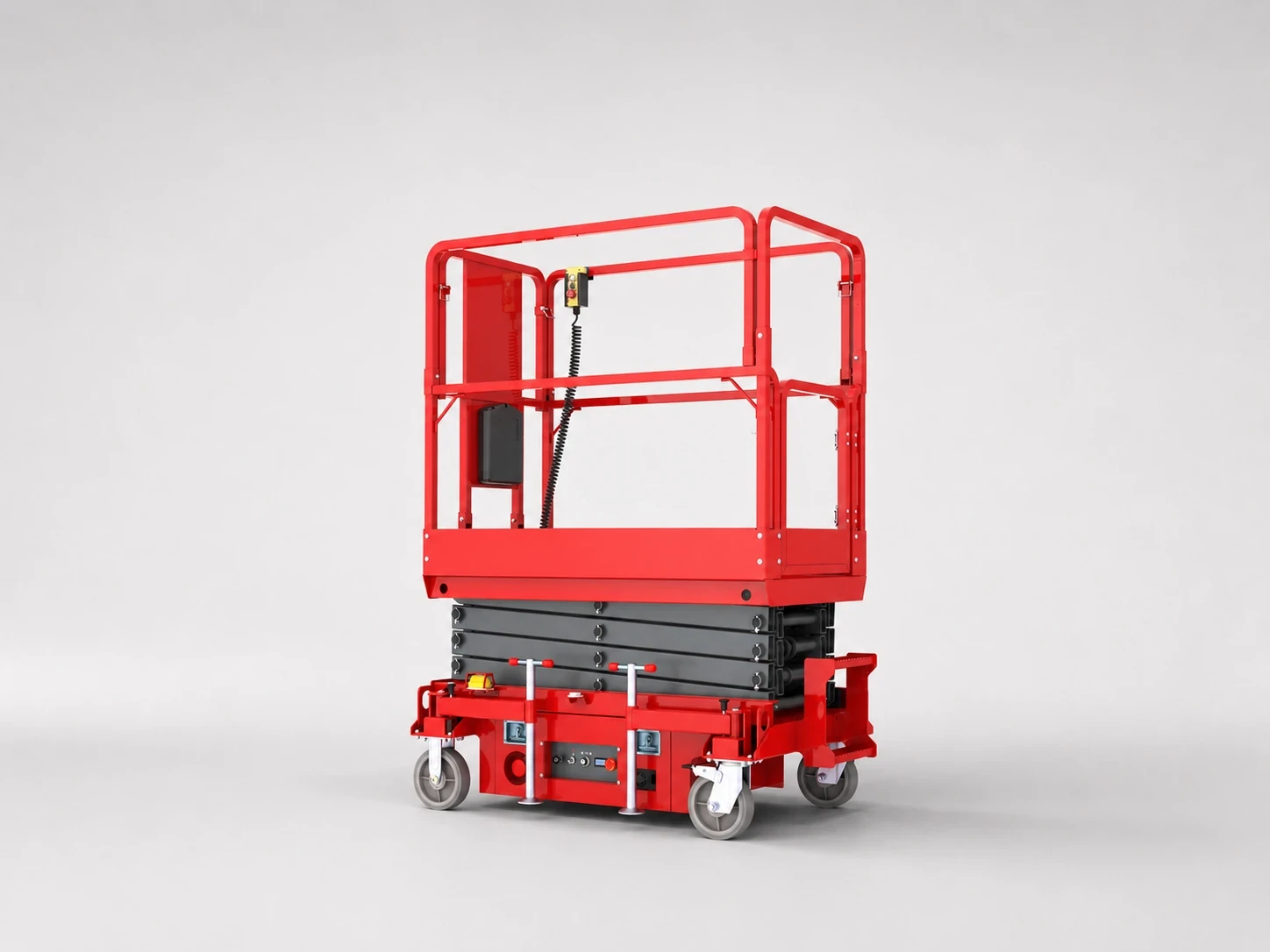
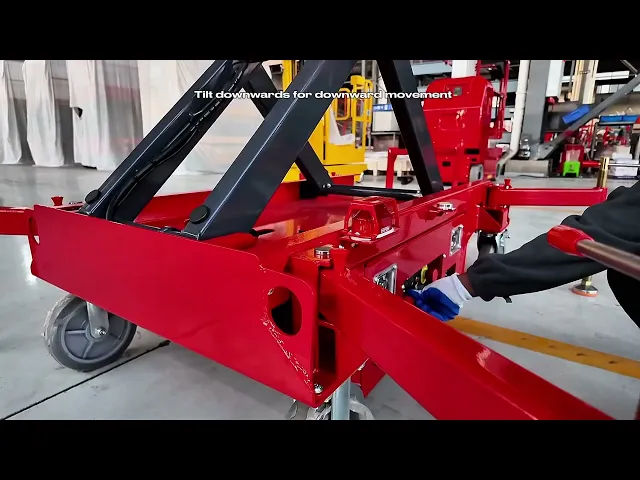
A scissor lift is an elevated work platform that uses linked, crossed supports to raise and lower the platform vertically. As the lifting mechanism extends, the platform rises; when the mechanism retracts, the platform lowers.
Electric scissor lifts are commonly used for installation, inspection, construction, warehouse maintenance, and other tasks that require a stable elevated working area.
How Does a Scissor Lift Work?
A scissor lift typically consists of a base chassis, crossed lifting arms, a platform, a power system, and operating controls.
Depending on the model, the machine may use an electric hydraulic lifting system, powered drive and steering, or a configuration that requires manual positioning.
Its platform can provide room for an operator, tools, and permitted materials. Some models are designed for one operator, while others are rated for multiple occupants. The rated capacity and occupancy must always be confirmed for the specific machine.
Key Characteristics of a Scissor Lift
Compared with a compact single-mast lift, a scissor lift can provide a larger platform and higher load capacity in certain configurations.
For example, the WIZPLUSLIFT CKJC-7858EH electric scissor lift has a published overall width of 810 mm, a platform size of 1,670 × 740 mm, and a safe working load of 300 kg. Its listed maximum safe working height is 7,800 mm.
These specifications illustrate that the scissor lift's platform and load capacity may make it more suitable for jobs involving tools, materials, or additional working space.
They do not mean every scissor lift is wider, taller, or more powerful than every single man lift. The correct comparison depends on the exact models under consideration.
Single Man Lift vs. Scissor Lift: Key Differences
The main differences involve lifting mechanism, platform arrangement, capacity, maneuverability, and intended application.
Comparison Factor | Single-Mast Single Man Lift | Scissor Lift |
|---|---|---|
Lifting mechanism | Vertical mast assembly | Crossed scissor arms |
Typical platform arrangement | Compact work platform | Platform supported by the scissor mechanism |
Working area | Often suited to individual access tasks | Can offer more room for tools and materials |
Rated load | Model dependent | Model dependent; some models support higher loads |
Footprint | Compact models are available | Ranges from compact indoor models to larger heavy-duty machines |
Maneuverability | Self-propelled models can be useful in confined areas | Depends on chassis, steering system, and model |
Working height | Depends on the mast design and model | Depends on the scissor mechanism and model |
Operating environment | Often used indoors | Indoor or outdoor use, depending on the model and conditions |
Purchase cost | Depends on configuration and supplier | Depends on size, capacity, power system, and features |
Typical selection priority | Compact access and individual maintenance | Platform space, load requirements, and work efficiency |
The table describes common design tendencies, not universal rules. A compact scissor lift may have a footprint similar to a single-mast lift, and some single-mast platforms have extension sections. Always compare actual technical specifications.
Working Height: Which Lift Reaches Higher?
Working height is an important selection factor, but buyers must distinguish working height from platform height.
Platform height is the vertical distance from the ground to the platform floor. Working height is a manufacturer-defined estimate of the height at which an operator can perform work from the platform.
Different manufacturers may use different conventions to calculate working height, so confirm the definition before comparing models.
Single Man Lift Working Height
The WIZPLUSLIFT AM-S series lists the following height ranges:
Maximum working height: 8,000–9,500 mm.
Maximum platform height: 6,000–7,500 mm.
The exact height depends on whether the AM-S06 or AM-S75 model is selected.
This range can suit maintenance work involving overhead fixtures, warehouse installations, retail facilities, and commercial building interiors.
Scissor Lift Working Height
WIZPLUSLIFT offers scissor lifts across multiple height ranges. Its compact CKJC-EH series includes models with maximum safe working heights of 5,000–6,800 mm, while the CKJC-7858EH has a listed maximum safe working height of 7,800 mm.
The heavy-duty CKJC-HD series includes configurations with maximum safe working heights ranging from 8,000 to 15,800 mm.
These examples demonstrate why buyers should not assume that all scissor lifts have a lower working height than single-mast lifts. The available range depends on the series and model.
How to Choose the Right Working Height
Use the following process:
Identify the highest point that must be reached during normal work.
Confirm whether the required measurement refers to platform height or working height.
Compare the manufacturer's published height for the exact model.
Check overhead obstructions, floor conditions, and permitted operating conditions.
Select a model that meets the task requirements without purchasing unnecessary capacity.
A taller machine is not automatically the better choice. If the job only requires a lower working height, a compact model may offer a more suitable combination of access, footprint, and cost.
Platform Size and Load Capacity
Platform size and load capacity can have a direct impact on productivity. The appropriate choice depends on how much space the operator needs and what must be carried to the work location.
When a Single Man Lift Is the Better Choice
A compact single-mast lift may be suitable when:
One operator needs access to an elevated work area.
The task requires a relatively small working platform.
The equipment must move through narrow aisles or restricted access points.
Tools and materials can remain within the platform's rated load.
The facility prioritizes a compact machine footprint.
The WIZPLUSLIFT AM-S series has a published safe working load of 159 kg and an extendable platform load capacity of 113 kg. These limits must be considered according to the applicable platform configuration.
The total load must include the operator, tools, and other permitted materials.
When a Scissor Lift Is the Better Choice
A scissor lift may be more appropriate when:
The operator needs more platform space.
The task requires multiple permitted occupants.
Tools and materials need to be carried to the working height.
The job involves repeated elevated installation or maintenance work.
The selected model's load capacity better matches the task.
For example, the WIZPLUSLIFT CKJC-7858EH lists a safe working load of 300 kg and an extension-platform load capacity of 113 kg.
The main platform and extension platform may have different load restrictions. Buyers must follow the capacity information for the specific model and configuration.
Platform Size Is Not the Only Consideration
A larger platform can improve working convenience, but it may also increase the machine's overall dimensions or affect access through doorways and narrow passages.
Before purchasing, compare:
Main platform length and width.
Extension-platform dimensions.
Overall machine width and length.
Stowed height and transport dimensions.
Rated load and any separate extension load limit.
Doorway clearance and turning requirements.
The best machine is the one that provides enough working space without creating unnecessary access or transportation problems.
Maneuverability and Access in Confined Spaces
Maneuverability matters in warehouses, shopping malls, hospitals, offices, production facilities, and other buildings where equipment must travel around fixed obstacles.
However, compact dimensions alone do not determine maneuverability. Steering design, wheelbase, turning radius, controls, and operating conditions all affect how easily a machine can be positioned.
Single Man Lift for Narrow Aisles
The WIZPLUSLIFT AM-S series has a published footprint of 800 × 1,500 mm and is designed for indoor access in confined spaces.
Its self-propelled design can help operators reposition the equipment between nearby work locations without relying on manual movement alone.
This can be useful for recurring tasks such as changing overhead lights, inspecting ceiling installations, maintaining warehouse equipment, or carrying out facility repairs.
Before selecting the model, measure the full access route, including doorway width, overhead clearance, tight turns, and floor transitions.
Scissor Lift for Indoor Access
Scissor lifts are also available in compact configurations. The appropriate model depends on the required platform dimensions, working height, and access restrictions.
For example, the WIZPLUSLIFT small electric scissor lift CKJC-EH series has a published overall width of 760 mm and platform dimensions of 1,280 × 700 mm.
This shows that a scissor lift can also be suitable for restricted indoor spaces.
For larger scissor lifts, buyers should pay particular attention to overall width, machine length, turning space, and the dimensions of the intended work area.
What to Check Before Buying
Before confirming a purchase, measure:
The narrowest doorway along the route.
The lowest overhead obstruction.
The width and length of corridors.
The space available for turning.
Elevator door and internal dimensions, if applicable.
Floor transitions, slopes, and other surface conditions.
A machine that fits through the entrance may still be unsuitable if it cannot turn or position itself safely at the work location.
Single Man Lift vs. Scissor Lift: Applications
Both equipment types can support elevated access, but they are often selected for different combinations of working space, load, and mobility.
Warehouse Maintenance
Warehouse maintenance may involve overhead lighting, sprinkler inspections, ventilation systems, signs, and equipment servicing.
A compact single-mast lift can be useful when access points are narrow and the task requires one operator with a limited set of tools.
A scissor lift may be preferable when a larger platform is needed or when the job requires more tools and materials.
The choice also depends on aisle dimensions, floor loading, rack layout, overhead hazards, and the facility's operating procedures.
Factory and Industrial Maintenance
Factories often have overhead pipes, cable trays, production equipment, and fixed machinery.
A single man lift may suit small, localized maintenance tasks in restricted spaces. A scissor lift may offer a more convenient working area for certain installation, inspection, and repair tasks.
In either case, confirm that the selected machine is designed for the operating environment and that its dimensions, capacity, and safety systems meet the job requirements.
Retail Stores and Commercial Buildings
Retail stores and commercial buildings often require quiet equipment that can operate on finished floors.
A compact electric single-mast lift may be useful for changing lights, maintaining signs, or carrying out overhead repairs in confined areas.
A compact electric scissor lift may be a better option when the job requires additional platform space.
Battery performance, tire type, floor protection, noise, doorway access, and storage requirements should all be considered.
Installation and Construction Work
Installation projects may require workers to carry tools and materials while positioning themselves at height.
A scissor lift can be advantageous when its platform size and rated capacity match these requirements. A single-mast lift may be more suitable for an individual performing a localized task in a restricted area.
Outdoor construction use requires particular attention to the model's approved environment, surface conditions, wind restrictions, stability, and operating instructions.
Do not assume that an indoor personnel lift is suitable for outdoor construction merely because it reaches the required height.
Single Man Lift vs. Scissor Lift Cost
Purchase price is only one part of the cost comparison. The total cost of ownership includes the initial equipment price, transportation, charging, maintenance, replacement parts, downtime, and the labor required to complete the job.
There is no universal rule that single man lifts are always cheaper than scissor lifts. Cost depends on the exact model, configuration, supplier, destination, and expected utilization.
1. Initial Purchase Price
The initial price is affected by working height, rated capacity, platform dimensions, drive and steering systems, battery configuration, and safety features.
A compact machine may cost less than a larger machine in some comparisons, but the equipment category alone does not determine price.
When requesting quotations, compare models with similar working heights, capacities, configurations, and documentation.
2. Shipping and Installation Costs
Transportation costs depend on the machine's shipping dimensions, weight, packaging, shipping method, and delivery destination.
Equipment that fits the intended loading and unloading arrangements may help avoid additional handling requirements.
For international buyers, request a quotation that clearly identifies the equipment price, packaging, freight arrangements, and any other applicable charges rather than comparing product prices alone.
3. Battery and Charging Costs
Electric personnel lifts and electric scissor lifts both require an appropriate power and charging arrangement.
Compare battery specifications, expected operating duration, charging requirements, replacement procedures, and battery availability.
Actual runtime depends on the battery, operating cycle, load, travel distance, and environmental conditions. Do not estimate lifetime operating costs from battery capacity alone.
4. Maintenance and Replacement Parts
Maintenance costs vary according to machine design, operating hours, service conditions, and component availability.
When comparing suppliers, ask about:
Routine inspection and maintenance requirements.
Battery and charger replacement.
Availability of electrical and hydraulic components.
Drive-wheel and tire replacement.
Technical documentation and troubleshooting support.
Spare-parts lead times.
Warranty terms and service arrangements.
A lower initial purchase price may not provide the lowest lifetime cost if the equipment is frequently unavailable or difficult to maintain.
5. Productivity and Labor Costs
The most suitable lift may reduce the time needed to complete recurring work.
For example, a compact self-propelled single-mast lift may help an operator move efficiently between several nearby maintenance points. A scissor lift with a larger platform may reduce repeated trips when the task requires more tools or permitted materials.
The benefit depends on the actual work process.
Consider the number of work locations, setup time, travel distance, repositioning frequency, required platform space, and number of workers permitted on the platform.
How to Compare Total Cost of Ownership
Use this framework when evaluating quotations:
Cost Category | Questions to Ask |
|---|---|
Purchase price | Are the models comparable in height, capacity, and configuration? |
Shipping | What are the packaging dimensions, shipping weight, and delivery charges? |
Charging | What battery and charger are supplied, and what are the charging requirements? |
Maintenance | What routine servicing and inspections are required? |
Spare parts | Are replacement components available, and what are the expected lead times? |
Downtime | How could servicing or parts delays affect operations? |
Productivity | Which machine best fits the task and minimizes unnecessary repositioning? |
Resale and service life | What support, maintenance records, and parts availability can be expected? |
For a more quantitative comparison, estimate the cost over the expected ownership period:
Total cost of ownership = purchase price + delivery and setup + energy and charging + maintenance and parts + downtime costs − resale value
This is a planning framework, not a standardized accounting formula. Use consistent assumptions and the same evaluation period when comparing machines.
Safety Considerations: Choosing the Right Equipment for the Job
Neither a single man lift nor a scissor lift is automatically safer in every situation. Safety depends on the equipment design, task, site conditions, operator competence, and compliance with the manufacturer's instructions and applicable regulations.
OSHA treats scissor lifts used in U.S. construction as mobile supported scaffold work platforms rather than aerial lifts under the aerial-lift provisions. Applicable requirements depend on the work setting and task.
Before operating either type of equipment, consider the following.
Inspect the Work Area
Check the ground or floor for holes, slopes, obstructions, unstable surfaces, and other hazards. Identify overhead structures, electrical hazards, moving vehicles, and pedestrian traffic.
Confirm that the equipment is approved for the surface and environmental conditions.
Follow Rated Capacity Limits
Include the operator, tools, and permitted materials when calculating the platform load. Observe separate limits for extension platforms where applicable.
Never exceed the manufacturer's rated capacity.
Use the Required Safety Systems
Inspect guardrails, gates, controls, emergency-stop functions, and emergency-lowering systems according to the manufacturer's instructions.
Do not bypass safety devices or operate equipment with unresolved safety-critical defects.
Train and Authorize Operators
Operators must receive the training, familiarization, and authorization required for the equipment and applicable regulations.
Training should cover the controls, operating limits, worksite hazards, emergency procedures, and pre-use inspections.
Follow Manufacturer Requirements
Traveling with the platform elevated, working on slopes, operating outdoors, and using the equipment near overhead hazards are all subject to machine-specific restrictions.
Follow the operating manual and applicable requirements rather than relying on general assumptions about the equipment category.
For further guidance, consult the official OSHA Scissor Lift Safety Guide and OSHA Aerial Lift Safety Guide.
How to Choose Between a Single Man Lift and a Scissor Lift
Use the following decision process to narrow down the right machine.
Choose a Single-Mast Single Man Lift When:
The task primarily requires one operator.
A compact footprint is important.
The work area contains narrow aisles or restricted access points.
The required platform capacity is within the selected model's rating.
The machine's working height and approved operating conditions meet the job requirements.
Choose a Scissor Lift When:
The task requires a larger platform.
The selected model offers the necessary load capacity.
Tools and materials need to be positioned on the platform.
The work involves repeated installation or maintenance activities.
The machine's dimensions and operating characteristics suit the site.
Confirm These Specifications Before Ordering
Required working height and platform height.
Rated platform load and permitted occupancy.
Main platform and extension-platform dimensions.
Overall machine width, length, and stowed height.
Turning and maneuvering requirements.
Floor condition and load-bearing limitations.
Battery system and charging requirements.
Required safety features and operating restrictions.
Shipping dimensions, spare-parts support, and warranty terms.
Purchase price and estimated total cost of ownership.
If a project has restricted access or unusual operating conditions, send the supplier the worksite dimensions and task requirements before selecting the model.
Frequently Asked Questions
Is a single man lift the same as a scissor lift?
No. A single-mast single man lift raises the platform along a vertical mast, while a scissor lift uses crossed supports to raise and lower the platform. The terms can be used broadly in the market, so confirm the exact machine type and specifications before purchasing.
Which is better for warehouse maintenance?
A single-mast lift may suit individual maintenance tasks in narrow aisles. A scissor lift may be more suitable when the job requires more platform space or a higher rated load. The correct choice depends on the warehouse layout, working height, load, and operating conditions.
Which lift is better for narrow spaces?
A compact single-mast lift can be advantageous in confined areas, but compact scissor lifts are also available. Compare the actual width, length, turning requirements, stowed height, and access route rather than choosing based on the equipment name alone.
Which lift can carry more weight?
Capacity varies by model. For example, the WIZPLUSLIFT AM-S series lists a safe working load of 159 kg, while the CKJC-7858EH scissor lift lists 300 kg. These are representative specifications, not universal category limits. Always verify the exact model and platform configuration.
Which lift reaches a greater working height?
It depends on the models being compared. The WIZPLUSLIFT AM-S series lists working heights from 8 to 9.5 m, while its scissor lift range includes models with working heights both below and above that range. Compare the exact model specifications and the manufacturer's definition of working height.
Is a single man lift cheaper than a scissor lift?
Not necessarily. Price depends on working height, load capacity, configuration, supplier, and delivery requirements. Compare total cost of ownership, including shipping, charging, maintenance, parts, downtime, and expected resale value.
Can both types of lift be used indoors?
Many models are designed for indoor use, but suitability depends on the machine's specifications and the site. Check the operating environment, floor conditions, tire type, ventilation requirements, dimensions, and overhead clearance before use.
Can a scissor lift carry two workers?
Some scissor lifts are designed and rated for multiple occupants, while others are not. Confirm the manufacturer's permitted occupancy and load limits for the exact model. Never assume that a larger platform automatically permits two operators.
What information should I provide when requesting a quotation?
Provide the required working height, platform load, number of permitted occupants, access-route dimensions, operating environment, expected usage, delivery destination, and any special floor or transportation restrictions. This helps the supplier recommend an appropriate configuration and provide a more accurate quotation.
Conclusion: Select the Lift That Matches the Task
The choice between a single man lift and a scissor lift depends on the work to be performed, the available space, required working height, platform load, and total ownership cost.
A self-propelled single-mast lift can be a practical option for individual access tasks in confined indoor environments. A scissor lift may be preferable when the job requires a larger working area or a higher rated load. However, the best choice must be based on the specifications of the actual models being compared.
Before purchasing, evaluate machine dimensions, platform capacity, maneuverability, battery requirements, maintenance support, and site conditions together. This approach helps buyers avoid paying for unnecessary capability while ensuring the equipment meets the requirements of the intended application.
WIZPLUSLIFT supplies self-propelled single-mast lifts and electric scissor lifts for industrial and commercial access applications.
Explore the WIZPLUSLIFT AM-S Single-Mast Lift Platform and the WIZPLUSLIFT Electric Scissor Lift Range to compare available models. Contact the team with your required working height, platform load, site dimensions, and operating environment to discuss the most suitable configuration.