Electric Scissor Lift Battery Guide: Lithium vs Lead-Acid, Runtime and Charging
Published
Category
Small Scissor Lift
How long an electric scissor lift runs on one charge, what lithium and lead-acid really cost over five years, and the charging habits that protect both.
How long will an electric scissor lift actually run on one charge?
Long enough for a full shift in most indoor applications — provided the pack was sized for the work, the charger matches the chemistry, and the battery is not left half empty overnight. Runtime is decided by duty cycle, temperature and charging discipline far more than by the label on the battery case.
Buyers ask for runtime in hours. Suppliers answer in volts and amp-hours. The two do not convert without knowing how many lifts the machine makes per hour, how far it travels between them, and where it is stored overnight.
The gap is expensive in both directions. Too small a pack gives you a machine that dies at 2 pm, a spare battery, and a second shift that cannot start on time. Too large a pack means paying for capacity you never use and hauling extra weight through every lift.
Then there is chemistry. Lead-acid is cheap to buy and expensive to live with: watering, equalising, ventilation, and a shorter life if it is cycled deeply. Lithium costs more upfront and asks for very little afterwards. Which one is cheaper depends on how hard the machine works, which is why every honest comparison starts with the duty cycle.
This guide covers what actually drains an electric scissor lift battery, how to estimate runtime before you buy, how lead-acid and lithium compare over five years, the charging habits that decide pack life, and what cold and heat do to every number above.

What Actually Drains an Electric Scissor Lift Battery
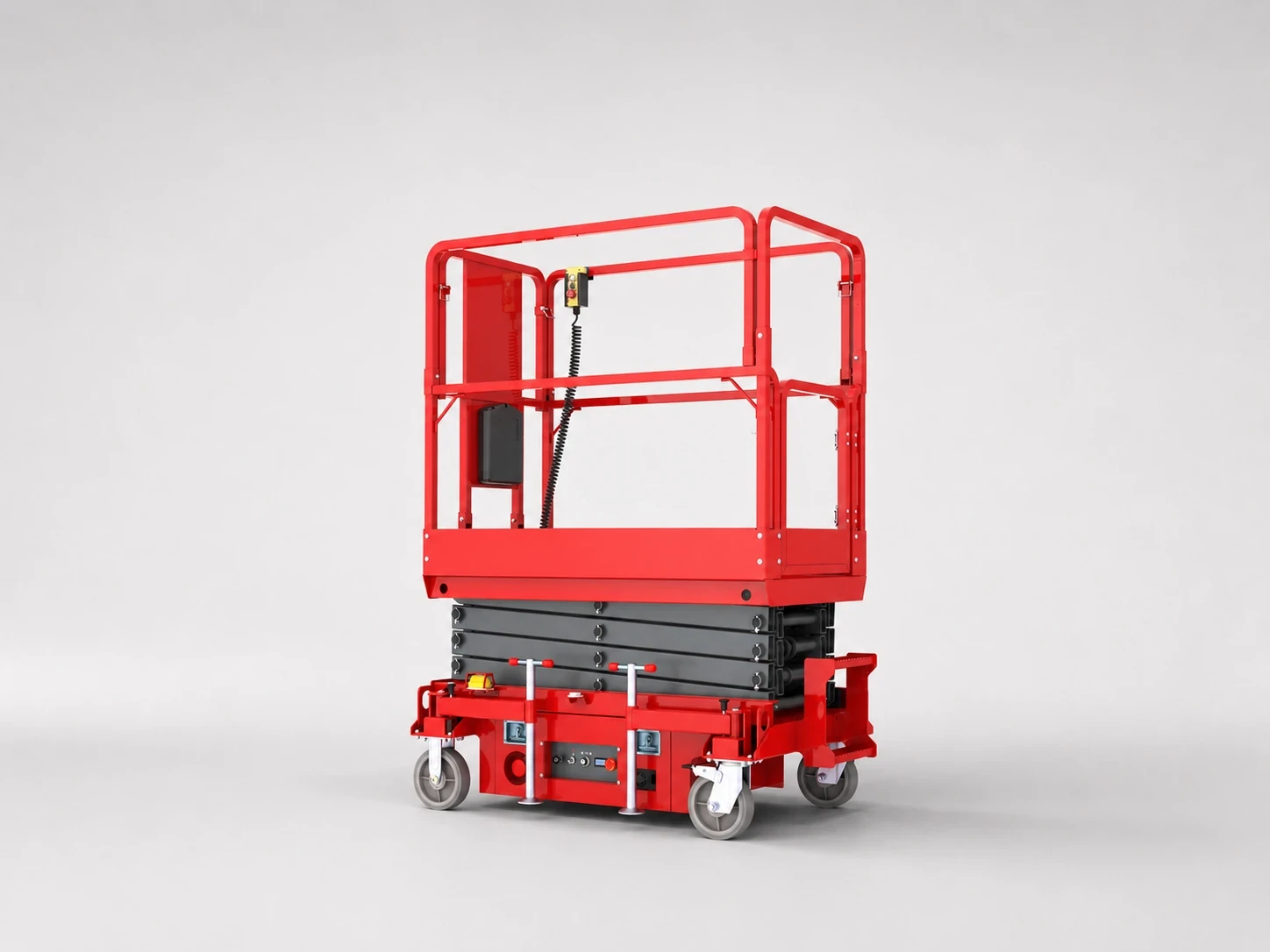
Drive type changes the energy profile as much as chemistry does: electric, semi-electric and hydraulic scissor lifts draw a pack down in visibly different ways.
A scissor lift is a hydraulic machine with an electric motor bolted to it. Nearly every joule the pack delivers ends up moving the machine or pushing oil into a cylinder. Knowing how that energy splits is the difference between an estimate and a guess.
Drive Time Is Rarely the Dominant Load
Travel is cheap. On a level warehouse floor a compact electric scissor lift draws only a few amps to move at walking pace, and most machines spend a small fraction of the shift travelling. A machine covering 300 m in a shift runs its drive motor for minutes, not hours.
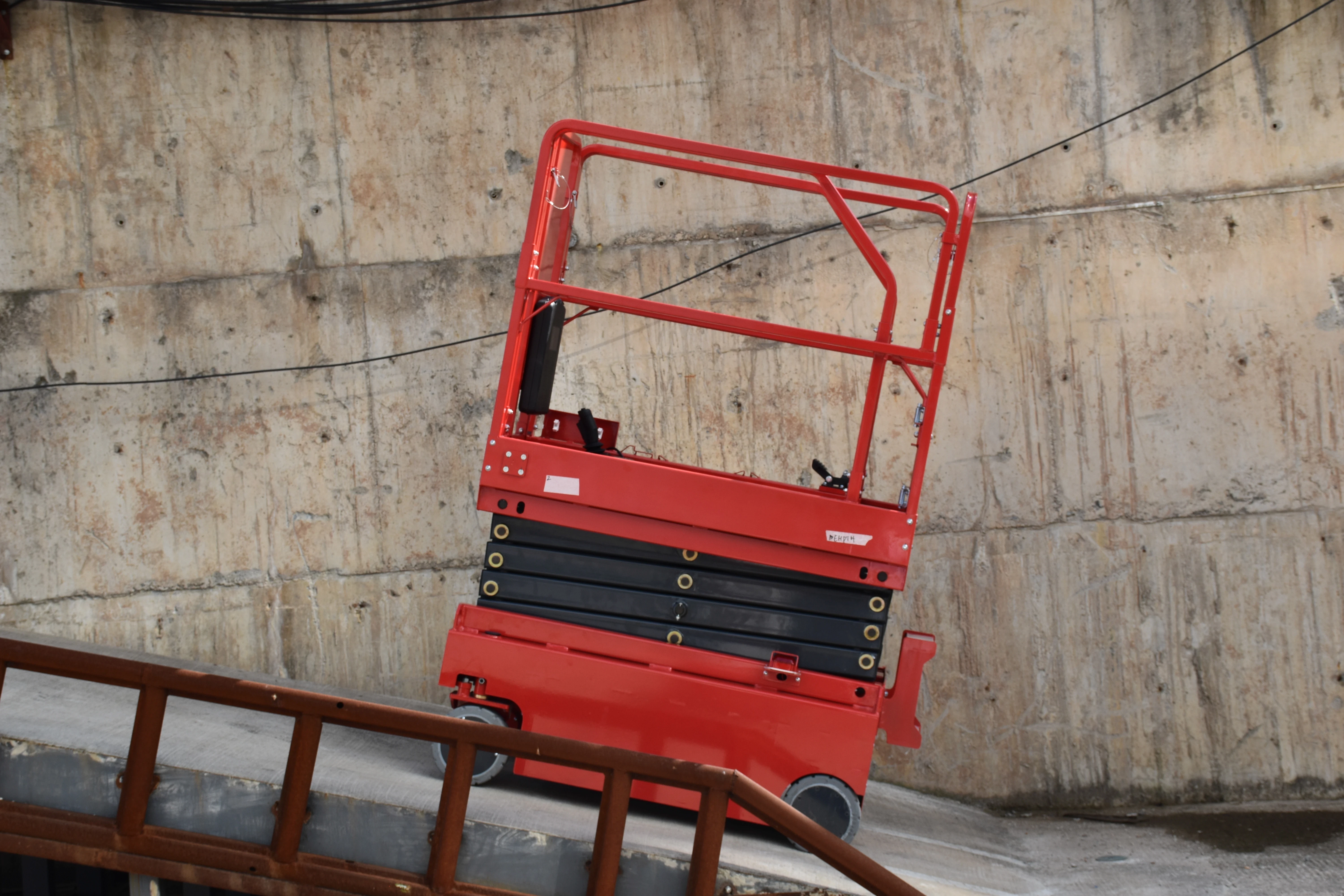
The exception is outdoor or ramped work, where grade resistance, gravel and repeated starts multiply the draw. A machine climbing a ramp ten times an hour is not doing the same job as one crossing a level floor.
Every Lift and Lower Cycle Costs Energy
Lifting is where the energy goes. Raising a loaded platform means lifting the platform, the load and the scissor stack itself, and hydraulics are not perfectly efficient — a reasonable planning figure is that roughly a third of the electrical energy is lost as heat in the pump, valves and hoses.
Lowering is close to free, because gravity does the work and the fluid returns through a valve. That is why twenty long lifts an hour cost less than sixty short ones: it is the number of strokes, not the height alone, that sets the draw.
Idle, Heat and Floor Conditions
A machine left switched on between tasks still draws current for controls and lights — small, but measurable over eight hours. Soft floors, debris and repeated door thresholds add rolling resistance, and cold hydraulic oil raises pressure and current until the system warms up, which is why the first twenty minutes of a winter shift cost more than the rest of it.
Duty Cycle: The Number Buyers Forget to Ask For
Duty cycle is the honest description of the job: lifts per hour, travel per lift, load weight, and hours of real use. Two customers buying "the same lift" can differ by a factor of four, which is exactly why runtime questions get vague answers.
Write it down before you compare batteries. Even a rough version — "25 lifts an hour, 8 hours, 300 kg of tools and material" — turns a marketing claim into something you can check.
A scissor lift spends most of its charge on travel rather than on lifting, which is why how a scissor lift works matters more than its rated platform height when estimating runtime.
How to Estimate Runtime Before You Buy
No manufacturer knows your duty cycle, so no datasheet can give an exact number. You can still get close enough to choose between two packs, and to know whether one charge covers a shift.
Start With Energy, Not Amp-Hours
Amp-hours only mean something alongside voltage. Convert to kilowatt-hours, then discount for usable capacity. Lead-acid should not go below roughly 50% on a regular basis, so a 4.8 kWh nominal pack gives about 2.4 kWh of daily usable energy. A lithium pack of the same nominal rating can be cycled to 85–90%, closer to 4 kWh usable — enough to change how a "same capacity" comparison reads.
The Energy-Per-Lift Method
Work is mass times gravity times height. Raising a 500 kg combined platform-and-load mass through 4 m is about 19.6 kJ, or 5.5 Wh. At a combined hydraulic and motor efficiency of roughly 65%, each stroke costs about 8 Wh of battery energy.
That number is small, which is the point: a lift is not a battery killer per stroke. Two hundred strokes a day at 8 Wh is 1.6 kWh. Add travel, idle draw and cold starts at around 25%, and the shift needs about 2 kWh.
A Worked Example for a One-Shift Day
Input or result | Value | Basis |
|---|---|---|
Platform + load mass | 500 kg | Operator, tools, materials |
Lift height | 4 m | Average, not maximum |
Mechanical work per lift | 5.5 Wh | m × g × h |
Electrical energy per lift | 8 Wh | ≈65% system efficiency |
Lifts per shift | 200 | 25 per hour × 8 hours |
Lift energy per shift | 1.6 kWh | 200 × 8 Wh |
Travel, idle, cold start | 0.4 kWh | +25% allowance |
Energy needed per shift | ≈2.0 kWh | Rounded |
Usable pack energy | 2.4 kWh | 4.8 kWh nominal at 50% |
Headroom | ≈20% | One shift, not two |
The conclusion is unglamorous: this machine covers one shift with a thin margin and cannot cover two. A two-shift operation needs roughly 4.8 kWh of usable energy, a mid-shift opportunity charge, or a battery swap — and the cheapest of those is usually the charging habit, not the bigger pack.
Keep a 20% Reserve
Never plan to use the last 20% on a working day. Low-voltage cutouts are protection, not planning: they trip earlier on cold mornings, on aged cells and under a heavy lift, which is exactly when the machine is in the air with an operator on the platform. Treat 20% as the floor and let it absorb what you cannot model — a colder week, a heavier load, a longer route.
The hydraulic versus electric choice loads the pack differently: hydraulic drive can run longer between charges on the same capacity, at the cost of weight and service complexity.

Lithium vs Lead-Acid: The Real Cost Comparison
Most buyers compare purchase prices and stop, which is the most expensive mistake in this decision. The invoice is roughly a third of what the battery costs over five years.
Upfront Price and Weight
Lead-acid wins on price: a pack of comparable nominal capacity typically costs half to a third of a lithium pack, and it is a mature commodity that a competent technician can service without special tools. It loses on weight, typically 40–60% heavier for the same usable energy, which shows up as rolling resistance, more current on every start, and floor loading on upper levels.
Cycle Life and Replacement Timing
Lead-acid in a well-maintained lift typically delivers 800–1,500 cycles to 80% capacity and three to five years in daily use. Lithium iron phosphate is usually quoted at 2,000–4,000 cycles and five to eight years, with the management system absorbing abuse that would quietly kill a lead-acid pack.
At 250 cycles a year that is one or two lead-acid replacements over five years against zero or one lithium replacement. At 60 cycles a year the advantage nearly disappears, because neither pack reaches its cycle limit before the calendar does.
Five-Year Cost Comparison
The figures below are indicative street prices for packs used in compact electric scissor lifts, not a quote for any machine. Substitute your supplier's numbers; the shape of the comparison usually survives.
Cost item | Lead-acid | Lithium (LiFePO4) |
|---|---|---|
Purchase price, indicative | $400–$900 | $1,400–$3,000 |
Usable share of nominal capacity | ≈50% | ≈85% |
Cycles to 80% capacity | 800–1,500 | 2,000–4,000 |
Replacements over 5 years at 250 cycles/yr | 1–2 | 0–1 |
Battery spend over 5 years | $800–$2,700 | $1,400–$3,000 |
Routine maintenance | Watering, terminals, equalising | Visual check, BMS diagnostics |
Time to full charge | 8–10 hours | 2–4 hours |
Weight for the same usable energy | Heavier | 40–60% lighter |
Read the table as a range, not a verdict. The crossover is usually between 60 and 150 cycles a year: below it, lead-acid is cheaper and simpler; above it, lithium repays the premium in hardware and in labour avoided.
Where Lead-Acid Still Wins
Lead-acid remains right for machines used a few hours a week, for sites with a ventilated charging room and a watering routine, and for buyers whose downtime is not measured. It is also more forgiving of the failure mode that kills lithium: storage. A lead-acid pack left flat will sulfate and lose capacity, but usually still accepts a charge; a deeply discharged lithium pack may never wake up.
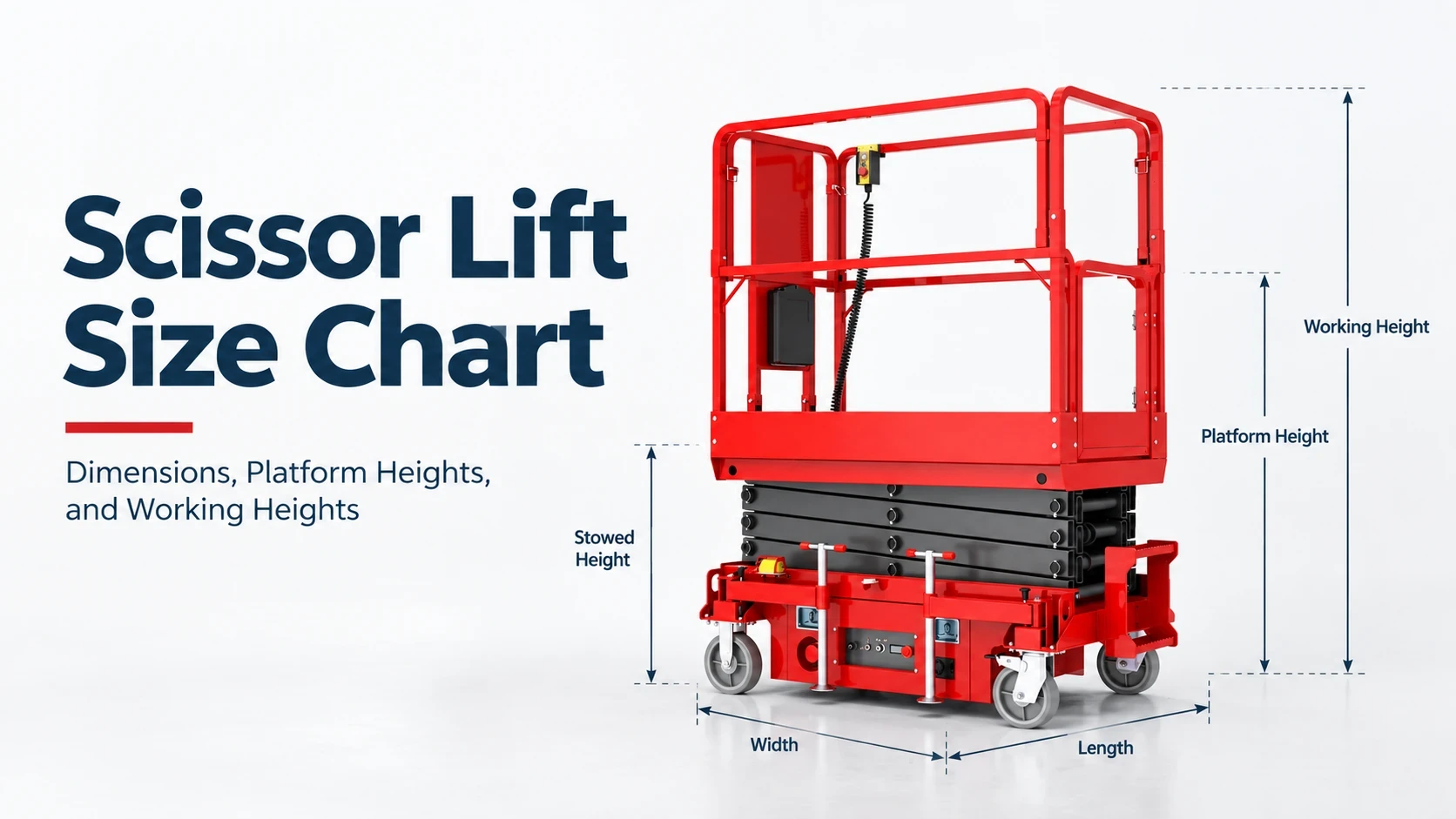
Deck size and platform height set the energy budget, so use the machine's actual dimensions rather than the brochure headline; the scissor lift size chart is the usual reference for the common frame sizes.

Charging Habits That Decide How Long the Battery Lasts
Most batteries do not die of age. They die of the routine they were given: the wrong charger, the wrong depth of discharge, or a charging bay next to a heater.
Opportunity Charging vs Deep Discharge
Lead-acid dislikes both extremes. Left partially charged, lead sulfate crystallises on the plates; repeatedly deep-discharged, the grids corrode and active material sheds. Put it back on charge as soon as the shift ends, and avoid routine discharges below 50%.
Lithium is the opposite. It has no memory effect and is comfortable being topped up during breaks, which is why ten minutes at lunch and twenty between tasks suit it so well. What it dislikes is sitting at 100% in a hot room, or being stored at low charge for weeks.
The 80% Rule and When It Applies
If the management system allows a charge limit, keeping daily charging to around 80–90% slows calendar ageing on lithium, at the cost of some range; top up to 100% before a long shift or weekly so the cells balance. For lead-acid the rule inverts: charge to 100% every time. Partial charging is the fastest way to lose capacity, and a periodic equalising charge is maintenance, not an extra.
Charger Matching, Ventilation and Charge Windows
The charger must match the chemistry, not just the connector. A lead-acid charger applied to lithium will overcharge it because it expects voltage to sag as the pack fills; a lithium charger applied to lead-acid stops too early and leaves it sulfating. Flooded lead-acid produces hydrogen while charging and needs ventilation; lithium needs a bay that is dry but not hot. The charge window then sets the shift pattern: eight to ten hours allows one charge a day, two to four hours makes a break enough.
Many "battery" complaints turn out to be controller or charger faults, and separating them is the first step in diagnosing the five most common electric scissor lift problems.
Temperature: The Runtime Variable Nobody Budgets For
Capacity is quoted at 25 °C, and every degree away from that costs usable energy. The effect is large enough to turn a comfortable one-shift pack into a marginal one in January.
Cold Weather
At 0 °C a lead-acid pack delivers roughly 80% of rated capacity, and at −10 °C closer to 65–75%, because the electrolyte is more viscous and the reaction slows. Lithium loses less capacity but has a harder constraint: most management systems refuse to charge below 0 °C, because plating lithium onto the anode permanently damages the cell.
A machine parked in an unheated yard overnight may therefore arrive with less range and a refusal to charge at lunch, until the pack warms. Cold also thickens hydraulic oil, raising current draw through the first lifts of the day.
Heat
Heat is the quiet killer. Lead-acid ageing roughly doubles for every 10 °C above 25 °C, so a pack beside a heater or in a sun-baked container can lose half its life without ever being deeply discharged. Lithium fares better but still ages faster when stored hot and full, and its management system derates charging to protect the cells.
Seasonal Adjustment
Ambient temperature | Usable capacity, lead-acid | Usable capacity, lithium | What to do |
|---|---|---|---|
Above 30 °C | Full, ageing accelerates | Full, charge may derate | Charge in shade; do not store hot and full |
15–25 °C | Reference | Reference | Normal routine |
0–5 °C | ≈80–90% | ≈85–90% | Charge promptly after use |
−10 °C | ≈65–75% | ≈75–85%, no charge below 0 °C | Warm the pack before charging |
Below −15 °C | ≈55–65% | ≈70–80% | Store indoors; plan a shorter shift |
If the machine works outdoors in winter, size the pack against the cold-weather figure, not the standard one. A pack that covers eight hours in June may cover six in January, and six is what you have to promise the customer.
When comparing quotes, check whether the figure is working height or platform height — the difference is roughly the operator's height, and battery sizing follows the platform.
Battery Life, Replacement and Specification Checklist
Eventually every pack charges faster than it used to and holds less than it should. Recognising that point early is cheaper than discovering it with the platform in the air.
Signs the Pack Is Near End of Life
Watch for runtime down more than 30% against new, a charge that finishes suspiciously quickly, voltage sagging under a normal lift, and repeated cutouts on jobs that used to be routine. On lead-acid, rising water consumption and uneven specific gravity across cells are early warnings; on lithium, a swelling case or a state-of-charge reading that jumps from 40% to 5% means the pack comes out of service, not that it needs another cycle.
Replacement Math
Compare cost per usable kilowatt-hour per cycle, not sticker price. A lead-acid pack replaced every 18 months at 250 cycles a year costs roughly $450 a year in hardware; a lithium pack lasting six years costs roughly $330, before counting two extra swap-outs and the downtime when a pack fails mid-shift. For low-utilisation machines the maths reverses, because the lithium pack is replaced on the calendar and the premium is never worked off.
What to Ask Before You Order
Usable energy in kilowatt-hours, not nominal amp-hours.
Chemistry, and whether the management system permits a charge limit.
Cycle life at the depth of discharge you will actually use.
Charger type and charge time from 20% to full.
Weight of the pack and whether the machine is balanced for it.
Minimum operating and charging temperature, in writing.
Replacement lead time and whether the pack is a standard size.
WIZPLUSLIFT builds battery-electric scissor lifts across the CKJC-EW universal wheel series and the CKJC-EH hydraulic steering series, with the battery configured against a duty cycle rather than sold as a fixed package.
Machine size drives the energy budget directly: choosing the right working height usually settles the platform size, and with it the pack you need.
If the machine has to climb a ramp on site, the runtime assumption weakens: slope travel draws more current than flat running and may rule the model out altogether.
Frequently Asked Questions
How long does an electric scissor lift battery last on one charge?
For a compact machine doing 20–25 lifts an hour indoors, one charge typically covers an eight-hour shift with a reserve. Heavier duty, outdoor work, ramps and cold weather can cut that by a third or more, so the only reliable figure comes from your own duty cycle.
Is lithium worth the extra cost on an electric scissor lift?
It is worth it when the machine runs most days: the pack usually outlives two lead-acid packs, charges in a fraction of the time, needs no watering, and can be opportunity-charged during breaks. For a machine used a few hours a week, lead-acid is cheaper over its life because the lithium cycle advantage is never used.
Can I charge an electric scissor lift battery after every use?
Yes for lead-acid, and you should: leaving it partially charged causes sulfation. Lithium also tolerates topping up, though keeping it at 100% in a hot room accelerates ageing, so many operators charge to 80–90% daily and top up before a long shift.
Does cold weather reduce scissor lift battery runtime?
Yes. At 0 °C a lead-acid pack gives roughly 80% of rated capacity and at −10 °C closer to 65–75%. Lithium holds capacity better but most management systems block charging below 0 °C, so a cold machine may need to warm up before it accepts a charge.
How do I know when the battery needs replacing?
Runtime down by more than 30% against new, a charge that completes unusually fast, voltage sag under a normal lift, repeated cutouts, or — on lithium — a swelling case or a state-of-charge reading that drops without warning. Any of these justifies a load test before the pack fails on site.
Can I use a lead-acid charger on a lithium battery?
No. A lead-acid charger expects voltage to sag as the pack fills and will overcharge a lithium pack, which can permanently damage it. The charger must match the chemistry, not just the connector.
How much does a replacement scissor lift battery cost?
Indicatively, a lead-acid pack for a compact electric scissor lift runs from a few hundred to under a thousand dollars, and a lithium pack from roughly one and a half to three thousand, depending on capacity and supplier. Compare cost per usable kilowatt-hour per cycle rather than the sticker price.
Should I buy a spare battery?
Only if the duty cycle genuinely exceeds one charge per shift and a mid-shift charge is not practical. A spare means a second charging station, a safe storage location and a swap procedure; for many operators a faster charger or a longer break is cheaper.
Buying machine and battery together is usually cheaper than retrofitting, and choosing a compact scissor lift is the stage where the duty cycle should be agreed.
Conclusion: Size the Battery to the Shift, Not to the Datasheet
Battery runtime is a calculation, not a claim. Count the lifts, multiply by the energy per stroke, add the travel and idle allowance, and compare the result with usable kilowatt-hours rather than nominal amp-hours. That one habit prevents most runtime disappointments in this category.
Then choose the chemistry against utilisation: daily use rewards lithium, occasional use rewards lead-acid, and every use rewards a charger that matches the pack and a routine that keeps it near full without cooking it.
The full model range and the charging options that ship with it are listed in the product catalogue.