Single-Stage vs. Multi-Stage Scissor Lift Structure: What Is the Difference?
Published
Category
Small Scissor Lift
Compare single-stage and multi-stage scissor lift structures, including lifting height, design complexity, stability, maintenance, and applications.
Scissor lifts are widely used in construction, warehousing, manufacturing, and industrial maintenance because they provide a practical way to raise workers, tools, and materials to elevated work areas. However, not all scissor lifts use the same structural configuration. One important difference is whether the lifting mechanism uses a single stage or multiple stacked stages of crossed arms.
A single-stage scissor lift uses one vertical level of scissor linkage, while a multi-stage scissor lift combines two or more levels to achieve greater vertical travel within a particular equipment layout. This structural difference affects the available lifting height, mechanism complexity, maintenance requirements, and engineering considerations.
Understanding the difference between single-stage and multi-stage scissor lift structures helps equipment buyers select the right configuration for their working environment. It also helps engineers and maintenance professionals understand how the lifting mechanism is arranged and which design factors require attention.
This guide compares the two configurations, explains their advantages and limitations, and outlines the key factors to consider when choosing a scissor lift for an industrial application.

What Is a Single-Stage Scissor Lift?
A single-stage scissor lift uses one level of crossed arms to raise and lower the platform. The arms connect through pivot joints and form a scissor-like linkage that changes its angle as the lifting mechanism operates.
When the actuator moves, the arms rotate around their pivot points, increasing or decreasing the vertical distance between the platform and the chassis. Depending on the design, rollers or sliding guides allow selected connections to move as the mechanism opens and closes.
The main advantage of a single-stage structure is its relatively straightforward mechanical arrangement.
With fewer vertically stacked stages, the mechanism generally has fewer interstage connections and a simpler structural layout to design and maintain. This can make it suitable for applications that require moderate vertical travel without the need for a taller multi-stage assembly.
Single-stage scissor mechanisms are commonly found in industrial lift tables, material-positioning equipment, and other lifting applications where the required travel can be achieved with one stage.
Their suitability depends on the required working height, platform dimensions, folded height, load rating, and overall equipment configuration.

What Is a Multi-Stage Scissor Lift?
A multi-stage scissor lift combines two or more levels of crossed-arm linkages arranged vertically. Each stage contributes to the overall extension of the lifting mechanism.
A double-stage scissor lift has two stacked scissor stages, while a three-stage configuration uses three. Additional stages can provide greater vertical travel without requiring a single set of extremely long arms.
When the mechanism extends, the stacked stages work together to raise the platform. The exact movement of each stage depends on the linkage geometry, actuator arrangement, and any synchronization or guidance system incorporated into the design.
Multi-stage structures are particularly useful when an application requires significant vertical travel but must operate within a defined equipment footprint.
However, adding stages introduces more structural members, joints, and interfaces. Engineers must evaluate the alignment, movement, load distribution, structural stiffness, and overall stability of the complete assembly.
A multi-stage scissor lift is not automatically more suitable for every application. Its main benefit is the ability to achieve a greater lifting range when the equipment is properly designed for that requirement.
Single-Stage vs. Multi-Stage Scissor Lift: Key Differences
Both configurations use crossed arms to convert actuator movement into vertical platform movement. The main difference is how many lifting stages are stacked within the mechanism.
Comparison factor | Single-stage scissor lift | Multi-stage scissor lift |
|---|---|---|
Structural arrangement | One vertical level of crossed arms | Two or more vertically stacked levels |
Potential lifting height | Suited to the travel available from one stage | Can provide greater vertical travel |
Mechanism complexity | Generally fewer interstage joints | More structural links and interfaces |
Design considerations | Arm geometry, actuator placement, frame and joint strength | All single-stage considerations plus interstage alignment, guidance and cumulative tolerances |
Maintenance | Usually fewer linkage components to inspect | More joints, guides and interfaces may require inspection |
Space requirements | Depends on the required travel and platform design | Can achieve greater travel within a defined footprint, depending on configuration |
Load capacity | Determined by the complete equipment design | Also determined by the complete equipment design, not simply the stage count |
Typical applications | Material positioning and applications with moderate travel requirements | Applications requiring greater vertical reach |
These are general characteristics rather than specifications for every model. Actual performance depends on the manufacturer's design, operating conditions, and rated limits.

How Does Lifting Height Differ Between Single-Stage and Multi-Stage Designs?
Lifting height is one of the main reasons engineers consider a multi-stage scissor lift.
In a single-stage mechanism, vertical movement depends on the length of the arms and the angles through which they rotate. The maximum extension is limited by the linkage geometry and the equipment's structural and operating constraints.
When additional scissor stages are stacked vertically, their combined geometry can provide greater overall platform travel.
Why multiple stages can increase vertical travel
Each stage contributes to the vertical extension of the mechanism. By stacking stages, designers can increase the total lifting range without relying exclusively on longer individual arms.
This approach can be useful when the equipment must reach a higher working position while remaining within a defined floor-space envelope.
However, adding stages does not guarantee a particular working height or collapsed height. Those dimensions depend on arm length, pivot positions, platform and chassis dimensions, and the overall arrangement.
Working height versus platform height
When comparing scissor lifts, buyers should distinguish between platform height and working height.
Platform height describes the height of the working surface above the ground. Working height is a separate manufacturer-defined specification, typically based on the platform height plus an assumed worker reach.
Always check how the supplier defines these measurements before comparing different models.
How Does Structural Complexity Change with Multiple Stages?
The main engineering trade-off is that greater vertical travel generally requires a more involved structural arrangement.
A single-stage mechanism has one level of crossed arms. Engineers must evaluate the forces in the arms, pivot joints, actuator connections, platform, and chassis throughout the lifting cycle.
A multi-stage mechanism introduces additional interfaces between the stacked linkages. The design must account for how these stages move together and how forces transfer through the complete assembly.
Additional pivot joints and interfaces
Every additional stage introduces more structural connections and potential wear points. Joint dimensions, bearing surfaces, clearances, and alignment must be considered in the overall design.
Interstage alignment
The stacked linkages must move through the intended operating range without unwanted binding or excessive misalignment. Depending on the configuration, rollers, sliding guides, or other guidance arrangements may be needed.
Structural stiffness and deflection
The complete assembly must resist the loads and deformations expected during operation. Engineers need to evaluate the relationship between arm geometry, connection details, frame stiffness, and the extended configuration.
Manufacturing tolerances
Dimensional variation can accumulate across a multi-stage assembly. Accurate pivot locations, consistent component dimensions, and proper assembly procedures help the mechanism operate as intended.
These considerations do not mean that multi-stage structures are inherently unreliable. They mean that their design and verification must address the additional complexity created by the stacked arrangement.
Single-Stage vs. Multi-Stage Scissor Lift: Load Capacity and Stability
One common misconception is that a multi-stage scissor lift automatically has a higher load capacity because it has more crossed arms.
In practice, rated load capacity depends on the complete structural and mechanical system, including the arm dimensions, material properties, pivot connections, actuator capacity, platform frame, chassis, and operating conditions.
A single-stage design can be engineered for demanding loads, while a multi-stage design can be engineered for applications that require both greater travel and an appropriate rated capacity. Neither conclusion should be drawn from the stage count alone.
How load distribution affects performance
A load positioned near the center of a platform may produce different structural reactions from a load positioned near one edge. The distribution of forces depends on the platform dimensions, linkage geometry, and supporting structure.
Design verification must account for the loading conditions permitted by the equipment specification.
Why stability matters at greater heights
As a scissor lift rises, its center of gravity and susceptibility to external disturbances may change. Overall stability depends on several factors, including the chassis and base geometry, platform load, operating height, ground conditions, and environmental limits.
For multi-stage equipment, the extended structure must be evaluated as a complete assembly. Additional stages do not inherently make a lift unstable, but the intended height and operating conditions must be addressed in the design.
Users should operate the equipment within its rated capacity and follow the manufacturer's requirements for ground conditions, wind, movement, and loading.
Maintenance Differences Between Single-Stage and Multi-Stage Scissor Lifts
Maintenance requirements depend on the specific model and its operating environment. However, the number and arrangement of structural components can affect the inspection workload.
Single-stage scissor lift maintenance
A single-stage structure generally has fewer vertically stacked linkage interfaces. Inspection commonly focuses on the structural arms, pivot joints, rollers or sliding guides where fitted, fasteners, actuator connections, and supporting frame.
Multi-stage scissor lift maintenance
A multi-stage mechanism requires attention to the same basic components, along with the additional connections and interfaces between stages.
Maintenance personnel may need to inspect more pivot points, guide surfaces, alignment conditions, and other components specified by the manufacturer.
What both configurations have in common
Both types require appropriate pre-use checks, scheduled maintenance, and prompt investigation of suspected defects.
Cracks, abnormal movement, excessive joint clearance, damaged rollers, hydraulic leakage, or other defects should be assessed according to the manufacturer's procedures. Equipment should not continue operating when a suspected problem could affect safe operation.
The correct inspection frequency and service procedures must come from the equipment documentation and applicable requirements, not from stage count alone.
Common Applications of Single-Stage and Multi-Stage Scissor Lifts
The right structure depends on the required vertical travel, operating environment, load, and space available.
Single-stage scissor lifts
A single-stage configuration may be suitable for:
Industrial workstations requiring moderate vertical adjustment.
Pallet and material positioning.
Production and assembly operations.
Applications where a relatively straightforward lifting mechanism meets the required travel.
For these uses, a single stage may provide sufficient movement without the additional structural interfaces of a multi-stage arrangement.
Multi-stage scissor lifts
A multi-stage configuration may be suitable for:
Elevated maintenance and installation work.
Applications that require greater working height.
Warehouses and industrial facilities with specific overhead-access requirements.
Tasks where additional vertical travel is needed within a defined equipment footprint.
For mobile elevated work platforms, the appropriate configuration also depends on the site's access conditions, platform dimensions, ground requirements, and intended operating environment.
These examples are general guidance. The equipment's published specifications and intended use should determine whether a particular model is suitable.
How to Choose Between a Single-Stage and Multi-Stage Scissor Lift
Before selecting a small scissor lift, define the actual requirements of the application instead of starting with the number of stages.
1. Determine the required working height
Calculate the height needed to complete the task and confirm whether the supplier specifies platform height, working height, or both.
If the required travel exceeds what a suitable single-stage configuration can provide, a multi-stage design may be worth evaluating.
2. Confirm the rated load capacity
Include the intended personnel, tools, materials, and other permitted loads. Verify that the model's rated capacity and loading restrictions match the task.
Do not use the number of arms or stages as a substitute for a published capacity rating.
3. Check the available space
Consider the available floor area, access routes, doorways, ceiling clearance, and height of the equipment when fully lowered.
A multi-stage design may provide additional vertical travel within a defined footprint, but actual folded dimensions must be checked for the model.
4. Evaluate the operating environment
Indoor warehouses, manufacturing floors, and outdoor construction sites can have different requirements.
Review the surface conditions, terrain, maneuverability, environmental restrictions, and any limitations specified by the manufacturer.
5. Compare maintenance and service requirements
Ask about inspection procedures, replacement parts, service documentation, and technical support. For multi-stage equipment, confirm that the documentation addresses the additional linkage interfaces and relevant inspection points.
6. Review the manufacturer's specifications
Compare the actual models under consideration, including their working heights, platform dimensions, rated capacities, overall dimensions, and operating restrictions.
A suitable choice is the structure that meets the work requirements within its approved operating limits, not necessarily the one with the fewest or most stages.
Frequently Asked Questions
What is the difference between a single-stage and a multi-stage scissor lift?
A single-stage scissor lift uses one level of crossed arms, while a multi-stage design stacks two or more levels vertically. The additional stages can provide greater lifting travel but also introduce more structural interfaces and design considerations.
Does a multi-stage scissor lift reach a higher height?
A multi-stage configuration can provide greater vertical travel by combining multiple scissor stages. The actual maximum height depends on the arm geometry, number of stages, platform dimensions, and the manufacturer's design specifications.
Is a single-stage scissor lift more stable than a multi-stage lift?
Not necessarily. Stability depends on the complete machine design, including chassis geometry, base dimensions, load distribution, operating height, ground conditions, and environmental limits. Stage count alone cannot establish stability.
Does a multi-stage scissor lift have a higher load capacity?
Not automatically. Rated capacity depends on the structural members, connections, actuator system, platform, chassis, and verified operating conditions. Always use the rated capacity specified for the exact model.
Which scissor lift structure requires less maintenance?
A single-stage structure generally has fewer stacked linkage interfaces to inspect. A multi-stage mechanism may have additional joints and guide components. Actual maintenance requirements depend on the model, duty cycle, environment, and manufacturer's instructions.
Can a single-stage scissor lift be used for industrial applications?
Yes. Single-stage mechanisms are used in various industrial lifting and material-positioning applications. Suitability depends on the required travel, load, platform dimensions, and equipment design.
How do I choose the right scissor lift configuration?
Start with the required working height, load capacity, platform size, available space, and operating environment. Then compare the specifications and operating limits of suitable single-stage and multi-stage models.
Conclusion
The main difference between single-stage and multi-stage scissor lift structures is the number of vertically stacked scissor linkages used to achieve the required lifting travel.
A single-stage configuration offers a relatively straightforward structure and may be suitable when the required vertical movement is moderate. A multi-stage configuration can provide greater vertical reach within a defined equipment layout, but it requires additional consideration of structural alignment, connections, guidance, and the complete extended mechanism.
Neither design is automatically better for every application. The right choice depends on the required working height, rated load capacity, platform dimensions, operating conditions, maintenance requirements, and the manufacturer's specifications.
WIZPLUS provides lifting equipment solutions for industrial and material-handling applications. When comparing scissor lift models, review the technical specifications carefully and select a configuration that matches your worksite and operating requirements.
Looking for the right scissor lift for your application? Explore WIZPLUS scissor lift solutions or contact the team to discuss your required working height, load capacity, platform dimensions, and operating environment.
Scissor lifts are widely used in construction, warehousing, manufacturing, and industrial maintenance because they provide a practical way to raise workers, tools, and materials to elevated work areas. However, not all scissor lifts use the same structural configuration. One important difference is whether the lifting mechanism uses a single stage or multiple stacked stages of crossed arms.
A single-stage scissor lift uses one vertical level of scissor linkage, while a multi-stage scissor lift combines two or more levels to achieve greater vertical travel within a particular equipment layout. This structural difference affects the available lifting height, mechanism complexity, maintenance requirements, and engineering considerations.
Understanding the difference between single-stage and multi-stage scissor lift structures helps equipment buyers select the right configuration for their working environment. It also helps engineers and maintenance professionals understand how the lifting mechanism is arranged and which design factors require attention.
This guide compares the two configurations, explains their advantages and limitations, and outlines the key factors to consider when choosing a scissor lift for an industrial application.
What Is a Single-Stage Scissor Lift?
A single-stage scissor lift uses one level of crossed arms to raise and lower the platform. The arms connect through pivot joints and form a scissor-like linkage that changes its angle as the lifting mechanism operates.
When the actuator moves, the arms rotate around their pivot points, increasing or decreasing the vertical distance between the platform and the chassis. Depending on the design, rollers or sliding guides allow selected connections to move as the mechanism opens and closes.
The main advantage of a single-stage structure is its relatively straightforward mechanical arrangement.
With fewer vertically stacked stages, the mechanism generally has fewer interstage connections and a simpler structural layout to design and maintain. This can make it suitable for applications that require moderate vertical travel without the need for a taller multi-stage assembly.
Single-stage scissor mechanisms are commonly found in industrial lift tables, material-positioning equipment, and other lifting applications where the required travel can be achieved with one stage.
Their suitability depends on the required working height, platform dimensions, folded height, load rating, and overall equipment configuration.
What Is a Multi-Stage Scissor Lift?
A multi-stage scissor lift combines two or more levels of crossed-arm linkages arranged vertically. Each stage contributes to the overall extension of the lifting mechanism.
A double-stage scissor lift has two stacked scissor stages, while a three-stage configuration uses three. Additional stages can provide greater vertical travel without requiring a single set of extremely long arms.
When the mechanism extends, the stacked stages work together to raise the platform. The exact movement of each stage depends on the linkage geometry, actuator arrangement, and any synchronization or guidance system incorporated into the design.
Multi-stage structures are particularly useful when an application requires significant vertical travel but must operate within a defined equipment footprint.
However, adding stages introduces more structural members, joints, and interfaces. Engineers must evaluate the alignment, movement, load distribution, structural stiffness, and overall stability of the complete assembly.
A multi-stage scissor lift is not automatically more suitable for every application. Its main benefit is the ability to achieve a greater lifting range when the equipment is properly designed for that requirement.
Single-Stage vs. Multi-Stage Scissor Lift: Key Differences
Both configurations use crossed arms to convert actuator movement into vertical platform movement. The main difference is how many lifting stages are stacked within the mechanism.
Comparison factor | Single-stage scissor lift | Multi-stage scissor lift |
|---|---|---|
Structural arrangement | One vertical level of crossed arms | Two or more vertically stacked levels |
Potential lifting height | Suited to the travel available from one stage | Can provide greater vertical travel |
Mechanism complexity | Generally fewer interstage joints | More structural links and interfaces |
Design considerations | Arm geometry, actuator placement, frame and joint strength | All single-stage considerations plus interstage alignment, guidance and cumulative tolerances |
Maintenance | Usually fewer linkage components to inspect | More joints, guides and interfaces may require inspection |
Space requirements | Depends on the required travel and platform design | Can achieve greater travel within a defined footprint, depending on configuration |
Load capacity | Determined by the complete equipment design | Also determined by the complete equipment design, not simply the stage count |
Typical applications | Material positioning and applications with moderate travel requirements | Applications requiring greater vertical reach |
These are general characteristics rather than specifications for every model. Actual performance depends on the manufacturer's design, operating conditions, and rated limits.
How Does Lifting Height Differ Between Single-Stage and Multi-Stage Designs?
Lifting height is one of the main reasons engineers consider a multi-stage scissor lift.
In a single-stage mechanism, vertical movement depends on the length of the arms and the angles through which they rotate. The maximum extension is limited by the linkage geometry and the equipment's structural and operating constraints.
When additional scissor stages are stacked vertically, their combined geometry can provide greater overall platform travel.
Why multiple stages can increase vertical travel
Each stage contributes to the vertical extension of the mechanism. By stacking stages, designers can increase the total lifting range without relying exclusively on longer individual arms.
This approach can be useful when the equipment must reach a higher working position while remaining within a defined floor-space envelope.
However, adding stages does not guarantee a particular working height or collapsed height. Those dimensions depend on arm length, pivot positions, platform and chassis dimensions, and the overall arrangement.
Working height versus platform height
When comparing scissor lifts, buyers should distinguish between platform height and working height.
Platform height describes the height of the working surface above the ground. Working height is a separate manufacturer-defined specification, typically based on the platform height plus an assumed worker reach.
Always check how the supplier defines these measurements before comparing different models.
How Does Structural Complexity Change with Multiple Stages?
The main engineering trade-off is that greater vertical travel generally requires a more involved structural arrangement.
A single-stage mechanism has one level of crossed arms. Engineers must evaluate the forces in the arms, pivot joints, actuator connections, platform, and chassis throughout the lifting cycle.
A multi-stage mechanism introduces additional interfaces between the stacked linkages. The design must account for how these stages move together and how forces transfer through the complete assembly.
Additional pivot joints and interfaces
Every additional stage introduces more structural connections and potential wear points. Joint dimensions, bearing surfaces, clearances, and alignment must be considered in the overall design.
Interstage alignment
The stacked linkages must move through the intended operating range without unwanted binding or excessive misalignment. Depending on the configuration, rollers, sliding guides, or other guidance arrangements may be needed.
Structural stiffness and deflection
The complete assembly must resist the loads and deformations expected during operation. Engineers need to evaluate the relationship between arm geometry, connection details, frame stiffness, and the extended configuration.
Manufacturing tolerances
Dimensional variation can accumulate across a multi-stage assembly. Accurate pivot locations, consistent component dimensions, and proper assembly procedures help the mechanism operate as intended.
These considerations do not mean that multi-stage structures are inherently unreliable. They mean that their design and verification must address the additional complexity created by the stacked arrangement.
Single-Stage vs. Multi-Stage Scissor Lift: Load Capacity and Stability
One common misconception is that a multi-stage scissor lift automatically has a higher load capacity because it has more crossed arms.
In practice, rated load capacity depends on the complete structural and mechanical system, including the arm dimensions, material properties, pivot connections, actuator capacity, platform frame, chassis, and operating conditions.
A single-stage design can be engineered for demanding loads, while a multi-stage design can be engineered for applications that require both greater travel and an appropriate rated capacity. Neither conclusion should be drawn from the stage count alone.
How load distribution affects performance
A load positioned near the center of a platform may produce different structural reactions from a load positioned near one edge. The distribution of forces depends on the platform dimensions, linkage geometry, and supporting structure.
Design verification must account for the loading conditions permitted by the equipment specification.
Why stability matters at greater heights
As a scissor lift rises, its center of gravity and susceptibility to external disturbances may change. Overall stability depends on several factors, including the chassis and base geometry, platform load, operating height, ground conditions, and environmental limits.
For multi-stage equipment, the extended structure must be evaluated as a complete assembly. Additional stages do not inherently make a lift unstable, but the intended height and operating conditions must be addressed in the design.
Users should operate the equipment within its rated capacity and follow the manufacturer's requirements for ground conditions, wind, movement, and loading.
Maintenance Differences Between Single-Stage and Multi-Stage Scissor Lifts
Maintenance requirements depend on the specific model and its operating environment. However, the number and arrangement of structural components can affect the inspection workload.
Single-stage scissor lift maintenance
A single-stage structure generally has fewer vertically stacked linkage interfaces. Inspection commonly focuses on the structural arms, pivot joints, rollers or sliding guides where fitted, fasteners, actuator connections, and supporting frame.
Multi-stage scissor lift maintenance
A multi-stage mechanism requires attention to the same basic components, along with the additional connections and interfaces between stages.
Maintenance personnel may need to inspect more pivot points, guide surfaces, alignment conditions, and other components specified by the manufacturer.
What both configurations have in common
Both types require appropriate pre-use checks, scheduled maintenance, and prompt investigation of suspected defects.
Cracks, abnormal movement, excessive joint clearance, damaged rollers, hydraulic leakage, or other defects should be assessed according to the manufacturer's procedures. Equipment should not continue operating when a suspected problem could affect safe operation.
The correct inspection frequency and service procedures must come from the equipment documentation and applicable requirements, not from stage count alone.
Common Applications of Single-Stage and Multi-Stage Scissor Lifts
The right structure depends on the required vertical travel, operating environment, load, and space available.
Single-stage scissor lifts
A single-stage configuration may be suitable for:
Industrial workstations requiring moderate vertical adjustment.
Pallet and material positioning.
Production and assembly operations.
Applications where a relatively straightforward lifting mechanism meets the required travel.
For these uses, a single stage may provide sufficient movement without the additional structural interfaces of a multi-stage arrangement.
Multi-stage scissor lifts
A multi-stage configuration may be suitable for:
Elevated maintenance and installation work.
Applications that require greater working height.
Warehouses and industrial facilities with specific overhead-access requirements.
Tasks where additional vertical travel is needed within a defined equipment footprint.
For mobile elevated work platforms, the appropriate configuration also depends on the site's access conditions, platform dimensions, ground requirements, and intended operating environment.
These examples are general guidance. The equipment's published specifications and intended use should determine whether a particular model is suitable.
How to Choose Between a Single-Stage and Multi-Stage Scissor Lift
Before selecting a small scissor lift, define the actual requirements of the application instead of starting with the number of stages.
1. Determine the required working height
Calculate the height needed to complete the task and confirm whether the supplier specifies platform height, working height, or both.
If the required travel exceeds what a suitable single-stage configuration can provide, a multi-stage design may be worth evaluating.
2. Confirm the rated load capacity
Include the intended personnel, tools, materials, and other permitted loads. Verify that the model's rated capacity and loading restrictions match the task.
Do not use the number of arms or stages as a substitute for a published capacity rating.
3. Check the available space
Consider the available floor area, access routes, doorways, ceiling clearance, and height of the equipment when fully lowered.
A multi-stage design may provide additional vertical travel within a defined footprint, but actual folded dimensions must be checked for the model.
4. Evaluate the operating environment
Indoor warehouses, manufacturing floors, and outdoor construction sites can have different requirements.
Review the surface conditions, terrain, maneuverability, environmental restrictions, and any limitations specified by the manufacturer.
5. Compare maintenance and service requirements
Ask about inspection procedures, replacement parts, service documentation, and technical support. For multi-stage equipment, confirm that the documentation addresses the additional linkage interfaces and relevant inspection points.
6. Review the manufacturer's specifications
Compare the actual models under consideration, including their working heights, platform dimensions, rated capacities, overall dimensions, and operating restrictions.
A suitable choice is the structure that meets the work requirements within its approved operating limits, not necessarily the one with the fewest or most stages.
Frequently Asked Questions
What is the difference between a single-stage and a multi-stage scissor lift?
A single-stage scissor lift uses one level of crossed arms, while a multi-stage design stacks two or more levels vertically. The additional stages can provide greater lifting travel but also introduce more structural interfaces and design considerations.
Does a multi-stage scissor lift reach a higher height?
A multi-stage configuration can provide greater vertical travel by combining multiple scissor stages. The actual maximum height depends on the arm geometry, number of stages, platform dimensions, and the manufacturer's design specifications.
Is a single-stage scissor lift more stable than a multi-stage lift?
Not necessarily. Stability depends on the complete machine design, including chassis geometry, base dimensions, load distribution, operating height, ground conditions, and environmental limits. Stage count alone cannot establish stability.
Does a multi-stage scissor lift have a higher load capacity?
Not automatically. Rated capacity depends on the structural members, connections, actuator system, platform, chassis, and verified operating conditions. Always use the rated capacity specified for the exact model.
Which scissor lift structure requires less maintenance?
A single-stage structure generally has fewer stacked linkage interfaces to inspect. A multi-stage mechanism may have additional joints and guide components. Actual maintenance requirements depend on the model, duty cycle, environment, and manufacturer's instructions.
Can a single-stage scissor lift be used for industrial applications?
Yes. Single-stage mechanisms are used in various industrial lifting and material-positioning applications. Suitability depends on the required travel, load, platform dimensions, and equipment design.
How do I choose the right scissor lift configuration?
Start with the required working height, load capacity, platform size, available space, and operating environment. Then compare the specifications and operating limits of suitable single-stage and multi-stage models.
Conclusion
The main difference between single-stage and multi-stage scissor lift structures is the number of vertically stacked scissor linkages used to achieve the required lifting travel.
A single-stage configuration offers a relatively straightforward structure and may be suitable when the required vertical movement is moderate. A multi-stage configuration can provide greater vertical reach within a defined equipment layout, but it requires additional consideration of structural alignment, connections, guidance, and the complete extended mechanism.
Neither design is automatically better for every application. The right choice depends on the required working height, rated load capacity, platform dimensions, operating conditions, maintenance requirements, and the manufacturer's specifications.
WIZPLUS provides lifting equipment solutions for industrial and material-handling applications. When comparing scissor lift models, review the technical specifications carefully and select a configuration that matches your worksite and operating requirements.
Looking for the right scissor lift for your application? Explore WIZPLUS scissor lift solutions or contact the team to discuss your required working height, load capacity, platform dimensions, and operating environment.
SELF-PROPELLED ORDER PICKING LIFT
OPC Series
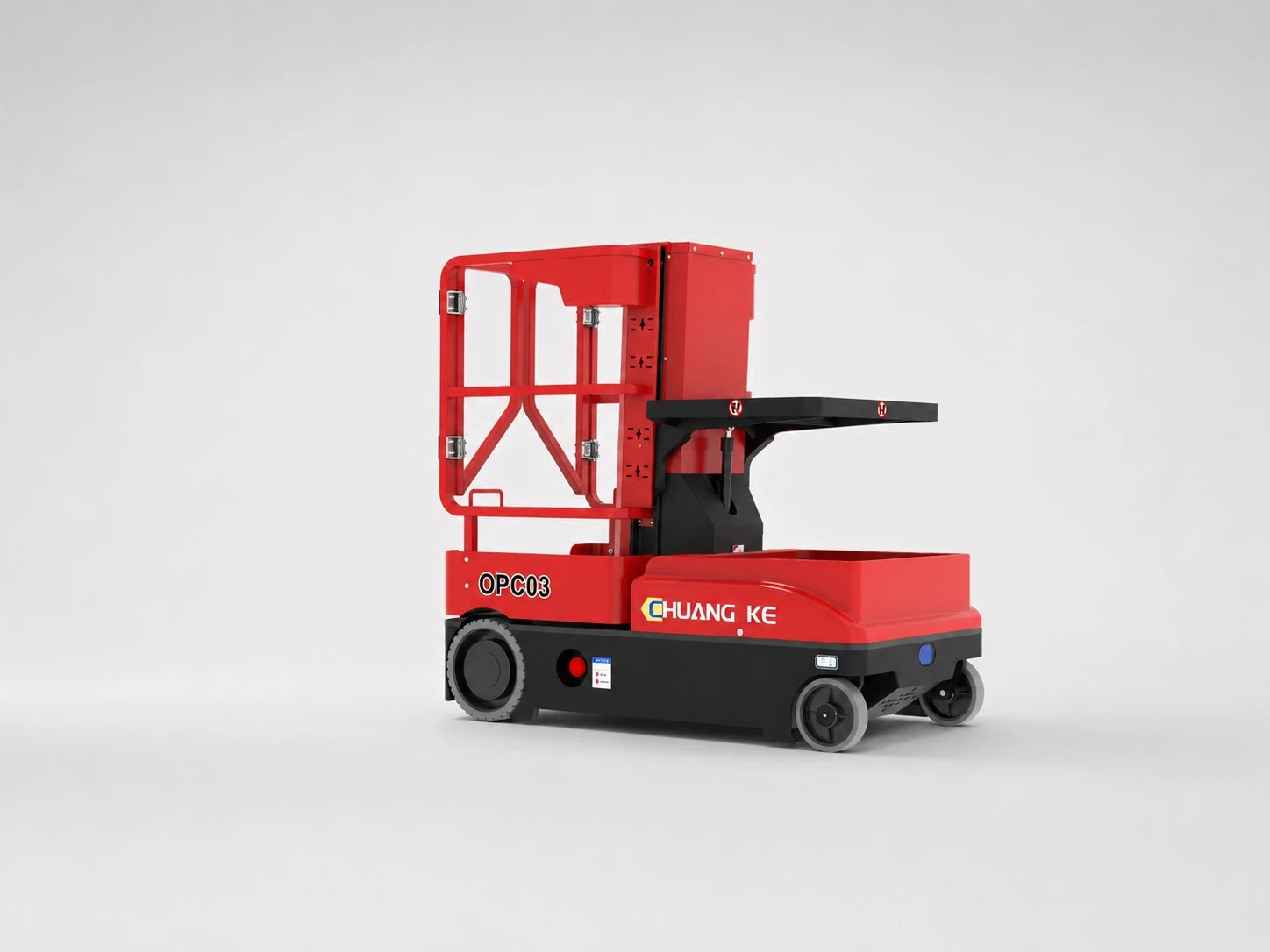
SELF-PROPELLED ORDER PICKING LIFT
OPC Series
SELF-PROPELLED SINGLE-MAST LIFT
AM-S
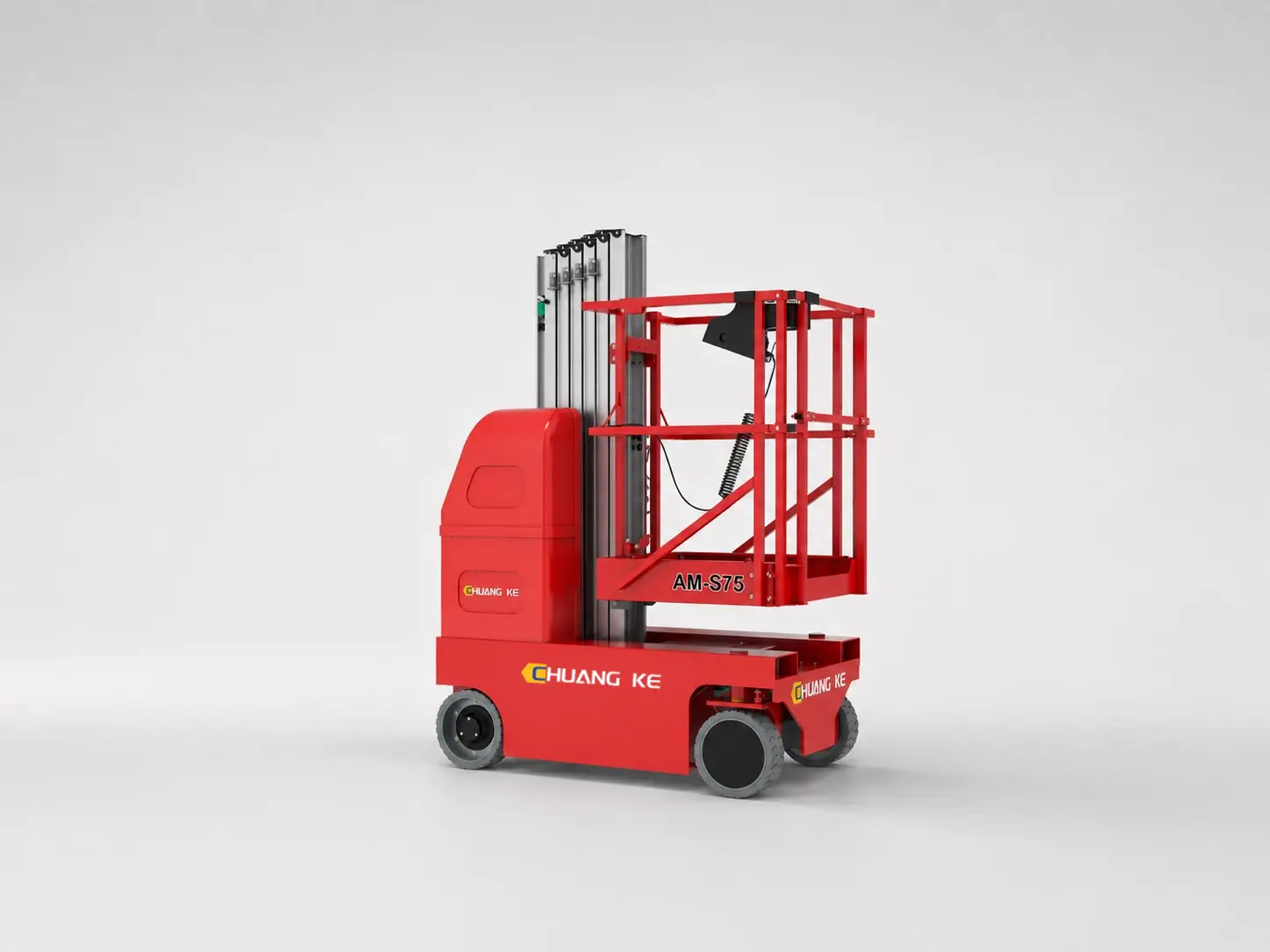
SELF-PROPELLED SINGLE-MAST LIFT
AM-S
SEMI ELECTRIC SCISSOR LIFT
CKJC-Y Series
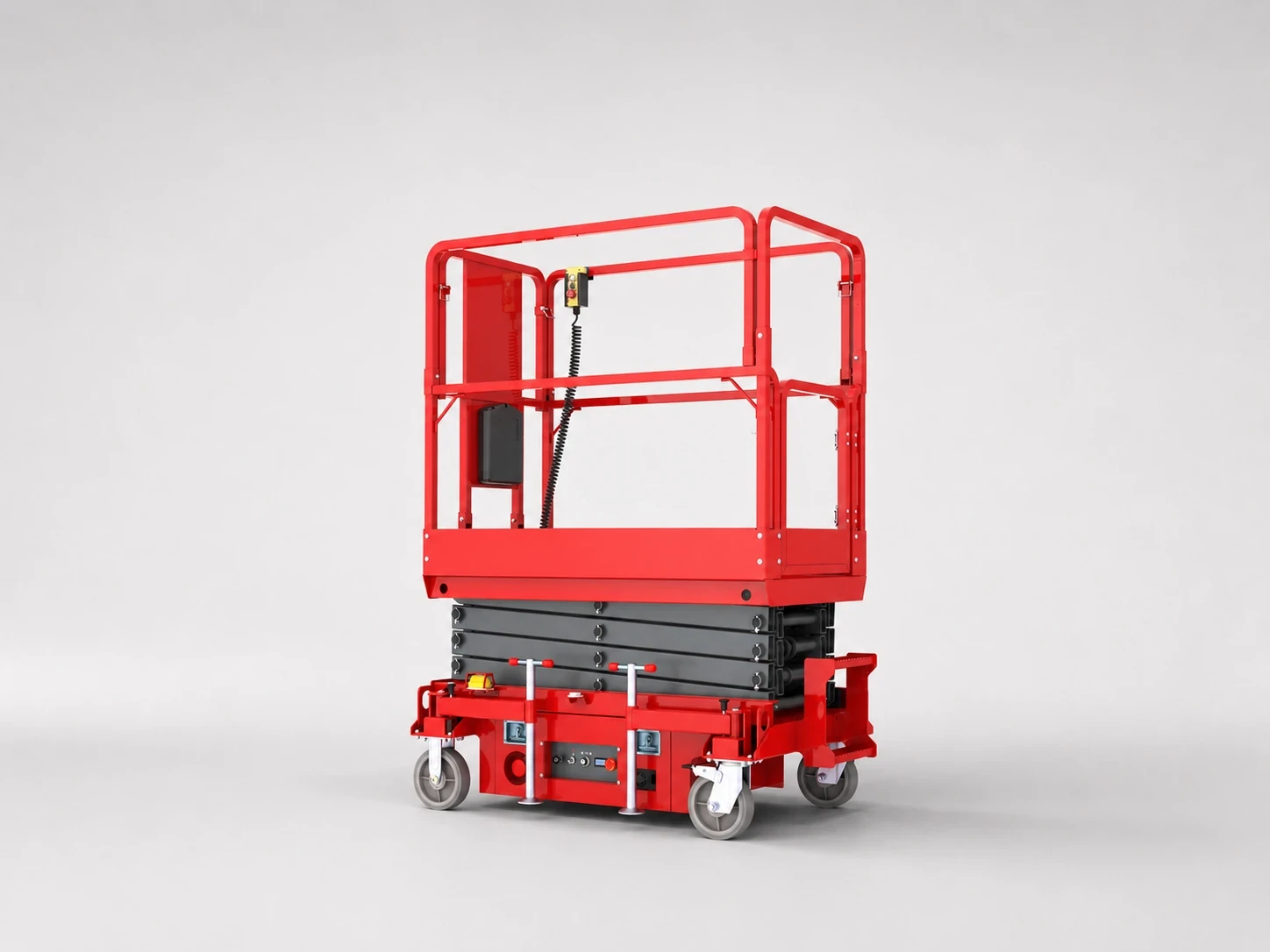
SEMI ELECTRIC SCISSOR LIFT
CKJC-Y Series
Looking for a Trusted Order Picker & Scissor Lift Manufacturer?
WIZPLUS delivers reliable aerial work and material handling solutions with competitive factory pricing, OEM & ODM customization, professional technical support, and responsive service for customers worldwide.


