Order Picker Battery and Charging: How to Get a Full Shift of Runtime
Published
Category
Order Picker
Order picker battery runtime is a calculation, not a datasheet claim: measure the duty cycle, compare lead-acid with lithium, and plan charging around breaks.
How long will an order picker actually run on one charge?
Long enough for a full shift, if the battery is sized for the work and the charging pattern matches the chemistry. Most runtime complaints are not battery faults — they are a duty cycle nobody measured, a lead-acid pack asked to do lithium duty, or a charging window that only exists on paper.
An order picker is an energy-hungry machine for its size. It drives, it lifts an operator plus a load, and it often does both dozens of times an hour in a stop-start pattern that is far harder on a battery than steady travel. Two warehouses running identical machines can see runtime differ by hours, because their picking profiles differ.
This guide works through the numbers in the order that matters: how much energy a shift consumes, what lead-acid and lithium do differently under that load, how opportunity charging changes shift design, how to lay out a charging area that passes an audit, what temperature does to capacity, and when a battery is genuinely finished rather than merely tired.
Figures here are industry-typical and illustrative. Runtime depends on the machine, the load, the floor, the ambient temperature and the operator, so treat any single number as a planning starting point and confirm it against the datasheet and a real trial.
Runtime only means something once the task is defined: an order picker's duty cycle is a sequence of short lifts and long travel, not a steady load.
How Much Energy Does One Shift Actually Use?
Battery labels tell you capacity, not consumption. Before comparing chemistries, measure what the machine does in a shift.
Start With the Duty Cycle, Not the Battery Label
An order picker's day is a sequence of short drives, lifts to a pick face, pauses while the operator picks, and descents. The energy goes into three places: traction, lifting, and the auxiliary loads — controls, lights, and on some machines the drive and steer motors working against each other in tight aisles.
Lifting is the expensive part per second, but traction usually dominates over a shift because the machine moves constantly. Picking time — the seconds the machine sits still while someone counts cartons — is free energy-wise, which is exactly why break-time charging works so well.
The Arithmetic Behind a Runtime Estimate
Capacity is quoted in amp-hours at a nominal voltage, so watt-hours are simply Ah × V. Usable energy is smaller: a lead-acid pack should not be discharged below roughly 50% of its rated capacity on a regular basis, while a lithium pack with a battery management system typically allows 80–90% depth of discharge.
Runtime then follows from average draw: usable watt-hours ÷ average watts = hours. Average draw is the number most buyers guess and most suppliers quote generously, so build the estimate from measured segments instead.
Shift segment | Share of an 8-hour shift | Energy character |
|---|---|---|
Travel between picks | Roughly 40–55% | Steady, moderate draw; the largest total consumer |
Lifting and lowering | Roughly 10–20% | Short bursts of high current |
Picking, scanning, paperwork | Roughly 25–40% | Near-zero draw; the natural charging window |
Idle with lights and controls on | Roughly 5–10% | Parasitic but real, and easy to eliminate |
The table explains a pattern every warehouse manager recognises: machines that spend more time parked at a pick face outlast machines on long travel runs, even when both are rated the same.
A Worked Example: What 8 Hours Looks Like
Take an illustrative machine with a 24 V pack rated 210 Ah. Rated energy is 5,040 Wh. A lead-acid pack used to 50% depth of discharge gives about 2,520 Wh of usable energy; the same rating in lithium at 85% usable gives roughly 4,280 Wh.
If the shift averages 600 W — a plausible figure for a lightly loaded picker in a small warehouse — the lead-acid pack covers roughly four hours and the lithium pack roughly seven. If the warehouse runs 900 W because of long travel, ramps and frequent lifts, both numbers fall by a third.
That single calculation, run with your own measured draw, answers most of the buying question before price is discussed.
Battery architecture follows machine type, and the different types of order pickers draw on the pack in ways that make cross-class comparison misleading.

Lead-Acid vs. Lithium: What Changes on an Order Picker
The chemistry decides how the machine is used, not just how long it runs. A lithium pack bought for a lead-acid shift pattern wastes money; a lead-acid pack bought for a multi-shift operation creates a charging bottleneck.
How Each Chemistry Behaves Under Load
Lead-acid delivers its rated capacity only at a gentle discharge. Under the burst currents of lifting, voltage sags and effective capacity drops, which is why a nominal 210 Ah pack can behave like a smaller one on a busy day. It also degrades quickly if left partially charged, so it wants a full cycle and a cool-down.
Lithium, usually LiFePO4 in this class, holds voltage flatter under load, accepts partial charging without damage, and does not need a cool-down before recharging. The battery management system protects it from over-discharge and from charging below freezing, which is a feature — but also a constraint in cold stores.
The Comparison Table
What it affects | Lead-acid (flooded or AGM) | Lithium (LiFePO4) |
|---|---|---|
Upfront cost | Lower per pack | Higher, often two to three times |
Usable capacity | Roughly 50% of rating | Roughly 80–90% of rating |
Partial charging | Tolerated occasionally; sulfation risk if habitual | Normal operation, no memory effect |
Charge time | Typically 8 hours, plus cooling | Typically 1–3 hours to 80–100% |
Multi-shift use | Needs a spare pack or a swap routine | Break charging often removes the spare |
Maintenance | Watering, terminal cleaning, equalising | Effectively none; BMS handles balancing |
Weight | Heavy, which acts as counterweight | Lighter; check the machine's stability rating |
Cold performance | Capacity falls, charging slow | Capacity falls; charging blocked below 0 °C |
Life | Typically 1,200–1,500 cycles, 3–5 years | Typically 3,000–5,000 cycles |
What the Price Difference Actually Buys
Lithium costs more up front and less per shift. It removes the spare battery, the watering routine, the cool-down and the dedicated charge window, so the saving shows up in labour and floor space rather than on the invoice. The break-even usually lands somewhere between three and six years of single-shift operation, earlier for multi-shift sites.
Lead-acid remains the sensible choice where capital is tight, duty is light and one clean overnight charge covers the day. It is the wrong choice where the machine runs two shifts and nobody wants to own a battery-changing routine.
Not every model can opportunity-charge, and the electric order picker types differ mainly in whether the pack is swappable or fixed.
Opportunity Charging vs. Deep Cycling
"Opportunity charging" means topping up whenever the machine is idle — during breaks, at shift change, while paperwork is completed. "Deep cycling" means running the pack down and recharging it fully. The two patterns suit different chemistries and different shifts.
What Each Pattern Does to the Battery
A deep cycle is what lead-acid is designed for: discharge to about 50%, then a full recharge, then a rest. Done consistently, it gives the rated cycle life. Done half-heartedly — topped up briefly and returned to work — a flooded pack begins to sulfate, losing capacity in a way that cannot be reversed.
Lithium is the opposite. It has no memory effect and no sulfation, so many shallow top-ups are gentler than one deep discharge. BMS-managed packs also count partial cycles, so the cycle life quoted in the datasheet accounts for this pattern.
Rules for Opportunity Charging
Opportunity charging works when three conditions hold, and fails loudly when they do not.
The charger must be rated for the pack, and the connector must be rated for the current. A domestic socket and an extension lead are not a charging solution.
The battery must be within its temperature window. Charging a hot lead-acid pack, or a lithium pack below freezing, damages it — the BMS will refuse, and a lead-acid pack will simply accept the damage.
The opportunity must be long enough to matter. A four-minute stop adds very little; a 20–30 minute break adds a useful block of charge on lithium and almost nothing on lead-acid.
The practical rule for a mixed fleet: opportunity charge lithium at every break, and treat lead-acid as a once-a-day machine with a dedicated window.
When Deep Cycling Is Still the Right Answer
Single-shift operations with a predictable end time are the classic deep-cycle case. The machine runs, the pack is charged overnight, and the cycle is complete before the next shift. It is simple, cheap and easy to audit.
Deep cycling also suits sites where charging is centralised in one room and machines return there anyway. The cost is the spare battery requirement when a pack cannot complete a shift — and that is a decision to make deliberately, not discover at 3 p.m.
A charging area is a hazard in its own right — ventilation, spill containment, isolation — and order picker safety guidance treats it separately from the picking floor.
Charging Area Layout, Power and Safety
The charging bay is a workplace with its own hazards, and inspectors treat it that way. A few layout decisions prevent most of the problems.
Electrical Supply and Siting
Size the supply for the number of chargers running simultaneously, not for the number installed — most sites charge in parallel at shift end. Locate chargers where the machine can reach them without reversing through a pick aisle, and keep the cable run short enough that the lead is never under tension.
Chargers should be on a dedicated circuit with isolation and labelling, and the area should be marked out on the floor so that a parked machine does not block an exit or a sprinkler control.
Ventilation, Hydrogen and Acid
Flooded lead-acid batteries release hydrogen while charging. The gas is lighter than air and accumulates at ceiling level, so ventilation has to be at high level as well as low, and the room must not be a sealed cupboard. Industry guidance on battery room ventilation sets minimum air-change rates by pack size; use the figure that applies to your pack rather than a rule of thumb.
Acid handling needs an eyewash, a spill kit and gloves within reach, and a sign at the door stating what is stored. AGM and gel packs reduce gassing but do not remove the need for ventilation and PPE.
Fire, Spills and Housekeeping
Keep the charging area clear of cardboard, pallets and anything else that would feed a fire. A suitable extinguisher, a clearly marked isolation point and a written procedure matter more than the equipment list, because the response in the first minute decides the outcome.
Spilled electrolyte should be neutralised and cleaned by trained staff, not hosed into a drain. A spill kit that has never been opened is a decoration; check it on the same schedule as the extinguishers.
Cable Management and Daily Discipline
Trailing leads are the most common cause of charging-bay incidents: trip hazards, damaged cables, and connectors pulled out under load. Overhead cable management, retractable reels or simple cable hooks solve most of it, and a rule that the machine is switched off before connecting solves the rest.
The daily routine is short: check the connector for damage, check the electrolyte level on flooded packs, confirm the charger has gone into its finish stage, and record it. Five minutes a day prevents most of the expensive failures.
Where the machine works changes the duty cycle: warehouse order picking in a frozen store draws on the pack differently from ambient racking.
Cold, Heat and the Conditions That Eat Runtime
A pack that runs a full shift in a 20 °C warehouse can fall short in a cold store or a hot loading bay. Temperature is the most under-specified variable in runtime planning.
Cold Storage and Winter Operation
Capacity falls as temperature drops — as a rough industry guide, lead-acid loses several percent of usable capacity for every 10 °C below its rated temperature, and lithium loses less but still noticeably. Charging is the harder problem: lead-acid charges slowly and incompletely when cold, and lithium's BMS blocks charging below freezing to protect the cells.
The usual fix is to charge in a warmer room and let the pack warm up before the shift, rather than charging in the cold store itself. Insulated battery compartments and heated charging areas cost money but pay back in predictable runtime.
Heat, Dust and High-Ambient Sites
Heat ages batteries faster than any other factor. Every 10 °C above the rated ambient roughly halves the life of a lead-acid pack, and it accelerates lithium calendar ageing too. A charger in a sunny corner next to a roller door can run far hotter than the warehouse average.
Dust is the secondary problem: it coats terminals and cooling surfaces, and in food or pharma sites it is a contamination issue as well. Specify chargers and packs suited to the environment, and clean terminals on a schedule rather than when a fault appears.
Self-propelled and semi-electric machines draw differently, and the choice between them usually fixes the pack size before battery chemistry does.
Battery Life, Replacement Signals and Shift Planning
If the machine is not chosen yet, choosing an order picker comes first; runtime is a consequence of the duty cycle, not a starting point.
Most batteries are replaced late, after months of shrinking runtime, rather than at the right moment. A little measurement turns that into a planned cost.
What Shortens Battery Life
Heat, deep discharges below the recommended limit, leaving a lead-acid pack discharged for days, overcharging from a mismatched charger, and vibration from rough floors all shorten life. For lithium, the main risks are charging below freezing, sustained high temperatures and a faulty BMS.
Most of these are habits rather than defects, which is why the cheapest life-extending measure is usually a charging procedure that people actually follow.
Signals That the Battery Is Nearing Replacement
Watch for a runtime drop of more than about 20% against the machine's baseline, a pack that charges much faster than it used to, visible swelling (lithium) or a bulging case (lead-acid), electrolyte that will not hold its level, and terminals that corrode within weeks of cleaning.
Record the baseline when the machine is new: run it to a known state of charge and time the work. Without that number, every later complaint is an argument rather than a measurement.
Planning Shifts Around Charging
The shift plan is where chemistry, duty cycle and charging layout meet. Work through these in order.
Measure average draw over a representative shift, including lifts, travel and idle time.
Convert to usable watt-hours for each candidate chemistry and confirm the pack covers the shift with margin.
Map the breaks: how many, how long, and where the machine is parked during them.
Decide whether a spare pack, a battery swap routine or break charging covers the gap.
Size the charger and the electrical supply for parallel use at shift end.
Write the daily routine — connect, check, record — and put it on the shift handover.
A two-shift operation usually lands on one of two answers: lithium with break charging, or lead-acid with a second pack and a scheduled swap. Both work; mixing them half-way does not.
Manufacturers quote battery capacity inconsistently — amp-hours, watt-hours, or runtime at a nominal load — and order picker specifications rarely say which basis was used.
Frequently Asked Questions
How long does an order picker battery last on one charge?
It depends on the pack and the duty cycle. As an industry-typical range, a lead-acid pack used to about 50% depth of discharge covers roughly one shift of moderate picking, while an equivalent lithium pack often covers a shift with margin to spare. Measure your average draw rather than relying on the label.
Can I charge a lead-acid order picker battery during a break?
Occasionally, yes, but not as a habit. Lead-acid packs prefer a full cycle and a cool-down, and repeated partial charging encourages sulfation. Use breaks for lithium packs and keep lead-acid on a dedicated overnight or shift-end window.
How long does it take to charge an order picker?
A conventional lead-acid charge is typically around eight hours plus a cool-down period before the next discharge. Lithium packs typically reach 80% in one to three hours and accept top-ups between breaks. Charger rating and pack size decide the exact figure.
Should I buy lithium or lead-acid for an order picker?
Buy lithium where you run multiple shifts, cannot spare a battery-changing routine, or need break charging to work. Buy lead-acid where duty is light, capital is tight and one clean overnight charge covers the day. Compare total cost over five years, not sticker price.
How do I know when an order picker battery needs replacing?
The clearest signal is a runtime drop of more than about 20% against the machine's new baseline, combined with faster charging and a pack that no longer covers a shift it used to cover. Swelling, electrolyte loss or corrosion that returns within weeks confirms it.
Can order pickers be charged in a cold store?
Not safely or efficiently in most cases. Lead-acid charges slowly and incompletely when cold, and lithium's BMS blocks charging below freezing. Charge in a warmer room, or specify a heated charging area and a pack rated for the temperature.
Do I need a dedicated charging room?
For flooded lead-acid, effectively yes — ventilation, acid handling and fire separation all point that way. Lithium packs need less, but still need a marked area, a suitable circuit and clearance from combustible storage. Check local requirements before building the layout.
How many batteries do I need per shift?
One pack per machine per shift, if the pack covers the duty cycle with margin. Add a spare when charging cannot fit inside the break pattern, when a pack cannot complete a shift, or when a swap is cheaper than a second machine. Plan the spare, do not improvise it.
Conclusion: Size the Pack for the Shift, Then Design the Charging
Order picker runtime is a calculation, not a claim on a datasheet. Measure the draw, convert it to usable watt-hours for each chemistry, and check that the answer covers your longest shift with margin. Everything else — charger size, spare packs, break charging, charging bay layout — follows from that number.
The mistake to avoid is choosing a chemistry first and adapting the operation to it afterwards. A lead-acid machine in a site designed for it runs well for years. The same machine in a two-shift operation without a swap routine will be blamed for a planning failure.
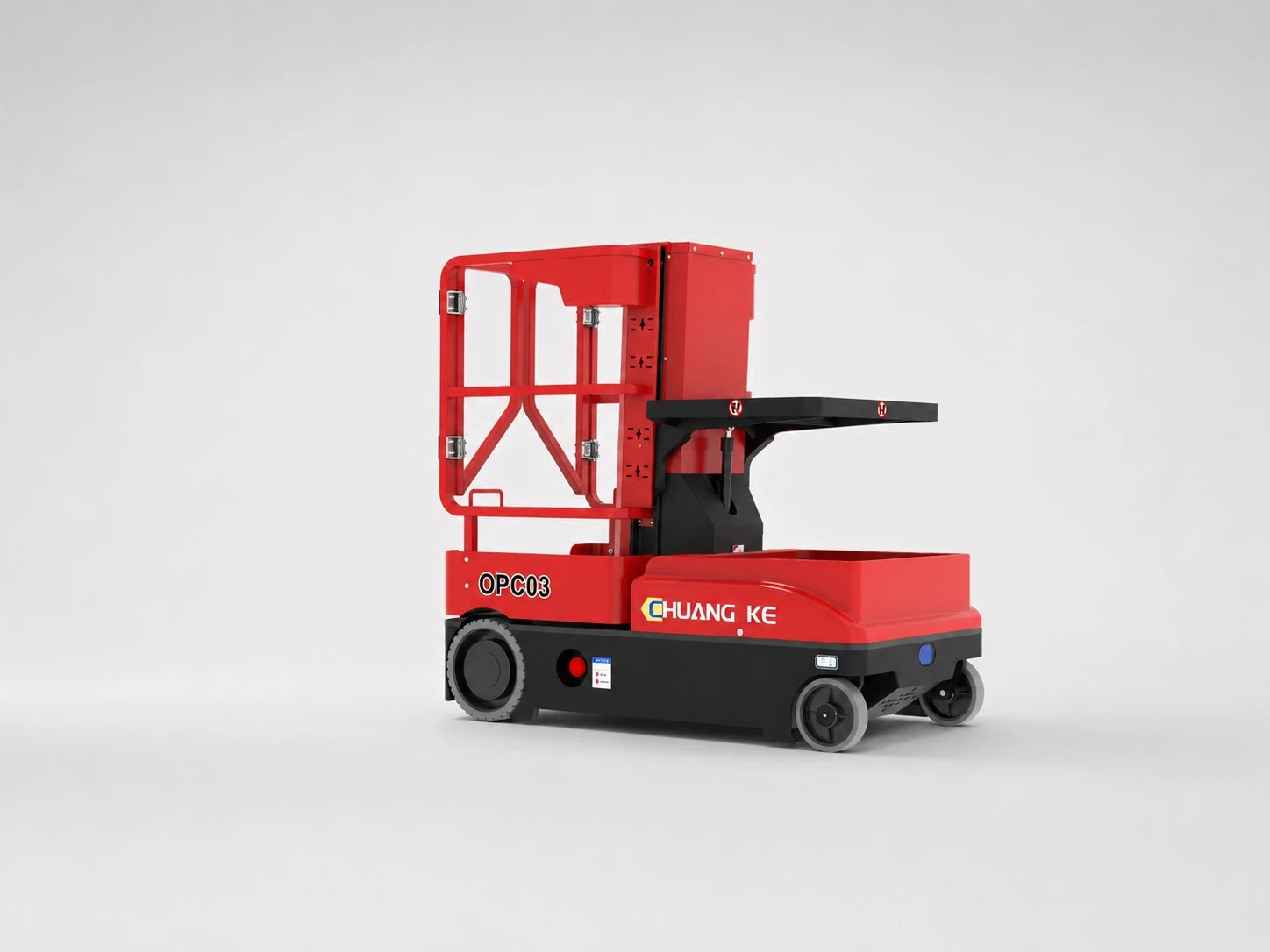
WIZPLUSLIFT builds order pickers in both semi-electric and self-propelled full-electric configurations, with battery and charging options matched to the duty cycle. Start with the OPC order picker series for the compact end of the range and the OP self-propelled full-electric series where a taller mast is needed.
Fleet sizing follows from how many picks per hour the operation actually needs, and order picker versus forklift remains the first comparison for anyone moving from pallet handling to piece picking.
If you already run a fleet and runtime is falling short, bring the numbers: shift length, average draw, break pattern and charging window. That is enough to tell whether you need a bigger pack, a different chemistry or simply a better charging routine.