Blog
Types of Order Pickers: How to Choose the Right One for Your Warehouse
Published
Category
Order Picker
Discover the main types of order pickers, including low-level, medium-level and high-level models. Learn how to choose the right order picker for your warehouse.
Order picking is one of the most important activities in a warehouse.
Whether a company operates an e-commerce fulfillment center, spare-parts warehouse, retail distribution facility or manufacturing plant, employees often need to retrieve individual products from different storage locations quickly and efficiently.
However, not every warehouse uses the same rack height, aisle width, load size or picking method.
That is why there are different types of order pickers.
Some order pickers are designed mainly for ground-level picking. Others allow operators to access products several levels above the floor. Certain models are designed for narrow aisles, while others focus on long-distance horizontal travel and frequent picking stops.
Understanding these differences can help warehouse operators choose equipment that better matches their real working conditions.
In this guide, WIZPLUS explains the main types of order pickers, where they are commonly used and what factors you should consider before choosing one.
What Is an Order Picker?
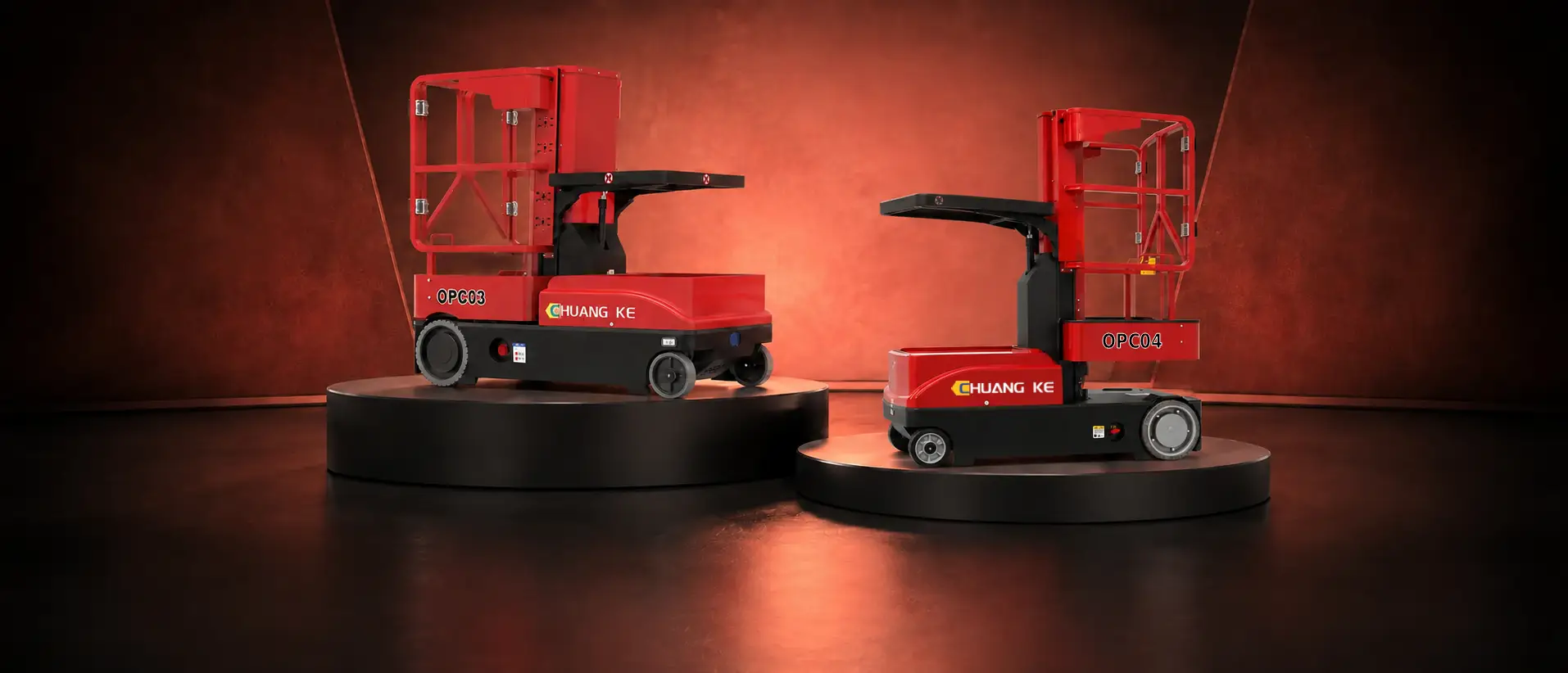
An order picker is a type of material-handling equipment designed to help warehouse operators retrieve individual products, cartons or components from storage locations.
Unlike a conventional forklift, which is primarily used to transport and stack complete pallet loads, an order picker is designed around the picking process.
Depending on the machine configuration, the operator may remain close to floor level or rise together with the platform to access products stored higher in the warehouse racks.
Order pickers are commonly used for:
Individual product picking
Carton picking
Spare-parts retrieval
E-commerce order fulfillment
Retail distribution
Inventory management
Warehouse replenishment
Manufacturing parts handling
What Are the Main Types of Order Pickers?
There is no single order picker configuration suitable for every warehouse.
Manufacturers may use slightly different names for their equipment, but order pickers are commonly classified according to:
Picking height
Operator position
Travel method
Aisle requirements
Load capacity
Application
The three most common categories are:
Low-level order pickers
Medium-level order pickers
High-level order pickers
Let's look at each type in more detail.
1. Low-Level Order Picker
A low-level order picker is designed primarily for picking products from floor-level and lower storage positions.
The operator normally remains close to the floor while traveling through warehouse aisles.
These machines are especially useful when workers need to make many picking stops over relatively long distances.
Typical Low-Level Order Picker Applications
Low-level order pickers are commonly used in:
Supermarket distribution centers
Beverage warehouses
Food distribution
Retail warehouses
FMCG warehouses
E-commerce fulfillment centers
Wholesale distribution
Ground-level carton picking
For example, imagine a warehouse employee collecting products for a supermarket order.
The worker may need:
Two cartons from aisle 1
Three cartons from aisle 4
One carton from aisle 7
Four cartons from aisle 10
The main challenge is not reaching a great height.
The challenge is efficiently moving through the warehouse while repeatedly stopping to collect products.
A low-level order picker can be well suited to this workflow.
Advantages of Low-Level Order Pickers
Fast Horizontal Movement
Low-level order pickers are designed for warehouse routes involving frequent movement between picking locations.
Easy Access to Lower Racks
Products stored at convenient picking heights can be accessed quickly.
Suitable for Repetitive Picking
They can help improve efficiency when operators complete many picking cycles during a shift.
Useful for High-Volume Distribution
Large distribution centers frequently process mixed orders requiring products from multiple warehouse locations.
When Should You Choose a Low-Level Order Picker?
Consider a low-level order picker if:
Most products are stored near ground level
High lifting height is not required
Operators make many picking stops
Travel distance is relatively long
Order volume is high
Carton or case picking is common
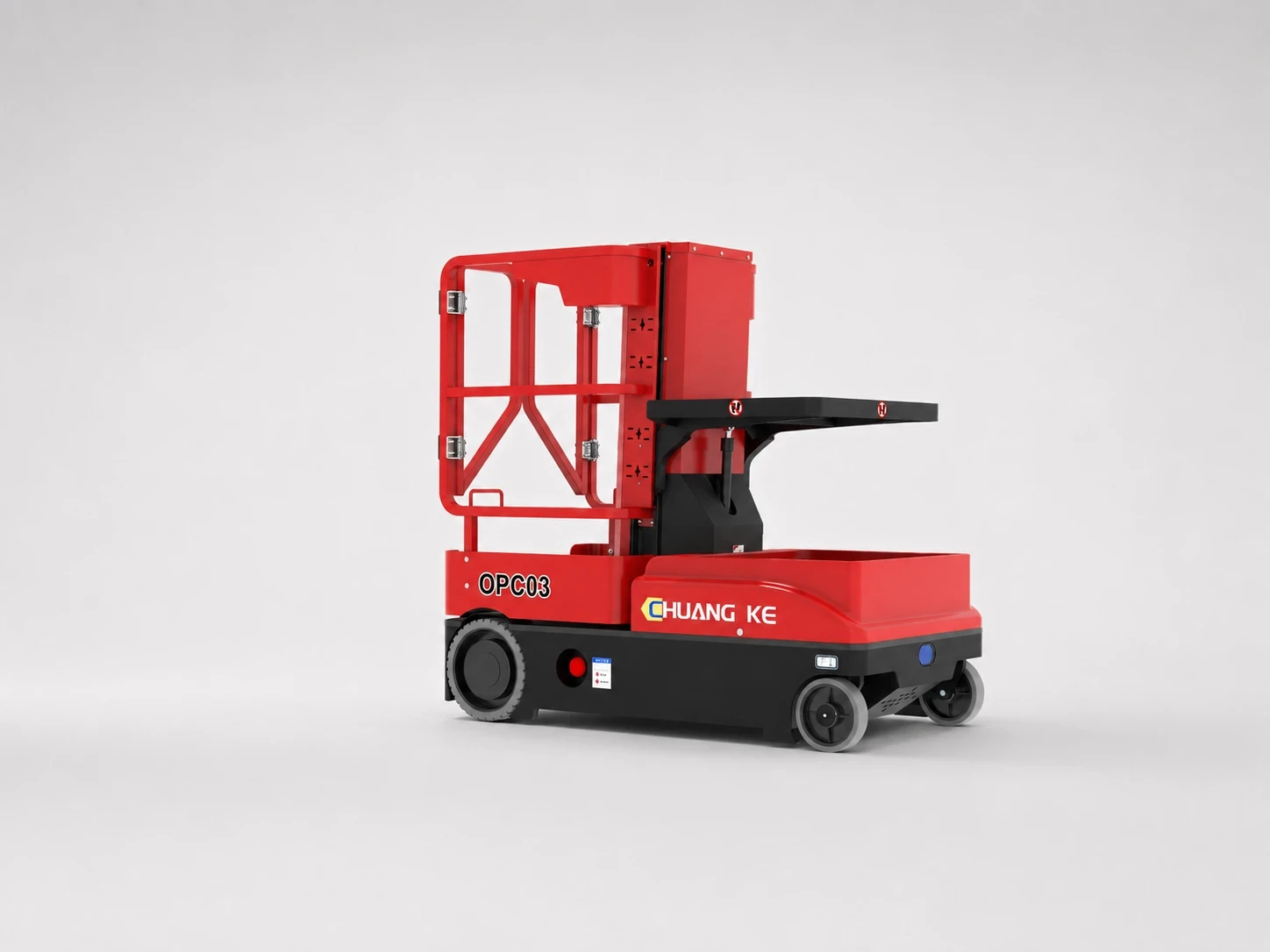
2. Medium-Level Order Picker
A medium-level order picker is designed for applications where operators need to access products above normal floor-level picking positions.
The operator platform can rise to reach several levels of warehouse shelving.
Medium-level machines offer a balance between:
Vertical access
Compact machine dimensions
Warehouse maneuverability
Picking efficiency
They are often useful in facilities that have moderate rack heights but do not require extremely high-level picking.

Typical Medium-Level Order Picker Applications
Medium-level order pickers can be suitable for:
Automotive spare-parts warehouses
Electronics storage
Industrial components
Maintenance parts
E-commerce warehouses
Retail stockrooms
Pharmaceutical distribution
Small-parts warehouses
These environments often contain many SKUs stored at different vertical positions.
Instead of retrieving an entire pallet, the operator can access the required shelf and select the individual item.
Advantages of Medium-Level Order Pickers
Greater Vertical Access
They allow operators to reach products that cannot conveniently be picked from floor level.
Flexible Warehouse Use
Medium-level machines can be useful where both lower and intermediate rack levels need regular access.
Suitable for High-SKU Warehouses
Warehouses containing many different small products can benefit from direct shelf access.
Reduced Dependence on Manual Ladders
Where permitted by the equipment design and workplace procedure, powered access equipment can provide a dedicated solution for elevated picking tasks.
When Should You Choose a Medium-Level Order Picker?
Consider this type when:
Products are stored several rack levels high
Picking height is moderate
Individual products must be retrieved frequently
The warehouse contains many SKUs
A compact warehouse machine is required
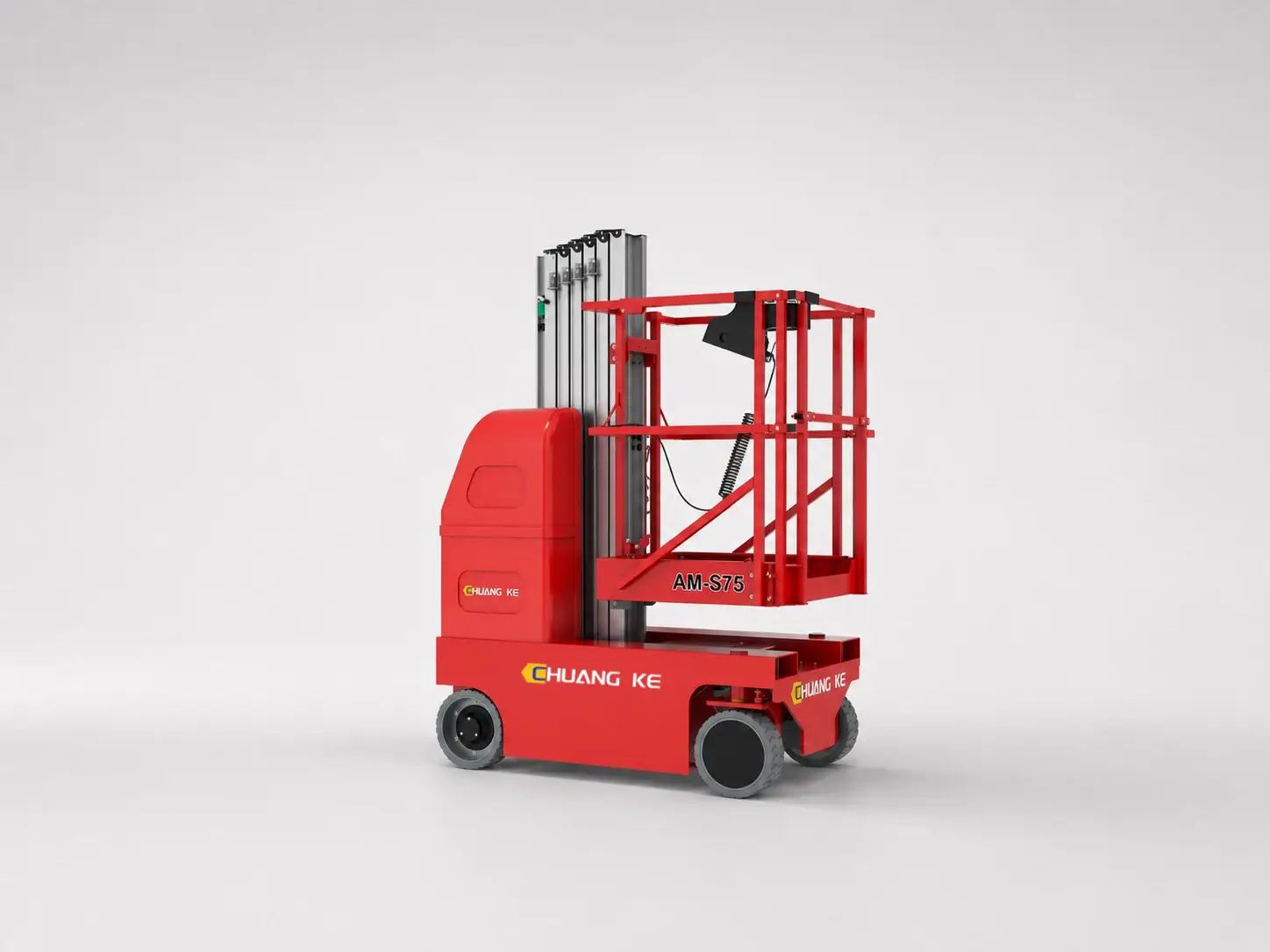
3. High-Level Order Picker
A high-level order picker is designed for elevated picking applications.
It is often referred to as a:
High-level order picker
Man-up order picker
High-level stock picker
Order picker forklift
With this type of machine, the operator platform rises vertically so the operator can access products stored at higher rack levels.
High-level order pickers are particularly useful in warehouses that need to maximize vertical storage space.
Typical High-Level Order Picker Applications
High-level order pickers are commonly considered for:
High-rack warehouses
E-commerce fulfillment centers
Spare-parts distribution centers
Automotive warehouses
Industrial storage facilities
Retail distribution
High-density warehouse storage
These warehouses may contain thousands of different products distributed across multiple vertical storage levels.
Advantages of High-Level Order Pickers
Access to Higher Storage Positions
The main advantage is the ability to bring the operator to elevated picking positions.
Better Use of Warehouse Height
Warehouses can make greater use of vertical storage space while retaining access to individual products.
Direct Product Picking
The operator can select individual cartons or items instead of removing an entire pallet.
Suitable for High-SKU Operations
High-level order pickers can be useful when many products are stored in relatively small quantities across multiple rack levels.
When Should You Choose a High-Level Order Picker?
A high-level order picker may be suitable when:
Rack height is significant
Individual products are stored at high levels
Operators need frequent elevated access
Warehouse space is limited
Vertical storage density is important
Full pallets do not need to be removed for every order
Low-Level vs Medium-Level vs High-Level Order Picker
Here is a simple comparison.
Type | Main Function | Typical Picking Height | Typical Application |
|---|---|---|---|
Low-Level Order Picker | Ground and lower-level picking | Low | Food, beverage, retail, distribution |
Medium-Level Order Picker | Intermediate rack picking | Medium | Parts, electronics, e-commerce |
High-Level Order Picker | Elevated rack picking | High | High-rack warehouse, fulfillment centers |
The exact height capabilities depend on the individual machine model.
For this reason, buyers should compare actual technical specifications rather than choosing equipment based only on the category name.
4. Walkie Order Picker
A walkie order picker is operated by a worker walking with the equipment.
This configuration may be suitable for relatively short travel distances and lower-intensity applications.
Walkie-style equipment generally focuses on simplicity and maneuverability.
It may be suitable for:
Small warehouses
Retail stockrooms
Short picking routes
Light-duty operations
Occasional warehouse picking
However, for larger warehouses with long travel distances, ride-on equipment may provide greater productivity.
5. Ride-On Order Picker
A ride-on order picker allows the operator to travel on the machine rather than walking alongside it.
This configuration can be particularly useful when:
Warehouse aisles are long
Operators travel significant distances
Order volume is high
Picking is performed continuously
Ride-on order pickers are commonly considered for larger warehouse operations where productivity and operator movement are important factors.
6. Man-Up Order Picker
A man-up order picker is a machine where the operator rises together with the picking platform.
This term is commonly associated with medium-level and high-level order picking.
The concept is simple:
Instead of bringing the entire pallet down to the operator, the machine brings the operator up to the product.
This allows individual cartons, boxes or components to be retrieved directly from warehouse racks.
7. Narrow Aisle Order Picker
Warehouse space is expensive.
For this reason, many modern warehouses attempt to reduce aisle width and increase storage density.
A narrow aisle order picker is designed for warehouse layouts where space between racks is limited.
Depending on the equipment type and warehouse design, these machines can help reduce unnecessary aisle space while maintaining access to stored products.
What Should You Check Before Choosing a Narrow Aisle Order Picker?
Do not select a machine simply because a manufacturer describes it as "narrow aisle."
You should check:
Actual Aisle Width
Measure the clear distance between the racks.
Machine Width
The machine must have sufficient operating clearance.
Turning Requirements
Some machines need additional space when entering or exiting aisles.
Load Dimensions
The load or pallet may be wider than the machine itself.
Guidance System
Some specialized warehouse equipment may use guidance technologies in very narrow aisles.
Warehouse Floor
Floor condition and flatness can become increasingly important in narrow and high-level applications.
8. Electric Order Picker
Most modern warehouse order pickers are electrically powered.
An electric order picker uses a battery to power functions such as:
Travel
Lifting
Steering
Electronic controls
Electric equipment is especially common in indoor warehouse operations.
Why Are Electric Order Pickers Popular?
Suitable for Indoor Warehouses
Electric power is widely used for indoor material-handling equipment.
Low Operating Noise
Electric equipment can generally operate more quietly than combustion-powered alternatives.
Convenient Warehouse Charging
Battery charging systems can be incorporated into warehouse operations.
Precise Electric Control
Modern electrical systems can support smooth travel and lifting control.
Battery Types for Electric Order Pickers
Depending on the machine, manufacturer and application, an order picker may use different battery technologies.
Common options can include:
Lead-Acid Battery
A traditional industrial battery option used in many material-handling applications.
Lithium Battery
Lithium battery systems are increasingly used in warehouse equipment because they can offer advantages such as convenient charging and reduced routine battery maintenance.
The correct battery configuration depends on factors including:
Working hours
Number of shifts
Charging opportunities
Local temperature
Machine power requirements
Purchase budget
Which Type of Order Picker Is Best for a Warehouse?
There is no universal "best order picker."
The correct machine depends on the warehouse.
Before choosing equipment, evaluate at least the following factors.
1. Picking Height
This is one of the most important considerations.
Ask:
What is the highest product the operator needs to reach?
Do not simply provide the total warehouse ceiling height.
The manufacturer needs to understand the actual storage and picking position.
Also distinguish between:
Platform height
Picking height
Working height
Fork height
Rack height
These values are not necessarily the same.
2. Load Capacity
Determine the maximum expected load.
Consider:
Product weight
Number of cartons
Pallet weight
Platform load
Accessories
Peak operating conditions
Avoid selecting a machine based only on average loads.
3. Aisle Width
Measure the warehouse carefully.
Provide:
Clear aisle width
Rack-to-rack distance
Turning space
Cross-aisle dimensions
Door width
Narrowest operating point
This information is especially important when choosing a narrow aisle order picker.
4. Rack Dimensions
Provide the manufacturer with:
Total rack height
Shelf height
Shelf depth
Lowest storage level
Highest storage level
Rack spacing
Warehouse drawings or photographs can also be useful during equipment selection.
5. Picking Frequency
How many hours will the machine operate?
For example:
Light Use
1–2 hours per day.
Regular Use
Several hours during one shift.
Intensive Use
Continuous picking or multiple shifts.
The correct configuration may change significantly depending on usage intensity.
6. Travel Distance
A small warehouse and a large fulfillment center have very different requirements.
If employees travel hundreds of meters during each picking cycle, machine travel performance and operator ergonomics become important.
For shorter distances, a simpler configuration may be sufficient.
7. Indoor or Outdoor Use
Most warehouse order pickers are primarily designed around indoor applications.
If the machine will operate outdoors or between indoor and outdoor areas, tell the manufacturer.
Important factors include:
Rain
Dust
Floor quality
Gradients
Temperature
Door thresholds
Surface irregularities
8. Warehouse Floor Condition
Floor quality is sometimes overlooked when purchasing warehouse equipment.
Check for:
Uneven surfaces
Cracks
Slopes
Floor joints
Debris
Wet areas
Higher lifting applications can require particularly careful consideration of operating conditions.
9. Battery Working Time
Tell the manufacturer:
Working hours per day
Number of shifts
Available charging time
Preferred battery technology
For example, an order picker operating occasionally in a small warehouse has very different energy requirements from a machine operating throughout multiple shifts.
10. Operator Safety
Safety should always be considered during machine selection.
Depending on the equipment and application, buyers should evaluate features such as:
Emergency stop
Emergency lowering
Braking system
Operator platform protection
Guardrails
Speed control
Operator presence controls
Warning devices
Fall-protection provisions
Actual safety requirements depend on the machine, workplace and regulations applicable in the destination country.
Operators should always receive appropriate training before using powered warehouse equipment.
Order Picker vs Forklift: Which One Should You Choose?
A traditional forklift and an order picker perform different tasks.
Choose a Forklift When:
Full pallets are moved frequently
Pallets need to be loaded or unloaded
Pallet stacking is the main activity
Goods are handled primarily as complete unit loads
Choose an Order Picker When:
Individual items need to be retrieved
Cartons are picked from racks
Mixed-SKU orders are common
Operators need access to storage locations
Piece picking is important
If your warehouse does both activities, you may need both machines.
Order Picker vs Reach Truck
A reach truck is primarily designed to store and retrieve pallets from warehouse racking.
An order picker is designed primarily around retrieving individual products.
For example:
If you need to remove an entire pallet from a high rack:
Reach Truck
If you need to retrieve three boxes from that pallet position:
Order Picker
This difference can help buyers determine which equipment better matches their warehouse workflow.
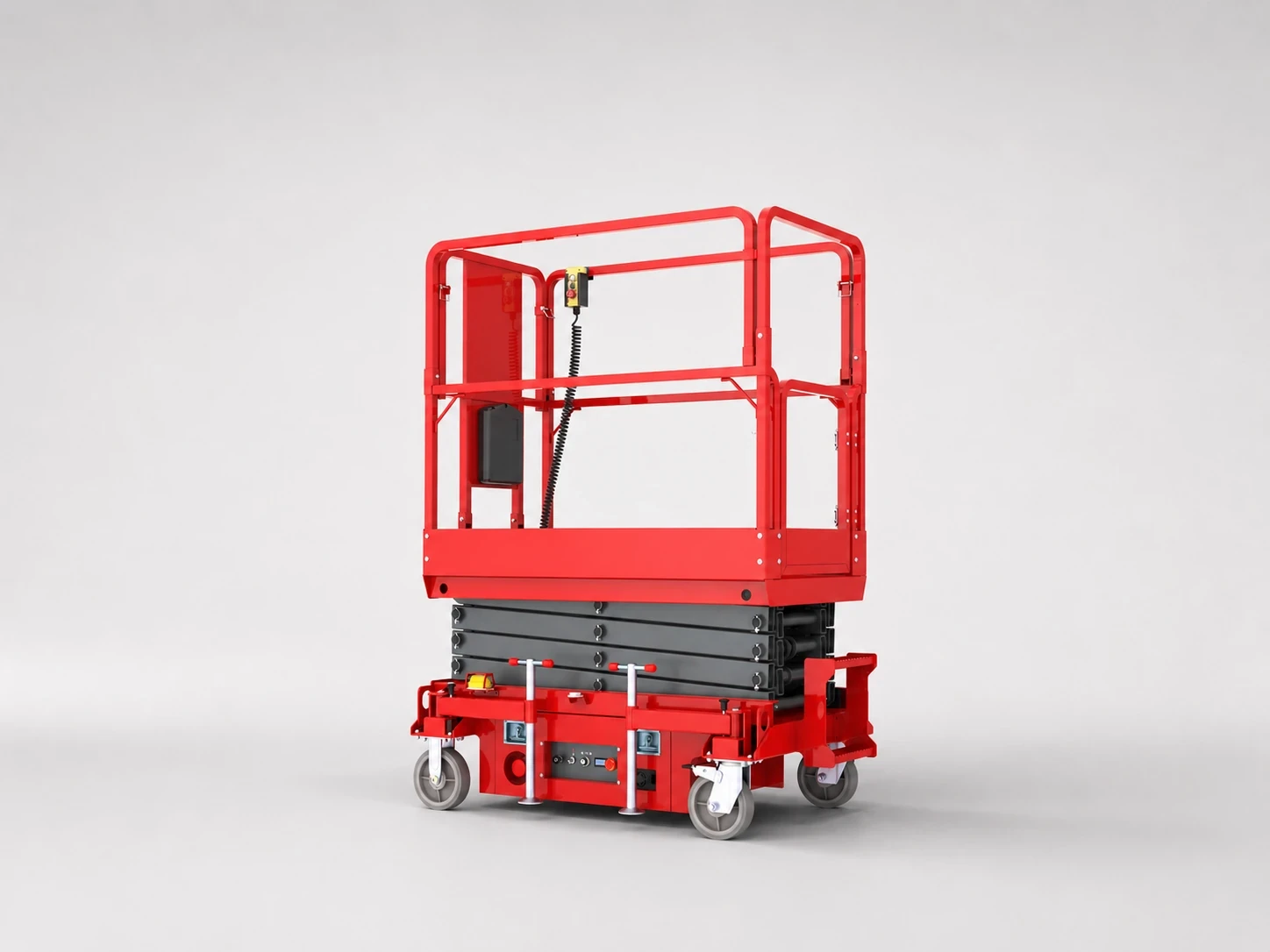
Order Picker vs Scissor Lift
Both machines can elevate personnel, but they are designed around different applications.
Order Picker
Best suited for:
Product picking
Warehouse shelves
Inventory retrieval
Frequent movement between storage locations
Scissor Lift
Best suited for:
Maintenance
Installation
Electrical work
Equipment repair
Elevated work platforms
For warehouses that need both order picking and maintenance access, the two machines can complement each other rather than replace each other.
How WIZPLUS Helps Customers Choose an Order Picker
Choosing an order picker should begin with the application rather than the product model.
At WIZPLUS, we recommend evaluating the complete warehouse environment before selecting equipment.
Important information includes:
Picking Height + Load Capacity + Aisle Width + Rack Layout + Working Hours + Application
For example, two customers may both request an "electric order picker."
However:
Customer A
3-meter picking height
200 kg load
Small retail warehouse
Occasional operation
Customer B
8-meter picking requirement
Narrow warehouse aisles
High-density racks
Continuous daily operation
These customers should not automatically be offered the same machine.
Understanding the application first can help identify a more suitable equipment configuration.
Frequently Asked Questions About Types of Order Pickers
What Are the Three Main Types of Order Pickers?
Order pickers are commonly grouped into:
Low-level order pickers
Medium-level order pickers
High-level order pickers
The most appropriate type depends mainly on picking height and warehouse workflow.
What Is a Low-Level Order Picker?
A low-level order picker is designed primarily for picking products at or near floor level.
It is commonly used for high-volume carton picking in distribution centers and warehouses.
What Is a High-Level Order Picker?
A high-level order picker raises the operator so products can be retrieved from elevated warehouse storage locations.
It is commonly used in high-rack warehouses and fulfillment centers.
What Is a Man-Up Order Picker?
A man-up order picker allows the operator platform to rise vertically with the operator.
This enables direct access to products stored at elevated rack levels.
What Is an Electric Order Picker?
An electric order picker is powered by a battery and uses electric systems for functions such as travel and lifting.
Electric order pickers are commonly used for indoor warehouse operations.
What Is a Narrow Aisle Order Picker?
A narrow aisle order picker is designed for warehouse operations where rack spacing is limited.
Actual suitability depends on the machine dimensions, aisle width, load size and warehouse layout.
How High Can an Order Picker Lift?
Maximum lift and platform height vary by model.
Buyers should compare the actual specifications of individual machines rather than assuming all high-level order pickers provide the same height.
Can an Order Picker Be Used Instead of a Forklift?
Sometimes, but the machines serve different primary purposes.
Order pickers are designed around individual-item retrieval, while conventional forklifts are usually more suitable for pallet handling.
A warehouse may require both.
How Do I Know Which Order Picker I Need?
Start by providing five key pieces of information:
1. Picking height
2. Maximum load
3. Aisle width
4. Working hours
5. Warehouse application
These details allow an equipment manufacturer to make a more accurate recommendation.
Choose the Right Order Picker for Your Warehouse
Different warehouses require different order-picking solutions.
A low-level order picker may be ideal for fast carton picking near floor level.
A medium-level order picker can provide access to products stored at intermediate heights.
A high-level order picker can help operators retrieve inventory from elevated warehouse racks.
The most important point is not simply choosing between the different types of order pickers.
Our team can help evaluate your warehouse conditions and recommend a suitable order-picking equipment configuration.
Contact WIZPLUS for your order picker requirements.
Other Blogs