Blog
What Is an Order Picker? A Complete Guide to Types, Uses and How to Choose One
Published
Category
Guide
Learn what an order picker is, how it works, main types, warehouse uses, safety basics, and how order pickers differ from forklifts and reach trucks.
An order picker is a type of warehouse equipment designed to help operators retrieve individual products, cartons, parts or other items directly from storage locations.
Unlike a conventional forklift, which is primarily used to lift and transport palletized loads, an order picker is designed around piece picking. Depending on the equipment type, the operator may work at floor level or rise with the platform to reach products stored higher in warehouse racking.
Order pickers are widely used in e-commerce fulfillment centers, distribution centers, spare-parts warehouses, retail storage facilities and manufacturing plants where workers frequently need to retrieve individual SKUs rather than entire pallets.
In simple terms:
A forklift moves pallets. An order picker helps an operator pick individual items from storage locations.
However, the term “order picker” is used for several related types of warehouse equipment, so understanding the differences is important before choosing a machine.
What Is an Order Picker?
An order picker is a type of powered material-handling equipment designed specifically for picking products from warehouse storage locations.
The operator moves through the warehouse, stops at the required storage location and picks the required item. On elevated models, the operator platform rises so products stored above normal reach height can be accessed directly.
This makes order pickers particularly useful for warehouses containing a large number of SKUs where customer orders consist of products collected from several different storage locations.
For example, imagine an e-commerce warehouse containing 20,000 different products. A customer order may contain five products stored in five different rack positions.
Removing five complete pallets would be inefficient.
An order picker allows the operator to travel through the warehouse and collect only the products required for that order.
Order Picker Meaning: The Term Can Describe Different Machines
One source of confusion is that manufacturers and markets do not always use the term “order picker” in exactly the same way.
Two equipment configurations are commonly encountered.
Order Picker Forklift or Stock Picker
A traditional warehouse order picker forklift, sometimes called a stock picker or man-up order picker, is a powered material-handling truck.
The operator compartment rises with the operator, allowing individual cartons or products to be retrieved from warehouse racking.
These machines are commonly associated with medium- and high-level warehouse picking, narrow aisles and high-density storage facilities.
They may also incorporate forks, load platforms or other material-handling systems depending on the machine design.
Compact Order Picking Lift
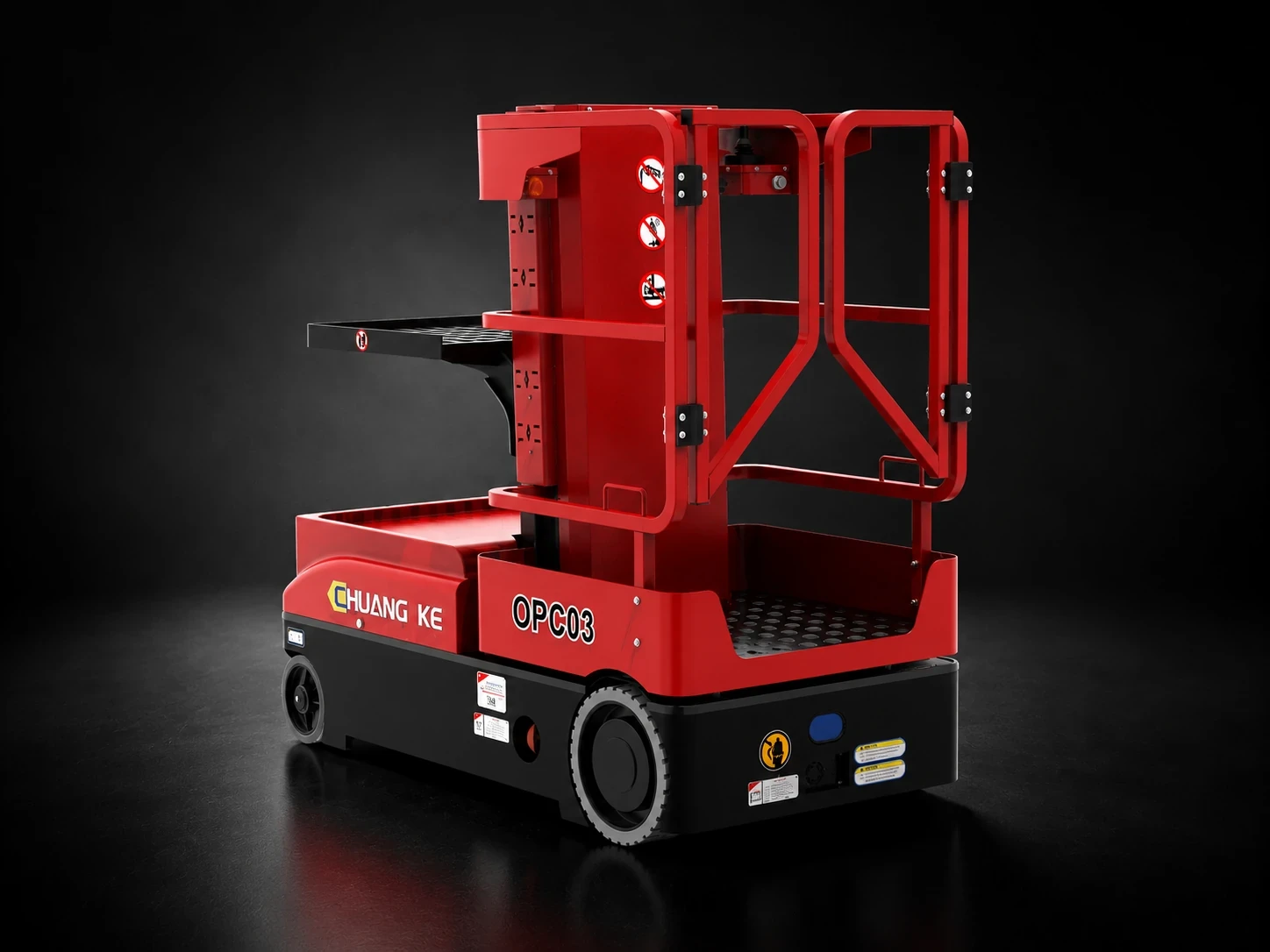
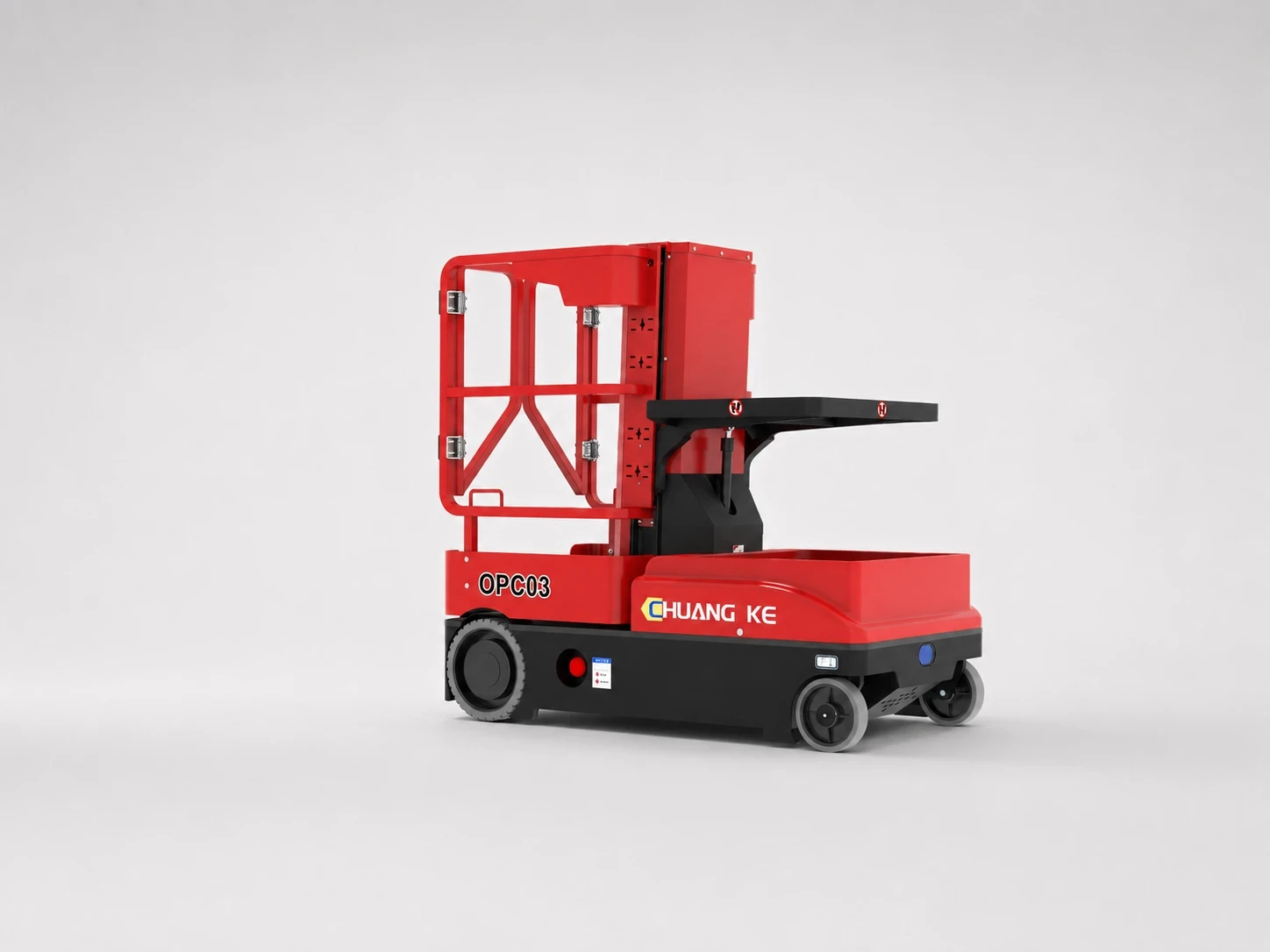
Another equipment category commonly marketed as an order picking lift uses a compact vertical mast and operator platform rather than the configuration of a conventional forklift.
These machines are particularly useful for lighter warehouse tasks such as shelf replenishment, inventory access, small-parts picking and elevated maintenance.
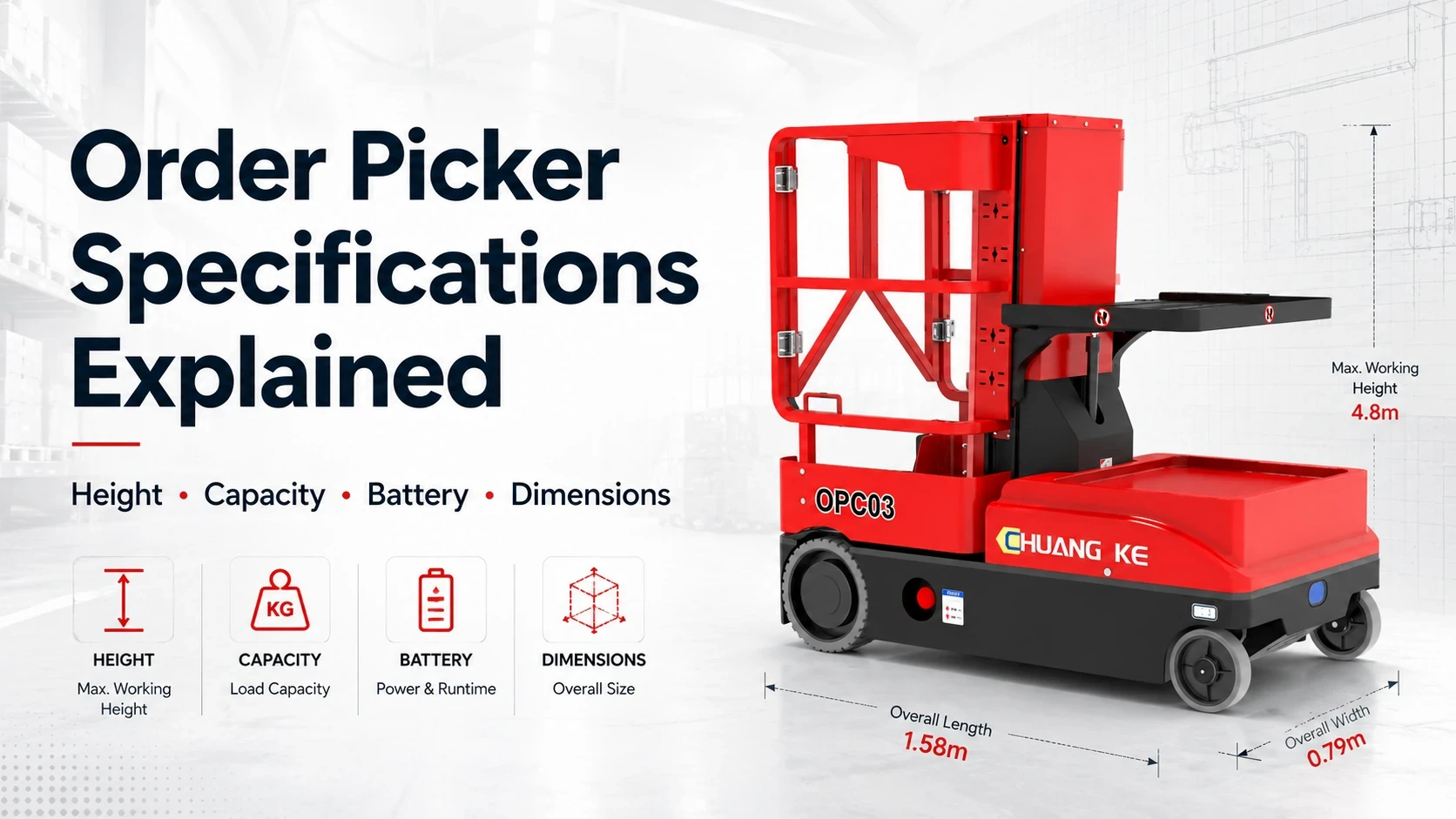
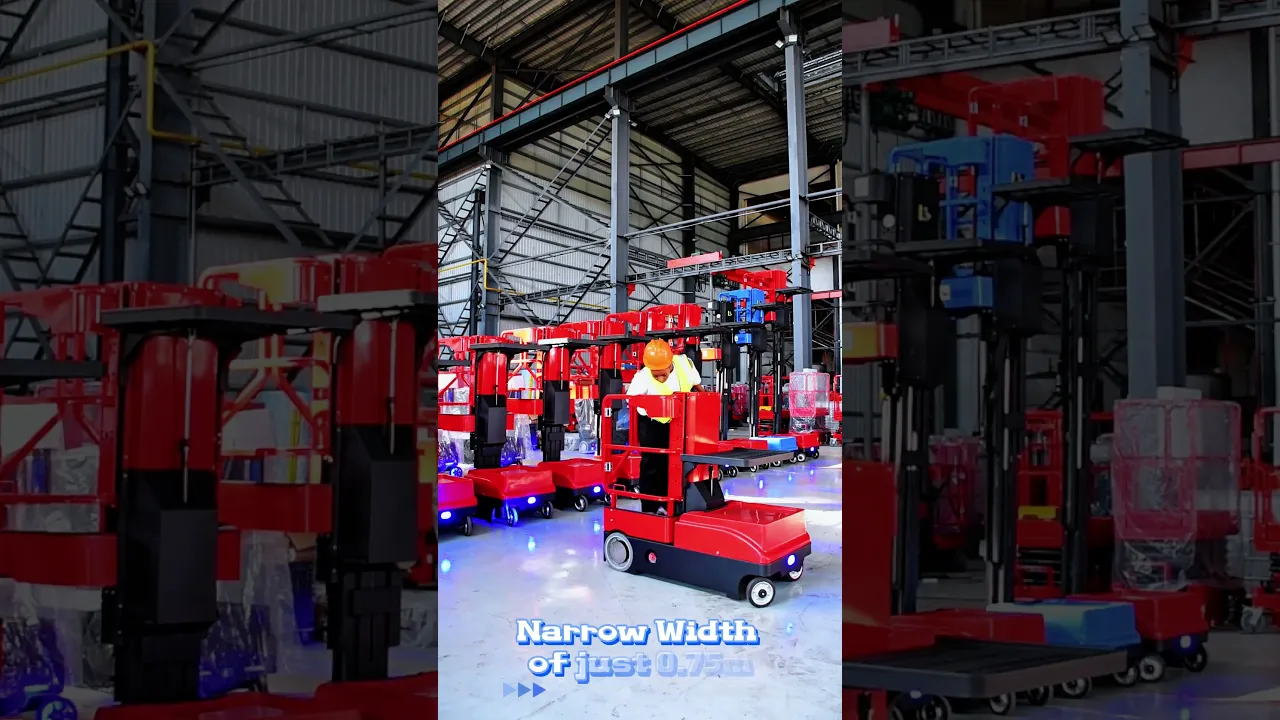
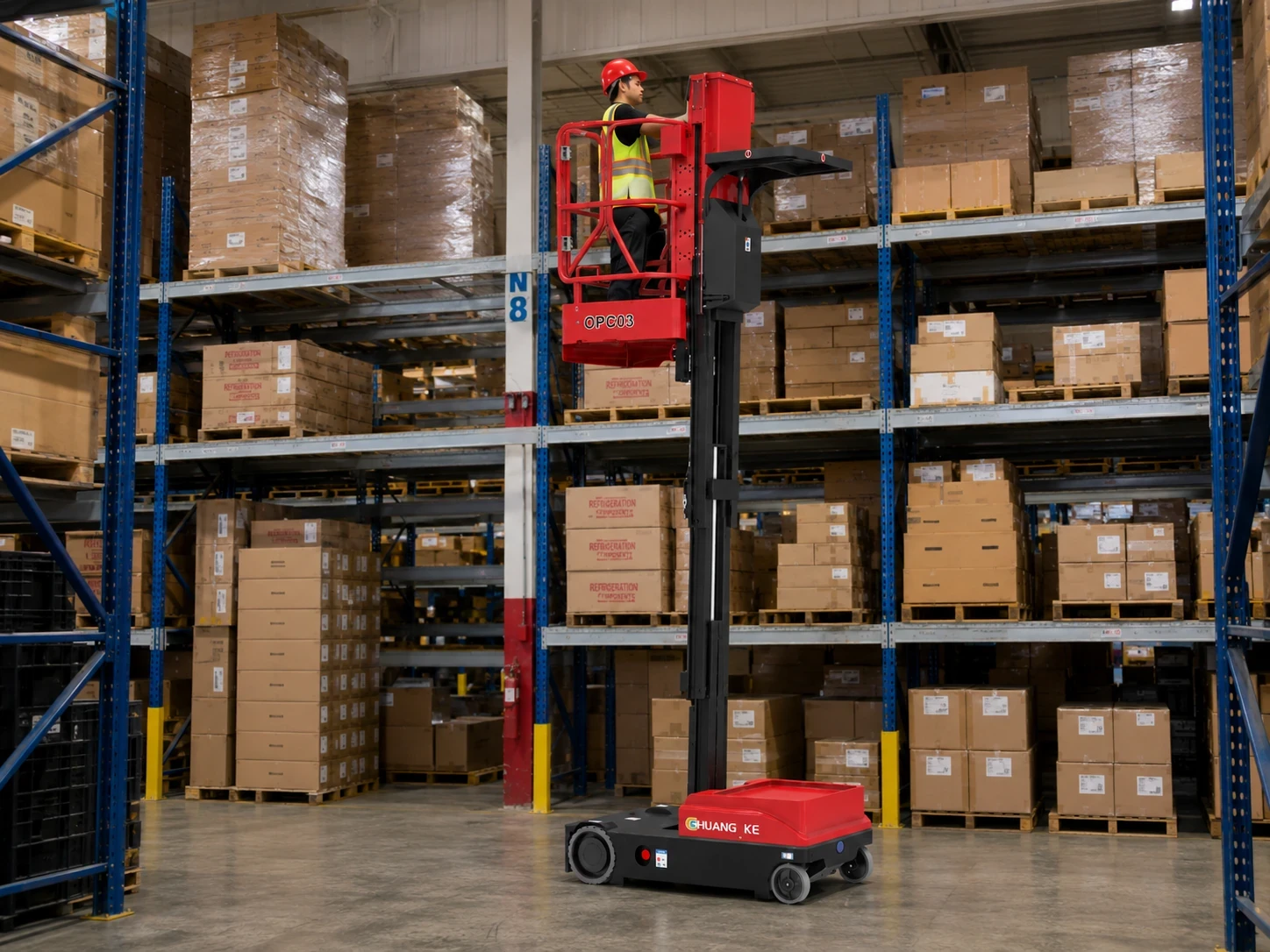
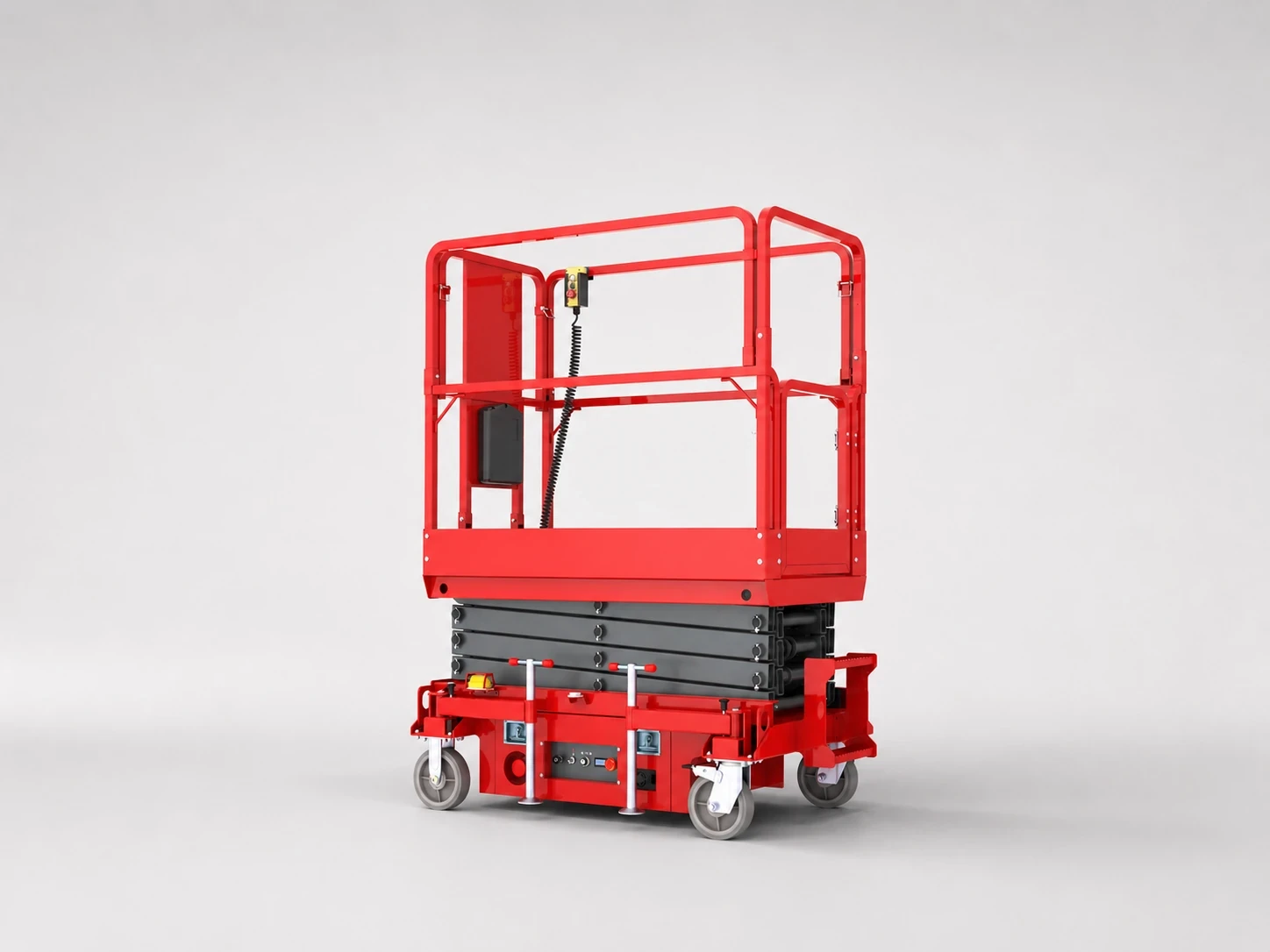
For example, the WIZPLUS OPC Series is a compact self-propelled order-picking lift designed around warehouse picking and elevated access. Its narrow chassis allows it to work in environments where maneuverability and direct shelf access are important.
The correct machine therefore depends not simply on the name “order picker,” but on what the operator actually needs to lift, reach and transport.
How Does an Order Picker Work?
An electric order picker typically combines several functions in one machine:
Although designs vary, the operating process is relatively straightforward.
The operator first travels to the required warehouse location. On an elevated machine, the platform or operator compartment then rises to the required picking position.
The operator retrieves the required carton, component or product and places it on the machine's storage tray, load deck, pallet or designated carrying area.
The machine then travels to the next picking location.
A typical picking cycle therefore follows this sequence:
Travel → Position → Elevate → Pick → Store → Move to the next location
Because the operator can access inventory directly, there is often no need to remove an entire pallet simply to retrieve one carton.
What Are the Main Types of Order Pickers?
Not every warehouse requires the same picking height or operating configuration.
Order pickers can generally be divided according to the level at which the operator needs to work.
1. Low-Level Order Picker
A low-level order picker is mainly designed for picking products located close to floor level or on lower rack levels.
It is useful when workers need to move efficiently through long warehouse aisles while collecting multiple products.
Typical applications include:
Supermarket distribution
Beverage warehouses
Food distribution
Retail distribution centers
Ground-level carton picking
Fast-moving consumer goods
Low-level order pickers can combine horizontal transportation with frequent picking stops.
Manufacturers such as Toyota and Hyster offer dedicated low-level order-picking equipment for these types of operations.
2. Medium-Level Order Picker
A medium-level order picker is used when products are stored higher than normal ground-level picking positions but do not require extremely high warehouse access.
These machines can be suitable for warehouses that have several levels of shelving and need greater vertical flexibility.
Common applications include:
Spare parts warehouses
Retail stockrooms
E-commerce warehouses
Electronics storage
Small-parts distribution
Maintenance parts storage
The actual working height varies according to the machine design.
3. High-Level Order Picker
A high-level order picker, sometimes called a man-up order picker, is designed for elevated warehouse picking.
The operator platform rises together with the operator, allowing products to be selected directly from higher rack positions.
These machines are particularly useful in warehouses where vertical storage space is important.
Typical applications include:
High-rack warehouses
E-commerce fulfillment centers
Distribution centers
Spare parts warehouses
Industrial storage facilities
High-density storage environments
Some industrial high-level order pickers are also designed for guided very-narrow-aisle applications. Crown, for example, identifies high-level order pickers for both guided VNA and free-ranging applications.
Order Picker vs Forklift: What Is the Difference?
Order pickers and forklifts are both used in material handling, but they are designed for different jobs.
Equipment | Main Purpose | Operator Elevated? | Typical Load |
|---|---|---|---|
Order Picker | Picking individual items from racks | Yes, on many models | Cartons, products, components |
Forklift | Transporting and stacking loads | Usually no | Pallets |
Reach Truck | Storing and retrieving pallets from racks | No | Pallets |
Scissor Lift | Elevating personnel for access/work | Yes | Personnel, tools, materials |
A forklift is typically selected when the main task is:
moving pallets from one place to another.
An order picker is typically selected when the task is:
sending the operator to the storage position to pick the required product.
That difference is extremely important when selecting warehouse equipment.
What Are the Main Parts of an Order Picker?
The exact construction depends on whether the machine is a forklift-style stock picker or a compact order-picking lift.
Component | Main Function |
|---|---|
Operator platform or compartment | Positions the operator at the required picking level |
Mast or lifting structure | Raises and lowers the platform |
Drive system | Moves the machine through the warehouse |
Steering controls | Allows positioning within aisles |
Battery system | Powers electric travel and/or lifting |
Load tray, deck or forks | Carries picked products |
Braking system | Controls and stops machine travel |
Emergency controls | Provide emergency stop or lowering functions where fitted |
Guarding | Helps protect the operator while working from the platform |
Warning devices | Improve awareness around moving equipment |
When comparing equipment, buyers should evaluate the entire machine rather than judging it only by maximum height.
Order Picker vs Reach Truck
An order picker and a reach truck can both operate in warehouse environments, but they serve different workflows.
A reach truck is primarily designed to handle palletized loads in storage racks.
The forks and mast handle the load while the operator remains in the operator compartment.
A high-level order picker works differently.
The operator is elevated so individual products can be picked directly from the rack.
Crown describes reach trucks as equipment typically used in narrow-aisle environments where storage density and pallet-handling productivity are important.
Choose an order picker when:
Individual cartons need to be picked
Mixed orders are common
Operators need direct access to products
Multiple SKUs are stored vertically
Piece picking is an important warehouse activity
Choose a reach truck when:
Complete pallets are being handled
Pallets need to be placed into high racks
Pallet storage and retrieval is the main operation
Many large warehouses use both types of equipment because they perform different tasks.
Order Picker vs Scissor Lift
Another common question is whether an order picker can be replaced by a scissor lift.
Although both machines can elevate personnel, their primary purposes are different.
Order Picker
Designed primarily for:
Warehouse picking
Inventory access
Moving between multiple picking positions
Collecting products from racks
Scissor Lift
Designed primarily for:
Elevated maintenance work
Equipment installation
Building maintenance
Electrical work
Indoor or outdoor access tasks
Working at height from a platform
If your employees mainly need to pick products from warehouse shelving, an order picker is usually the more specialized solution.
If they mainly need a stable elevated working platform for maintenance, installation or construction-related tasks, a scissor lift may be more appropriate.
Where Are Order Pickers Used?
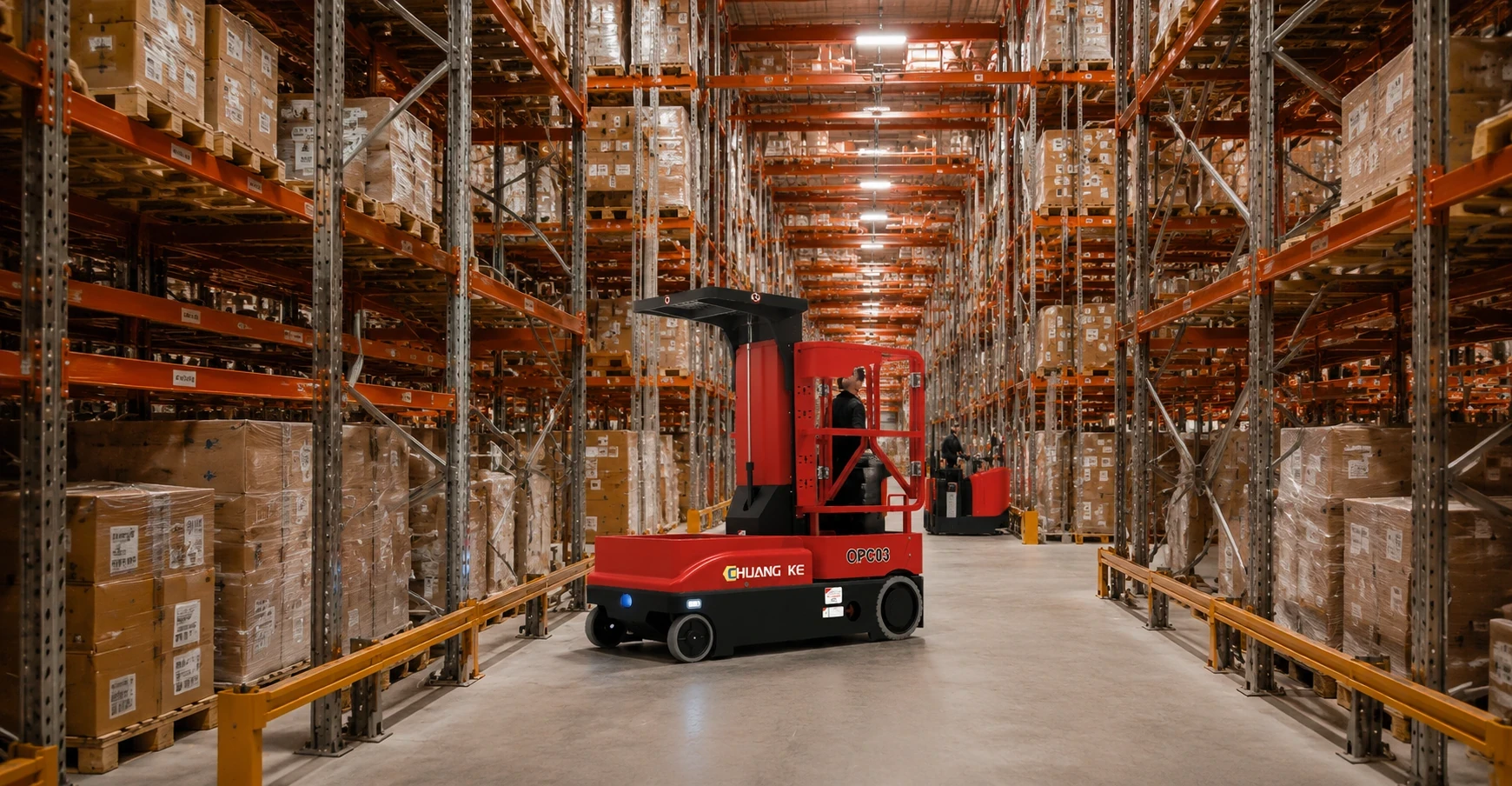
Order pickers are widely used in operations where many different SKUs need to be accessed efficiently.
E-Commerce Warehouses
E-commerce orders often contain products from several different storage locations.
An order picker allows employees to travel through the warehouse and retrieve the required products directly from shelving.
Distribution Centers
Distribution centers frequently process large numbers of mixed orders.
Order pickers can support workflows where individual cartons or products must be collected rather than entire pallets.
Spare Parts Warehouses
Automotive, machinery and industrial spare-parts warehouses may contain thousands of different components.
An order picker gives operators direct access to parts stored at different rack levels.
Retail Warehouses
Retail distribution operations often require mixed-product picking for different stores or customers.
Order pickers can be used to collect different products during the same picking cycle.
Manufacturing Facilities
Factories may use order pickers to retrieve:
Components
Maintenance parts
Packaging materials
Production supplies
Spare parts
from warehouse storage areas.
Crown lists warehouse, manufacturing and distribution environments among common applications for man-up order pickers.
What Are the Advantages of an Electric Order Picker?
Direct Access to Inventory
The operator can access the required storage position instead of removing complete pallets unnecessarily.
Efficient Use of Vertical Storage Space
High-level order pickers can help warehouses use higher storage locations while maintaining access to individual products.
Suitable for Warehouse Environments
Many order pickers are electrically powered, making them particularly suitable for indoor material-handling operations.
Designed Around Picking Workflows
An order picker is not simply a lifting machine.
Its layout, controls and operating concept are designed around repeated warehouse picking activities.
Narrow-Aisle Capability
Certain order picker configurations are designed for narrow or very-narrow warehouse aisles.
However, the required aisle width must always be checked against the exact machine dimensions, turning requirements, load dimensions and warehouse layout.
Never choose equipment based only on a general description such as “narrow aisle.”
How to Choose the Right Order Picker
Choosing an order picker should begin with your warehouse requirements, not simply with the machine price.
Before requesting a quotation, consider the following factors.
1. Required Picking Height
Start by determining the highest position the operator needs to reach.
Do not confuse:
Platform height
Fork lift height
Picking height
Working height
Overall machine height
These measurements may describe different things.
Always provide the supplier with your actual rack dimensions and required picking position.
2. Load Capacity
Determine the maximum load the machine will carry during normal operation.
Consider:
Product weight
Pallet weight
Number of cartons
Accessories
Maximum expected combined load
Selecting equipment only according to your average load can create problems when heavier orders appear.
3. Warehouse Aisle Width
Measure the actual clear aisle width.
Also consider:
Rack clearance
Turning space
Pallet dimensions
Obstacles
Column positions
Emergency routes
Warehouse traffic
The correct equipment must fit your real warehouse environment.
4. Maximum Rack Height
Provide your supplier with the rack height and the exact level from which products must be picked.
A professional equipment selection should be based on the real application rather than simply selecting the tallest available machine.
5. Indoor or Outdoor Operation
Consider where the machine will operate.
Important factors include:
Floor condition
Surface level
Temperature
Humidity
Dust
Rain exposure
Door thresholds
Ramps
Not every order picker is suitable for every environment.
6. Battery and Working Time
For an electric order picker, battery configuration is an important purchasing consideration.
Consider:
Working hours per day
Number of shifts
Charging time
Charging location
Battery technology
Maintenance requirements
A warehouse operating several shifts per day may require a different energy strategy from a warehouse using the machine only a few hours daily.
7. Picking Frequency
Ask how often the machine will be used.
For example:
Occasional use:
A few picking tasks each day.
Regular use:
Continuous warehouse picking during one shift.
High-intensity use:
Multiple shifts with frequent travel and lifting.
Your operating intensity can influence the most suitable machine configuration.
8. Safety Features
Safety should be evaluated together with productivity.
Depending on the equipment and application, important considerations can include:
Emergency stop
Operator controls
Platform guarding
Fall-protection provisions
Speed control
Braking system
Warning devices
Emergency lowering
Operator presence systems
For high-level order picker operation, OSHA specifically identifies falling as a hazard and emphasizes appropriate fall protection and operator training.
9. Maintenance and Spare Parts
Equipment price is only one part of long-term ownership cost.
Before purchasing an order picker, also ask about:
Spare-part availability
Technical documentation
Maintenance instructions
Battery replacement
Controllers
Wheels and tires
Motors
Sensors
Service support
A machine that cannot be maintained efficiently can become expensive over its operating life.
Order Picker Safety: What Should Operators Know?
An order picker should only be operated according to the manufacturer's instructions and applicable local regulations.
Important safety practices include proper training, inspection and fall protection where required.
OSHA states that powered industrial truck operators must be trained and evaluated according to the applicable requirements.
Pre-operation inspection is also important. Equipment that is defective or unsafe should be removed from service until the problem has been corrected.
Operators should never improvise when working at height.
The correct operating procedure depends on the machine, workplace and applicable safety regulations.
What Information Should You Send an Order Picker Manufacturer?
If you are requesting an order picker quotation, providing detailed information will help the manufacturer recommend the right model.
Send the following information:
1. Maximum required picking height
Example:
6 meters
2. Maximum load
Example:
300 kg
3. Warehouse aisle width
Example:
1.5 meters
4. Rack dimensions
Include rack height and shelf spacing if possible.
5. Application
Example:
E-commerce warehouse
6. Indoor or outdoor use
Example:
Indoor warehouse only
7. Working hours
Example:
8 hours per day
8. Destination country
This can help determine electrical configuration, documentation and shipping requirements.
9. Any special requirements
For example:
Battery preference
Platform dimensions
Custom configuration
Charger specification
Branding
OEM requirements
Providing this information at the beginning can make equipment selection much more efficient.
Frequently Asked Questions About Order Pickers
Is an Order Picker a Forklift?
An order picker belongs to the broader powered industrial truck/material-handling equipment category and is often referred to as an order picker forklift.
However, its function is more specialized than that of a conventional counterbalance forklift.
It is primarily designed for warehouse order-picking operations.
Does the Operator Go Up on an Order Picker?
On high-level or man-up order pickers, yes.
The operator platform rises so the operator can access products at elevated storage locations.
Low-level machines may use a different operating configuration.
What Is an Electric Order Picker?
An electric order picker uses battery power for travel and lifting functions.
Electric order pickers are commonly used in warehouses, distribution centers and other indoor material-handling applications.
How High Can an Order Picker Go?
The maximum height depends on the model.
Different machines have different platform heights, fork heights and working heights, so buyers should compare specifications carefully.
Always select the machine according to the actual rack and picking height rather than choosing based only on a general machine category.
Can an Order Picker Be Used in a Narrow Aisle?
Some order pickers are specifically designed for narrow-aisle or very-narrow-aisle warehouse applications.
However, suitability depends on the machine dimensions, guidance system, load dimensions and warehouse layout.
The aisle should be measured before selecting the machine.
What Is the Difference Between an Order Picker and a Reach Truck?
A reach truck is primarily designed to move and position palletized loads in warehouse racks.
An order picker is primarily designed to allow an operator to retrieve individual products or cartons from storage positions.
What Is the Difference Between an Order Picker and a Scissor Lift?
An order picker is designed around warehouse picking and inventory access.
A scissor lift is primarily an elevated work platform used to position personnel for work at height.
The correct choice depends on the task.
How Do I Choose an Order Picker Manufacturer?
When comparing manufacturers, do not compare price alone.
Evaluate:
Machine specifications
Engineering capability
Product configuration
Safety features
Quality-control process
Documentation
Spare parts
Warranty terms
Technical support
OEM capability
Export experience
Most importantly, make sure the manufacturer understands your actual application.
Looking for the Right Order Picker for Your Warehouse?
Choosing the correct order picker starts with understanding your warehouse.
At WIZPLUS, we focus on order-picking and lifting solutions for different material-handling applications.
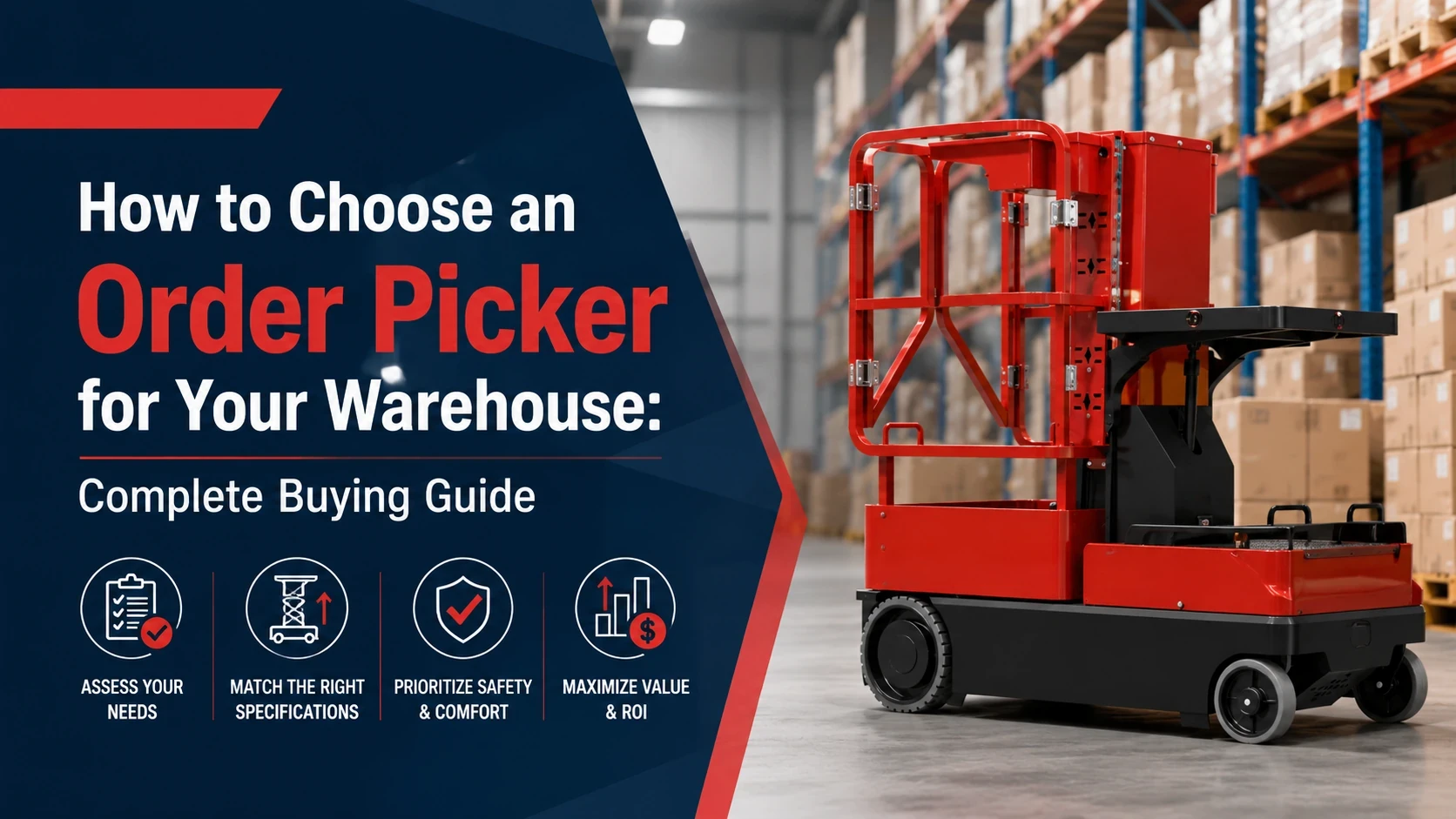
Instead of selecting equipment based only on a model name, buyers should consider the complete operating environment — including picking height, load capacity, aisle width, working time and warehouse conditions.
If you are looking for an electric order picker, warehouse order picker or customized order-picking solution, send WIZPLUS the following information:
✓ Required picking height
✓ Maximum load
✓ Aisle width
✓ Indoor or outdoor application
✓ Working hours per day
✓ Destination country
Other Blogs