Blog
Self-Propelled Order Picker vs Semi-Electric Order Picker: Which One Should You Choose?
Published
Category
Order Picker
Compare self-propelled and semi-electric order pickers based on productivity, travel, battery, maintenance, cost and warehouse applications to choose the right model.
Understanding the Difference Between Self-Propelled and Semi-Electric Order Pickers
Choosing the right order picker is an important decision for warehouses, distribution centers and industrial storage operations.
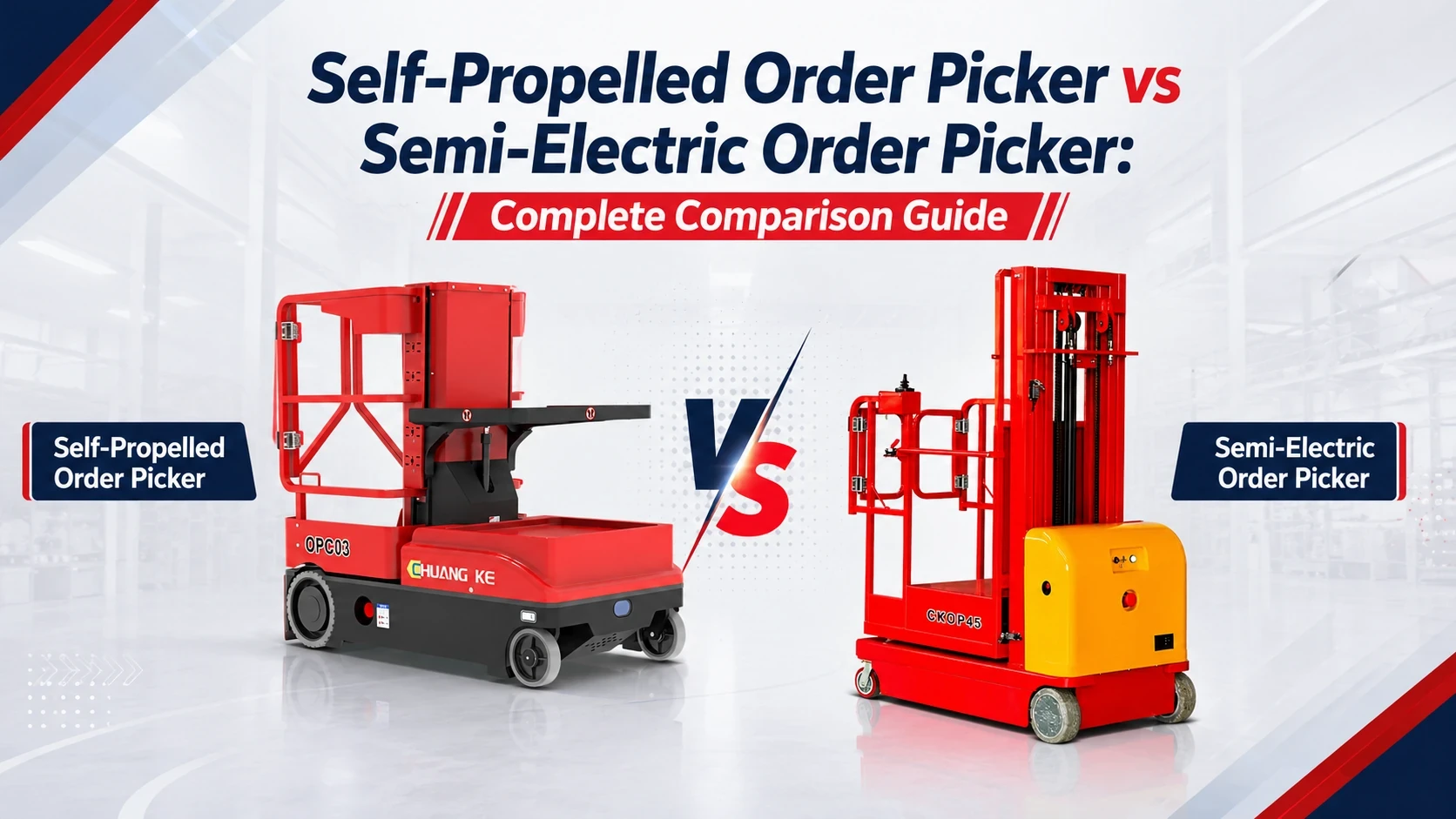
When purchasing an order picker, many buyers need to decide between two common configurations: self-propelled order pickers and semi-electric order pickers.
Both solutions are designed to help operators access elevated storage locations safely and efficiently. However, they differ significantly in travel operation, productivity, maintenance requirements and suitable applications.
A self-propelled order picker provides powered movement and lifting, making it suitable for warehouses where operators frequently travel between multiple picking locations. A semi-electric order picker usually focuses on powered lifting with a simpler movement design, making it suitable for applications where travel requirements are limited.
The right choice depends on the actual warehouse workflow, not simply the machine with more functions or a higher specification.
Before selecting a model, buyers should evaluate:
Picking frequency
Travel distance
Working height requirements
Warehouse layout
Battery requirements
Operating hours
Long-term maintenance costs
What Is a Self-Propelled Order Picker?
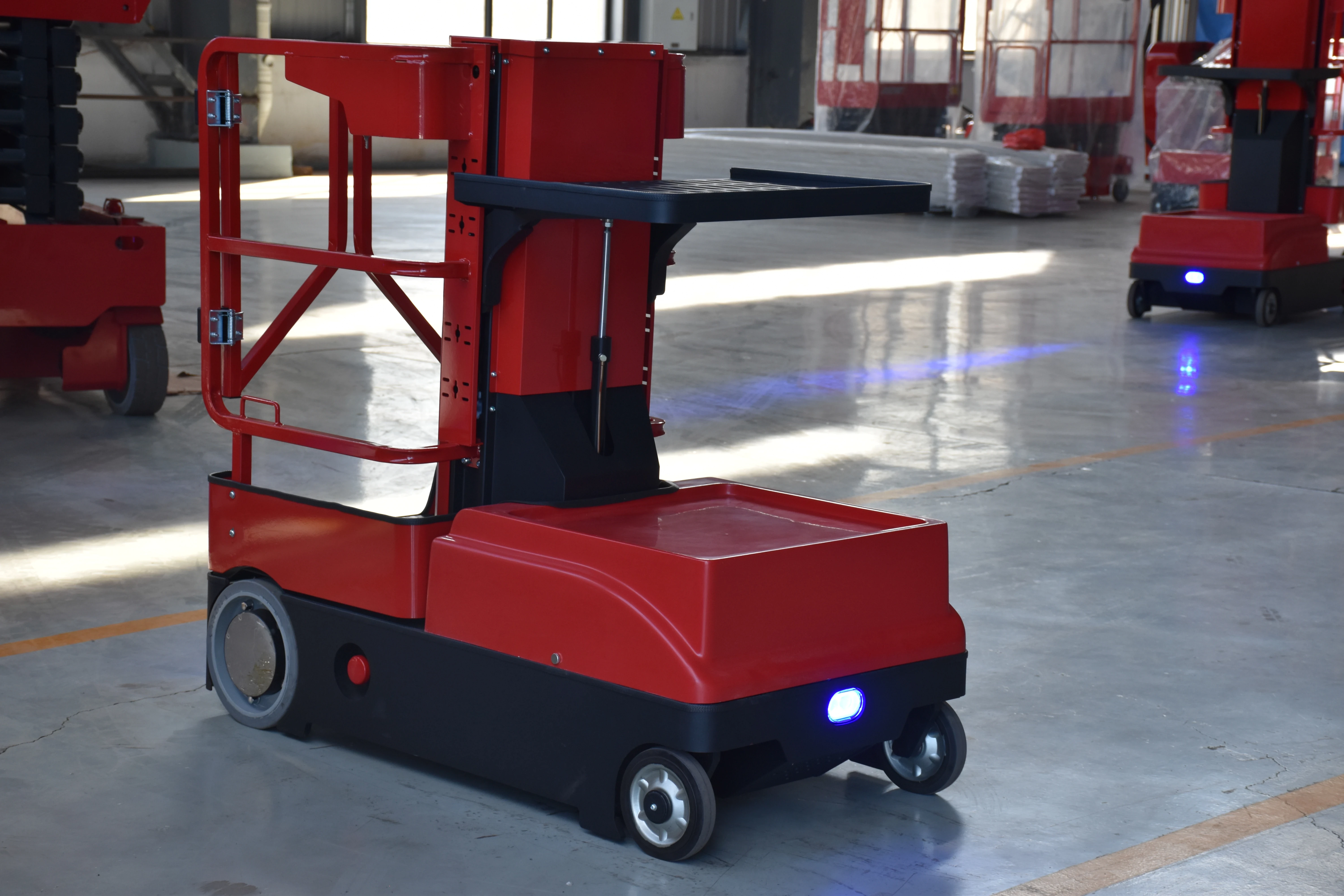
A self-propelled order picker is an electrically powered lifting machine that allows operators to control both lifting and traveling functions.
The operator can raise the platform to the required working height and move the equipment between different picking locations using the integrated electric drive system.
Unlike manually moved equipment, self-propelled models reduce the physical effort required to reposition the machine, especially in warehouses where employees perform repeated picking cycles.
Main Features of Self-Propelled Order Pickers
Typical features include:
Electric travel system
Powered lifting mechanism
Rechargeable battery
Operator control handle
Elevated working platform
Safety protection functions
The main advantage of a self-propelled order picker is improved efficiency during frequent warehouse movement.
For example, in a large distribution center, operators may need to move between many aisles throughout the day. Powered travel can reduce unnecessary repositioning time and allow employees to focus more on picking tasks.
However, self-propelled models generally include more components, which may result in:
Higher purchase cost
More complex maintenance requirements
Additional electrical components to inspect
Therefore, buyers should consider whether the productivity benefits match their actual application.
What Is a Semi-Electric Order Picker?
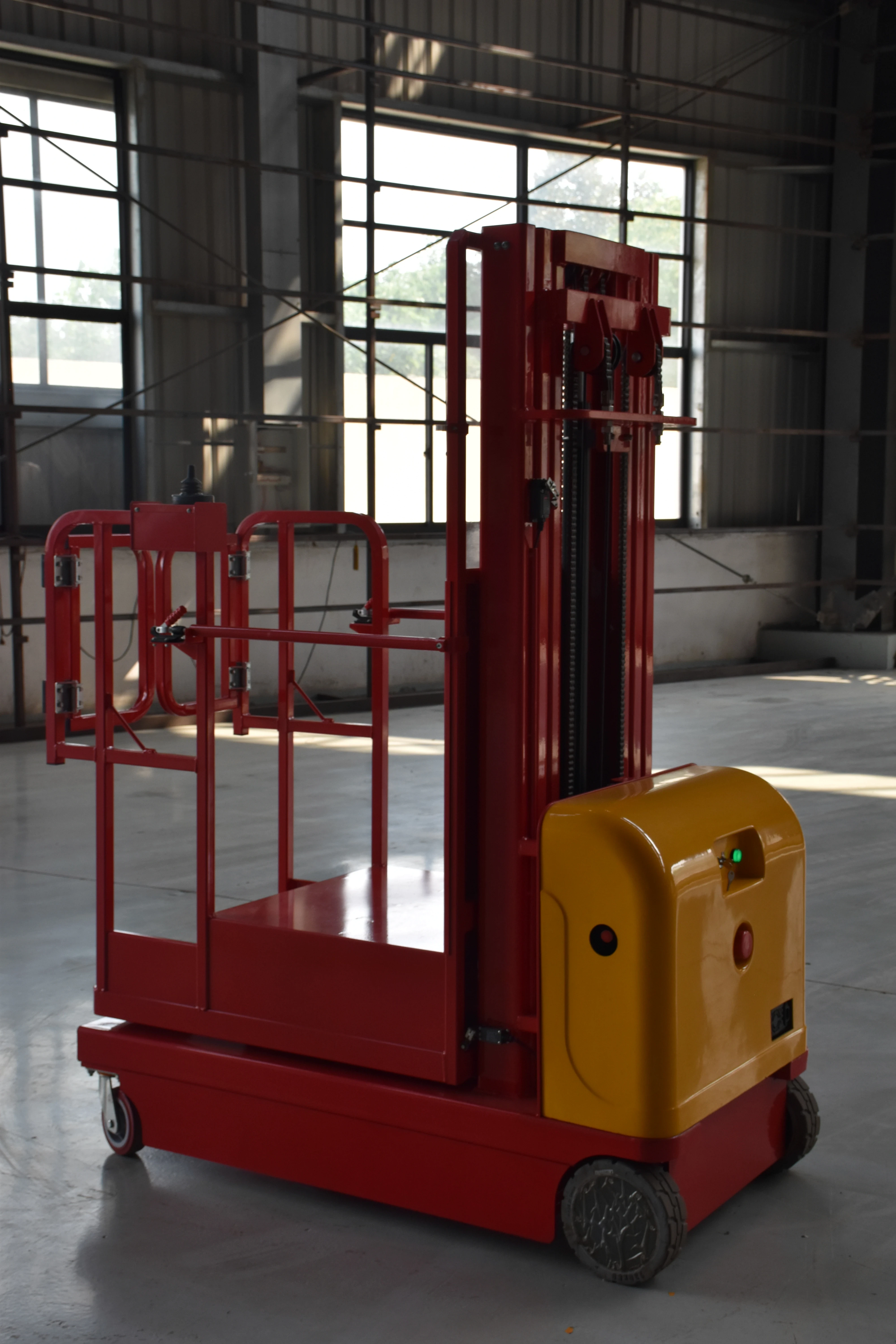
A semi-electric order picker combines powered lifting with a simpler travel design.
The lifting system uses electric power to raise and lower the platform, while movement between locations may require manual positioning depending on the machine design.
Semi-electric order pickers are often selected for applications where operators do not need to travel long distances during each shift.
Common Applications of Semi-Electric Order Pickers
Semi-electric models are commonly used in:
Small warehouses
Spare parts storage areas
Retail stockrooms
Maintenance applications
Low-frequency picking operations
One advantage of semi-electric models is their simpler structure.
Because they usually have fewer powered travel components, they can provide a practical solution for companies that need elevated access but do not require continuous movement.
However, for high-frequency warehouse picking, manual repositioning may reduce overall efficiency.
Key Differences Between Self-Propelled and Semi-Electric Order Pickers
Feature | Self-Propelled Order Picker (WIZPLUS OPC / OP Series) | Semi-Electric Order Picker |
|---|---|---|
Travel System | Fully electric travel system allows operators to move between picking locations with reduced physical effort | Usually requires manual repositioning or assisted movement depending on design |
Lifting Function | Electric lifting system for efficient access to elevated storage areas | Electric lifting system for vertical access |
Operator Efficiency | Higher efficiency for frequent picking operations and repeated warehouse movement | Suitable for applications with limited movement requirements |
Best Application | Warehouses, distribution centers, narrow aisles and high-frequency picking operations | Small warehouses, occasional inventory access and low-frequency picking tasks |
Working Environment | Designed for professional warehouse operations requiring regular equipment movement | More suitable for simpler material handling environments |
Productivity | Reduces time spent manually moving equipment between picking points | Productivity may decrease when frequent repositioning is required |
Operator Effort | Lower physical effort due to powered driving and lifting functions | Requires more operator involvement during movement |
Initial Investment | Generally higher because of additional electric drive components | Usually lower due to simpler configuration |
Maintenance Requirements | Requires inspection of drive system, battery, controller and electrical components | Simpler structure with fewer powered movement components |
Long-Term Value | Better suited for operations where productivity and efficiency are priorities | Practical choice when equipment usage is occasional |
Warehouse Suitability | Suitable for larger warehouses, distribution centers and dense storage environments | Suitable for smaller storage areas with limited travel distance |
The biggest difference is not the lifting capability.
The key difference is how the equipment supports daily warehouse operations.
How Warehouse Operations Affect Equipment Selection
Many buyers focus mainly on technical specifications such as lifting height and load capacity.
However, warehouse workflow often has a greater impact on equipment performance.
Before selecting an order picker, consider the following factors.
Picking Frequency
The number of picking tasks completed every day directly affects whether powered travel is valuable.
A warehouse completing hundreds of picking movements per shift may benefit from a self-propelled model.
A smaller storage area with occasional product retrieval may not require powered movement.
Travel Distance
The distance traveled during daily operation is another important factor.
If operators frequently move between different aisles and storage zones, powered travel can improve efficiency.
For short-distance applications, a semi-electric model may provide sufficient performance.
A useful question is:
How many times does the order picker need to move during one working shift?
The answer often helps determine the most suitable configuration.
Warehouse Layout
The physical environment should always be considered.
Important factors include:
Aisle width
Turning space
Rack arrangement
Floor conditions
Storage density
A powered machine cannot improve productivity if it does not fit the warehouse layout properly.
When Should You Choose a Self-Propelled Order Picker?
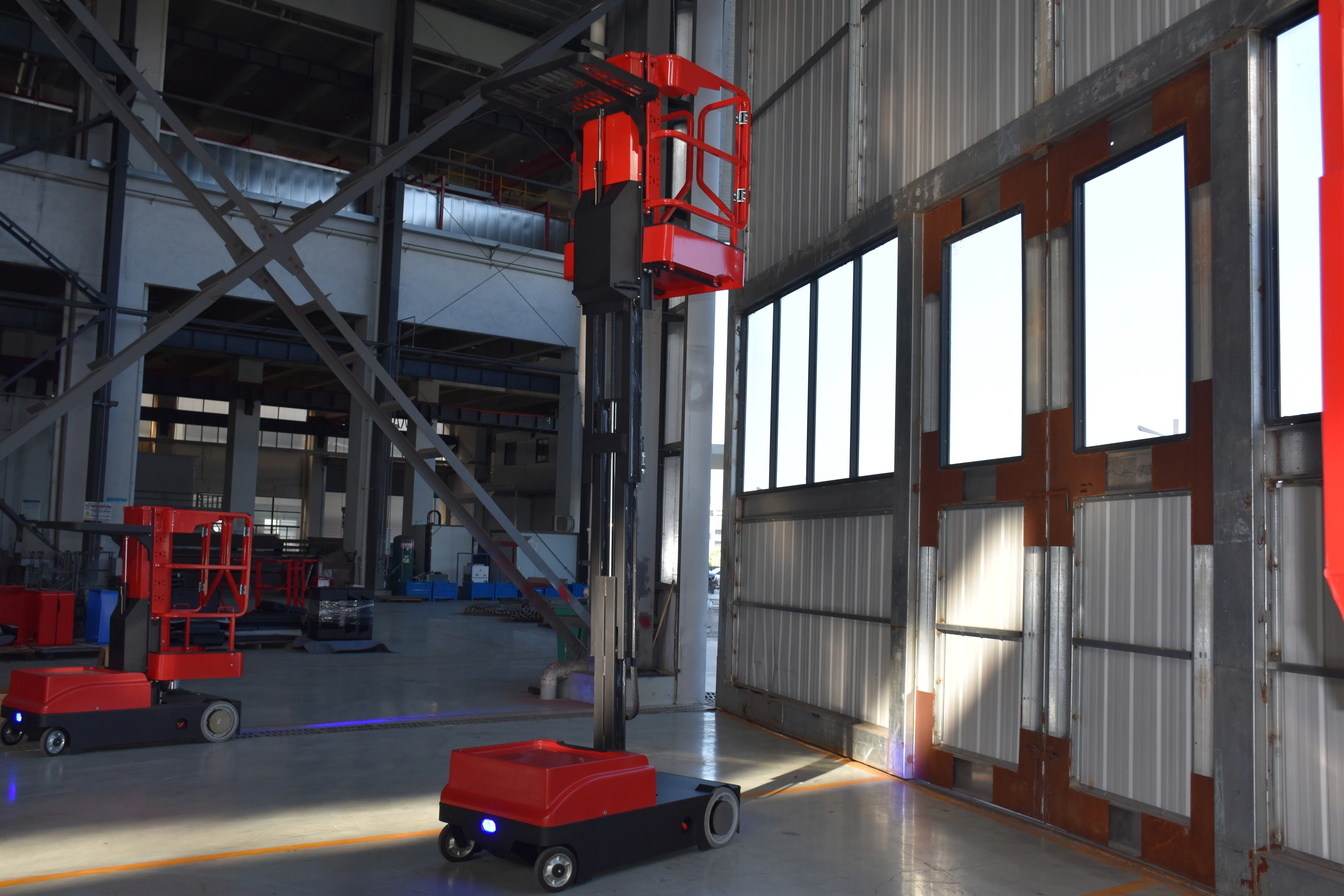
A self-propelled order picker is generally more suitable when efficiency and frequent movement are important.
Large Distribution Centers
Large distribution centers often require continuous movement between storage locations.
In these environments, powered travel can reduce operator effort and improve workflow consistency.
High-Frequency Picking Operations
When equipment is used throughout the day, reducing manual repositioning can provide significant productivity advantages.
Self-propelled models are often preferred when the order picker is a key part of daily warehouse operations.
Large Storage Areas
Warehouses with long travel distances can benefit more from powered movement.
The larger the operating area, the more valuable travel efficiency becomes.
When Should You Choose a Semi-Electric Order Picker?
A semi-electric order picker can be a practical choice when movement requirements are limited.
Small Warehouses
Smaller warehouses often have shorter travel distances and fewer picking locations.
A simpler machine may provide enough capability without unnecessary additional cost.
Occasional Picking Tasks
For businesses that only occasionally require elevated access, a semi-electric model may offer a better balance between investment and performance.
Maintenance and Inventory Applications
Semi-electric models can also be suitable for:
Inventory checking
Equipment inspection
Occasional elevated access
The selection should always consider the intended application.
Cost Comparison: Self-Propelled vs Semi-Electric Order Picker
Purchase price is an important factor, but it should not be the only consideration.
A complete evaluation should include:
Initial Investment
Semi-electric models usually have a lower purchase cost due to their simpler design.
Self-propelled models generally require a higher investment because of additional drive components.
Operating Efficiency
For high-volume warehouse operations, improved productivity may justify the additional investment of a self-propelled machine.
Maintenance Requirements
Semi-electric models may have simpler maintenance requirements.
Self-propelled machines require additional attention to:
Drive systems
Controllers
Electrical components
Battery systems
Total Ownership Cost
The best choice should consider:
Purchase price
Productivity
Maintenance
Spare parts availability
Equipment lifespan
Battery Considerations for Electric Order Pickers
Battery performance affects both self-propelled and semi-electric models.
However, self-propelled machines usually place greater demand on the battery because it supports both travel and lifting operations.
When evaluating battery requirements, consider:
Battery capacity
Daily operating hours
Number of lifting cycles
Travel distance
Charging schedule
A larger battery does not always mean better performance. The correct configuration depends on the actual working conditions.
Common Mistakes When Choosing an Order Picker
Choosing Only Based on Price
The lowest purchase price does not always provide the best long-term value.
A machine that does not match warehouse requirements may reduce productivity or increase operating costs.
Selecting Maximum Specifications Without Need
Higher lifting height or capacity may increase cost without improving actual performance.
The equipment should match the application.
Ignoring Daily Workflow
The best order picker should support the way operators work.
Picking frequency and travel requirements are often more important than individual specifications.
Comparing Different Equipment Configurations
When comparing suppliers, make sure specifications are equivalent.
Important comparison points include:
Working height
Load capacity
Battery configuration
Travel system
Machine dimensions
Safety features
Warranty
Spare parts support
How to Choose Between Self-Propelled and Semi-Electric Order Pickers
A practical selection process includes:
Step 1: Define Required Working Height
Determine the highest picking position operators need to reach.
Step 2: Measure Warehouse Space
Check:
Aisle width
Turning area
Access routes
Step 3: Evaluate Daily Usage
Consider:
Operating hours
Picking frequency
Travel distance
Step 4: Compare Long-Term Value
Evaluate:
Initial cost
Productivity improvement
Maintenance requirements
Spare parts support
Questions to Ask an Order Picker Manufacturer
Before requesting a quotation, provide:
Required working height
Maximum load
Warehouse layout
Aisle width
Daily operating hours
Destination country
Required certifications
Quantity required
Important questions include:
Which model fits our application?
What battery configuration is recommended?
What maintenance is required?
Are spare parts available?
Can the equipment be customized?
Providing detailed information helps manufacturers recommend the most suitable solution.
Final Recommendation
A self-propelled order picker is usually better suited for:
Large warehouses
Frequent movement
Continuous picking operations
Productivity-focused applications
A semi-electric order picker is usually better suited for:
Smaller warehouses
Limited movement
Occasional picking
Simpler applications
There is no single best order picker for every business.
The correct choice depends on matching the equipment with:
Warehouse workflow
Picking requirements
Operating environment
Long-term business needs
Frequently Asked Questions
What is the difference between a self-propelled and semi-electric order picker?
A self-propelled order picker uses electric power for both travel and lifting, while a semi-electric order picker mainly provides powered lifting with a simpler movement system.
Is a self-propelled order picker worth the extra cost?
For warehouses with frequent movement and continuous picking operations, the additional investment may provide better productivity and efficiency.
Are semi-electric order pickers suitable for warehouses?
Yes. Semi-electric models can be suitable for smaller warehouses, limited travel applications and occasional elevated picking tasks.
Which order picker requires less maintenance?
Semi-electric models generally have simpler structures, while self-propelled models include additional drive and electrical components.
How do I choose the right order picker for my warehouse?
Consider working height, load capacity, aisle width, travel frequency, operating hours, battery requirements and warehouse conditions before selecting a model.
Other Blogs