Blog
Order Picker Safety Guide: Rules, Hazards and Best Practices
Published
Category
Order Picker
Learn essential order picker safety rules, common hazards, inspection procedures and best practices to improve warehouse operation safety.
Why Order Picker Safety Matters in Warehouse Operations
Order pickers are widely used in warehouses, distribution centers, retail storage facilities and manufacturing environments to help operators access products stored at elevated levels.
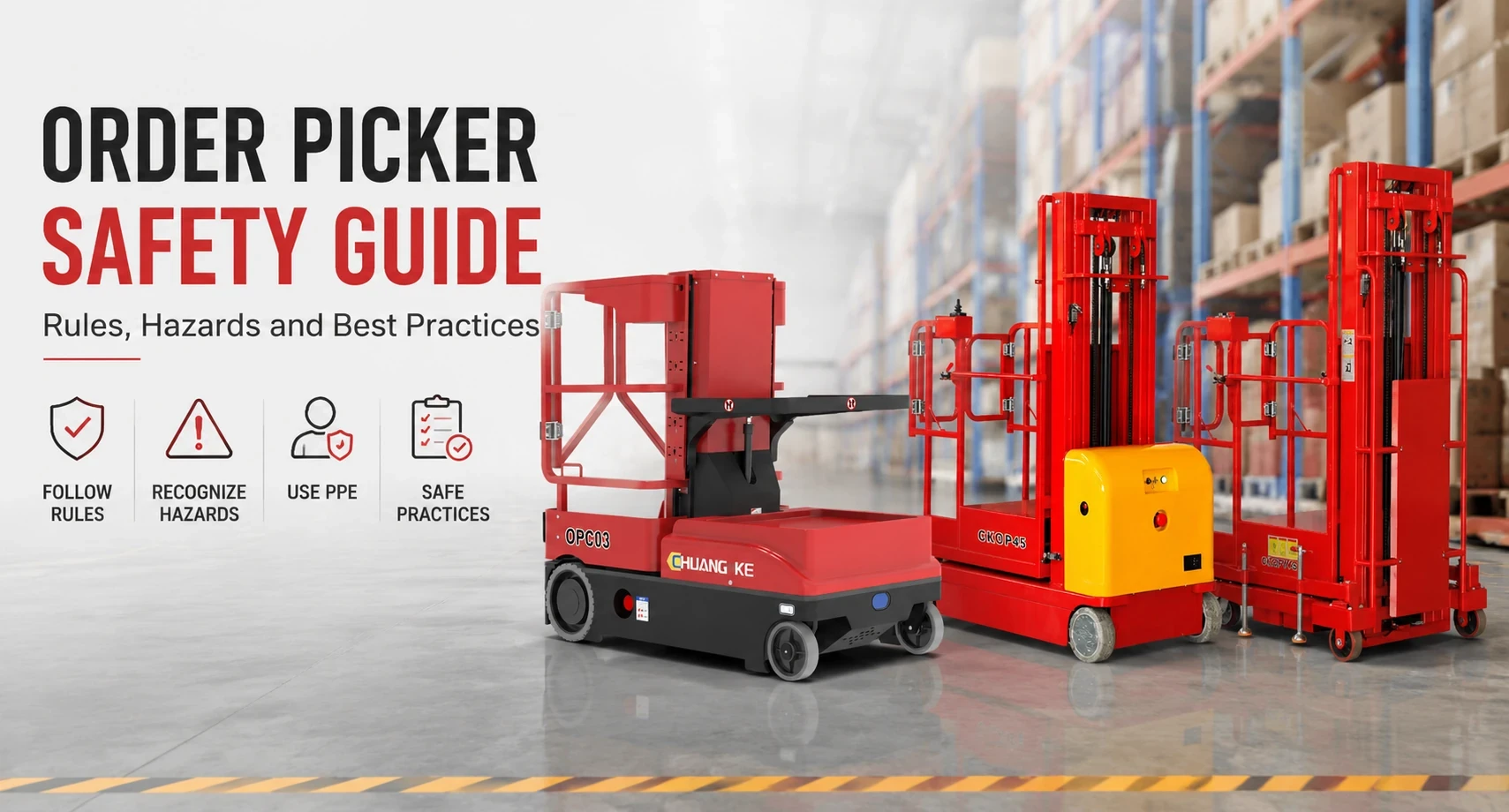
Unlike traditional ground-level picking methods, order pickers lift both the operator and materials above the floor. This makes them highly effective for vertical storage operations, but it also means that proper operating procedures, equipment inspections and operator training are essential.
A safe order picker operation depends on three key factors:
The condition of the equipment
The knowledge and behavior of the operator
The warehouse environment where the machine is used
Many safety problems do not come from the equipment itself, but from incorrect operation, poor maintenance, unsuitable working conditions or failure to follow recommended procedures.
Before operating an order picker, companies should establish clear safety rules, provide proper operator training and perform regular inspections.
Understanding Common Order Picker Safety Risks
Order picker operations involve several potential hazards that warehouse managers should consider before equipment deployment.
The most common risks include:
Falls from elevated platforms
Overloading the platform
Collision with racks or other equipment
Unsafe movement in narrow aisles
Poor visibility during operation
Battery-related hazards
Equipment failure caused by insufficient maintenance
A safe warehouse does not depend on one single safety feature. Instead, it requires a combination of correct equipment selection, operator awareness and consistent operating procedures.
Pre-Operation Order Picker Inspection Checklist
Before using an order picker, operators should complete a basic inspection to confirm that the equipment is in safe working condition.
A daily inspection helps identify problems before they affect operation.
Battery Condition
Check:
Battery charge level
Battery connection
Visible cable damage
Leakage or abnormal conditions
Charger condition
Battery performance directly affects machine reliability, especially for electric order pickers used throughout long working shifts.
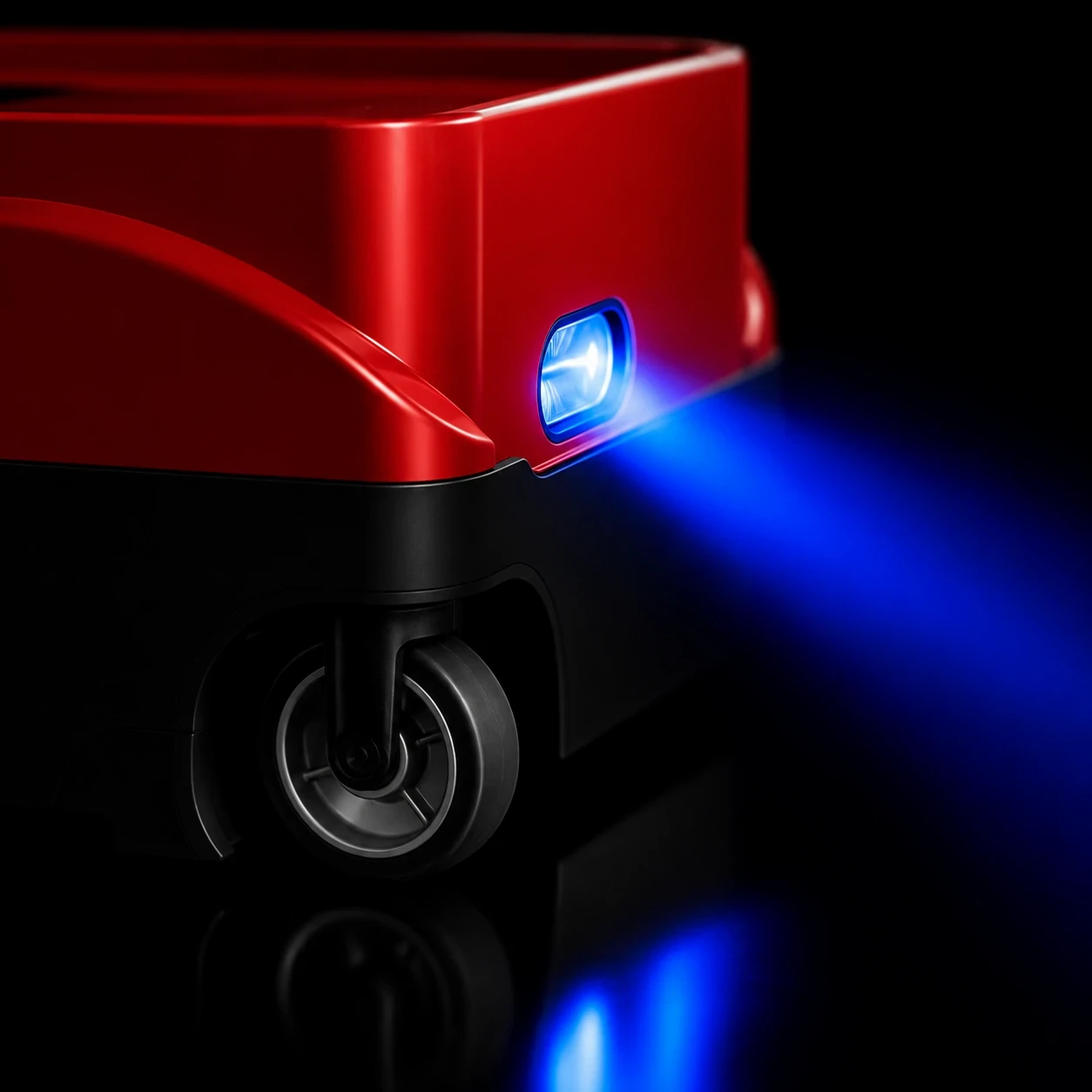
Wheels and Travel System
Inspect:
Wheel condition
Abnormal noise during movement
Steering response
Braking function
Drive system operation
Damaged wheels or unstable movement can affect machine control, especially in narrow warehouse aisles.
Platform and Guardrails
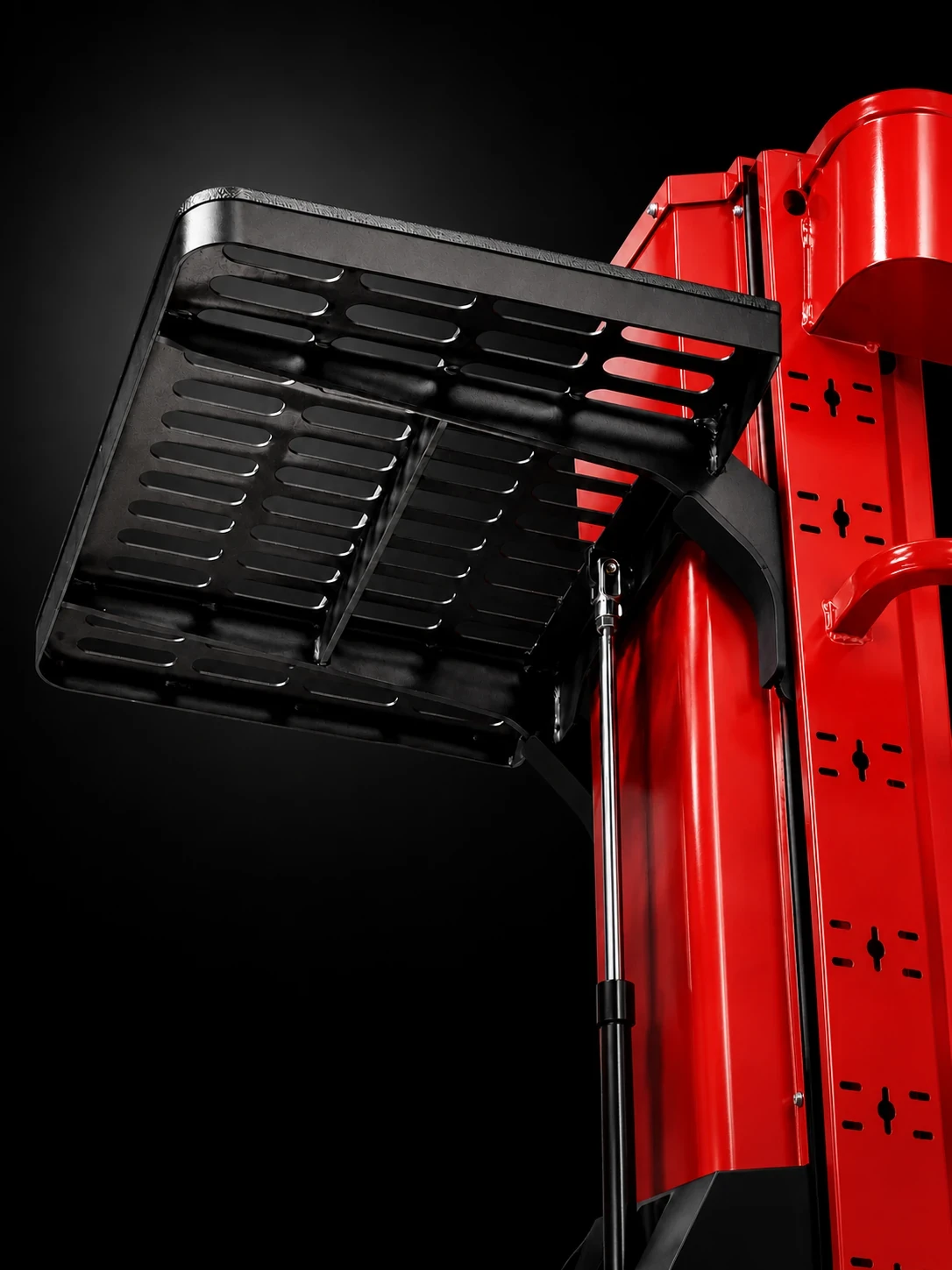
The operator platform should be checked before operation.
Confirm:
Platform surface is clean and stable
Guardrails are secure
Entry gate functions correctly
No structural damage is visible
The platform is the working area where operators spend time at height, so any damage should be addressed before use.
Control System and Emergency Functions
Operators should verify:
Lift controls
Travel controls
Emergency stop function
Lowering function
Warning indicators
Emergency systems should be tested according to the manufacturer's recommendations.
Common Order Picker Safety Hazards
Operating at Excessive Height Without Proper Awareness
Working at height requires additional attention.
Operators should:
Avoid unnecessary movement while elevated
Keep the platform area organized
Follow manufacturer operating instructions
Avoid reaching outside the safe working area
The operator should never attempt to increase reach by standing on rails, using additional platforms or leaning outside the machine.
Exceeding the Rated Load Capacity
Overloading is one of the most common equipment safety risks.
The total load should consider:
Operator weight
Picked products
Tools or equipment carried on the platform
The rated capacity provided by the manufacturer should always be followed.
A machine that appears capable of carrying additional weight may still become unstable if operated outside its designed limits.
Warehouse safety guidance also emphasizes staying within rated load limits and ensuring loads are stable before operation.
Unsafe Movement in Warehouse Aisles
Warehouse environments often contain multiple types of traffic:
Forklifts
Pallet trucks
Pedestrians
Other lifting equipment
Operators should:
Follow designated travel routes
Reduce speed in congested areas
Maintain visibility
Watch for pedestrians
Avoid sudden direction changes
Narrow aisles require additional attention because storage racks and other equipment may reduce available maneuvering space.
Ignoring Overhead Obstacles
Before raising the platform, operators should check the surrounding area.
Potential hazards include:
Lighting fixtures
Warehouse structures
Pipes
Doors
Ceiling equipment
An order picker should only be raised when there is sufficient clearance above and around the machine.
Using an Order Picker Without Proper Training
Operator training is one of the most important parts of safe operation.
Training should include:
Machine controls
Safety procedures
Load handling
Warehouse traffic rules
Emergency procedures
Daily inspection requirements
Operators should understand not only how to operate the machine, but also how to recognize unsafe conditions.
Proper training before operation is widely recognized as an essential part of powered industrial equipment safety.
Safe Operating Practices for Order Pickers
Before Raising the Platform
Operators should confirm:
The area is clear
The floor condition is suitable
No obstacles are nearby
The load is secure
The machine is positioned correctly
The equipment should always be placed on a stable surface before lifting.
During Elevated Operation
When working from an elevated platform:
Operators should:
Keep both feet inside the platform area
Maintain proper body position
Keep materials organized
Avoid overreaching
Follow the machine operating instructions
The platform should never be used as a substitute for ladders or other unsafe access methods.
During Travel
Safe travel practices include:
Maintain controlled speed
Keep attention on the travel path
Avoid sharp turns
Watch for pedestrians
Follow warehouse traffic rules
Some operating environments may require additional precautions when traveling with the platform elevated, depending on the machine design and applicable regulations.
Order Picker Load Handling Safety
Correct load handling is important for both safety and equipment performance.
Before placing products on the machine, consider:
Product weight
Load distribution
Platform capacity
Stability of the materials
Products should be positioned securely and should not block the operator's visibility or controls.
Uneven loading can affect machine stability and handling performance.
Warehouse Environment Safety Considerations
The order picker is only one part of a safe warehouse system.
The surrounding environment also affects operation.
Important factors include:
Aisle Conditions
Keep aisles:
Clear
Properly marked
Free from unnecessary obstacles
Floor Conditions
Inspect for:
Uneven surfaces
Water or oil contamination
Damaged areas
Floor conditions can affect travel stability and braking performance.
Lighting and Visibility
Adequate lighting helps operators:
Identify obstacles
Read product labels
Navigate safely
Poor visibility increases the chance of collisions and incorrect operation.
Order Picker Battery Safety
Electric order pickers rely on battery systems for daily operation.
Battery safety practices include:
Use the correct charger
Keep charging areas clean
Follow battery maintenance instructions
Avoid damaged connections
Check battery condition regularly
Charging areas should be properly managed to reduce risks related to electrical equipment and battery maintenance.
Order Picker Maintenance and Safety
Regular maintenance is closely connected to safe operation.
A poorly maintained machine may experience:
Reduced braking performance
Control problems
Battery issues
Mechanical failures
A maintenance program should include:
Routine inspections
Replacement of worn components
Battery checks
Electrical system checks
Manufacturer-recommended servicing
Equipment should be removed from service if safety-related problems are identified.
How to Select a Safer Order Picker
Safety begins before the equipment arrives at the warehouse.
When selecting an order picker, buyers should consider:
Working Height
Choose a machine that matches the required picking height.
A machine with unnecessary extra height may increase cost and size without improving efficiency.
Load Capacity
Confirm that the machine can safely handle:
Operator weight
Products
Tools
Machine Dimensions
Check:
Overall width
Turning requirements
Warehouse aisle compatibility
A machine should match the actual working environment.
Safety Features
Depending on the model, buyers should evaluate:
Emergency stop systems
Platform protection
Warning devices
Control design
Structural quality
For example, WIZPLUS self-propelled order picker solutions such as the OPC Series and OP Series are designed for warehouse picking applications where stable operation, maneuverability and productivity are important considerations.
Order Picker Safety Checklist
Inspection Item | Check Before Operation |
|---|---|
Battery condition | Confirm charge level and connection |
Wheels | Check for damage or abnormal movement |
Controls | Test lifting and travel functions |
Emergency stop | Confirm operation |
Platform | Check surface and guardrails |
Load | Confirm weight and stability |
Warehouse area | Remove obstacles and hazards |
Safety equipment | Confirm required protection is available |
How WIZPLUS Supports Safe Order Picker Operations
Selecting the correct equipment is an important part of warehouse safety.
A suitable order picker should match:
Required working height
Load requirements
Warehouse layout
Operating frequency
Application environment
For professional warehouse operations, WIZPLUS provides self-propelled electric order picker solutions designed for different picking requirements.
When selecting equipment, Order Pickers buyers should provide information about warehouse conditions and operating requirements so the appropriate model can be recommended.
Frequently Asked Questions
What are the most important order picker safety rules?
The most important rules include completing operator training, performing pre-operation inspections, following load limits, maintaining safe travel practices and using the equipment according to manufacturer instructions.
How often should an order picker be inspected?
Order pickers should be inspected before operation and maintained regularly according to manufacturer recommendations. Daily checks help identify problems before they become safety risks.
Can an order picker be overloaded?
No. Operators should never exceed the rated capacity of the machine. The total load should include the operator, products and any additional materials carried.
What safety equipment should order picker operators use?
Safety requirements vary depending on workplace regulations and equipment design. Common warehouse safety equipment may include appropriate footwear, visibility clothing and other required protective equipment.
How can I choose a safe order picker for my warehouse?
Choose a machine based on working height, load capacity, aisle width, operating frequency, warehouse conditions and available safety features.
Other Blogs