Blog
Electric Order Picker: Types, Uses, Benefits and How to Choose the Right Model
Published
Category
Order Picker
Learn what an electric order picker is, how it works, the main types, applications, key specifications and how to choose the right model for your warehouse.
What Is an Electric Order Picker?
An electric order picker is a powered lifting machine designed to raise an operator to different storage levels so that individual products, cartons, parts or other goods can be picked directly from warehouse shelving or racking.
Unlike equipment that primarily lifts entire pallets, an order picker is designed around the picking process itself. The operator travels with the machine, raises the platform to the required level and retrieves items directly from the storage location.
Electric order pickers are commonly used in warehouses, distribution centers, retail stockrooms, spare-parts facilities and other environments where employees regularly need access to products stored above floor level.
However, not every electric order picker is designed for the same task.
Some models are compact machines intended for relatively low picking heights and narrow indoor spaces, while others provide higher working heights, powered travel, larger batteries or platforms designed for more intensive warehouse operations.
Choosing the right model therefore requires more than comparing maximum height and price.
How Does an Electric Order Picker Work?
An electric order picker normally combines a lifting system with battery-powered controls.
The operator stands on the platform and uses the machine controls to raise or lower the working position.
Depending on the model, travel may also be powered electrically.
This distinction is important because electric order pickers can generally be divided into different operating configurations.
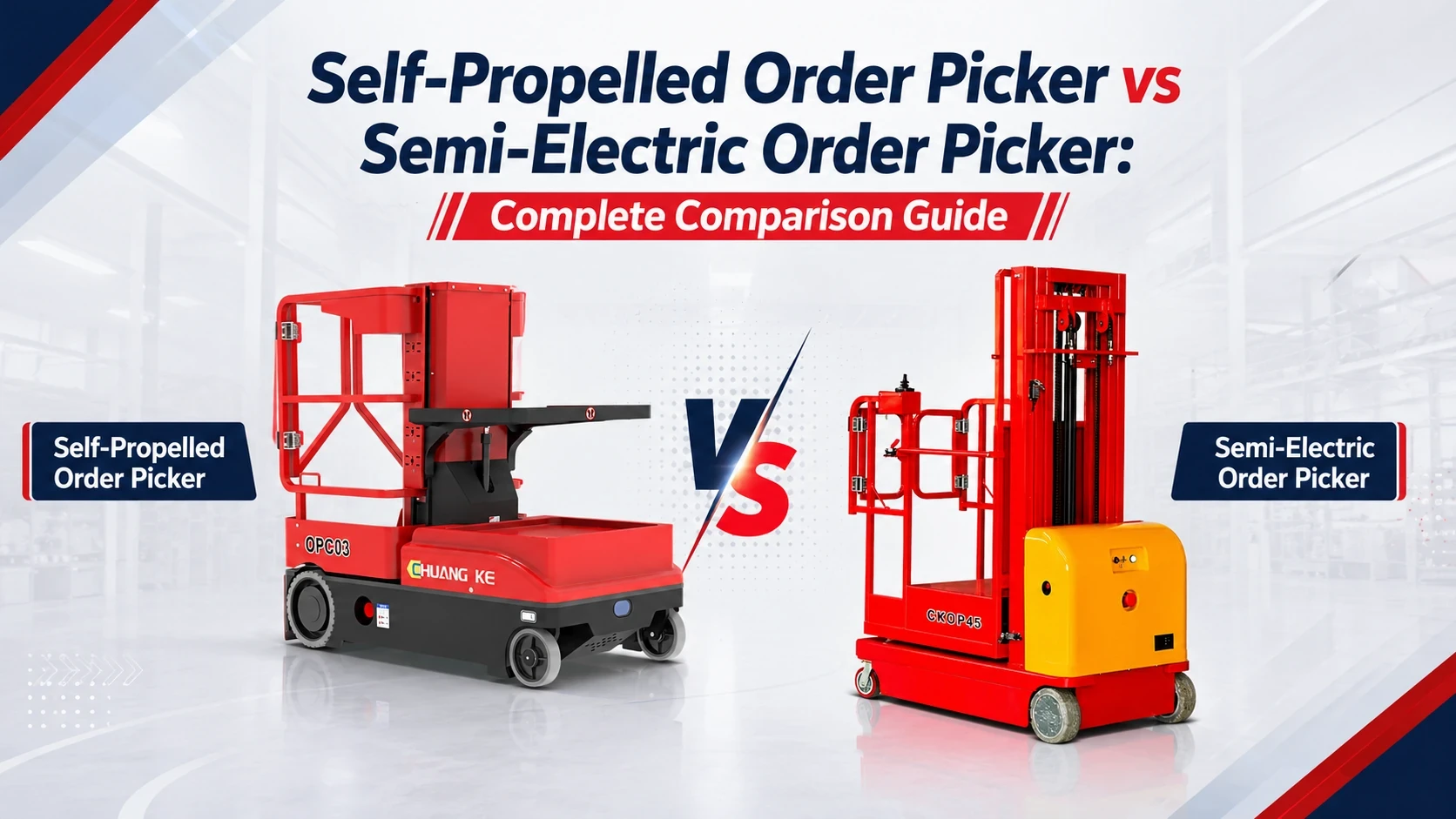
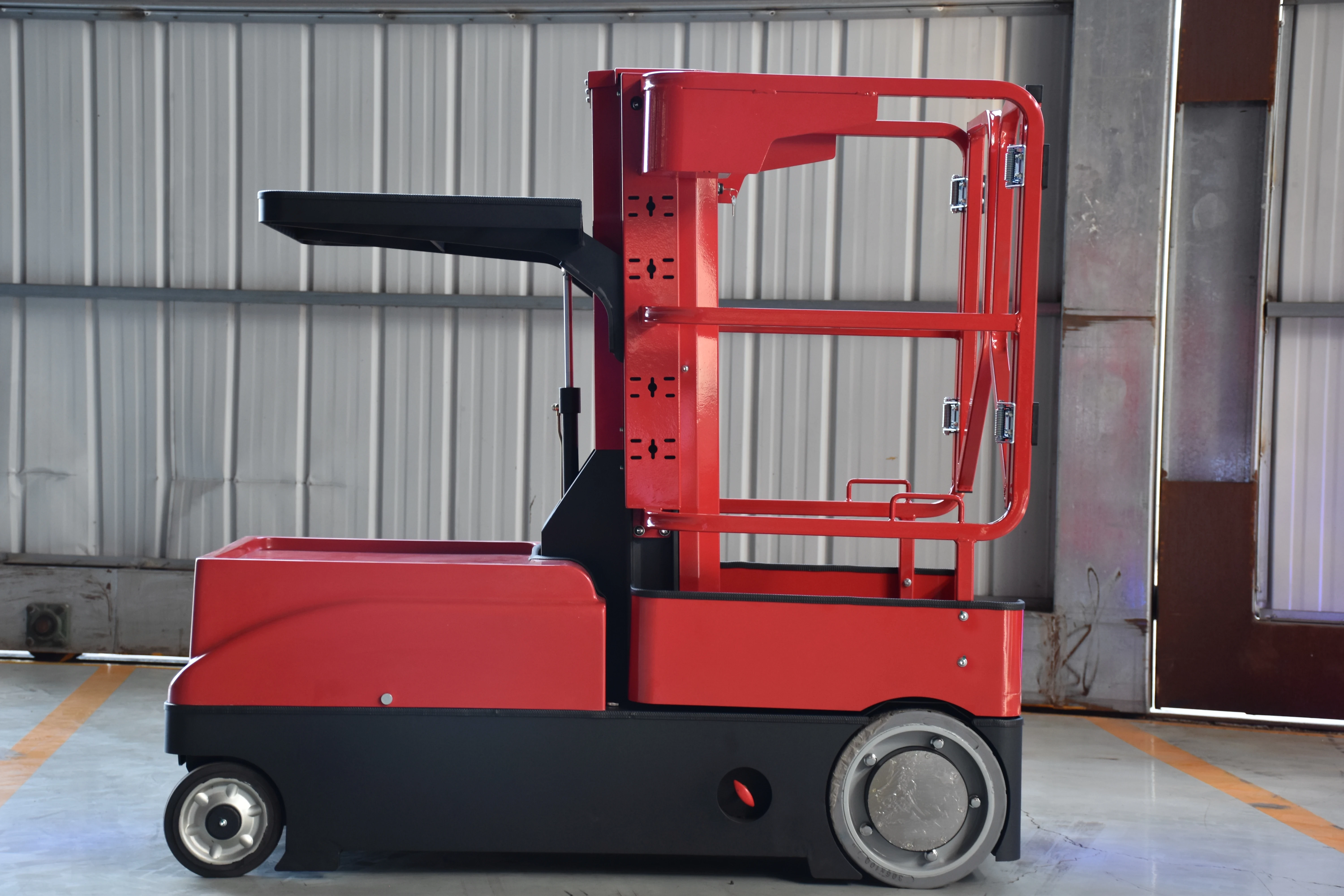
A self-propelled order picker uses electric power for both lifting and travel.
A semi-electric order picker generally uses powered lifting while repositioning may involve manual movement, depending on the machine design.
The lifting system, drive system, battery, controls, braking arrangement and platform configuration together determine how suitable the machine is for a particular warehouse.
This is why two machines with similar working heights can perform very differently in daily operation.
Main Types of Electric Order Pickers
The term “electric order picker” covers several different types of equipment.
Understanding these categories makes it easier to narrow down the right machine.
Self-Propelled Electric Order Picker
A self-propelled order picker uses electric power for both lifting and horizontal travel.
The operator can normally move between picking locations without manually pushing the machine.
This makes self-propelled models particularly useful when picking tasks involve frequent movement between racks.
For example, a distribution warehouse where employees make dozens or hundreds of picking movements during a shift may benefit from powered travel because repeated manual repositioning would otherwise reduce productivity.
Self-propelled machines may also offer more sophisticated drive controls, braking systems and battery configurations than simpler models.
However, these additional systems can increase purchase price, machine weight and maintenance requirements.
The key question is therefore not whether self-propelled is “better,” but whether the warehouse performs enough travel to justify it.
Semi-Electric Order Picker
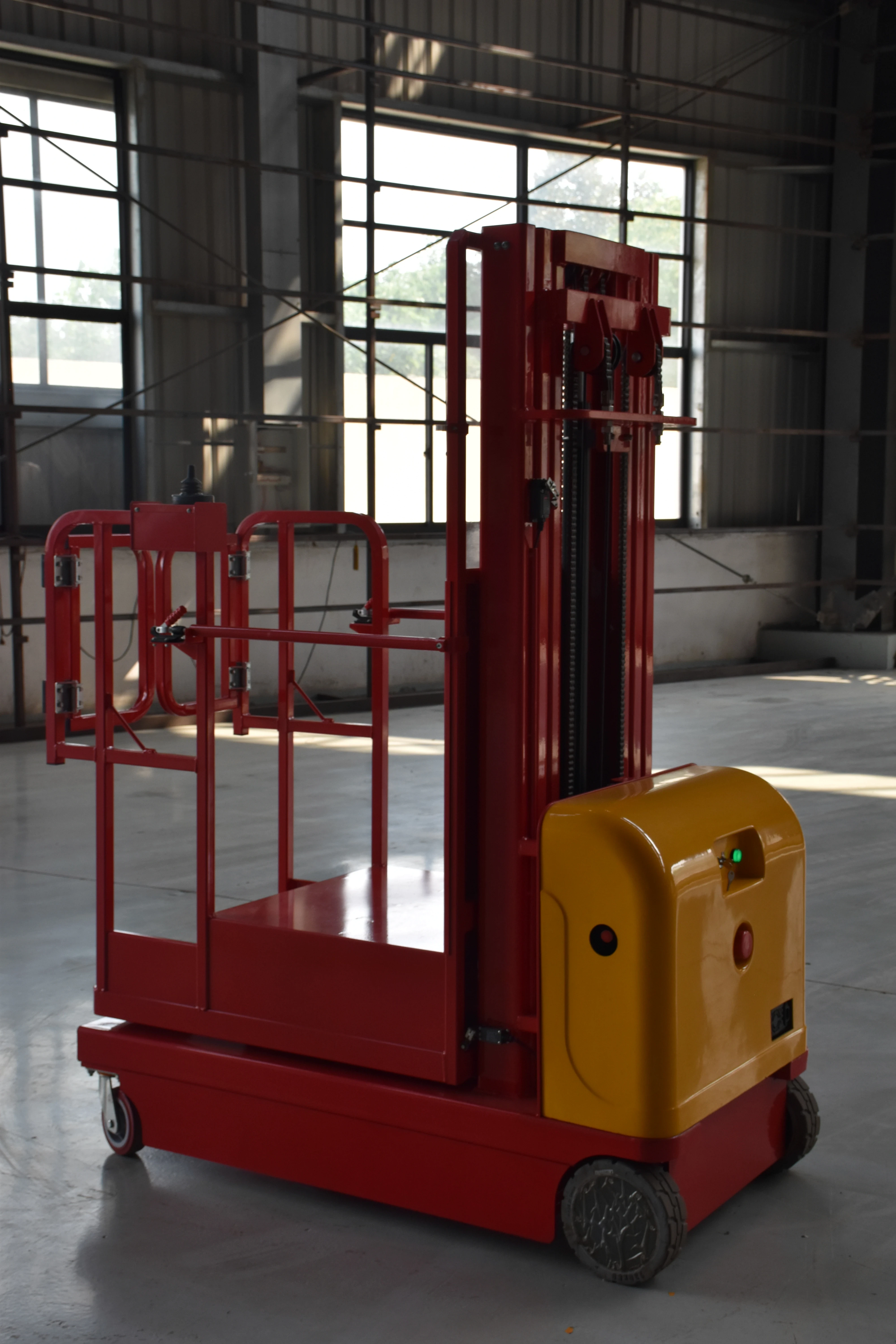
A semi-electric order picker normally provides electric lifting but uses a simpler method for horizontal positioning.
Depending on the design, the machine may need to be moved manually between work locations.
This configuration can be suitable for applications where the machine does not travel continuously.
Examples may include occasional stock retrieval, maintenance work, inventory access or use within a relatively small operating area.
A semi-electric model can also be easier to operate and maintain because the travel system is less complex.
However, it may become inefficient if employees need to reposition the equipment frequently throughout the day.
Before choosing between self-propelled and semi-electric models, estimate how many times the machine will move during a typical shift.
Low-Level Order Picker
Low-level order pickers are designed for relatively low picking positions.
They are commonly used when employees frequently retrieve products from lower shelving levels but need more height than can safely and efficiently be reached from the floor.
Compact dimensions and maneuverability can be important advantages in these applications.
For operations that rarely require access to high racking, choosing a lower-level machine may be more practical than purchasing a high-reaching model that adds unnecessary size and cost.
High-Level Order Picker
High-level order pickers are designed to raise operators to higher picking positions.
They are more relevant in warehouses that use vertical storage to maximize available space.
As working height increases, buyers should pay additional attention to platform design, stability, machine dimensions, safety systems and the manufacturer's operating instructions.
A high-level machine should not be selected simply because it offers more height.
The machine should match the highest regular picking requirement of the warehouse.
Where Are Electric Order Pickers Used?
Electric order pickers are used in many environments where employees need frequent access to elevated storage locations.
Warehouses
Warehouses are one of the most common applications.
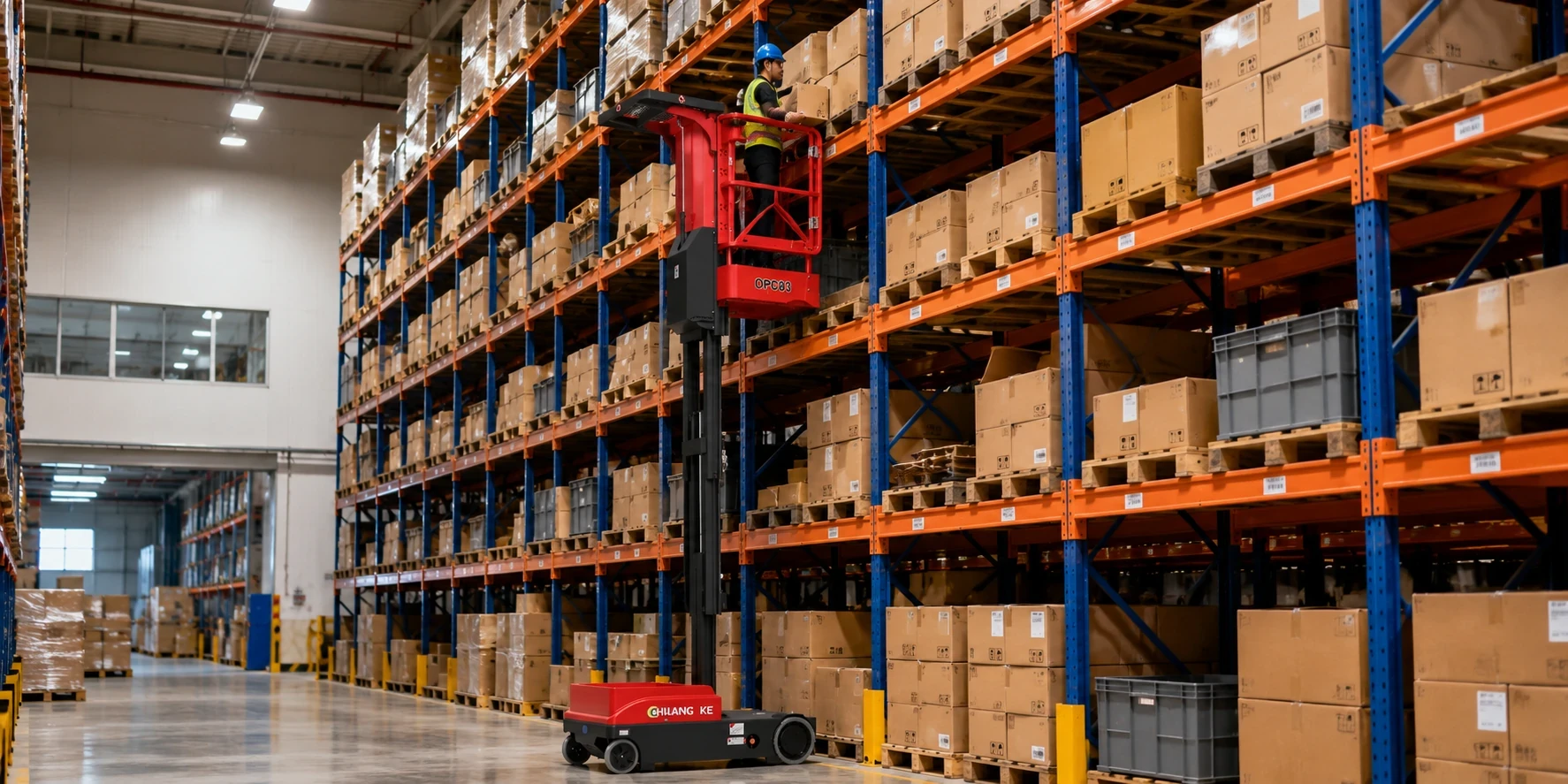
Employees can use order pickers to retrieve individual cartons, components or products from shelving without moving an entire pallet.
This can improve picking efficiency where inventory is stored vertically.
Distribution Centers
Distribution centers often involve frequent order fulfillment and repeated movement between storage locations.
In these environments, travel speed, maneuverability, battery runtime and operator efficiency can become just as important as lifting height.
Self-propelled models are often more relevant where the machine travels continuously between different aisles.
Retail Stockrooms
Retail stockrooms frequently contain relatively narrow aisles and limited storage space.
A compact electric order picker may help employees access products stored on higher shelving while occupying less floor area than larger material-handling equipment.
Machine width and turning space should be checked carefully before purchase.
Spare Parts Warehouses
Automotive, industrial and equipment spare-parts warehouses often store large numbers of relatively small items across multiple shelf levels.
The weight of each item may be low, but the picking frequency can be high.
In this situation, maneuverability and work-cycle efficiency may be more important than maximum lifting capacity.
Facility Maintenance
Certain compact lifting platforms can also be used for elevated maintenance tasks, depending on the equipment design and manufacturer's intended use.
Applications may include lighting, inspection, signage or building services.
However, buyers should confirm that the selected machine is actually intended and approved for the required application rather than assuming that every order picker can be used as a general-purpose access platform.
What Are the Main Benefits of an Electric Order Picker?
Electric order pickers can provide several practical advantages when the machine is correctly matched to the application.
Faster Access to Elevated Inventory
Employees can reach different shelf levels without repeatedly using manual access equipment.
This can reduce unnecessary movement during picking operations.
Improved Warehouse Space Utilization
Vertical storage allows warehouses to use available building height more effectively.
An appropriate order picker helps employees access inventory stored above normal reach height.
Reduced Manual Repositioning
With a self-propelled machine, operators can move electrically between picking locations.
This can be especially useful in warehouses where travel occurs frequently throughout the shift.
Compact Operation
Some electric order pickers are designed with relatively compact footprints, allowing them to operate in warehouse environments where larger equipment may be inconvenient.
Actual suitability still depends on aisle width, turning space and warehouse layout.
More Consistent Picking Process
Using dedicated equipment can make elevated picking more repeatable than relying on improvised or inappropriate access methods.
The equipment should always be used according to the manufacturer's instructions and applicable workplace requirements.
Key Specifications to Compare Before Buying
One of the biggest purchasing mistakes is comparing electric order pickers based only on maximum working height.
Several specifications should be evaluated together.
Working Height
Working height represents the approximate maximum height at which the operator can perform the intended task.
It should not be confused with platform height.
If the warehouse's highest picking location is known, select a machine that provides sufficient working height without adding unnecessary height beyond the actual requirement.
Platform Height
Platform height refers to the height of the operator platform above the ground.
Manufacturers may present platform height and working height separately.
Always confirm which specification is being quoted.
Load Capacity
The rated capacity indicates the amount of load the machine is designed to carry under specified conditions.
Buyers should consider the operator, goods and any other permitted loads according to the machine's rated configuration.
Do not select capacity based only on the weight of one carton.
If several products accumulate during one picking cycle, the realistic maximum load may be considerably higher.
Overall Width
Machine width is particularly important in narrow warehouses.
Measure the actual usable aisle width before comparing equipment.
Do not rely only on architectural drawings because pallets, barriers, columns or stored products can reduce the real operating space.
Overall Length
Overall machine length affects maneuverability, storage and turning requirements.
A longer machine may have difficulty entering certain aisles even if its width appears suitable.
Turning Space
The machine must be able to enter, travel through and exit the intended operating area.
Ask the manufacturer about turning requirements and compare them with actual warehouse conditions.
Battery Capacity
Battery capacity affects how long the machine can operate before charging.
However, battery capacity alone does not determine runtime.
Actual operating time also depends on lifting frequency, travel distance, machine load, temperature and operating habits.
For this reason, it is more useful to discuss the expected work cycle with the manufacturer than to ask only for an estimated number of operating hours.
Charging Time
Charging requirements should fit the warehouse schedule.
If the machine operates for most of the day, buyers should consider whether charging can be completed overnight or during scheduled breaks.
Also verify the required input voltage and charger specifications for the destination country.
Electric Order Picker vs Manual Picking Equipment
For occasional low-level access, simple manual equipment may sometimes be sufficient.
However, as picking height and frequency increase, manually repositioning and climbing repeatedly can become inefficient.
An electric order picker can provide a more consistent operating process by combining elevated access and, in some models, powered travel.
The decision should be based on how often elevated picking occurs.
For example, a warehouse retrieving one item from upper shelving a few times per week may have very different requirements from a fulfillment center performing elevated picks throughout every shift.
The higher the picking frequency, the more important equipment productivity becomes.
Self-Propelled vs Semi-Electric Order Picker
This is one of the most important decisions for many buyers.
A self-propelled model is normally more suitable when:
Travel between picking locations is frequent.
The warehouse covers a relatively large area.
Operators perform repeated picking cycles.
Reducing manual repositioning is important.
Productivity is a major purchasing consideration.
A semi-electric model may be more practical when:
Travel distances are short.
The machine is used occasionally.
Most work occurs within a limited area.
The buyer prefers a simpler configuration.
Initial equipment cost is an important consideration.
There is no universal winner.
The better option depends on how the machine will actually be used.
A useful rule is to evaluate the number of movements per shift rather than simply comparing machine features.
How to Choose the Right Electric Order Picker
A practical equipment selection process should begin with warehouse conditions.
Step 1: Measure the Highest Picking Point
Identify the highest shelf from which employees regularly retrieve products.
Measure the required reach rather than simply choosing the highest machine available.
Step 2: Determine the Maximum Realistic Load
Estimate how much weight may be carried during a complete picking cycle.
Consider accumulated products, not only individual item weight.
Step 3: Measure Aisle Width
Record the narrowest usable aisle in the operating area.
Include any obstacles that reduce available space.
Step 4: Evaluate Travel Frequency
Estimate how frequently the machine moves during a normal shift.
High travel frequency may support the case for a self-propelled model.
Step 5: Review Floor Conditions
Check whether the floor is smooth, level and suitable for the machine.
If the travel route includes ramps, thresholds or uneven surfaces, provide this information to the manufacturer before ordering.
Step 6: Estimate Daily Operating Time
Determine whether the machine will operate occasionally or continuously.
This influences battery selection and charging requirements.
Step 7: Check Destination Requirements
Tell the supplier where the equipment will be used.
Electrical requirements, documentation, certification and other specifications may vary by market.
A Practical Selection Example
Consider a warehouse with these conditions:
The highest normal picking position is approximately 4 meters.
Most products are relatively light cartons.
The machine is used throughout the working day.
Operators move frequently between multiple aisles.
The floor is smooth and level.
Warehouse space is limited.
In this situation, selecting the machine with the greatest possible working height would not necessarily provide the best value.
A more practical process would be to first shortlist machines that comfortably reach the required picking height.
Next, compare machine width, turning requirements, powered travel, battery capacity and platform configuration.
Because travel occurs frequently, a self-propelled model may offer a productivity advantage.
If two machines meet the height requirement, the more compact and easier-to-maneuver machine may be more suitable than the machine with the higher headline specification.
This example shows why warehouse conditions should determine equipment selection.
Common Mistakes When Buying an Electric Order Picker
Choosing Based Only on Maximum Height
More height is not automatically better.
Higher-reaching machines may be larger, heavier and more expensive.
Measure the actual picking requirement first.
Confusing Working Height and Platform Height
These measurements are not interchangeable.
Confirm exactly what the manufacturer's specification represents.
Ignoring Aisle Width
A machine can meet the required height and capacity but still be unsuitable if it cannot maneuver comfortably inside the warehouse.
Always measure the operating area.
Comparing Only Battery Capacity
Battery size does not tell you exactly how long a machine will work in your application.
Lifting cycles, travel distance, load and operating conditions all affect energy consumption.
Looking Only at Purchase Price
Two machines with similar appearance may use different batteries, motors, controllers, safety systems, structural components or documentation.
Compare the complete specification rather than only the quotation total.
Forgetting Spare Parts
Ask which parts commonly require replacement and whether they can be supplied easily.
For international buyers, spare-parts availability can have a major effect on long-term equipment downtime.
Not Sharing Warehouse Information With the Supplier
A manufacturer cannot make an accurate recommendation when the inquiry contains only:
“Please quote electric order picker.”
Providing real operating information leads to a much more useful equipment recommendation.
What Should You Ask an Electric Order Picker Manufacturer?
Before requesting a final quotation, ask the manufacturer to confirm the following information.
Working height
Platform height
Rated load capacity
Overall width and length
Machine weight
Turning requirements
Drive system
Lift motor specification
Battery type and capacity
Charger specification
Charging time
Expected application
Safety features
Required maintenance
Spare parts availability
Warranty
Technical documentation
Applicable certification
Lead time
Shipping dimensions
These details make it easier to compare suppliers on an equivalent basis.
What Information Should You Send With Your Inquiry?
A good inquiry should include more than the requested quantity.
Provide:
Required picking height
Maximum expected load
Aisle width
Daily operating hours
Travel frequency
Indoor or outdoor use
Floor conditions
Destination country
Required quantity
Required certification
Warehouse photographs where possible
Rack dimensions
A simple warehouse layout if available
This information allows the manufacturer to understand the application before recommending a model.
For project-based purchases, a warehouse drawing can be particularly useful because equipment dimensions can be compared with the actual operating area.
Should You Buy the Highest-Specification Model?
Usually, no.
The best electric order picker is not necessarily the machine with the greatest height, battery capacity or load rating.
Buying significantly more capability than required can increase cost and potentially reduce maneuverability without improving the actual picking process.
Instead, identify the minimum specifications required to comfortably handle the warehouse's normal operating conditions, then evaluate reasonable additional capacity for expected future requirements.
The objective is not maximum specification.
The objective is the best match between equipment and application.
Electric Order Picker Buying Checklist
Before choosing a model, confirm these ten points:
Working height: Can the machine comfortably reach the highest normal picking level?
Capacity: Can it handle the realistic maximum operating load?
Width: Does it fit the narrowest usable aisle?
Turning space: Can it maneuver at aisle entrances and intersections?
Travel system: Is self-propelled travel necessary for the expected work cycle?
Battery: Does the battery configuration support the required operating time?
Charging: Does charging fit the warehouse schedule and local electrical supply?
Floor: Is the machine suitable for the intended surface conditions?
Safety and compliance: Are the required systems, documents and certifications available?
Service: Can spare parts and technical support be supplied after delivery?
If these questions are answered before comparing prices, equipment selection becomes much easier.
How WIZPLUS Can Help With Electric Order Picker Selection
Selecting an electric order picker is easier when equipment specifications are matched to actual warehouse conditions.
When requesting a recommendation, buyers can provide information such as required working height, aisle width, expected load, operating hours, warehouse layout and destination country.
This allows equipment options to be evaluated based on the real application rather than simply choosing the largest available model.
For distributors, warehouse projects and OEM requirements, additional details such as quantity, branding requirements, battery configuration and destination compliance can also be discussed during the selection process.
Frequently Asked Questions
What is an electric order picker?
An electric order picker is a powered machine designed to raise an operator to different storage levels so individual products or cartons can be picked directly from warehouse shelving. Depending on the model, lifting and travel may both be electrically powered.
What is the difference between a self-propelled and semi-electric order picker?
A self-propelled order picker normally uses electric power for both travel and lifting. A semi-electric model usually provides powered lifting but may require manual repositioning. Self-propelled models are generally more suitable for frequent warehouse travel, while semi-electric machines can be practical for occasional or short-distance applications.
How high can an electric order picker reach?
Maximum height varies by model. Buyers should distinguish between platform height and working height and select equipment based on the warehouse's actual highest picking position rather than simply choosing the tallest machine available.
How long does an electric order picker battery last?
Operating time depends on battery capacity, lifting frequency, travel distance, load, temperature and the machine's duty cycle. Instead of relying only on a nominal runtime figure, buyers should provide their expected daily operating pattern to the manufacturer.
What should I consider before buying an electric order picker?
The main factors are required working height, load capacity, aisle width, machine dimensions, travel frequency, battery configuration, floor conditions, platform size, safety requirements, certification and after-sales support.
Other Blogs