Blog
How to Choose an Order Picker: Warehouse Buying Guide
Published
Category
Guide
Learn how to choose the right order picker based on working height, load capacity, aisle width, battery, warehouse conditions and daily picking needs.
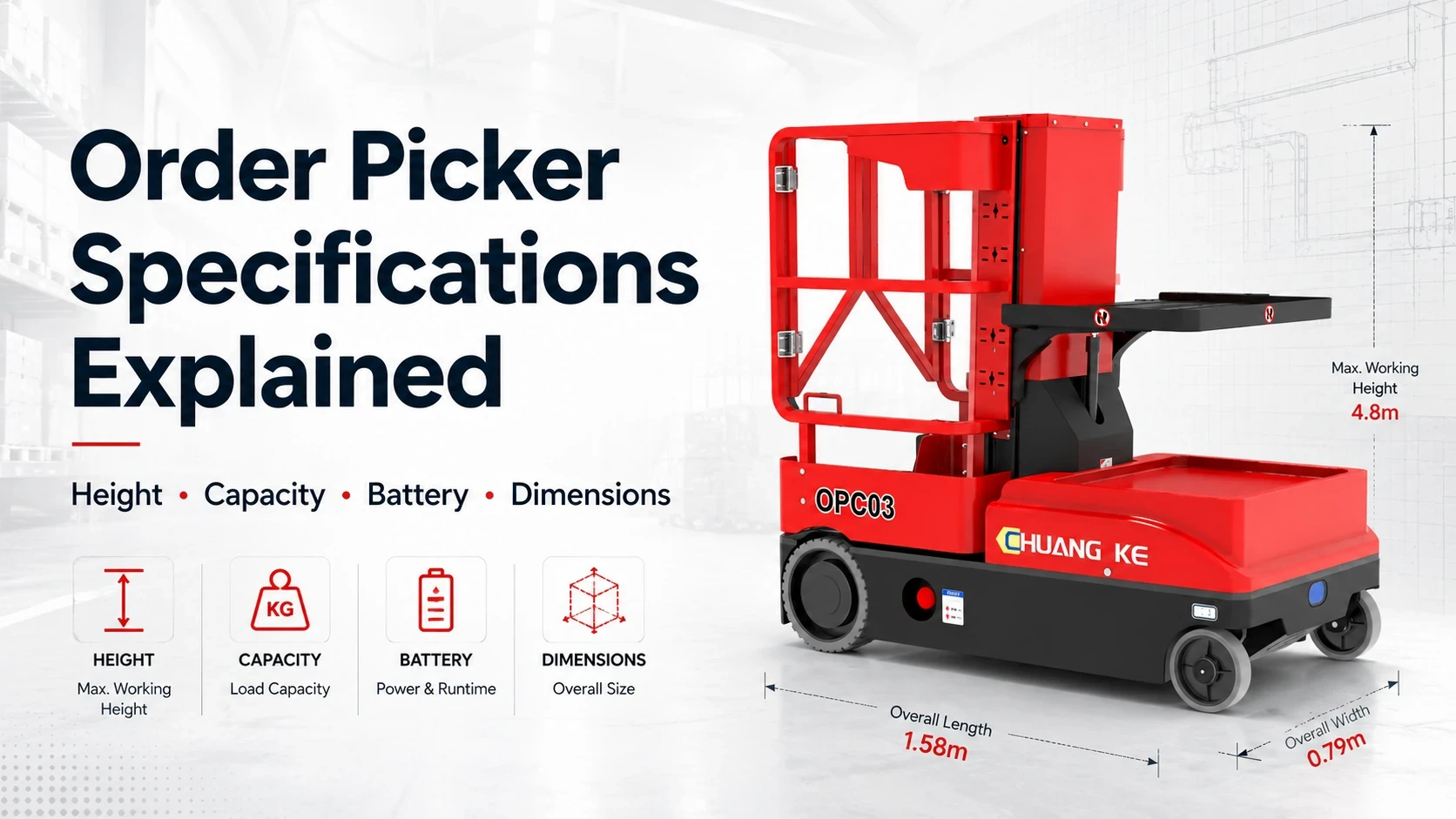
Choosing an order picker is not simply a matter of comparing maximum lifting height and load capacity.
The right machine depends on where employees need to pick products, how often the equipment will operate, how narrow the aisles are, what type of floor it will travel on, how heavy the goods are, and how long the machine needs to work between charges.
A machine with a higher specification is therefore not automatically the better choice.
For example, a warehouse that mainly picks cartons from shelving at moderate heights may benefit more from a compact electric order picker with easy maneuverability than from a larger machine designed for maximum platform height. Conversely, a distribution center with several levels of high racking may need greater working height, longer battery runtime and more consideration of platform stability.
This guide explains the main factors warehouse operators and equipment buyers should evaluate before selecting an order picker.
1. Start With the Picking Task, Not the Machine
Before looking at individual models, define exactly what the order picker needs to do.
Consider where the operator starts, where the goods are located, how they are removed from the rack and where they are placed after picking.
For example, an operator who retrieves small cartons from shelving has very different requirements from an operator handling bulky components at an elevated working position.
Start by answering these questions:
What is the highest shelf that employees need to reach?
What is the typical weight of each item being picked?
How much material will normally be placed on the platform at one time?
How wide are the warehouse aisles?
How many hours per shift will the machine operate?
Does the machine need to travel frequently between different warehouse areas?
Will it operate only indoors, or will it occasionally travel outside?
How many order pickers will share the same charging area?
These answers usually narrow the equipment choice much faster than beginning with a product catalog.
2. Determine the Required Working Height
Working height is one of the most important specifications when selecting an order picker, but it is also one of the specifications most easily misunderstood.
Buyers should distinguish between platform height and working height.
Platform height refers to how high the operator platform can rise above the ground.
Working height normally represents the approximate height an operator can reach while standing on the elevated platform.
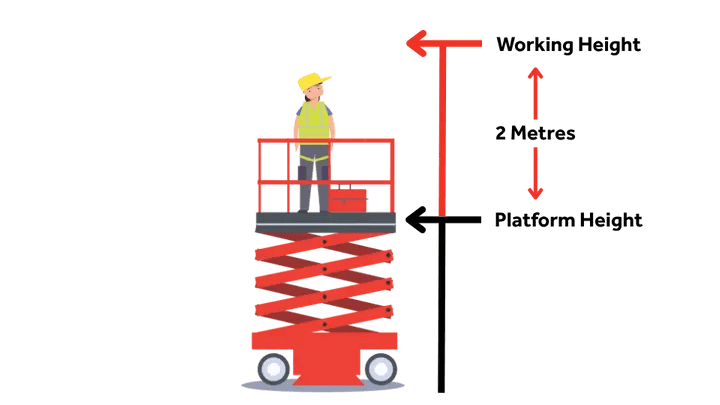
They are not the same measurement.
For example, if a warehouse needs employees to reach inventory located at a particular rack level, selecting a machine based only on platform height may result in unnecessary equipment size or insufficient reach.
A practical approach is to measure the actual highest picking position in the warehouse first.
Do not automatically choose the tallest machine available. Greater lifting height can affect equipment dimensions, weight, cost and maneuverability.
The better question is:
What is the lowest machine specification that safely and comfortably covers the highest regular picking position?
3. Calculate the Load the Machine Will Actually Carry
Another common mistake is looking only at the weight of the operator.
The machine may need to carry the operator, picked goods and other permitted loads according to the manufacturer's rated configuration.
Suppose a warehouse employee picks relatively light individual cartons but completes several picks before returning to the packing area. The combined accumulated load may be significantly higher than the weight of one carton.
Before purchasing equipment, estimate the realistic maximum load during normal operation rather than the average weight of a single item.
Also avoid treating the published rated capacity as a target operating load.
The rated capacity must be interpreted according to the manufacturer's instructions, operating configuration and applicable load limitations.
For purchasing decisions, ask the supplier for:
Rated platform capacity
Permitted operator configuration
Any load restrictions at different operating conditions
Platform or tray capacity where applicable
Relevant load or operating documentation
This is more useful than simply asking, “How many kilograms can it lift?”
4. Measure Your Aisles Before Comparing Models
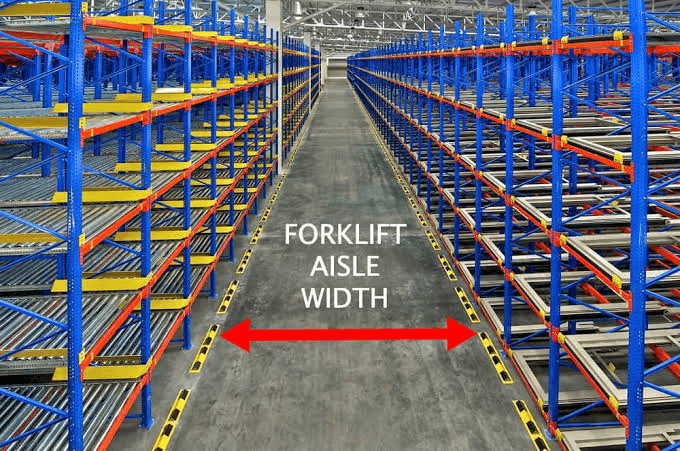
A machine may have the correct lifting height and capacity but still be unsuitable for the warehouse because it cannot maneuver comfortably within the existing aisle layout.
Measure the usable aisle width, not just the distance between the racks.
Pallets, protective barriers, columns, stored products and other equipment may reduce the actual operating space.
Important dimensions to compare include machine width, overall length, turning behavior and the space required to enter or leave an aisle.
This becomes particularly important in warehouses trying to increase storage density.
A compact order picker can sometimes provide more operational value than a larger machine with higher specifications because operators can move between racks more efficiently.
When discussing a machine with a manufacturer, provide the actual warehouse aisle dimensions whenever possible rather than simply saying the warehouse has “narrow aisles.”
5. Decide Between Self-Propelled and Semi-Electric Operation
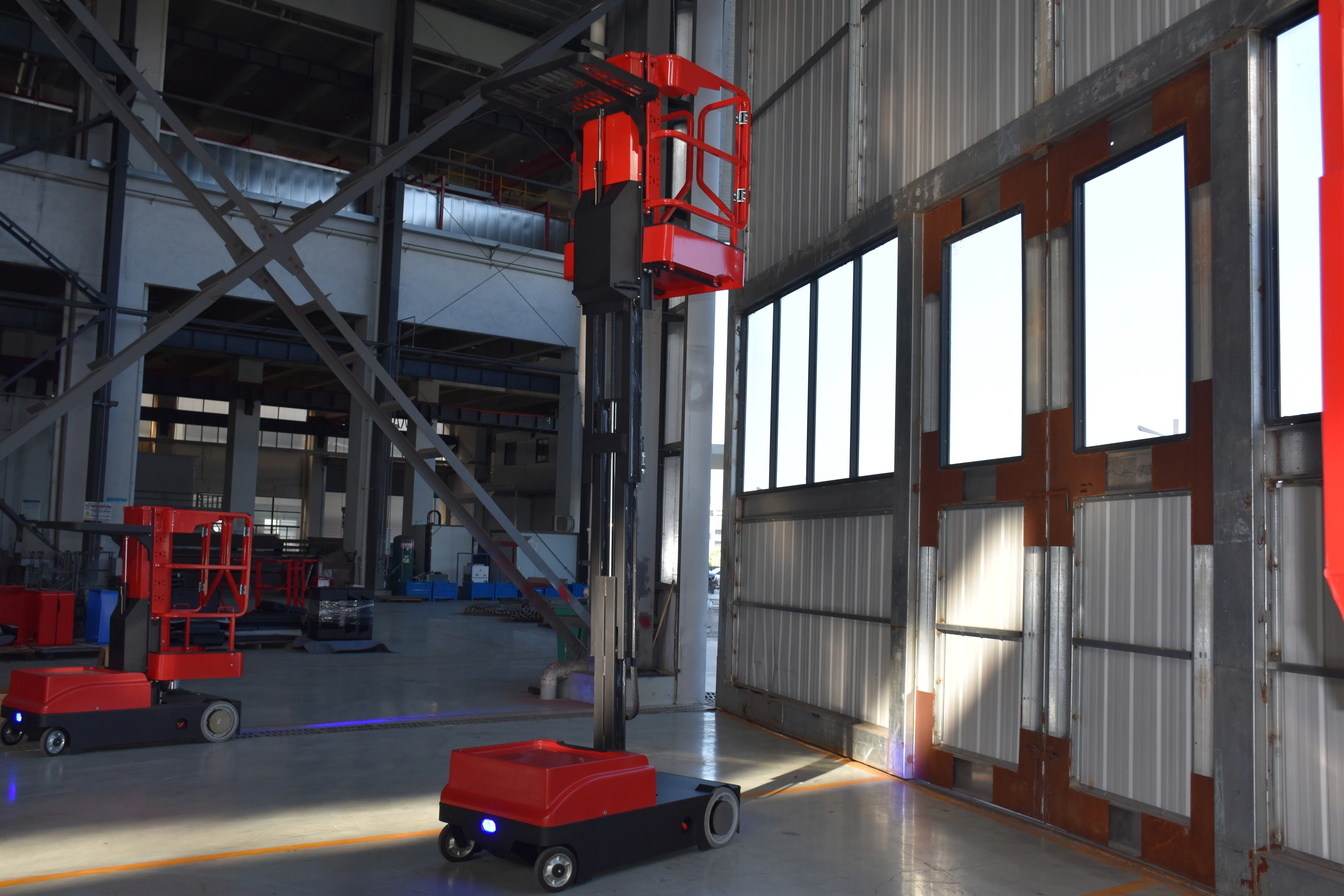
Not every warehouse requires the same drive system.
A self-propelled order picker uses electric drive for traveling as well as powered lifting. This type is generally more suitable when operators need to move repeatedly between picking locations throughout the day.
A semi-electric order picker typically provides powered lifting while some travel movement requires manual positioning, depending on the machine design.
For occasional maintenance or relatively short-distance picking tasks, a simpler machine may be sufficient.
For frequent warehouse picking, however, repeated manual repositioning can affect productivity and operator effort.
The decision should therefore be based on the work cycle rather than price alone.
Ask:
How many times will the machine move during one shift?
How far will it travel between picks?
Will the operator frequently reposition the machine?
Will several warehouse zones be covered by one machine?
If movement is frequent, propulsion becomes an important productivity consideration rather than simply an equipment feature.
6. Evaluate the Battery Based on the Work Cycle
Battery capacity should be considered in relation to actual warehouse use.
Two warehouses using the same order picker may experience very different operating times because their work cycles are different.
Frequent lifting, repeated acceleration, long travel distances, load conditions, temperature and operating habits can all affect energy consumption.
Instead of asking only, “How many hours does the battery last?”, provide the supplier with information about the expected duty cycle.
For example:
A small stockroom operating an order picker intermittently may not need the same battery arrangement as a fulfillment warehouse where the machine is used repeatedly throughout an eight-hour shift.
Important questions include:
What battery chemistry is used?
What is the battery capacity?
How long does typical charging take under the specified charger?
Can the battery be conveniently accessed or replaced?
Is opportunity charging appropriate for the supplied battery system?
What battery maintenance is required?
What is the expected operating environment?
Battery selection should support the operating schedule rather than forcing warehouse operations to adapt to the charging schedule.
7. Consider Floor Conditions and Travel Routes
Product specifications do not tell the whole story.
The warehouse floor and travel route can significantly influence which machine is appropriate.
Before selecting an order picker, inspect the areas where it will operate.
Consider floor flatness, surface condition, thresholds, ramps, expansion joints, loading areas and transitions between indoor and outdoor surfaces.
Many compact warehouse order pickers are primarily intended for smooth, level surfaces.
A machine designed for an indoor warehouse should not automatically be assumed suitable for uneven outdoor terrain simply because it can physically travel there.
If the route includes slopes or unusual surfaces, provide this information to the equipment manufacturer before purchasing.
Photos, measurements and a simple warehouse layout can often help a supplier recommend a more appropriate configuration.
8. Check Platform Size and Operator Workspace
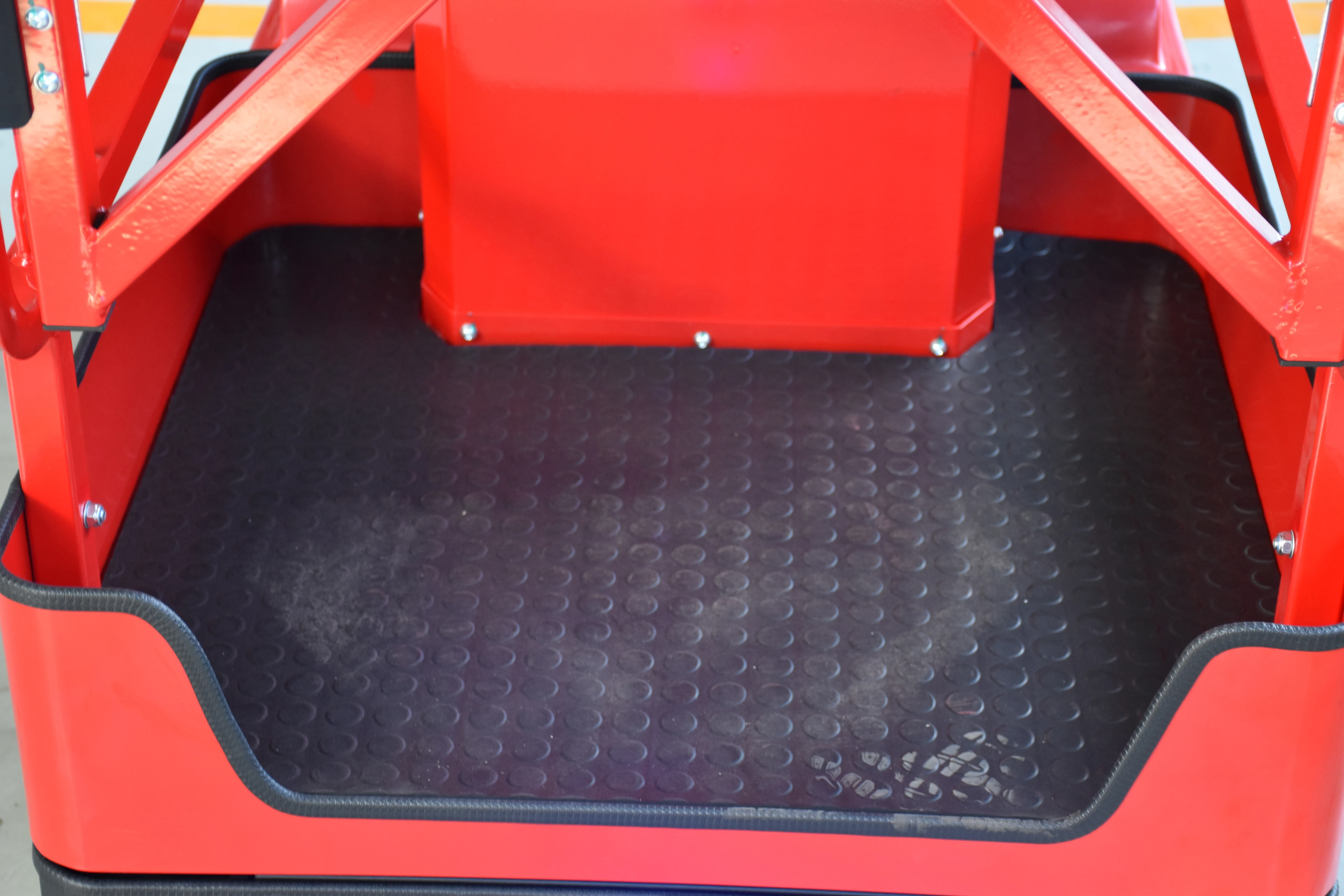
Platform dimensions often receive less attention than lifting height, but they can make a significant difference during actual picking.
Think about what the operator needs to do once elevated.
Does the worker need space only to stand and retrieve a small item?
Will cartons temporarily remain on the platform?
Does the operator need to turn frequently?
Are tools or components carried during elevated maintenance work?
A larger platform may provide additional working room, but it can also increase the overall machine size.
The goal is therefore not to choose the largest platform. It is to match the usable work area to the actual task.
9. Think About Picking Frequency
Consider two warehouses.
Warehouse A uses an order picker several times each day to retrieve occasional replacement parts.
Warehouse B operates continuously throughout the shift as employees fulfill hundreds of orders.
Even if both warehouses have racks of the same height, their equipment requirements may be very different.
Warehouse B should place greater emphasis on factors such as travel efficiency, battery capacity, operator controls, charging strategy, serviceability and long-term component wear.
Warehouse A may prioritize simplicity, compact storage and lower acquisition cost.
This is why choosing equipment based only on rack height often produces the wrong result.
The complete duty cycle matters.
10. Check Safety Features Before Comparing Price
Price comparisons are meaningful only when machines are being compared on a similar specification and safety basis.
Depending on the machine type and applicable market requirements, buyers should review the provided safety systems, operating controls, guarding, emergency functions, braking arrangements and required documentation.
Do not assume two machines with the same working height and capacity are technically equivalent.
Ask the supplier to clearly explain:
How emergency lowering works
How emergency stopping works
What operator guarding is provided
How the machine behaves when controls are released
What braking system is used
What warning devices are supplied
What operating and maintenance documentation is included
What standards or certifications apply to the specific model and destination market
Safety-related information should be verified against the actual machine documentation rather than assumed from photographs or marketing descriptions.
11. Consider Maintenance Before You Buy
Equipment cost continues after delivery.
Before purchasing an order picker, buyers should understand what routine inspection and maintenance the machine requires.
Ask which components require regular inspection, what lubrication is required, how the battery should be maintained, which wear parts are commonly replaced and whether diagnostic support is available.
Also ask about spare parts availability.
For overseas buyers, distributors and warehouse operators, the ability to identify and obtain a small replacement component quickly can sometimes matter more than a minor difference in initial machine price.
A good purchasing discussion should therefore include both the machine and the support available after shipment.
12. Do Not Choose an Order Picker Based on Price Alone
Order picker prices can vary because machines that appear similar in photographs may have different motors, batteries, controllers, lifting systems, platform configurations, materials, safety equipment and certification requirements.
When comparing quotations, create a specification comparison rather than comparing only the final price.
A useful comparison should include:
Item | Machine A | Machine B |
|---|---|---|
Working height | Verify | Verify |
Platform height | Verify | Verify |
Rated capacity | Verify | Verify |
Overall dimensions | Verify | Verify |
Machine weight | Verify | Verify |
Drive system | Verify | Verify |
Battery type/capacity | Verify | Verify |
Charger | Verify | Verify |
Safety configuration | Verify | Verify |
Certification | Verify | Verify |
Spare parts support | Verify | Verify |
Warranty terms | Verify | Verify |
If two quotations have a large price difference, this table usually makes it easier to understand whether the difference comes from specification, configuration or simply supplier pricing.
13. A Practical Warehouse Selection Example
Consider a hypothetical warehouse with the following requirements:
The highest regular picking position is approximately 4.5 meters.
Products are mostly cartons and small components.
Employees perform picking throughout the working day.
The aisles are relatively narrow.
The warehouse floor is smooth and level.
The machine travels repeatedly between different rack locations.
In this situation, immediately selecting the highest-capacity or highest-reaching model would not necessarily be the most efficient decision.
The buyer should first shortlist machines that comfortably cover the required working height, then compare machine width, maneuverability, electric travel capability, battery capacity, platform configuration and service requirements.
If two machines both satisfy the height and load requirement, the more compact and operationally efficient model may provide better value than the machine with the larger headline specification.
This is the type of comparison that should happen before a purchase order is placed.
14. What Information Should You Send an Order Picker Manufacturer?
The more useful information a manufacturer receives, the more accurately it can recommend equipment.
Instead of sending only:
“Please quote one order picker.”
Send:
Required working or picking height
Typical and maximum expected load
Warehouse aisle width
Indoor or outdoor operation
Floor and ramp conditions
Daily operating hours
Approximate travel frequency
Preferred battery type if specified
Destination country
Required certification or documentation
Quantity required
Photos or drawings of the warehouse where possible
For project buyers, providing a rack layout or warehouse floor plan can make the equipment discussion considerably more precise.
15. Common Mistakes When Buying an Order Picker
One common mistake is buying more lifting height than the warehouse actually needs.
Another is selecting capacity based only on the weight of one picked item.
Buyers also sometimes overlook machine dimensions until after the equipment arrives, when they discover that the turning space or access route is more restricted than expected.
Battery requirements may be underestimated because buyers compare nominal battery specifications rather than actual work cycles.
Another mistake is comparing suppliers based only on price without confirming whether batteries, chargers, safety configurations, documentation and certifications are equivalent.
Finally, buyers sometimes focus entirely on the purchase itself and fail to ask about replacement parts and technical support.
Most of these problems can be avoided by defining the application before selecting the machine.
16. Order Picker Selection Checklist
Before requesting a quotation, confirm the following information:
Picking height: What is the highest point the operator needs to reach?
Load: What is the realistic maximum combined load during picking?
Aisle: What is the narrowest usable operating space?
Travel: How frequently and how far will the machine move?
Floor: Is the operating surface smooth, level and suitable for the equipment?
Battery: Does the expected runtime fit the warehouse shift pattern?
Platform: Is there enough space for the operator and the intended picking task?
Safety: Are the required safety features and documents provided?
Compliance: What standards or certifications are required in the destination market?
Service: Are spare parts, technical documentation and after-sales support available?
Once these ten questions have been answered, choosing between different order picker models becomes considerably easier.
Which Order Picker Is Right for Your Warehouse?
There is no single order picker that is best for every warehouse.
The right machine is the one that meets the required picking height and capacity while fitting the warehouse aisle, duty cycle, floor conditions, battery requirements and operating environment.
For occasional low-frequency work, a relatively simple configuration may be enough.
For frequent warehouse picking, factors such as electric travel, maneuverability, battery performance and serviceability become more important.
Before purchasing, measure the actual warehouse conditions and compare machines using the same criteria.
If possible, send your warehouse layout, rack height, aisle width and typical load information to the manufacturer before choosing a model. This gives the supplier enough information to recommend equipment based on the application rather than simply recommending the largest machine available.
Frequently Asked Questions
How do I choose the right order picker?
Start with the required picking height, maximum expected load, aisle width and daily duty cycle. Then compare machine dimensions, propulsion, battery configuration, platform size, operating environment, safety features and service support. The best order picker is the model that fits the actual warehouse task rather than the machine with the highest specifications.
What height order picker do I need?
Measure the highest location from which employees regularly need to retrieve goods and determine the required working height. Be careful not to confuse platform height with working height. Confirm the manufacturer's definitions and specifications before selecting the machine.
Is a self-propelled order picker better?
A self-propelled model can be more efficient when employees travel frequently between picking locations because both travel and lifting are powered. For occasional or short-distance tasks, a simpler configuration may be sufficient. The correct choice depends on the warehouse work cycle.
What load capacity should I choose for an order picker?
Calculate the realistic load the machine will carry during normal operation and confirm it against the manufacturer's rated capacity and operating limitations. Consider accumulated picked goods rather than only the weight of a single item.
What information should I provide when requesting an order picker quotation?
Provide the required working height, expected load, aisle width, operating environment, floor conditions, daily working time, destination country, quantity and required certification. Warehouse photos, rack dimensions or layout drawings can help the manufacturer recommend a more appropriate model.
Other Blogs