What Is the Maximum Height a Vertical Lift Can Reach? A Complete Guide
Published
Category
Vertical Lift
Learn how high a vertical lift can reach, the difference between working and platform height, and how to choose the right vertical mast lift for your application.
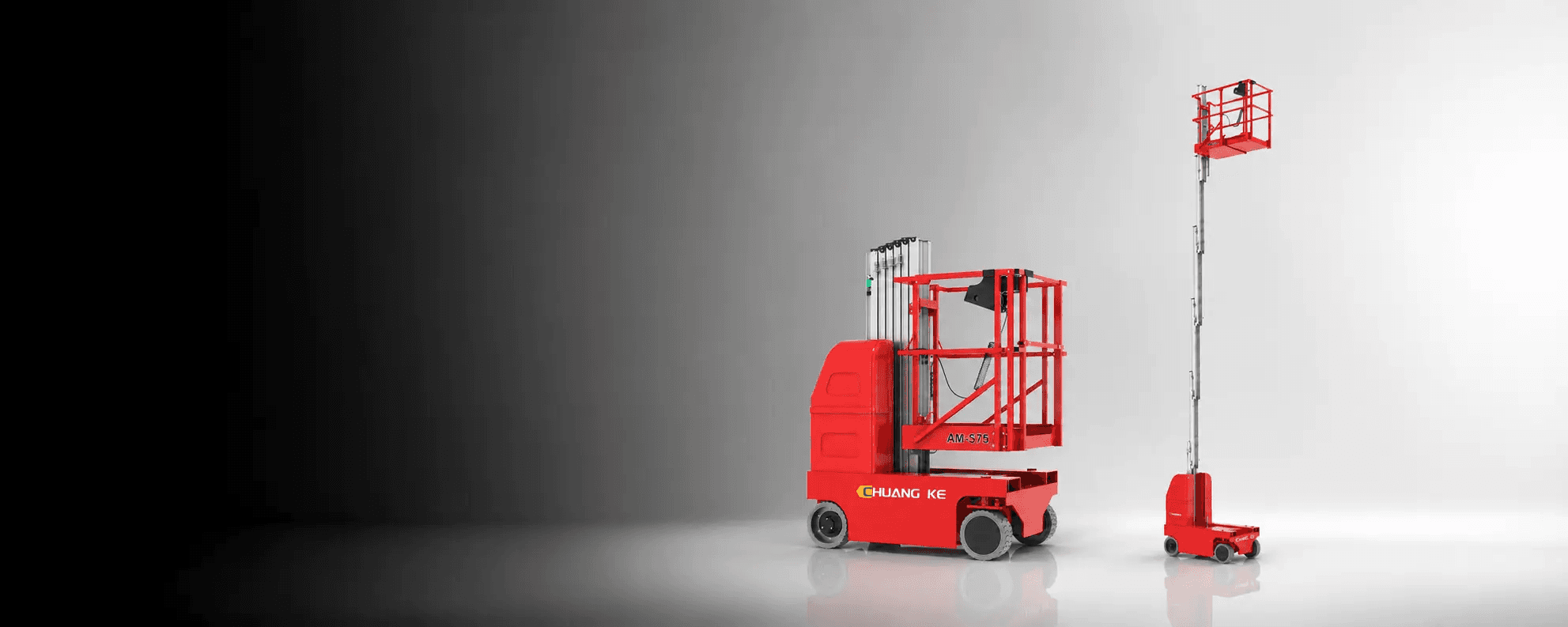
A vertical lift is designed to raise a worker or work platform vertically to an elevated position. The maximum height depends on the type of vertical lift, mast structure, drive system, platform design, stabilization method, and intended application.
There is no single maximum height that applies to every vertical lift. Compact indoor machines may be designed for moderate working heights, while larger vertical mast platforms can reach substantially higher positions.
For buyers, the more useful question is not simply “How high can a vertical lift reach?” but:
“What working height and platform height do I need for my application?”
That distinction matters because manufacturers commonly publish both maximum working height and maximum platform height, and the two measurements are not interchangeable.
WIZPLUS currently offers vertical mast lift solutions covering 8–9.5 m working height in its self-propelled AM-S series and 9.5–14 m working height in its semi-electric tilt-able MEWP series. The highest published working height in this WIZPLUS vertical mast lift range is 14 m.
How High Can a Vertical Mast Lift Reach?
There Is No Universal Maximum Height
The phrase vertical lift maximum height can refer to several different equipment categories, including vertical mast lifts, single-man lifts, personnel lifts, and other vertical access platforms.
Their height ranges vary according to:
Mast design
Number and arrangement of mast sections
Platform configuration
Machine stability
Drive system
Outrigger configuration
Rated load
Intended working environment
For this reason, a statement such as “a vertical lift can reach 14 m” should not be treated as a universal industry limit.
Instead, it is better to compare the published working-height range of the specific lift category and model.
WIZPLUS Vertical Mast Lift Height Range
WIZPLUS currently divides its vertical mast lift solutions into two main configurations.
WIZPLUS Series | Drive / Movement | Maximum Working Height | Maximum Platform Height | Main Application |
|---|---|---|---|---|
Self-propelled | 8,000–9,500 mm | 6,000–7,500 mm | Warehouses, factories, malls, airports | |
Semi-electric, electro-hydraulic lifting | 9,500–14,000 mm | 7,500–12,000 mm | Maintenance, warehousing, facility management |
The AM-S series is designed for indoor environments where mobility and compact dimensions are important. The MEWP series provides a taller working-height range while using manual travel and outrigger stabilization.
What Is the Highest WIZPLUS Vertical Lift?
Within the current WIZPLUS vertical mast lift range, the MEWP Series reaches up to 14,000 mm, or 14 m, maximum working height. Its published maximum platform height reaches 12,000 mm depending on model.
The AM-S self-propelled series reaches up to 9,500 mm maximum working height and 7,500 mm maximum platform height.
This gives buyers two distinct height ranges rather than a single vertical lift configuration.
What Is the Difference Between Working Height and Platform Height?
Platform Height
Platform height is the elevation of the platform itself above the supporting surface.
It is a machine specification and is normally measured from the ground to the platform floor at its maximum rated elevation.
Working Height
Working height describes the practical height at which a worker can perform a task from the platform.
Because the operator stands above the platform floor, working height is normally higher than platform height.
For example, WIZPLUS lists the AM-S series with:
Maximum working height: 8,000–9,500 mm
Maximum platform height: 6,000–7,500 mm
The MEWP series is listed with:
Maximum working height: 9,500–14,000 mm
Maximum platform height: 7,500–12,000 mm
Why the Difference Matters
Suppose a buyer says:
“I need a lift that reaches 10 meters.”
That statement is incomplete.
Does the customer need:
The platform to reach 10 m?
Or the operator to work at approximately 10 m?
The machine selection can be different depending on the answer.
For procurement, always state whether the required figure is:
working height or platform height.
How to Choose the Right Vertical Lift Working Height
Start With the Actual Work Point
The required lift height should be based on the highest point where the operator needs to perform work.
Examples include:
Warehouse lighting
Ceiling equipment
HVAC components
Electrical systems
Pipes and conduits
Industrial machinery
Building services
Signage
Inspection points
Do not automatically use the building's total ceiling height.
A warehouse with a 12 m ceiling may have lighting, equipment, or maintenance points at a much lower elevation.
Consider Operator Reach Carefully
Working height is partly based on operator reach, but buyers should not use a generic reach value as the final equipment specification.
A practical preliminary calculation can be expressed as:
Required working height ≈ required platform height + operator working reach
However, the manufacturer's published working height should be used for final model selection.
This is especially important because working-height definitions and measurement methods may vary between manufacturers.
Do Not Buy More Height Than You Need
A common purchasing mistake is choosing the tallest available model simply because it provides a larger number.
More height can also mean:
Greater machine weight
Larger transport dimensions
Higher procurement cost
Greater setup requirements
Different stabilization requirements
More demanding worksite considerations
The correct model is the one that provides the required access while matching the conditions of the job.
Vertical Lift Height by Application
Warehouse Maintenance
Warehouse maintenance often requires elevated access for:
Lighting
Fire protection systems
HVAC equipment
Electrical installations
Rack inspections
Overhead building services
In these environments, machine dimensions and maneuverability can be as important as height.
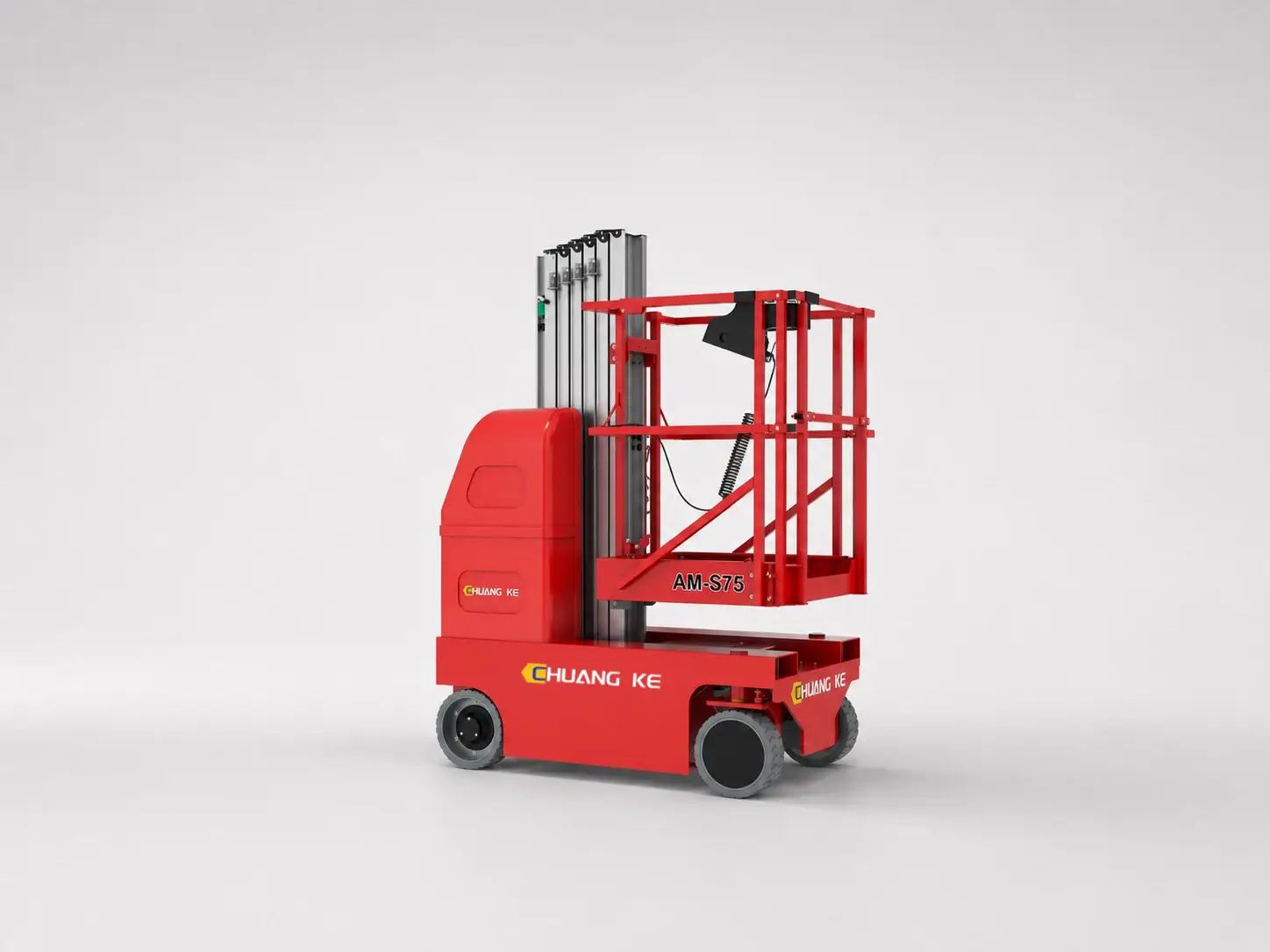
WIZPLUS describes its AM-S series as a self-propelled single-mast platform for warehouses, factories, shopping malls, and airports, with an approximately 800 × 1,500 mm footprint and zero-turn-radius design.
Commercial Building Maintenance
Shopping malls, offices, hotels, and other facilities often have restricted indoor access routes.
Important considerations can include:
Working height
Platform height
Doorway access
Aisle width
Elevator access
Floor loading
Turning space
Noise
Emissions
WIZPLUS positions the AM-S series for indoor applications where space is limited and mobility is important.
Industrial Maintenance
Industrial facilities can require higher access for:
Production equipment
Overhead utilities
Ventilation
Lighting
Electrical systems
Machinery inspection
Higher working height does not automatically make one lift better than another. The equipment still needs to match the required platform load, working environment, machine footprint, and access route.
Confined-Space Maintenance
For confined spaces, vertical mast lifts can provide an alternative to equipment with a larger horizontal footprint.
WIZPLUS's MEWP series is designed for maintenance, warehousing, and facility-management applications in confined spaces and narrow aisles. Its four-model range extends to 14 m working height while using an outrigger-stabilized configuration.
What Determines the Maximum Height of a Vertical Mast Lift?
Mast Structure
The mast is the primary vertical lifting structure.
WIZPLUS uses a high-strength aluminum alloy mast in its vertical mast lift platforms. The company describes the mast as combining lightweight construction with rigidity for elevated access.
Mast design affects:
Maximum elevation
Structural rigidity
Machine weight
Stability
Platform movement
Transport dimensions
The maximum height therefore has to be considered together with the structure supporting the elevated platform.
Platform Load
Maximum height and load capacity are related but should not be treated as the same specification.
A manufacturer may offer several models with different working heights and different rated loads.
For WIZPLUS, the AM-S models list a 159 kg safe working load, while the MEWP series lists 136–150 kg depending on model.
The actual rated load of the specific model should always be used.
Stabilization
The stabilization method also affects the type of vertical lift that can be used at greater heights.
WIZPLUS's comparison shows:
AM Series: self-propelled, small turning radius, no outriggers
MEWP Series: manual travel, outrigger-stabilized
This difference reflects two different approaches to vertical access.
The AM-S is designed around fast repositioning and continuous indoor movement, while the MEWP series uses outriggers to support higher working heights in a more stationary maintenance configuration.
Machine Footprint
Maximum height is only one part of the equipment design.
A machine with a compact footprint may be easier to use in a warehouse, shopping mall, production line, or commercial building where access space is restricted.
The WIZPLUS AM-S platform has an 800 mm overall width and 1,500 mm overall machine length.
Its compact design is intended for confined indoor applications where larger access equipment may be difficult to position.
Vertical Mast Lift Height Comparison: AM-S vs. MEWP
AM-S Self-Propelled Vertical Mast Lift
The WIZPLUS AM-S series covers 8–9.5 m working height.
Published specifications include:
Maximum working height: 8,000–9,500 mm
Maximum platform height: 6,000–7,500 mm
Overall width: 800 mm
Overall length: 1,500 mm
Overall height: 1,990–2,040 mm
Platform extension length: 840 mm
Wheelbase: 1,120 mm
Safe working load: 159 kg
Machine weight: 1,140–1,240 kg
The series uses a self-propelled electric drive and is designed for indoor environments including warehouses, factories, retail facilities, and building maintenance.
MEWP Semi-Electric Tilt-Able Single Mast Lift
The WIZPLUS MEWP series covers 9.5–14 m working height.
The published series comparison shows:
Maximum working height: 9,500–14,000 mm
Maximum platform height: 7,500–12,000 mm
Safe working load: 136–150 kg
Machine weight: 430–600 kg
Manual travel
Electro-hydraulic lifting
Outrigger stabilization
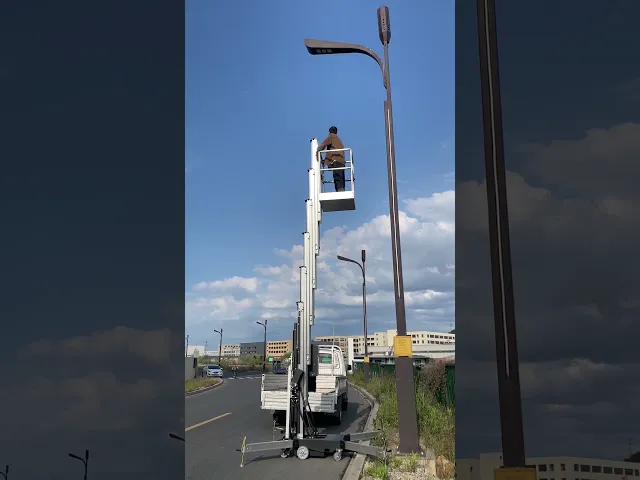
WIZPLUS also states that the MEWP series can reach up to 14 m while folding down to below 2.8 m, with a footprint as narrow as 750 mm.
Which Height Range Fits Your Application?
Required Working Height | WIZPLUS Option to Evaluate | Typical Application |
|---|---|---|
Up to 8 m | AM-S | Indoor maintenance and facility work |
8–9.5 m | AM-S | Warehouses, factories, commercial facilities |
9.5–12 m | MEWP | Higher-level maintenance and facility work |
12–14 m | MEWP | High-level maintenance and confined-space access |
This is an initial selection guide rather than an automatic model recommendation. Platform capacity, dimensions, site conditions, and operating requirements also need to be checked.
Is a Higher Vertical Lift Always Better?
Higher Reach Can Expand Application Range
A higher working-height range allows access to higher work points.
For example, a 14 m working-height vertical mast lift can address work locations that a 8 m machine cannot reach.
This can be useful in:
High-ceiling facilities
Large warehouses
Industrial plants
Commercial buildings
Infrastructure maintenance
Higher Does Not Mean More Suitable
A higher machine may introduce different requirements for:
Stability
Transport
Access
Setup
Operating space
Platform loading
Maintenance
For a facility with a 7 m work point, purchasing a machine designed primarily for much greater height may provide unnecessary capacity.
The goal is to match the equipment to the job.
How to Calculate the Vertical Lift Height You Need
Use the Actual Work Point
Start by identifying the highest point that must be reached.
For example:
Lighting fixture height: 7.5 m
The machine needs enough rated working height to allow the operator to perform the task at that elevation.
Check Platform Height
Next, look at the manufacturer's platform-height specification.
Do not confuse:
7.5 m working height
with:
7.5 m platform height
These are not necessarily the same.
Verify the Working Envelope
Consider whether the operator needs to reach:
Directly above
Slightly to one side
Across the platform
Around fixed equipment
Vertical mast lifts primarily provide vertical access. If the work requires substantial horizontal outreach, another access-equipment configuration may be more appropriate.
Add Practical Site Constraints
Before finalizing the model, check:
Ceiling clearance
Overhead structures
Doorway dimensions
Corridor width
Elevator access
Floor conditions
Machine weight
Platform capacity
This turns a simple height calculation into a real equipment-selection process.
Vertical Lift vs. Other Access Equipment
Vertical Mast Lift vs. Scissor Lift
Both provide primarily vertical access, but their designs and operating characteristics differ.
A scissor lift typically uses a larger platform supported by a scissor mechanism. A vertical mast lift uses a mast structure and is often designed around a narrower machine footprint.
For confined indoor applications, machine width and maneuverability may favor a compact vertical mast configuration.
Vertical Mast Lift vs. Boom Lift
A boom lift is designed to provide horizontal outreach as well as vertical elevation.
A vertical mast lift is more suitable when the work point is essentially above the machine.
The selection therefore depends on the access path, not just maximum height.
Vertical Mast Lift vs. Ladder
A vertical mast lift provides an engineered work platform that can carry the permitted load within its rated capacity and is designed for repeated elevated access.
A ladder is simpler equipment, but it does not provide the same platform configuration or mobility characteristics.
The appropriate solution depends on the task, height, duration, work environment, and applicable safety requirements.
What Should You Check Besides Vertical Lift Height?
Working Height
Confirm the maximum height at which the operator needs to perform work.
Platform Height
Compare the platform elevation separately from working height.
Capacity
Calculate the combined load of:
Operator
Tools
Equipment
Permitted materials
Never select a machine solely by height.
Machine Width
For indoor environments, measure the narrowest access point.
A lift that cannot pass through a doorway or aisle is not useful regardless of its working height.
Machine Weight
Weight can affect:
Transportation
Elevator use
Floor loading
Delivery equipment
Site access
WIZPLUS's AM-S and MEWP configurations differ substantially in machine weight, so the exact model should be checked before delivery planning.
Stabilization
Confirm whether the machine requires:
Outriggers
Stabilizer setup
Leveling
Specific surface conditions
WIZPLUS's AM-S and MEWP series use different stabilization approaches, which is one of the main differences between the two product families.
How to Choose a Vertical Mast Lift Step by Step
Measure the actual work height.
Determine whether you need working height or platform height.
Calculate the total platform load.
Measure doorways, aisles, and elevator openings.
Check ceiling and overhead clearance.
Evaluate the floor and operating environment.
Compare candidate models by working height, dimensions, capacity, and mobility.
Confirm the selected model's specifications with the manufacturer before ordering.
This process avoids one of the most common equipment-selection mistakes: choosing a lift based on height alone.
Common Vertical Lift Height Selection Mistakes
Using ceiling height as the required working height. The actual work point may be considerably lower.
Confusing platform height with working height. Always confirm which specification the manufacturer is providing.
Ignoring platform capacity. Tools, materials, and equipment count toward the permitted load.
Ignoring machine width. Indoor access can be limited by doors, aisles, and elevators.
Choosing the tallest model automatically. More height can also mean different dimensions, weight, and stabilization requirements.
Using specifications from a similar model. Always verify the exact model and configuration.
Ignoring the operating environment. Indoor maintenance, warehouse work, and industrial applications can have different requirements.
Vertical Mast Lift Safety Considerations
Stay Within the Manufacturer's Limits
Operators should use the platform according to the manufacturer's operating instructions and rated limits.
Important parameters can include:
Working height
Platform capacity
Grade limitations
Travel conditions
Platform configuration
Stabilization requirements
Inspect Before Operation
A pre-use inspection should follow the specific equipment manual and applicable workplace procedures.
Depending on the machine, relevant components may include:
Mast structure
Platform
Guardrails
Access gate
Wheels
Brakes
Steering
Drive system
Controls
Battery
Emergency stop
Emergency lowering system
Safety interlocks
Keep the Work Area Clear
Before raising the platform, identify:
Overhead obstructions
Electrical hazards
Pedestrian traffic
Vehicles
Uneven surfaces
Floor openings
Other worksite hazards
The equipment should be positioned and operated within the conditions for which it was designed.
What Makes WIZPLUS Vertical Mast Lifts Suitable for Different Heights?

AM-S: Mobility for Indoor Facilities
The AM-S self-propelled single-mast platform is designed around compact indoor operation.
WIZPLUS lists:
8–9.5 m working height
800 mm overall width
1,500 mm overall length
Zero-emission electric drive
Self-propelled operation
Zero-turn-radius design
Full-height drive capability
This configuration is aimed at applications where operators need to reposition frequently within warehouses, factories, malls, airports, and other commercial interiors.

MEWP: Greater Height With Outrigger Stabilization
The MEWP series extends the working-height range to 14 m.
Its semi-electric architecture combines manual maneuverability with electro-hydraulic lifting, while outriggers provide stabilization for the taller working-height range.
This makes the series relevant to higher-level maintenance, warehousing, and facility-management applications where frequent self-propelled travel is less important than compact storage and increased reach.
Frequently Asked Questions
What is the maximum height a vertical lift can reach?
There is no single maximum height for every vertical lift. The maximum depends on the equipment type and model. Within the current WIZPLUS vertical mast lift range, working heights extend from 8 m to 14 m, with the MEWP series reaching up to 14 m maximum working height.
How high can a vertical mast lift reach?
WIZPLUS's current vertical mast lift products cover 8,000–14,000 mm maximum working height, depending on the series. The AM-S reaches 8–9.5 m, while the MEWP series reaches 9.5–14 m.
What is the maximum platform height of a vertical mast lift?
The maximum platform height depends on the model. WIZPLUS lists 6,000–7,500 mm for the AM-S series and 7,500–12,000 mm for the MEWP series.
What is the difference between working height and platform height?
Platform height is the elevation of the platform floor. Working height represents the approximate height at which work can be performed from the platform and is normally higher than platform height.
What working height vertical mast lift do I need?
Start by measuring the actual height of the work point. Then compare it with the manufacturer's rated maximum working height. Also check platform capacity, machine width, dimensions, stabilization requirements, and operating environment.
Is a 14 m vertical mast lift suitable for every 14 m application?
Not automatically. A 14 m working-height rating indicates the maximum rated working height for the applicable model. The actual application also needs to meet the machine's load, surface, access, stabilization, overhead-clearance, and operating requirements.
Are vertical mast lifts suitable for indoor use?
Many vertical mast lifts are designed specifically for indoor applications. WIZPLUS describes its AM-S series for warehouses, factories, retail facilities, shopping malls, and airports, while its MEWP series is positioned for maintenance, warehousing, and facility-management applications in confined spaces.
Which is better for confined spaces, a vertical mast lift or a scissor lift?
The answer depends on the required height, platform size, machine footprint, and task. A compact vertical mast lift can be advantageous where narrow access and maneuverability are priorities, while a scissor lift may be more suitable when a larger working platform is required.
Can a vertical mast lift be driven while fully elevated?
This depends on the model. WIZPLUS specifically states that its AM-S self-propelled series can be driven at full working height. The MEWP series uses manual travel and a different operating configuration.
How much load can a vertical mast lift carry?
Capacity varies by model. WIZPLUS lists a 159 kg safe working load for its AM-S models and 136–150 kg for the MEWP series. Always use the rated capacity of the exact model and account for operators, tools, and permitted materials.
How do I choose a vertical mast lift manufacturer?
For B2B procurement, evaluate more than maximum height. Check the manufacturer's model range, technical specifications, quality system, testing procedures, documentation, spare-parts support, OEM capabilities, and technical assistance.
WIZPLUS states that its vertical mast lift manufacturing includes standardized quality-control procedures, inspections, load testing, performance verification, and international support.
Conclusion
So, what is the maximum height a vertical lift can reach? There is no single maximum height that applies to all vertical lift equipment. Maximum reach depends on the machine type, mast configuration, load requirements, stabilization system, and intended application.
For WIZPLUS, the current vertical mast lift range covers:
AM-S: 8–9.5 m maximum working height
MEWP Series: 9.5–14 m maximum working height
The highest published working height in the current WIZPLUS vertical mast lift range is 14 m.
However, maximum height should never be the only criterion when selecting a vertical lift. A practical equipment-selection process should evaluate:
Working height + platform height + load capacity + machine dimensions + access requirements + stabilization + operating environment
For indoor maintenance, warehouse operations, commercial facilities, and industrial applications, a compact vertical mast lift can provide efficient vertical access where space and maneuverability matter. For higher work points, an outrigger-stabilized configuration can provide a different approach to achieving greater reach.
WIZPLUS offers vertical mast lift solutions for both mobile indoor access and higher-height maintenance applications. Buyers can provide the required working height, platform load, access dimensions, operating environment, and application to identify the appropriate configuration.
The right vertical lift is not simply the one that reaches the highest—it is the one that safely and efficiently reaches the required work point while fitting the conditions of the job.