Single Man Lift Dimensions: Width, Weight, and Doorway Clearance Guide
Published
Category
Single Man Lift
Compare single man lift dimensions, including width, height, weight, and platform size. Learn how to check doorway clearance and choose the right lift for your application.
Choosing the right single man lift dimensions is essential for businesses that need reliable access to elevated work areas in warehouses, factories, commercial buildings, and maintenance facilities. A lift may provide the required working height but still be unsuitable for a particular job if it cannot pass through a doorway, fit inside a freight elevator, or maneuver through narrow aisles.
Before purchasing a single man lift, buyers should compare overall width, overall length, stowed height, platform dimensions, machine weight, and working height. These specifications determine whether the equipment can reach the intended work area, move through the facility, and operate within the site's physical and load-bearing limitations.
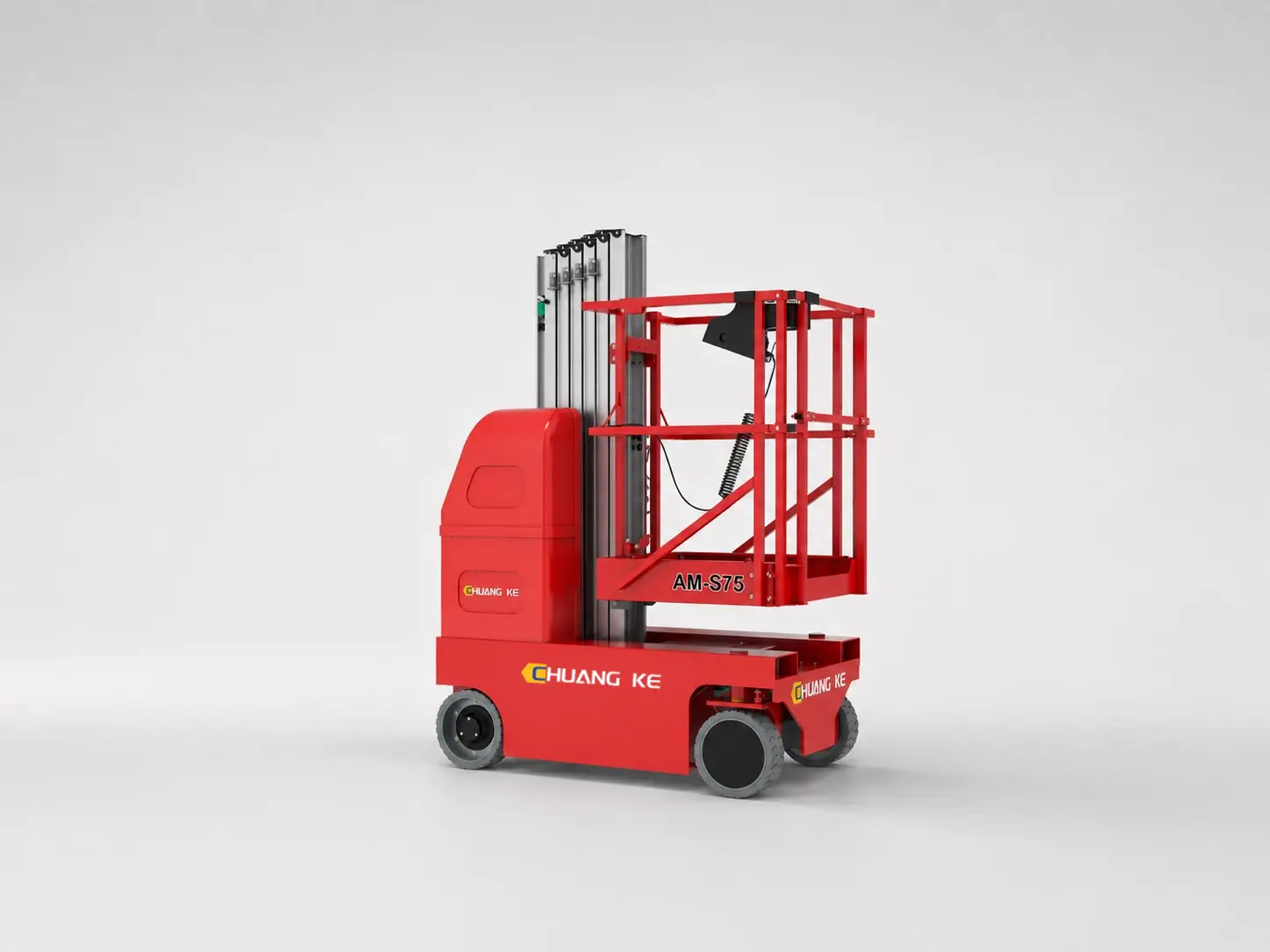
This guide explains how to read a single man lift dimensions chart, measure doorway and elevator clearance, evaluate equipment weight, and choose an appropriate model for indoor access applications. It also includes published specifications from WIZPLUSLIFT's AM-S self-propelled single-mast lift platform to help equipment buyers understand how actual dimensions relate to purchasing decisions.
Single Man Lift Dimensions: Quick Reference Chart
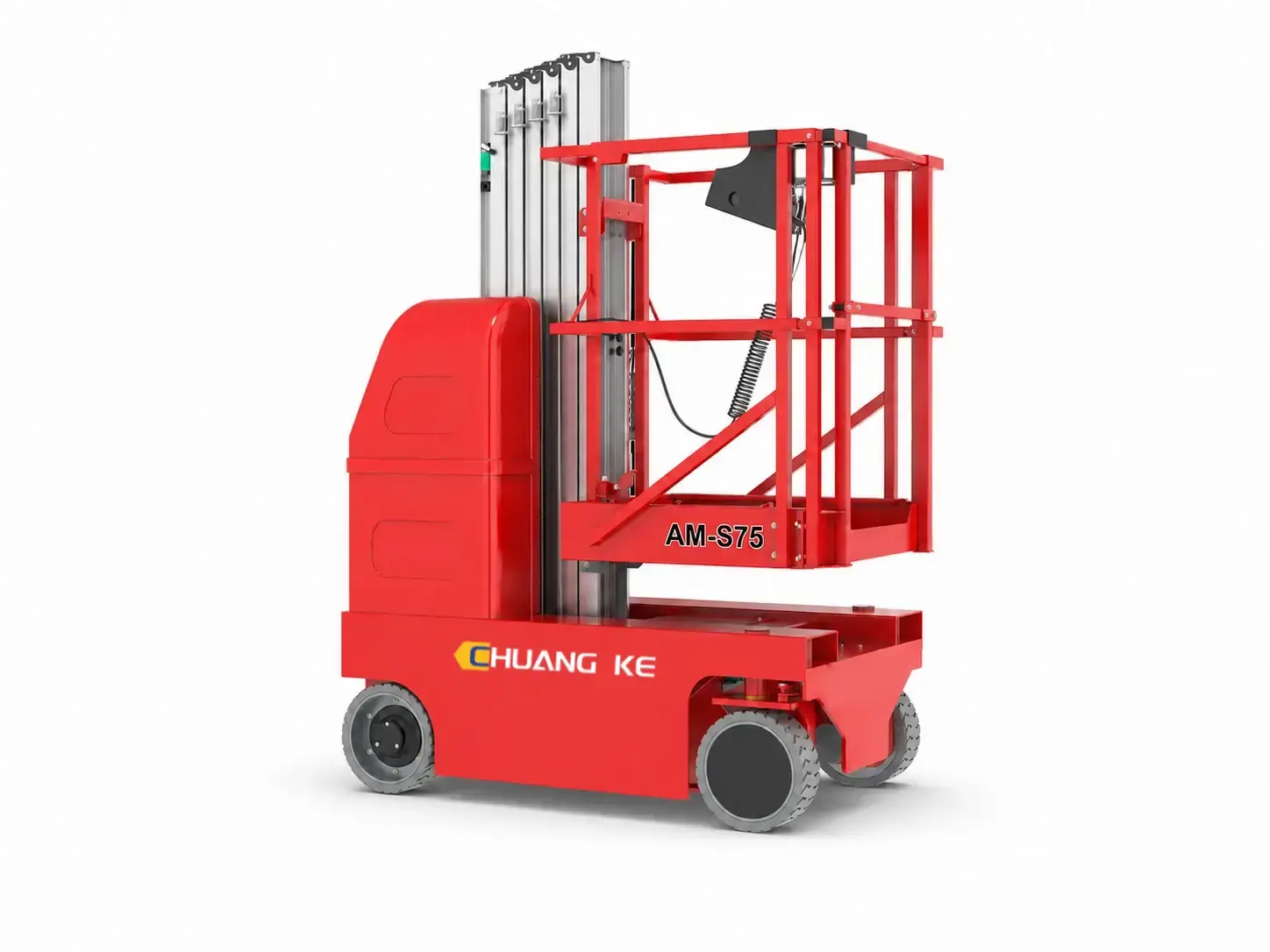
A single man lift, also called a one-man lift or personnel lift, is a type of elevated access equipment designed primarily for positioning an operator at an elevated working location. The term can describe different equipment configurations, so buyers should verify the exact machine type and specifications before comparing products.
The following chart uses published specifications for the WIZPLUSLIFT AM-S self-propelled single-mast lift platform.
Specification | WIZPLUS AM-S06 | WIZPLUS AM-S75 |
|---|---|---|
Maximum working height | 8,000 mm | 9,500 mm |
Maximum platform height | 6,000 mm | 7,500 mm |
Overall machine length | 1,500 mm | 1,500 mm |
Overall machine width | 800 mm | 800 mm |
Overall machine height | 1,990–2,040 mm | 1,990–2,040 mm |
Overall machine weight | 1,140 kg | 1,240 kg |
Safe working load | 159 kg | 159 kg |
Extendable platform load capacity | 113 kg | 113 kg |
Wheelbase | 1,120 mm | 1,120 mm |
Minimum ground clearance, folded/raised | 65 mm / 15 mm | 65 mm / 15 mm |
These figures apply to the listed AM-S models, not to every single man lift on the market. Dimensions and weights can vary across manufacturers, lifting mechanisms, and configurations. Confirm the current technical datasheet for the exact model before finalizing a purchase.
Important: Overall machine height is not necessarily identical to transport height in every configuration. If the equipment has removable or folding components, ask the manufacturer to confirm the actual transport dimensions and approved transport procedure.
What Dimensions Matter When Buying a Single Man Lift?
The most useful single man lift dimensions are those that determine access, maneuverability, working reach, and compatibility with the operating environment.
Overall Width
Overall width is the maximum side-to-side dimension of the machine in the specified configuration. It is especially important when the lift must pass through doorways, travel down narrow aisles, or operate between racks and equipment.
For example, the WIZPLUS AM-S series has a published overall width of 800 mm.
This is a useful starting point when assessing indoor access, but an 800 mm machine width does not automatically mean that every doorway wider than 800 mm is suitable. The route may contain door hardware, wall projections, thresholds, narrow turns, or other obstructions.
Before ordering, measure the narrowest clear passage along the entire travel route, not just the width of the first doorway.
Overall Length
Overall length measures the machine from front to rear. It affects how easily a lift can be positioned, stored, transported, and maneuvered in a confined work area.
The WIZPLUS AM-S series has a published overall length of 1,500 mm.
When evaluating this measurement, consider more than straight-line passage. The machine also needs adequate space to approach a doorway, change direction, enter an elevator, and position itself at the work location.
A machine can fit through an opening in a straight line but still be difficult to turn once inside the building.
Overall Height and Stowed Height
Overall height is the vertical dimension of the machine in its specified configuration. Stowed height refers to its height when the platform is lowered to the designated transport or storage position, although manufacturers may define their dimensional measurements differently.
The WIZPLUS AM-S series lists an overall height of 1,990–2,040 mm. Buyers planning to move the equipment through low doorways, under pipes, or inside freight elevators should confirm the actual height of the selected model in its travel configuration.
Also check whether any upper guardrails or other components affect the measurement.
Do not assume that a published overall height represents every possible configuration. Obtain the manufacturer's dimensional drawing if overhead clearance is limited.
Platform Dimensions
Platform dimensions determine the usable work area available to the operator. They affect how comfortably the operator can perform a task and whether permitted tools or equipment can be carried.
A platform extension can provide additional reach or working space on some models, but an extension may also introduce a separate load limit.
For the AM-S series, WIZPLUS publishes platform extension dimensions that include an extension length of 840 mm and an extension width of 750 mm. Buyers should confirm the applicable extension configuration and complete platform dimensions against the current datasheet.
When comparing platforms, check:
The main platform's length and width.
Whether an extension platform is fitted.
The extension's travel or operating configuration.
The rated load limit for the main platform.
Any separate load restriction for the extension platform.
A larger platform is not automatically better for a confined facility. The right choice balances useful working space against the machine's footprint and access requirements.
Machine Weight
Machine weight is a critical specification for indoor equipment because the lift may need to travel across floors, enter freight elevators, or operate in buildings with specific load-bearing limitations.
The published weights of the WIZPLUS AM-S06 and AM-S75 are 1,140 kg and 1,240 kg, respectively.
However, overall machine weight alone does not establish whether a floor is suitable. The load transmitted through individual wheels or tires can be concentrated over a relatively small area.
When the lift will operate on an elevated floor, inside an elevator, or on a floor with known load restrictions, ask the manufacturer for the relevant wheel-load or ground-pressure information. Confirm that the building's responsible engineer or facilities team approves the proposed use where necessary.
Will a Single Man Lift Fit Through a Standard Doorway?
A single man lift can fit through a doorway only when its actual dimensions and required clearance are compatible with the opening and the route beyond it. There is no universal answer based solely on the term "standard doorway," because door dimensions and equipment configurations vary.
For a practical assessment, compare the clear opening with the lift's width and height in its specified transport configuration.
Step 1: Measure the Clear Doorway Width
Measure the usable distance between the nearest obstructions at the narrowest point of the opening.
Do not rely only on the door leaf's advertised width or the nominal size of the door frame. Hinges, handles, door closers, protective barriers, and other fittings may reduce the available passage.
For the WIZPLUS AM-S, the published overall width is 800 mm. A doorway with a clear width of exactly 800 mm would leave no nominal horizontal clearance, making it unsuitable for practical passage.
Even when a doorway is wider than the machine, sufficient additional clearance must remain for controlled maneuvering and the conditions along the route. The appropriate allowance depends on the equipment and site.
Step 2: Measure the Doorway Height
Measure the clear vertical opening from the floor to the lowest obstruction.
Compare it with the lift's height in the approved transport configuration. Check for overhead door closers, beams, sprinkler pipes, signs, lighting fixtures, and other projections.
For an AM-S model with a published overall height of 1,990–2,040 mm, the lower end of the range should not automatically be assumed for every unit or configuration.
Ask the manufacturer to confirm the relevant dimension for the specific model.
Step 3: Check the Approach and Turning Space
A doorway is only one part of the access route. The lift may also need to turn in a corridor, move around a corner, or align with an elevator entrance.
Measure the available space in front of and beyond each opening. Consider the machine's steering geometry and turning requirements rather than estimating from overall length alone.
If the route contains a tight turn, provide the supplier with a floor plan, doorway measurements, and photographs of the access area.
Step 4: Consider Thresholds and Floor Transitions
Door thresholds, expansion joints, floor ramps, and uneven surfaces can affect passage and ground clearance.
The AM-S series lists minimum ground clearance of 65 mm in the folded condition and 15 mm in the raised condition. This specification should not be interpreted as permission to cross an obstacle of that height in every operating state.
Confirm the manufacturer's travel restrictions and permitted floor conditions before attempting to cross a threshold or ramp.
Step 5: Obtain Confirmation Before Ordering
If the lift must pass through multiple doorways or restricted spaces, give the supplier the narrowest width, lowest height, tightest turning area, and any threshold details.
Ask the manufacturer to confirm whether the exact machine configuration can complete the route. This is particularly important for overseas buyers who cannot easily inspect the equipment before shipment.
Can a Single Man Lift Fit Inside a Freight Elevator?
Elevator compatibility depends on both dimensions and load capacity. A lift may fit inside the elevator's clear opening but still be too large to maneuver within the car or too heavy for the elevator's rated load.
Before transporting equipment by elevator, check the following measurements and limits.
Elevator Requirement | What to Verify |
|---|---|
Doorway clear width | Can the machine pass through the entrance without interference? |
Doorway clear height | Is there enough vertical clearance in the approved transport configuration? |
Internal car width | Can the machine fit inside the elevator? |
Internal car length | Is there sufficient room to position the machine? |
Car height | Does the machine clear the ceiling and overhead fittings? |
Rated elevator capacity | Can the elevator carry the machine and all other permitted loads? |
Floor loading | Are wheel loads and the equipment's weight acceptable? |
Turning and entry space | Can the machine enter and be positioned without unsafe maneuvering? |
For example, the WIZPLUS AM-S06 weighs 1,140 kg, while the AM-S75 weighs 1,240 kg. These figures alone are not sufficient to establish elevator compatibility.
The elevator's rated capacity, the machine's wheel-load distribution, the entry route, and the actual transport arrangement must all be considered.
Never exceed the elevator's rated capacity or attempt to transport equipment when compatibility has not been confirmed.
How Much Space Does a Single Man Lift Need to Operate?
The machine's footprint is only the starting point for planning an operating area. Adequate space is also needed for positioning, moving into the work location, clearing nearby obstructions, and carrying out the task safely.
Allow for Machine Movement
If the lift is self-propelled, operators need enough space to control its movement and position it without striking racks, walls, machinery, or other workers.
Turning requirements depend on the chassis, steering design, and operating conditions. Do not calculate the required turning area from overall length and width alone; obtain the manufacturer's turning-radius or maneuvering information if the area is confined.
Consider Overhead Clearance
A lift may fit beneath an obstruction when fully lowered but cannot safely elevate at that position.
Inspect for:
Ceiling beams and roof structures.
Lighting and suspended fixtures.
Sprinkler pipes and fire-protection equipment.
Electrical installations and cable trays.
Ventilation ducts and overhead machinery.
Other structures that may interfere with the elevated platform.
The required clearance depends on the working height, machine design, task, and site conditions.
Plan for the Operator's Work Area
The operator needs enough space to access the control panel, enter and exit according to the manufacturer's procedure, and perform the intended task without unsafe reaching or positioning.
Tools and materials must remain within the machine's rated load limits. If an extension platform is used, its separate capacity restrictions must also be observed where applicable.
Assess the Floor
Check the floor for slopes, cracks, openings, uneven joints, loose surfaces, and restrictions on wheel loading.
A compact footprint does not guarantee that a machine is suitable for every floor. Consult the manufacturer for permitted gradients, floor conditions, and relevant load information.
For projects in commercial buildings, warehouses, or industrial facilities, it is worth having the access route assessed before the equipment is purchased.
Single Man Lift Weight: Why It Matters for Indoor Applications
Machine weight is particularly important when equipment is used on elevated floors, inside commercial buildings, or in locations with restricted transportation routes.
A lighter machine may be easier to transport, but equipment weight should never be evaluated independently of lifting height, platform capacity, stability, and the intended application.
Overall Weight vs. Rated Platform Capacity
Overall machine weight describes the equipment itself. Rated platform capacity describes the load the platform is designed to support under specified conditions.
These are separate specifications and should not be confused.
The WIZPLUS AM-S series lists a safe working load of 159 kg and an extendable platform load capacity of 113 kg. The applicable load restriction depends on the platform configuration.
When assessing operating load, account for the operator, tools, equipment, and other permitted materials. Follow the manufacturer's load limits at all times.
Weight and Floor Loading
Two machines with similar overall weights may impose different loads on individual wheels because their chassis and wheel arrangements can differ.
If equipment will operate on a mezzanine, raised floor, elevator, or another load-restricted structure, obtain the technical information needed for a proper assessment. Overall weight should not be used as a substitute for wheel-load or ground-pressure data.
Weight and Transportation
Machine weight also affects shipping, unloading, vehicle selection, and handling at the destination.
For B2B purchases, ask the supplier to provide the confirmed machine weight and transport dimensions for the ordered configuration. If packaging, crating, or shipping equipment adds weight or dimensions, request those details separately.
This helps buyers plan logistics accurately and avoid problems during delivery.
Single Man Lift Dimensions vs. Scissor Lift Dimensions
Single man lifts and scissor lifts can both provide elevated access, but their size and platform arrangements differ by model.

A single-mast personnel lift is often selected for compact individual access, while a scissor lift may be preferable when a larger working platform is needed. Neither equipment type is automatically better for every application.
Selection Factor | Single-Mast Personnel Lift | Scissor Lift |
|---|---|---|
Lifting mechanism | Generally uses a vertical mast | Uses a scissor mechanism |
Typical platform arrangement | Often compact | Often provides a wider working area, depending on model |
Overall footprint | Model dependent; some are designed for confined indoor spaces | Model dependent; compact options are available |
Working height | Depends on model and series | Depends on model and series |
Rated capacity | Depends on model | Depends on model |
Doorway access | Must be confirmed using exact dimensions | Must be confirmed using exact dimensions |
Best selection criteria | Individual access needs, footprint, height, and maneuverability | Platform area, load requirements, height, and operating environment |
For example, the WIZPLUS AM-S series is a self-propelled single-mast lift with a published overall footprint of 1,500 mm long by 800 mm wide.
When comparing it with a scissor lift, buyers should compare the actual models rather than assuming that all single man lifts are smaller than all scissor lifts.
If the job requires more room for tools, materials, or multiple permitted occupants, assess the specific platform and capacity requirements before selecting the equipment type.
How to Choose the Right Single Man Lift Size
Selecting the correct single man lift starts with the worksite rather than the product catalog. The following process helps purchasing teams identify a suitable model.
1. Determine the Required Working Height
Measure the highest point the operator needs to reach during normal work.
Distinguish between platform height and working height. Platform height is the height of the platform floor above the ground, while working height is a manufacturer-defined estimate of the practical height at which work can be performed.
Always verify how the supplier defines these measurements.
Choose a model that safely meets the actual requirement rather than automatically choosing the tallest available option.
2. Measure the Access Route
Record the narrowest doorway, corridor, and aisle along the proposed route.
Measure the lowest overhead opening, the tightest turn, and any threshold or floor transition. If the lift must enter an elevator, obtain both the elevator's internal dimensions and its load limit.
Provide these measurements to the supplier so the exact configuration can be checked before purchase.
3. Calculate the Required Load Capacity
Determine the combined weight of the operator, tools, equipment, and permitted materials that will be carried on the platform.
Compare this total with the machine's rated capacity and any applicable extension-platform limit. Do not exceed either restriction.
If operating requirements change between jobs, discuss the expected maximum load with the supplier before selecting a model.
4. Evaluate the Floor and Operating Environment
Confirm whether the lift will be used indoors, outdoors, or in a combination of environments.
Check the floor condition, permitted gradient, wheel-load requirements, overhead hazards, and any restrictions imposed by the facility.
For sensitive floors or raised structures, request technical information about wheel loads or ground pressure.
5. Compare the Complete Technical Specifications
Before making a final decision, review the following specifications together:
Maximum working height.
Maximum platform height.
Overall machine width, length, and height.
Confirmed transport dimensions.
Main platform dimensions and any extension dimensions.
Machine weight.
Rated platform capacity and extension-platform load limit.
Wheelbase and turning information.
Ground clearance and permitted travel conditions.
Battery system and charging requirements.
Required safety systems and operating restrictions.
A complete specification review reduces the risk of choosing a machine that meets the height requirement but cannot access or operate effectively in the intended work area.
6. Confirm Transportation and Maintenance Requirements
Ask whether the machine can be unloaded, stored, charged, and maintained at the destination facility.
For overseas B2B buyers, also confirm the shipping dimensions, packaging arrangement, operating manual, spare-parts availability, service requirements, and applicable product documentation.
These considerations can affect the total ownership cost as much as the initial purchase price.
Common Mistakes When Comparing Single Man Lift Dimensions
Choosing a Machine Based on Width Alone
A lift may be narrow enough to pass through a doorway but too tall for the opening or too long to turn in the corridor beyond it.
Check width, length, height, and maneuvering requirements together.
Confusing Working Height With Platform Height
Working height and platform height describe different measurements. Confirm the manufacturer's definitions before comparing two models.
Assuming the Machine's Transport Configuration
Folding components, removable parts, and other configuration details may affect transport dimensions. Obtain confirmed measurements for the actual machine being ordered.
Ignoring Machine Weight
A machine may fit inside a freight elevator but exceed its allowable load or fail the building's floor-loading requirements.
Confirm the elevator rating and, where relevant, the equipment's wheel-load or ground-pressure information.
Overlooking Extension-Platform Restrictions
An extension platform may have a different rated load limit from the main platform. Check both restrictions rather than treating the total platform area as having one unrestricted capacity.
Forgetting the Entire Access Route
One doorway may be wide enough while a second opening, corridor, or turning area makes the route impractical.
Measure the full route before purchasing instead of checking only the final work location.
Assuming All Single Man Lifts Have the Same Dimensions
The term can describe different models and configurations. Always use the exact model number and its current technical datasheet when planning access and transport.
Single Man Lift Dimensions Checklist
Use this checklist before requesting a quotation or confirming an order.
Required platform height and working height have been identified.
Overall machine width and length have been confirmed.
Overall and transport heights have been checked.
Doorway clear widths and heights have been measured.
Turning space and corridor clearance have been reviewed.
Elevator internal dimensions and rated load have been checked, if applicable.
Machine weight is compatible with transportation and site restrictions.
Wheel-load or ground-pressure data has been requested where needed.
Platform size and extension dimensions meet the work requirements.
Rated capacity includes the operator, tools, and permitted materials.
The floor condition and permitted operating environment have been assessed.
The current datasheet for the exact model has been reviewed.
Shipping dimensions, documentation, and maintenance support have been confirmed.
Frequently Asked Questions About Single Man Lift Dimensions
How wide is a single man lift?
The width depends on the model and manufacturer. The WIZPLUS AM-S self-propelled single-mast lift platform has a published overall width of 800 mm. Buyers should confirm the exact model dimensions and doorway clearance before ordering.
How tall is a single man lift when lowered?
The lowered height depends on the equipment configuration. The WIZPLUS AM-S series lists an overall height of 1,990–2,040 mm. Confirm the exact height in the specified transport configuration rather than assuming that every unit uses the same value.
How much does a single man lift weigh?
Machine weight varies by model. The WIZPLUS AM-S06 has a published machine weight of 1,140 kg, while the AM-S75 weighs 1,240 kg. Always compare the exact model's weight with the transportation, elevator, and floor-loading requirements of the intended site.
Will a single man lift fit through a standard doorway?
Not necessarily. Doorway dimensions vary, and the machine must clear the opening in its specified configuration. Measure the clear width and height, then check the full access route, including turns and thresholds.
Can a single man lift fit in a freight elevator?
It depends on the elevator's internal dimensions, doorway size, rated capacity, and floor-loading conditions. Confirm both dimensional compatibility and load limits before transporting the lift.
What is the difference between platform height and working height?
Platform height is the vertical distance from the ground to the platform floor. Working height is a manufacturer-defined estimate of the height at which work can be performed from the elevated platform. Buyers should confirm the definition used for the exact model.
Does a smaller single man lift always weigh less?
No. Machine weight depends on structural design, lifting height, battery system, platform configuration, and other factors. Compare the published weight of the exact model rather than inferring it from the machine's footprint.
What should I check before buying a single man lift for warehouse use?
Start with working height, platform capacity, machine width and length, lowered height, machine weight, aisle clearance, floor conditions, turning requirements, and battery needs. Verify the full technical datasheet and make sure the model is suitable for the actual warehouse environment.
Conclusion: Choose Single Man Lift Dimensions That Match Your Worksite
The right single man lift dimensions depend on more than the machine's maximum height. Overall width, length, stowed height, platform dimensions, machine weight, and access-route clearance all affect whether the equipment is suitable for the intended facility.
Before purchasing, measure the full route to the work area, confirm floor and elevator restrictions, and compare the technical specifications for the exact model. Do not assume that a lift will fit or operate safely simply because one of its dimensions meets the minimum requirement.
WIZPLUSLIFT offers the AM-S self-propelled single-mast lift platform for indoor access applications where a compact footprint and powered mobility are important. Review the WIZPLUSLIFT AM-S single man lift specifications, or contact the team with your required working height, doorway dimensions, platform load, and operating environment to discuss a suitable configuration.