5 Common Electric Scissor Lift Problems and How to Prevent Them
Published
Category
Small Scissor Lift
Learn five common electric scissor lift problems, including battery, hydraulic, electrical, drive, and safety-system issues, with practical prevention tips.
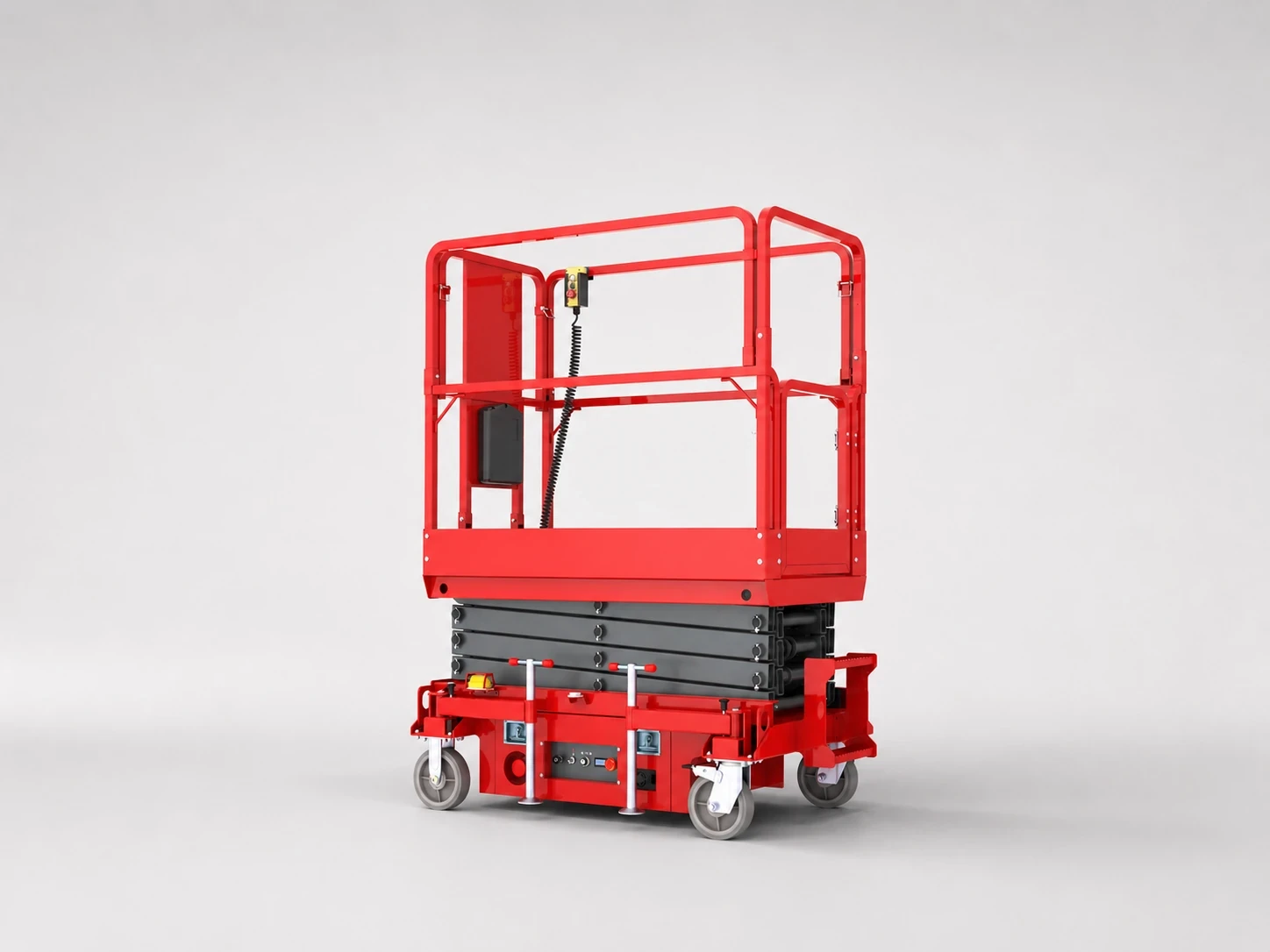
Electric scissor lifts are widely used for construction, facility maintenance, warehouse operations, equipment installation, electrical work, and other elevated-access applications. Their combination of vertical lifting, mobile operation, and electric power makes them useful in environments where controlled access, compact dimensions, and low-noise operation are important.
However, an electric scissor lift is a system made up of multiple electrical, mechanical, hydraulic, structural, and safety components. A problem in one system can affect another. For example, a platform that will not rise could be related to the battery, controls, an interlock, the hydraulic system, or another component rather than the lifting mechanism itself.
OSHA emphasizes regular maintenance, following manufacturer instructions, testing and inspecting controls and components, maintaining guardrail systems, and verifying that brakes hold the lift in position. OSHA also recommends that workers report equipment defects and maintenance needs.
This guide covers five common categories of electric scissor lift problems, their typical warning signs, possible causes, and practical ways to prevent them.
Important: This article provides general maintenance and troubleshooting information. It does not replace the operator's manual, service manual, OSHA requirements, or the employer's safety procedures. Operators should not attempt unauthorized repairs involving electrical systems, hydraulic systems, structural components, brakes, or safety devices.
Why Do Electric Scissor Lifts Develop Problems?
An Electric Scissor Lift Has Multiple Interconnected Systems
Depending on the model, an electric scissor lift can include:
Battery and charging system
Electric drive system
Hydraulic lifting system
Hydraulic steering system
Electrical control system
Platform and ground controls
Safety interlocks
Sensors and switches
Braking system
Emergency stop system
Emergency lowering system
Platform and guardrail structure
WIZPLUS offers several configurations using different combinations of these systems. Its product range includes compact electric scissor lifts as well as models using hydraulic drive and hydraulic steering.
Because configurations vary, the same symptom does not always have the same cause on every machine.
Why Early Detection Matters
A minor abnormality can become a larger operational problem when it is ignored.
For example:
Reduced battery performance → insufficient operating power → slower movement or loss of function
or:
Small hydraulic leak → reduced hydraulic performance → lifting problems
or:
Damaged safety sensor → function disabled → machine appears to have a drive or lifting fault
Early inspection can help identify problems before they develop into longer periods of downtime or unsafe operating conditions.
OSHA's scissor-lift guidance specifically recommends regular maintenance, inspection of controls and components before use, proper guardrail condition, and attention to brake performance.
1. Battery and Charging Problems
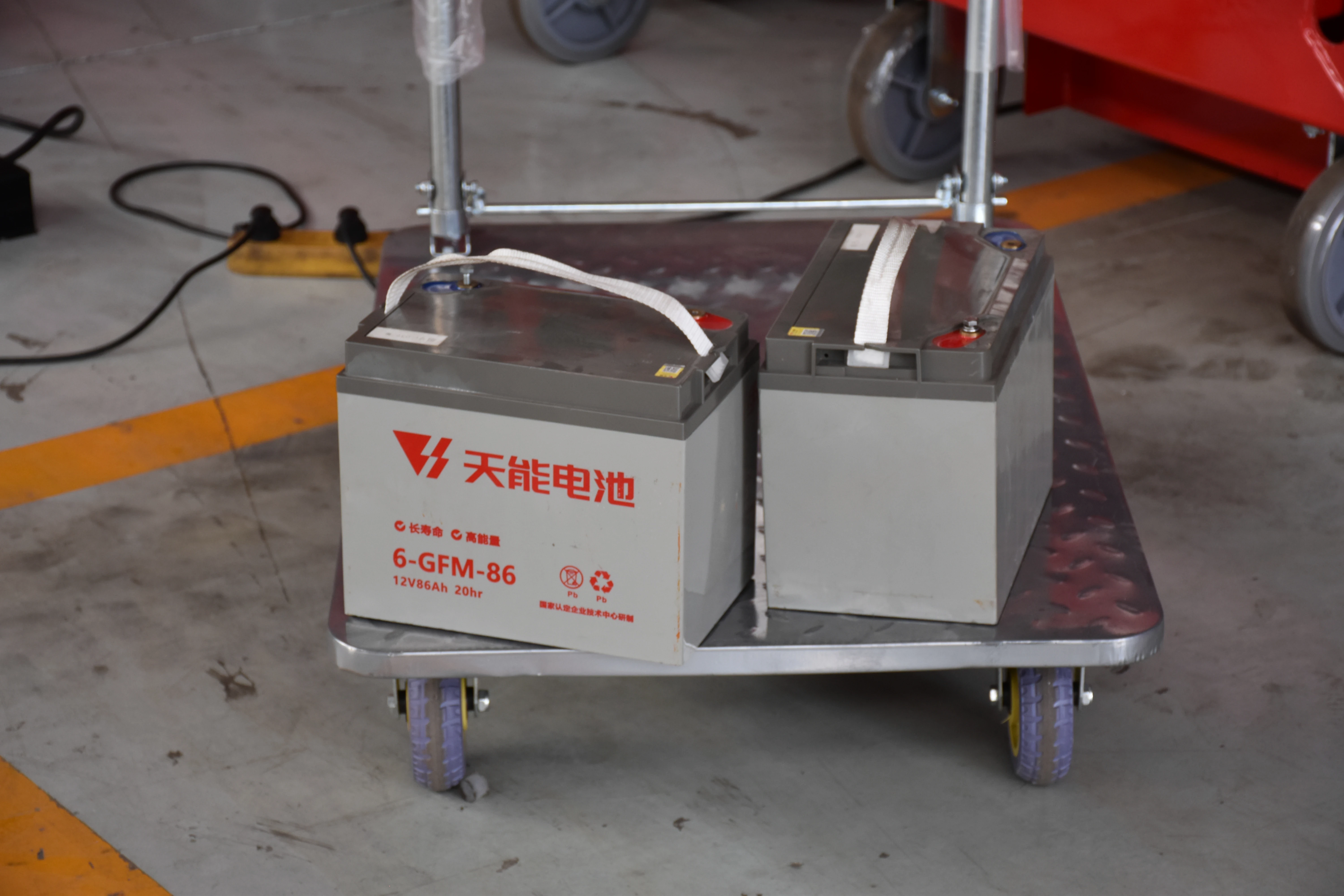
Common Warning Signs
Battery and charging problems are among the first issues to investigate when an electric scissor lift loses performance.
Possible symptoms include:
The machine does not start
The lift operates more slowly than expected
Travel performance decreases
The battery loses charge unusually quickly
The charging cycle does not complete normally
The battery indicator shows a low charge
The machine loses power during operation
The charger does not appear to operate correctly
These symptoms do not identify a single failed component. Battery condition, charger operation, connections, controls, and other electrical components may need to be checked.
Possible Causes
Battery-related problems may result from:
Incomplete charging
Battery aging
Poor connections
Corrosion
Damaged cables
Incorrect charging procedure
A problem with the charger
Extended periods of improper storage
Operating conditions that increase power consumption
The exact maintenance requirements depend on the battery technology and the specific electric scissor lift.
How to Prevent Battery Problems
Follow the Manufacturer's Charging Procedure
Use the charger and charging procedure specified for the machine.
Do not assume that a charger designed for one electric scissor lift is appropriate for another model.
Charging voltage, current, battery chemistry, and control systems can differ.
Inspect Accessible Connections
Where inspection is permitted by the manufacturer, check accessible battery cables and connections for:
Corrosion
Looseness
Visible damage
Contamination
Abnormal heating or discoloration
Electrical maintenance beyond routine inspection should be performed by appropriately qualified personnel.
Monitor Changes in Operating Time
A gradual reduction in operating time can indicate that the battery or charging system requires attention.
Keeping records of abnormal changes can help maintenance personnel identify developing problems earlier.
Follow Storage Requirements
When an electric scissor lift is not being used for an extended period, follow the manufacturer's instructions for battery storage and charging.
Improper storage can affect battery performance and service life.
When Should the Machine Be Removed From Service?
Do not continue operating the lift when there is serious battery or electrical damage, visible burning, abnormal heating, damaged cables, or another condition that could affect safe operation.
The employer's equipment-control procedure and manufacturer's instructions should determine how the machine is isolated, serviced, and returned to operation.
2. Lifting and Hydraulic System Problems
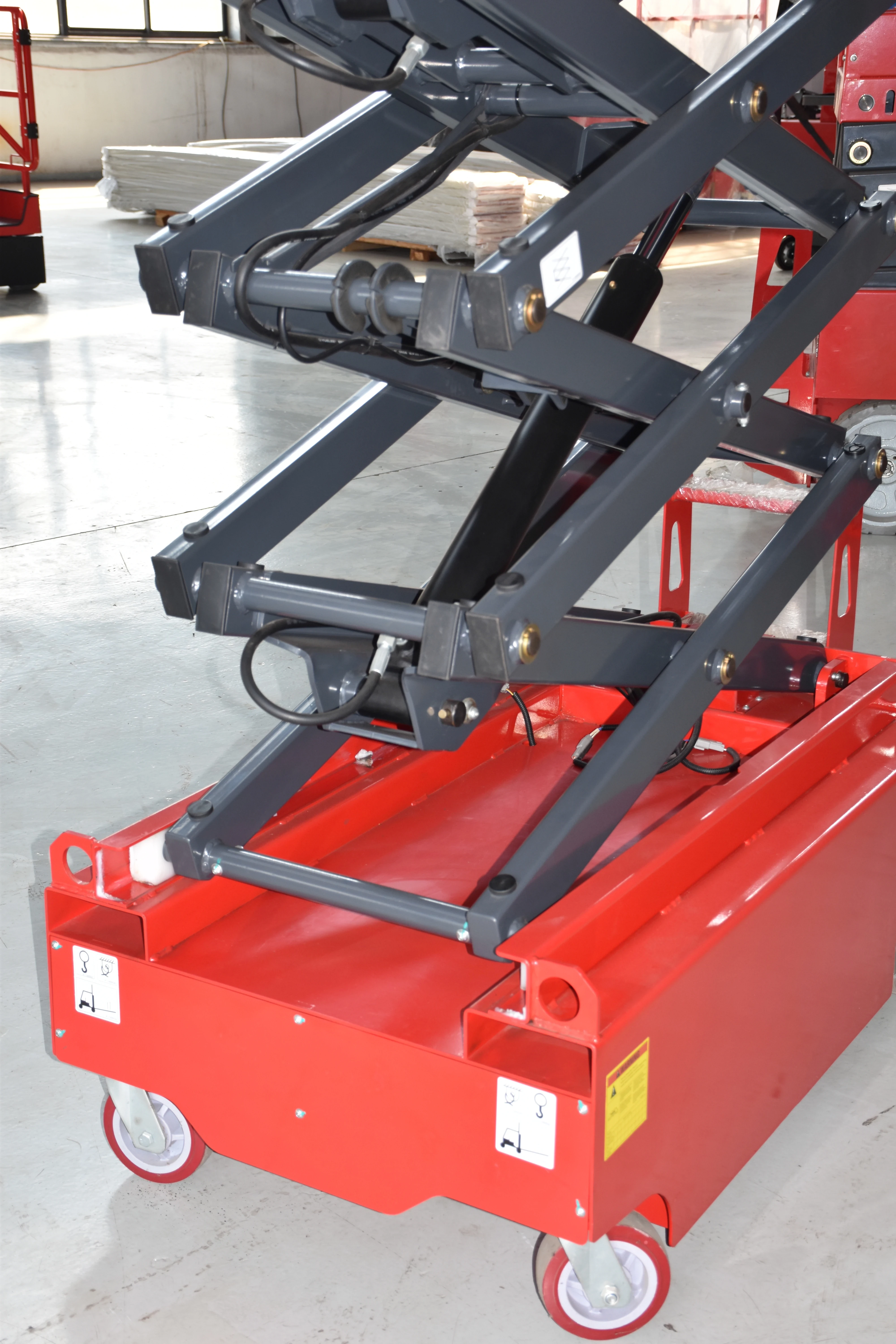
Why Can an Electric Scissor Lift Have Hydraulic Problems?
An electric scissor lift does not necessarily mean that every machine function is powered directly by an electric motor.
Many models use an electric power source together with hydraulic systems for lifting or steering.
For example, WIZPLUS's CKJC-7858EH and CKJC-HD configurations use hydraulic drive and hydraulic steering.
Therefore, hydraulic-system condition can be an important part of electric scissor lift maintenance.
Common Warning Signs
Potential symptoms include:
Platform rises more slowly than expected
Platform does not reach its normal height
Lift movement becomes uneven
Platform lowering behaves abnormally
Visible hydraulic-fluid leakage
Steering performance becomes abnormal
Unusual noise occurs during lifting or steering
A symptom alone cannot identify the failed component.
Possible Causes
Depending on the machine, possible causes can include:
Hydraulic-fluid leakage
Incorrect fluid level
Damaged hoses
Damaged fittings
Worn seals
Hydraulic component wear
Contaminated fluid
Pump problems
Valve problems
An electrical or control fault preventing hydraulic operation
A proper diagnosis should follow the service information for the specific machine.
How to Prevent Hydraulic Problems
Check for Visible Leaks
Regularly inspect accessible hoses, fittings, cylinders, and other hydraulic components for visible leakage.
A leak should not be ignored simply because the machine can still lift.
A loss of hydraulic fluid can affect system performance and may develop into a more serious equipment problem.
Use the Specified Hydraulic Fluid
Use only the hydraulic fluid specified by the manufacturer.
The correct fluid type, viscosity, and maintenance procedure depend on the equipment design.
Inspect Hoses and Fittings
Look for:
Abrasion
Cracks
Damage
Bulging
Loose fittings
Leakage
Incorrect routing
Do not repair a hydraulic hose using an improvised method.
Do Not Enter Hazardous Areas Without Proper Procedures
Maintenance beneath or around an elevated platform can involve serious crushing and stored-energy hazards.
OSHA's accident records document fatal incidents involving workers beneath scissor-lift platforms during hydraulic-system work where the equipment was not properly secured.
Maintenance personnel must follow the manufacturer's maintenance procedures and the employer's applicable energy-control and equipment-isolation requirements.
When Does a Hydraulic Problem Require Professional Service?
Professional service should be used when the problem involves:
Hydraulic pressure
Internal hydraulic components
Cylinder repair
Hydraulic valve or pump problems
Structural lifting components
Persistent leakage
Uncontrolled platform movement
Operators should not attempt hydraulic repairs without the required technical training, authorization, and service procedures.
3. Electrical and Control-System Problems
Why Are Electrical Problems Important?
Electric scissor lifts rely on electrical systems for functions such as:
Starting
Lifting controls
Travel controls
Steering controls
Battery management
Alarms
Safety circuits
Emergency functions
A fault in wiring, a switch, connector, joystick, controller, or another component can prevent one or more functions from operating.
Common Warning Signs
Electrical or control problems may appear as:
No response from a control
Intermittent operation
A function stops working
Unexpected fault indications
Control panel abnormalities
Machine starts but one function does not operate
Machine does not respond to a platform control
Repeated fault indications
Possible Causes
Potential causes can include:
Loose connections
Damaged cables
Corroded connectors
Damaged switches
Controller faults
Joystick problems
Water or contamination
Battery-related voltage problems
Safety interlocks preventing operation
The same symptom can have different causes depending on the machine's control architecture.
How to Prevent Electrical Problems
Inspect Visible Wiring
During permitted inspections, look for:
Damaged insulation
Loose connectors
Chafing
Corrosion
Visible contamination
Damaged cable protection
Do not pull, cut, or alter wiring simply to make a component work.
Protect Electrical Components
Keep electrical components within the environmental conditions specified by the manufacturer.
Improper washing, water intrusion, unauthorized modifications, or damaged enclosures can create electrical problems.
Pay Attention to Fault Codes
A diagnostic code can provide useful information when a machine detects an abnormal condition.
Operators should record the displayed code and use the manufacturer's troubleshooting information instead of repeatedly resetting the system without investigating the cause.
Never Bypass a Safety Circuit
Safety interlocks and other protective devices are part of the machine's safety architecture.
OSHA emphasizes maintaining safety systems designed to prevent collapse and following manufacturer instructions.
A machine that refuses to operate because a safety condition has not been satisfied should be diagnosed—not modified to bypass the protection.
When Is Professional Electrical Service Required?
Professional service is appropriate for:
Controller faults
Damaged internal wiring
Electrical component failure
Repeated unexplained fault codes
Safety-circuit faults
Live electrical troubleshooting
Component replacement requiring specialized procedures
Operators should only perform checks explicitly permitted by the manufacturer's operating instructions.
4. Drive, Steering, and Brake Problems
Common Warning Signs
Self-propelled electric scissor lifts can develop problems in their travel, steering, or braking systems.
Potential symptoms include:
Lift will not travel
Travel becomes unusually slow
Steering response changes
Machine does not move as expected
Brakes do not hold as expected
Unusual noise during travel
Drive function operates intermittently
A travel problem should not be assumed to be an electrical fault. Mechanical, hydraulic, control, brake, wheel, and surface-related factors can all affect performance.
Check the Wheels and Tires
Wheels and tires directly affect mobility and stability.
Inspect for visible:
Damage
Cracks
Cuts
Excessive wear
Deformation
Missing components
The exact acceptable wear limits should come from the manufacturer's maintenance instructions.
Check Steering Performance
Before operating the lift, the steering system should respond according to the manufacturer's operating procedure.
Unexpected steering behavior should be investigated before the machine is used for elevated work.
For hydraulic-steering electric scissor lifts, the hydraulic system may also need to be considered when diagnosing a steering problem.
Check Brake Performance
Brakes are a critical safety system.
OSHA's scissor-lift guidance specifically notes that manufacturer inspection and maintenance instructions generally include verifying that brakes, once set, will hold the scissor lift in position.
If the machine does not hold as specified, it should not be treated as a minor performance issue.
How to Prevent Drive and Brake Problems
Avoid Improper Operating Surfaces
OSHA advises selecting firm, level surfaces away from hazards such as drop-offs, holes, slopes, bumps, ground obstructions, and debris.
A suitable machine can still become unsafe when operated outside its permitted surface conditions.
Inspect Before Travel
Before moving the lift, check:
Travel path
Ground condition
Overhead clearance
Nearby equipment
Pedestrian traffic
Machine condition
Follow Manufacturer Travel Instructions
OSHA's scissor-lift guidance specifically directs employers and operators to follow manufacturer instructions for safe movement.
Do not assume that all electric scissor lifts have identical travel capabilities.
5. Safety Interlock, Sensor, and Emergency-System Problems
What Are Safety Interlocks?
Modern electric scissor lifts can use switches, sensors, alarms, and interlocks to control or monitor certain machine functions.
Depending on the model, these systems may be associated with:
Platform controls
Ground controls
Emergency stop
Access conditions
Lift functions
Travel functions
Tilt-related systems
Limit positions
Emergency lowering
Other protective systems
Because the exact configuration varies, operators need to use the model-specific manual.
Common Warning Signs
A safety-system problem may appear as:
Platform will not rise
Travel is disabled
Alarm remains active
Fault indicator remains on
One control station does not operate
Emergency function does not behave as described
A machine function stops unexpectedly
An apparent “lifting failure” may therefore actually be a safety circuit preventing operation.
How to Prevent Safety-System Problems
Test Controls and Safety Functions as Required
OSHA's scissor-lift guidance notes that manufacturer inspection procedures generally include testing controls and components before each use.
Follow the manufacturer's procedure for testing:
Emergency stop
Emergency lowering
Controls
Alarms
Interlocks
Other safety-related functions
Keep Safety Devices Intact
Do not remove, modify, disconnect, or bypass safety devices.
A safety system that prevents operation is often indicating that a condition requires investigation.
Do Not Treat an Alarm as a False Signal Without Diagnosis
An alarm or fault indication should be interpreted using the manufacturer's documentation.
Repeatedly clearing alarms without identifying the underlying cause can allow a developing equipment problem to remain unresolved.
When Should a Technician Be Called?
Professional diagnosis is appropriate when a problem involves:
Safety interlocks
Sensors
Controllers
Emergency systems
Repeated fault codes
Unexpected machine movement
Safety-related alarms
Any system that cannot be tested or diagnosed using the operator's normal procedure
How to Prevent Electric Scissor Lift Problems
Follow the Manufacturer's Maintenance Schedule
There is no universal maintenance schedule that applies identically to every electric scissor lift.
The appropriate schedule depends on:
Machine design
Operating hours
Operating environment
Battery technology
Hydraulic configuration
Drive system
Manufacturer requirements
OSHA requires employers to properly maintain scissor lifts and follow manufacturer instructions.
Perform Regular Inspection and Function Checks
For construction scaffolds, OSHA requires inspection for visible defects by a competent person before each work shift and after any occurrence that could affect structural integrity.
OSHA's scissor-lift guidance also notes that manufacturer inspection procedures generally include testing controls and components before each use.
These requirements should be incorporated into the employer's overall equipment-management process.
Train Operators to Recognize Abnormal Conditions
Operators should know how to identify signs such as:
Unusual noises
Unexpected movement
Reduced battery performance
Visible leaks
Brake problems
Steering problems
Damaged guardrails
Fault indications
Other abnormal behavior
OSHA specifically includes reporting equipment defects and maintenance needs as part of scissor-lift safety training.
Keep Records of Defects and Repairs
Even when a particular OSHA provision does not require a universal inspection form, an equipment-management system can benefit from recording:
Machine identification
Date
Reported problem
Inspection result
Repair required
Replacement parts
Technician
Return-to-service status
This creates a useful maintenance history for both individual machines and fleets.
Use the Correct Parts and Procedures
Do not replace safety-critical components with unspecified alternatives.
For electrical, hydraulic, structural, braking, and control-system components, use the manufacturer's technical requirements and service procedures.
What to Do When an Electric Scissor Lift Stops Working
Start With Safe Operator Checks
Operators may perform the checks permitted by the machine's operating instructions.
These may include:
Checking the battery state
Confirming normal startup conditions
Looking for visible damage
Reviewing a displayed fault indication
Checking that controls are configured correctly
Looking for obvious leaks or obstacles
The exact procedure should come from the manufacturer.
Do Not Guess at the Failure
For example, a platform that does not rise could involve:
Battery → Controls → Safety interlock → Electrical system → Hydraulic system → Lifting components
Replacing parts without diagnosis can increase downtime and repair cost.
Remove Unsafe Equipment From Service
When the machine has a defect that affects safe operation, it should not continue operating until the issue has been appropriately addressed.
OSHA's construction requirements state that machinery and equipment that do not comply with applicable requirements must not be used and must be identified as unsafe, rendered inoperable, or removed from the place of operation as appropriate.
Use Qualified Service Personnel
Service personnel should use the manufacturer's technical documentation and appropriate repair procedures.
Particular caution is required when working on:
Hydraulic systems
Electrical systems
Brakes
Structural lifting components
Controllers
Safety circuits
Emergency systems
Electric Scissor Lift Problems: Symptoms and Prevention
Problem Category | Typical Symptoms | Prevention |
|---|---|---|
Battery and charging | Slow operation, short runtime, no start | Correct charging, battery inspection, proper storage |
Lifting and hydraulic system | Slow or uneven lifting, leakage | Check fluid and components, follow service schedule |
Electrical and controls | No response, intermittent functions, fault codes | Inspect connections, protect controls, diagnose faults |
Drive, steering and brakes | Poor travel, steering problems, brake issues | Inspect wheels, brakes and controls; use suitable surfaces |
Safety systems | Disabled functions, alarms, interlock faults | Test according to manufacturer procedure; never bypass devices |
This table is a general troubleshooting framework, not a substitute for a model-specific service manual.
When Should an Electric Scissor Lift Be Taken Out of Service?
Structural Damage
Remove the equipment from operation when visible structural damage could affect safe performance.
Brake or Steering Failure
A machine that cannot stop or steer as intended should not continue normal operation.
Serious Hydraulic Leakage
Significant hydraulic leakage or abnormal platform movement requires appropriate evaluation before continued use.
Electrical Damage
Burned wiring, damaged connectors, abnormal heating, electrical arcing, or unexplained electrical faults require appropriate technical attention.
Safety-System Failure
A machine with a malfunctioning emergency system, interlock, alarm, or other safety-related component should be handled according to the manufacturer's and employer's procedures.
How WIZPLUS Supports Electric Scissor Lift Reliability
Different Configurations for Different Applications
WIZPLUS offers several electric scissor lift configurations, including:
CKJC-EW small electric scissor lift
CKJC-EH small electric scissor lift with hydraulic steering
CKJC-7858EH electric scissor lift with hydraulic drive and hydraulic steering
CKJC-HD electric scissor lift with hydraulic drive and hydraulic steering
The WIZPLUS product range is designed for applications including indoor facility maintenance, warehouse work, construction, and industrial servicing.
Model-Specific Technical Information
Different machine configurations use different systems, so maintenance and troubleshooting should always be based on the exact model.
For example, WIZPLUS's higher-working-height CKJC-HD series uses hydraulic drive and hydraulic steering and includes safety-related features such as emergency descent, automatic braking, tilt alarm, and hydraulic hose burst protection.
These specifications demonstrate why a generic troubleshooting procedure should not replace model-specific technical documentation.
Technical Support and Spare Parts
For B2B customers, reliability also depends on access to technical information and replacement parts.
WIZPLUS lists support for:
Model selection
Technical documentation
Export coordination
Spare-parts identification
After-sales technical communication
For distributors and fleet operators, these services can help maintenance teams identify the correct machine configuration and replacement components.
Frequently Asked Questions About Electric Scissor Lift Problems
What are the most common electric scissor lift problems?
Common problem categories include battery and charging issues, lifting or hydraulic-system problems, electrical and control faults, drive/steering/brake problems, and safety-system faults. The exact cause depends on the machine model, operating conditions, and maintenance history.
Why won't my electric scissor lift start?
Possible causes include insufficient battery power, charging-system problems, electrical faults, control-system issues, or a safety condition that prevents startup. Follow the manufacturer's startup and troubleshooting procedure before attempting further diagnosis.
Why won't my electric scissor lift go up?
Possible causes can include low power, a control fault, a safety interlock, or a hydraulic or lifting-system problem. The symptom alone is not enough to identify the failed component.
Why is my electric scissor lift moving slowly?
Reduced speed can result from battery condition, drive-system problems, hydraulic-system issues, controls, operating conditions, or another equipment fault. Check the manufacturer's permitted operator checks and obtain technical service when the cause is unclear.
What causes an electric scissor lift battery to drain quickly?
Possible causes include battery age or condition, incomplete charging, charging-system problems, poor electrical connections, storage conditions, or unusually demanding operating cycles. The manufacturer's battery and charging procedure should be used to identify the cause.
Can an electric scissor lift have hydraulic problems?
Yes. Some electric scissor lifts use electric-hydraulic systems. WIZPLUS offers models with hydraulic drive and hydraulic steering, so hydraulic components can be relevant to the maintenance and troubleshooting process.
How often should an electric scissor lift be inspected?
For construction scaffolds covered by OSHA's applicable requirements, a competent person must inspect the scaffold and its components for visible defects before each work shift and after an occurrence that could affect structural integrity. Manufacturer procedures can require additional checks, including checks before each use.
Should operators repair electric scissor lift problems themselves?
Operators should limit themselves to checks and procedures authorized by the manufacturer and employer. Repairs involving electrical systems, hydraulics, brakes, structural components, controllers, or safety devices should be performed by appropriately qualified and authorized personnel.
Can I bypass a safety sensor if the scissor lift will not operate?
No. Safety devices should not be bypassed to force the machine to operate. A malfunctioning sensor or interlock should be diagnosed according to the manufacturer's procedures.
How can I reduce electric scissor lift downtime?
Use preventive maintenance, perform required inspections and function checks, keep batteries properly maintained, train operators to report abnormal conditions, maintain appropriate spare parts, and address defects before they become larger failures. OSHA specifically emphasizes maintenance, manufacturer instructions, inspection, and reporting equipment defects.
What should overseas buyers ask an electric scissor lift manufacturer?
Buyers should ask for model-specific information covering:
Operating manual
Maintenance schedule
Inspection procedure
Electrical system
Hydraulic system, where applicable
Safety devices
Rated capacity
Spare parts
Warranty
Technical support
This information helps buyers establish an appropriate maintenance and equipment-management program.
Conclusion
The reliability of an electric scissor lift depends on the condition of several interconnected systems. Five problem categories deserve particular attention:
Battery and charging problems
Lifting and hydraulic-system problems
Electrical and control-system problems
Drive, steering, and brake problems
Safety interlock, sensor, and emergency-system problems
The best approach is not to wait until a machine stops working. Regular inspection, preventive maintenance, correct battery management, proper operating practices, early defect reporting, and model-specific technical support can help reduce avoidable downtime.
For U.S. construction operations, OSHA emphasizes proper maintenance, manufacturer instructions, equipment inspection, operator training, and reporting equipment defects. OSHA also requires applicable scaffolds to be inspected for visible defects by a competent person before each work shift and after an occurrence that could affect structural integrity.
For B2B buyers, equipment reliability should therefore be evaluated before purchase. In addition to working height and load capacity, consider maintenance requirements, spare-parts availability, technical documentation, safety systems, and after-sales support.
WIZPLUS offers multiple electric scissor lift configurations for different working-height and application requirements, including compact models and hydraulic-drive/hydraulic-steering configurations.
A reliable electric scissor lift is ultimately the result of three factors working together:
Suitable equipment + correct operation + preventive maintenance
Following the manufacturer's instructions and the safety requirements applicable to the worksite provides the foundation for keeping the equipment in safe and productive service.