Hydraulic vs. Electric Scissor Lifts: Which Is Right for Your Application?
Published
Category
Small Scissor Lift
Compare hydraulic and electric scissor lifts by drive system, performance, maintenance, operating costs, and indoor or outdoor applications.
Hydraulic vs. Electric Scissor Lifts: Which Is Right for Your Application?
Choosing between hydraulic and electric scissor lifts can affect equipment productivity, operating costs, maintenance requirements, and jobsite suitability. For U.S. contractors, warehouse operators, facility managers, and equipment rental companies, the right choice depends on how the lift will be used—not simply on whether the machine is labeled hydraulic or electric.
An important distinction is that many electric scissor lifts use hydraulic systems to raise and lower the platform. The battery powers an electric motor, which may drive a hydraulic pump, while a separate drive system moves the machine across the floor. Other designs use electric drive motors, and some newer platforms use fully electric lifting architectures.
For this reason, comparing hydraulic and electric scissor lifts requires a closer look at the power source, lifting mechanism, drive system, operating environment, and maintenance requirements.
This guide explains the differences between common scissor lift configurations, their advantages and limitations, and how to select the right equipment for warehouses, manufacturing facilities, commercial buildings, and construction sites.
Hydraulic vs. Electric Scissor Lifts: What's the Difference?
The primary difference depends on which part of the machine you are comparing: its power source, lifting mechanism, or travel system.
A conventional engine-powered hydraulic configuration uses an internal combustion engine to provide power to a hydraulic system. A battery-electric scissor lift uses rechargeable batteries to power its electrical systems. Depending on its design, it may also use hydraulics for lifting, steering, or travel.
A battery-electric machine is therefore not necessarily a machine without hydraulic components.

Understanding the Three Main System Types
System Configuration | Power Source | Lifting Mechanism | Key Consideration |
|---|---|---|---|
Engine-powered hydraulic | Typically an internal combustion engine | Hydraulic cylinders and associated components | Fuel, engine maintenance, terrain, and operating conditions |
Battery-electric hydraulic | Rechargeable batteries and electric motors | Hydraulic cylinders powered by an electric hydraulic pump | Battery runtime, charging, and hydraulic maintenance |
Battery-electric with all-electric lifting | Rechargeable batteries and electric actuators or motors | Electric lifting architecture | Electrical system design, serviceability, and model-specific performance |
These are general system categories. Actual designs differ by manufacturer and model, so buyers should verify the equipment's technical specifications.
For example, JLG's explanation of scissor lift technology distinguishes hydraulic, electric-hydraulic, and all-electric power distribution systems. The choice of drive architecture can affect efficiency, component count, and maintenance requirements.
The practical question for most buyers is not simply whether a lift is hydraulic or electric. It is whether the machine's power and drive configuration matches the application.
How Does a Hydraulic Scissor Lift Work?
A hydraulic scissor lift uses pressurized hydraulic fluid to generate the force needed to raise its platform.
The lifting system typically includes a hydraulic pump, reservoir, valves, cylinders, hoses, and associated control components. As the system extends the cylinders, the crossed scissor arms move apart and raise the platform.
When lowering, the system controls the release of hydraulic fluid so the platform descends according to the machine's design.

Key Components of a Hydraulic Lifting System
Hydraulic pump: Generates the fluid flow needed to operate the lifting mechanism.
Hydraulic cylinder: Converts hydraulic pressure into mechanical force that moves the scissor assembly.
Valves and control circuits: Regulate fluid flow and help control lifting and lowering.
Hoses and fittings: Transport hydraulic fluid between components.
Reservoir and hydraulic fluid: Store and supply the fluid used by the system.
The actual arrangement varies by equipment configuration.
Advantages of Hydraulic Lifting
Hydraulic systems are widely used in lifting equipment because they can generate substantial force within a relatively compact mechanism.
Potential advantages include:
High force output for lifting applications.
Established hydraulic technology and service practices.
Compatibility with a range of platform capacities and lifting heights.
Flexible system design for different equipment configurations.
Hydraulic lifting does not necessarily mean that a machine uses a combustion engine. Many battery-electric scissor lifts use an electric motor to power a hydraulic pump.
Limitations to Consider
Hydraulic systems require suitable fluid, hoses, seals, valves, and other components to remain in good working condition.
Potential maintenance concerns include hydraulic leaks, worn seals, damaged hoses, fluid contamination, and pump or valve issues.
These are manageable maintenance considerations rather than inevitable failures. Regular inspections and servicing according to the manufacturer's instructions help identify problems before they cause unnecessary downtime.
How Does an Electric Scissor Lift Work?
An electric scissor lift uses rechargeable batteries to supply electrical power to the machine's operating systems. Depending on the design, electric motors may power the lifting pump, drive wheels, steering system, or lifting mechanism itself.
For indoor facilities, battery-electric equipment is often considered because it does not produce combustion exhaust at the point of use and can operate with relatively low noise compared with engine-powered equipment.
However, actual noise levels, operating duration, and maintenance requirements depend on the complete machine design.
Main Components of an Electric Scissor Lift
Battery system: Stores the electrical energy used to operate the machine.
Electric motor: Converts electrical energy into mechanical power for the functions it supports.
Motor controller: Regulates motor operation according to the operator's commands and the machine's control logic.
Charging system: Replenishes battery energy according to the manufacturer's charging procedure.
Drive system: Moves the machine when it is configured for powered travel.
Lifting system: Raises and lowers the platform. This may be hydraulic or fully electric, depending on the model.
Advantages of Battery-Electric Scissor Lifts
Electric scissor lifts can be practical for applications requiring regular indoor access.
Their advantages may include:
No combustion exhaust at the point of use.
Reduced engine-related maintenance compared with combustion-powered machines.
Lower operating noise on many models.
Compatibility with indoor warehouses, factories, retail facilities, and commercial buildings, where the equipment is appropriately rated.
Convenient charging between work periods.
The benefits depend on battery capacity, duty cycle, floor conditions, and system design.
Limitations to Consider
Battery-electric equipment depends on battery condition, charging arrangements, and the amount of energy consumed during operation.
Long or intensive work shifts may require planned charging intervals or a suitable charging strategy. Battery performance can also vary with operating conditions and battery chemistry.
Some electric models retain hydraulic lifting and steering systems, so buyers should not assume that every electric scissor lift eliminates hydraulic-fluid maintenance.

Hydraulic Drive vs. Electric Drive: A Critical Distinction
For procurement teams, drive architecture can be more useful than the broad label "hydraulic scissor lift" or "electric scissor lift."
The lifting mechanism and the travel system perform different functions. A machine may use one system to raise the platform and another to move across the floor.
Hydraulic Drive
In a hydraulic-drive configuration, hydraulic power is used to provide travel movement. Depending on the machine, hydraulic systems may also provide steering and platform lifting.
Potential benefits include high power output and suitability for certain demanding duty cycles. However, buyers should review hydraulic maintenance requirements, system efficiency, and the machine's intended operating conditions.
Electric Drive
In an electric-drive configuration, electric motors provide the machine's travel movement.
Depending on the design, electric drive can reduce the number of hydraulic components needed for travel, such as certain hoses, fittings, and manifolds. It may also improve energy efficiency in some applications.
These benefits depend on the specific architecture. An electric-drive machine may still use hydraulic components for lifting or steering.
How to Compare the Two Systems
Factor | Hydraulic Drive | Electric Drive |
|---|---|---|
Travel power | Hydraulic system | Electric motor or motors |
Energy source | Depends on the system powering the hydraulic circuit | Commonly a battery on electric scissor lifts |
Hydraulic components | Used for travel and potentially other functions | May be reduced for travel, but can remain in lifting or steering |
Maintenance focus | Hydraulic components and their associated power system | Motors, controllers, batteries, and any hydraulic components retained |
Efficiency | Depends on hydraulic circuit design and workload | Depends on motor design, controls, battery, and workload |
Best selection approach | Check duty cycle, drive performance, and site requirements | Check runtime, drive performance, charging, and service needs |
The right choice depends on the exact configuration and intended work, not on a universal rule that one drive type is always better.
Electric Scissor Lifts for Indoor Applications
Battery-electric scissor lifts are commonly considered for indoor maintenance because they can operate without combustion exhaust at the point of use.
Typical applications include warehouses, distribution centers, factories, retail stores, offices, and commercial buildings.
Warehouse and Distribution Center Maintenance
Warehouse teams may need elevated access for lighting, signs, sprinkler inspections, ventilation systems, and other building services.
For these applications, buyers should consider:
A compact chassis for narrow aisles.
Adequate working height for overhead fixtures.
Battery runtime that matches the work schedule.
Platform dimensions and rated load.
Non-marking tires when required by the floor surface.
Turning space and doorway clearance.
A machine that fits through the aisle but cannot turn or position itself safely may not be suitable. Measure the access route before purchase.
Manufacturing Facilities
Manufacturing facilities often need equipment for inspections, maintenance, installation, and servicing around production areas.
Battery-electric equipment may be attractive when low operating noise and the absence of combustion exhaust at the point of use are important.
Nevertheless, manufacturers should evaluate floor conditions, production traffic, operating hours, overhead hazards, and any specific requirements imposed by the facility.
Retail Stores and Commercial Buildings
In retail and commercial environments, compact dimensions, floor protection, and quiet operation can be important.
A smaller electric scissor lift may fit more readily into restricted indoor spaces than a larger machine, but suitability still depends on exact dimensions, platform capacity, turning requirements, and operating restrictions.
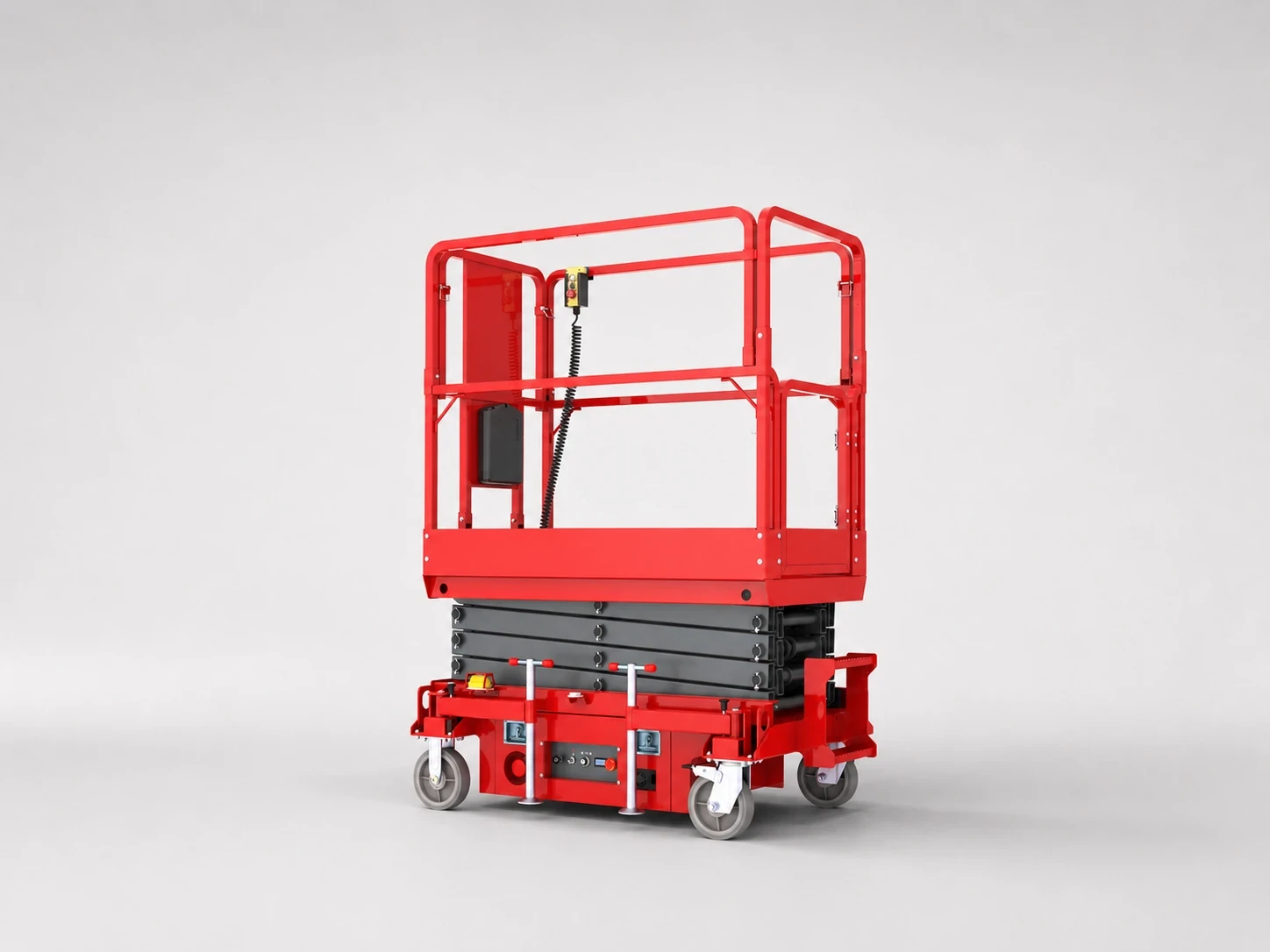
WIZPLUSLIFT's CKJC-EW small electric scissor lift range is designed for indoor applications such as malls, offices, warehouses, and maintenance areas. The manufacturer lists an operating width of 800 mm for this series.
Confirm the dimensions and capabilities of the exact model before relying on the series-level specification.
Hydraulic and Electric Scissor Lifts for Outdoor Jobsites
Outdoor work introduces additional factors, including surface conditions, terrain, weather, travel distance, and the demands of the operating cycle.
The most suitable machine is the one specifically rated for those conditions.
Construction and Industrial Maintenance
Construction contractors may need access equipment for installation, inspection, structural work, and maintenance.
When evaluating a lift for outdoor or demanding conditions, consider:
Whether the model is approved for the intended surface.
Permitted slopes and ground conditions.
Tire design and traction.
Working height and platform capacity.
Wind restrictions and environmental limits.
Battery or fuel operating requirements.
Drive-system performance and maintenance support.
Do not assume that a hydraulic-drive system automatically makes a machine suitable for rough terrain. A slab scissor lift and a rough-terrain scissor lift can have very different designs and operating limitations.
Can You Use an Electric Scissor Lift Outdoors?
Some electric scissor lifts are designed and rated for specified outdoor applications. Others are intended primarily for indoor use.
Before purchasing an outdoor electric lift, verify its approved environment, permitted wind conditions, slope limits, ground clearance, tire configuration, load ratings, and travel restrictions.
The power source alone does not determine whether the equipment is suitable for outdoor work.
Performance, Runtime, and Productivity
Equipment performance should be assessed against the work schedule and the requirements of the job rather than relying on generic claims about hydraulic or electric technology.
Battery Runtime and Work Cycles
The operating time of a battery-electric scissor lift depends on several factors, including:
Battery capacity and condition.
Frequency of lifting and lowering.
Distance traveled between work locations.
Load carried within the rated capacity.
Surface conditions.
Ambient temperature and operating practices.
For projects involving continuous or multi-shift work, estimate the required operating duration and charging windows before choosing a model.
Use the manufacturer's runtime information for the selected configuration rather than assuming all electric lifts will operate for the same number of hours.
Lifting Performance and Platform Capacity
When comparing equipment, check the rated specifications rather than assuming that one system automatically lifts higher or carries more weight.
Important specifications include maximum platform height, working height, platform dimensions, rated capacity, lift cycle time, and permitted operating conditions.
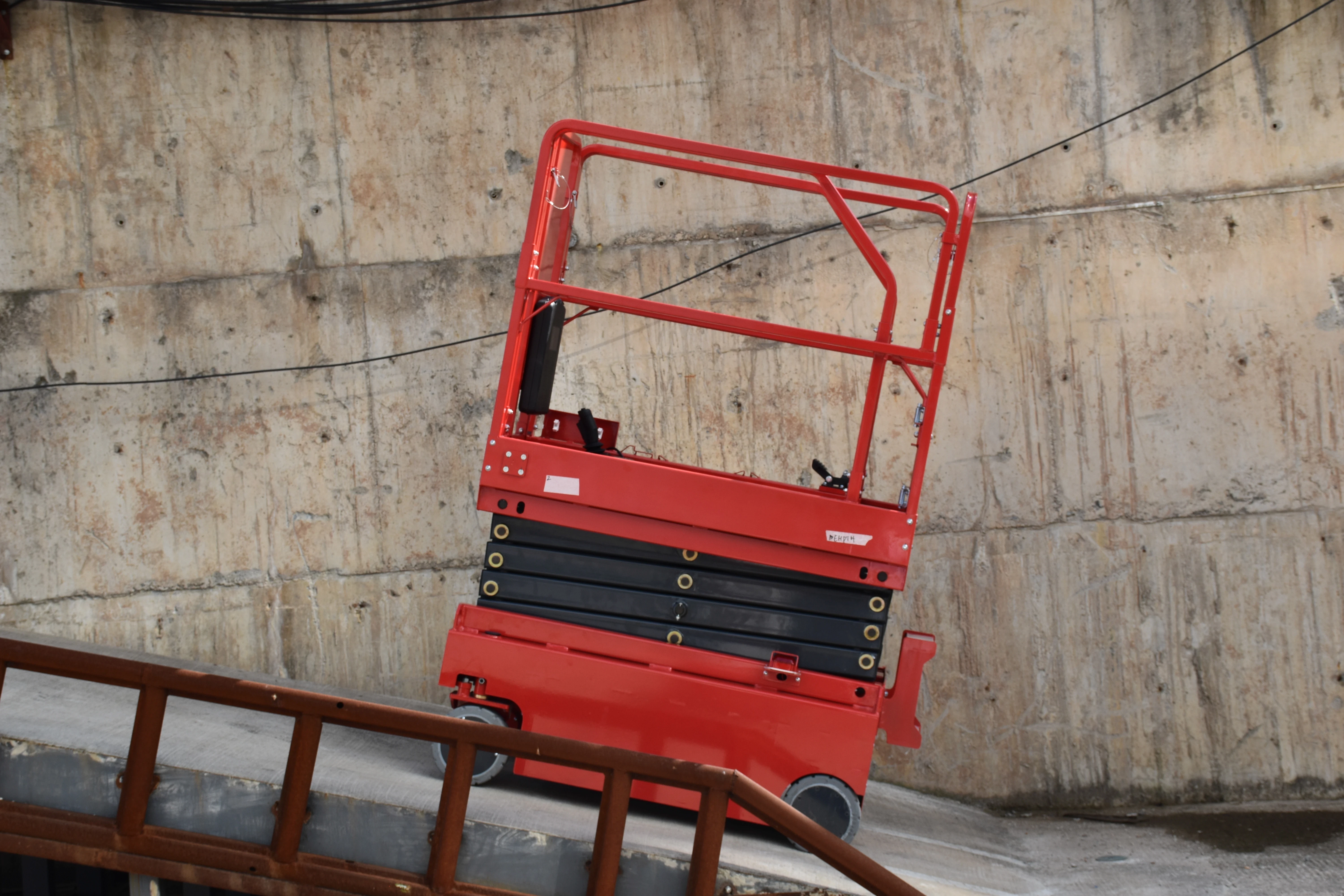
For example, the WIZPLUSLIFT CKJC-HD electric scissor lift series is marketed for demanding construction and maintenance applications, with listed working heights ranging from 8,000 to 15,800 mm across different configurations. The same series uses hydraulic drive and hydraulic steering.
This illustrates why the word "electric" does not mean every system on the machine is electrically driven.
Review the exact model's datasheet before comparing performance or capacity.
Maneuverability and Jobsite Efficiency
Productivity also depends on how easily the lift can be positioned.
In a warehouse, a compact chassis and appropriate steering system may reduce unnecessary repositioning. On a construction site, travel performance and compatibility with the ground conditions may matter more.
Assess the full workflow: how the machine reaches the job, positions beneath the work area, carries permitted tools, and returns to its charging or storage location.
Maintenance Requirements: Hydraulic vs. Electric Scissor Lifts
Maintenance requirements depend on the machine's system architecture, operating frequency, environment, and manufacturer's service schedule.
Hydraulic System Maintenance
Where hydraulic components are installed, routine checks may include:
Hydraulic fluid level and condition.
Hoses, fittings, and seals.
Visible leaks or damage.
Pump and valve performance.
Lifting cylinders and associated components.
Follow the manufacturer's inspection and maintenance instructions. Suspected hydraulic faults should be assessed by qualified personnel before the machine is returned to service.
Battery and Electrical System Maintenance
Battery-electric lifts require maintenance appropriate to their battery type and electrical configuration.
Consider:
Battery condition and charging performance.
Battery terminals and accessible connections.
Charging cables and connectors.
Motor and controller condition.
Error messages and warning indicators.
Manufacturer-specified replacement intervals.
Battery maintenance requirements vary with chemistry and design. Use the instructions supplied for the actual equipment rather than applying one charging or maintenance routine to all battery types.
Which System Is Easier to Maintain?
There is no universal answer.
An engine-powered hydraulic configuration introduces engine and fuel-system maintenance in addition to relevant hydraulic components. A battery-electric hydraulic lift avoids many combustion-engine service tasks but may still need hydraulic maintenance.
A fully electric lifting design can remove some hydraulic-system maintenance points, but it still contains electrical and mechanical components that require appropriate inspection and service.
For fleet buyers, the best comparison is the complete maintenance schedule, spare-parts availability,
technician requirements, and expected downtime for the exact models under consideration.

Operating Costs: Which Scissor Lift Is More Economical?
Operating costs include more than fuel or electricity. A useful comparison should account for energy consumption, maintenance, replacement parts, downtime, and expected service life.
Fuel vs. Electricity
For an engine-powered configuration, consider fuel consumption and the expected duty cycle.
For battery-electric equipment, consider charging requirements, electricity prices, battery performance, and operating hours.
Actual energy costs depend on the machine and the job. Avoid using a generic cost-per-hour figure unless it is supported by data for the equipment being compared.
Maintenance and Replacement Parts
Compare the expected cost and frequency of service for the complete machine.
Hydraulic components may require fluid, hose, seal, or valve maintenance. Electric systems may require battery-related service, electrical troubleshooting, or motor and controller replacement. Engine-powered equipment also has engine-related service requirements.
Parts availability and technician access can be particularly important for U.S. rental fleets and facilities where equipment downtime affects operations.
Calculate Total Cost of Ownership
Use a consistent planning method to compare alternatives:
Total Cost of Ownership = Purchase Price + Energy Costs + Maintenance + Repairs + Downtime Costs + Delivery Costs − Resale Value
This is a practical budgeting framework, not a universal accounting definition. If financing is involved, incorporate financing costs consistently into the comparison.
A model with a higher initial price may still be attractive if it offers lower operating costs or better productivity for the intended duty cycle. The only reliable way to establish that is to compare actual quotations and realistic operating assumptions.
How to Choose the Right Scissor Lift for Your Application
Use the following selection process when comparing hydraulic and electric scissor lifts.
1. Define the Worksite
Determine whether the lift will operate indoors, outdoors, or in both environments.
Record the floor condition, aisle width, overhead clearance, turning space, and any site-specific restrictions.
2. Identify the Required Height and Load
Confirm the working height, platform height, platform dimensions, and total load required for the task.
The rated load must account for the operator, tools, and materials. Follow any separate restrictions that apply to an extension platform.
3. Select the Appropriate Power and Drive Configuration
Decide whether battery power, an engine-powered arrangement, electric drive, hydraulic drive, or a combination best fits the job.
Remember that the lifting mechanism and travel system may use different technologies. Ask the supplier for the exact system configuration if it is unclear from the product listing.
4. Evaluate Operating Time and Charging or Refueling
Consider daily operating hours, expected lifting cycles, travel distance, charging access, and possible downtime.
A machine that meets the height requirement but cannot support the required operating schedule may not be a practical choice.
5. Compare Maintenance and Lifecycle Costs
Review service intervals, parts availability, battery requirements, hydraulic maintenance where applicable, and warranty conditions.
Ask suppliers for the documentation needed to compare ownership costs over a common period.
6. Verify the Exact Model
Before ordering, confirm the model number, working height, capacity, dimensions, operating environment, system configuration, safety features, and service documentation.
This prevents broad category labels from replacing the technical details needed for a reliable equipment decision.
Safety and Compliance Considerations in the United States
Regardless of the power source or drive architecture, scissor lifts must be selected, inspected, and operated according to the manufacturer's instructions and applicable workplace requirements.
OSHA's Scissor Lift Safety Guide emphasizes worksite assessment, stability, guardrails, rated load limits, equipment maintenance, and operator training.
Before operation, employers and operators should verify that:
The work area has been assessed for hazards.
Guardrails and required protective systems are in place.
The platform load remains within the rated limit.
The machine is used on suitable surfaces and within permitted slope limits.
Overhead hazards and electrical risks have been addressed.
Controls and safety systems have been inspected.
Operators have received the required training.
OSHA notes that many scissor lifts used in construction are covered by scaffold requirements. Applicable rules depend on the work setting and activity, so buyers and employers should confirm the requirements relevant to their operation.
Do not assume that electric equipment is automatically safer than hydraulic equipment. Safety depends on the model, maintenance, operating conditions, and how the machine is used.

Frequently Asked Questions
Are electric scissor lifts hydraulic?
Many electric scissor lifts use battery-powered electric motors to drive hydraulic pumps for platform lifting. Some machines also use hydraulic drive or steering, while other designs use all-electric lifting systems. Check the specifications for the exact model.
What is the difference between a hydraulic and an electric scissor lift?
The difference depends on whether you are comparing the power source, lifting mechanism, or drive system. An engine-powered hydraulic machine differs from a battery-electric machine in its energy source and service requirements, but many battery-electric lifts still use hydraulic lifting systems.
Are electric scissor lifts suitable for outdoor use?
Some electric scissor lifts are rated for specified outdoor applications. Suitability depends on the model's surface requirements, slope limits, wind rating, ground clearance, tires, load limits, and operating instructions.
Which scissor lift has lower operating costs?
Operating costs depend on the equipment design, duty cycle, energy prices, maintenance, parts, and downtime. A battery-electric model may reduce some engine-related maintenance costs, but the total cost should be calculated using the exact machine and expected usage.
Which scissor lift is better for warehouses?
Battery-electric models are often worth considering for warehouse applications because they can operate without combustion exhaust at the point of use. However, buyers should also consider aisle dimensions, floor conditions, working height, runtime, platform capacity, and charging access.
Do electric scissor lifts require hydraulic oil?
Electric scissor lifts with hydraulic lifting or steering systems require the hydraulic maintenance specified by the manufacturer. Models with fully electric lifting architecture may not require hydraulic fluid for the lifting mechanism. Verify the system design and maintenance manual.
Is hydraulic drive better than electric drive?
Neither is universally better. Hydraulic drive may suit certain equipment designs and duty cycles, while electric drive may reduce hydraulic components used for travel and improve efficiency in some applications. Compare performance, maintenance, runtime, and operating conditions for the actual models.
What should I compare before buying a scissor lift?
Compare working height, platform height, load capacity, machine dimensions, power source, drive and lifting systems, operating environment, runtime, maintenance requirements, parts support, and total cost of ownership.
Conclusion: Choose the Scissor Lift System That Matches Your Jobsite
The choice between hydraulic and electric scissor lifts is best made by evaluating the complete system rather than relying on a simple category label.
Battery-electric lifts are often worth considering for warehouse, manufacturing, retail, and indoor maintenance applications. Engine-powered or other specialized configurations may be more appropriate for particular operating conditions, while hydraulic-drive electric lifts can provide a different combination of travel and lifting capabilities.
Before purchasing, identify the required working height, platform capacity, site conditions, expected operating hours, maintenance resources, and budget. Then compare the specific models' technical specifications and estimated total ownership costs.
WIZPLUSLIFT offers electric scissor lifts with different configurations, including compact indoor models and higher-reach platforms with hydraulic drive and steering.
Explore the WIZPLUSLIFT Electric Scissor Lift Range or review the CKJC-HD Electric Scissor Lift Series. For a model recommendation, provide your required working height, platform load, operating environment, available space, and expected duty cycle.