Blog
The Complete Guide to Choosing the Best Small Scissor Lift
Published
Category
Order Picker
Looking for the best small scissor lift? Compare working height, capacity, dimensions, drive systems, batteries, safety features, and applications before buying.
Small scissor lifts have become an increasingly practical solution for warehouses, retail stores, factories, maintenance teams, contractors, and facility managers who need safe access to elevated work areas without using a full-size aerial work platform.
Their biggest advantage is simple: they combine vertical access with a compact footprint.
However, choosing the best small scissor lift involves much more than comparing maximum lifting height.
Machine width, platform capacity, overall weight, battery system, turning radius, floor conditions, indoor or outdoor use, and even elevator dimensions can determine whether a lift works efficiently at your jobsite—or becomes difficult to use.
This guide explains the most important factors buyers should consider before purchasing a small scissor lift.
Quick Answer: How Do You Choose the Best Small Scissor Lift?
The best small scissor lift should match your required working height, available floor space, load requirements, operating environment, and frequency of use.
Before buying, check these specifications first:
Factor | What to Check |
|---|---|
Working height | Can the operator comfortably reach the work area? |
Platform height | Maximum height of the actual platform |
Load capacity | Operator + tools + materials |
Machine width | Can it pass through doors and aisles? |
Machine length | Is there enough room to turn and position it? |
Machine weight | Can your floor or elevator support it? |
Drive type | Manual, semi-electric, or self-propelled |
Battery | Runtime, charging time, maintenance |
Platform size | Enough room to work safely |
Indoor/outdoor rating | Suitable for the actual work environment |
Safety system | Guardrails, emergency lowering, brakes, overload protection, etc. |
Serviceability | Parts availability and maintenance access |
Buyer takeaway: Do not choose a small scissor lift based only on price or maximum height. The most suitable machine is the one that can reach the job, enter the jobsite, carry the required load, and operate safely in the available space.
What Is a Small Scissor Lift?
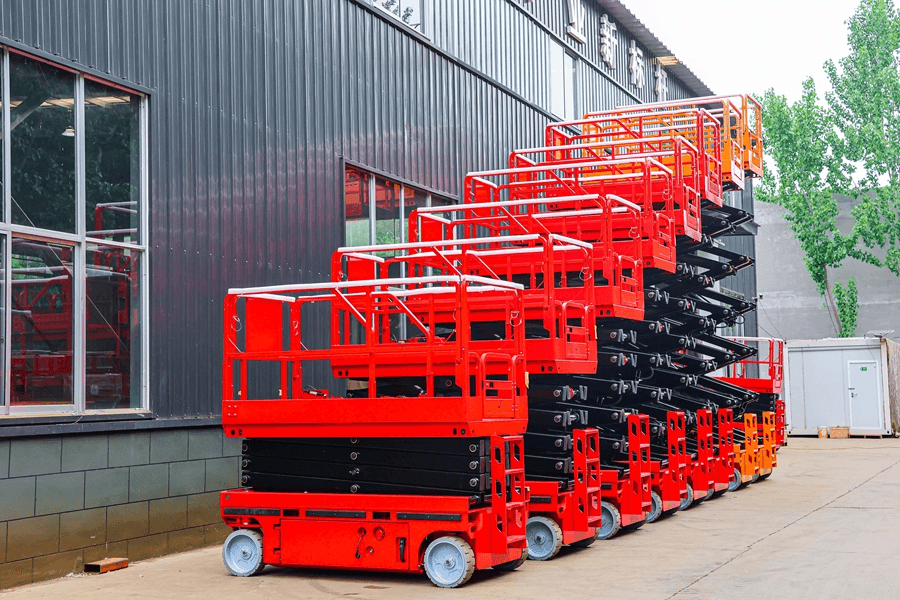
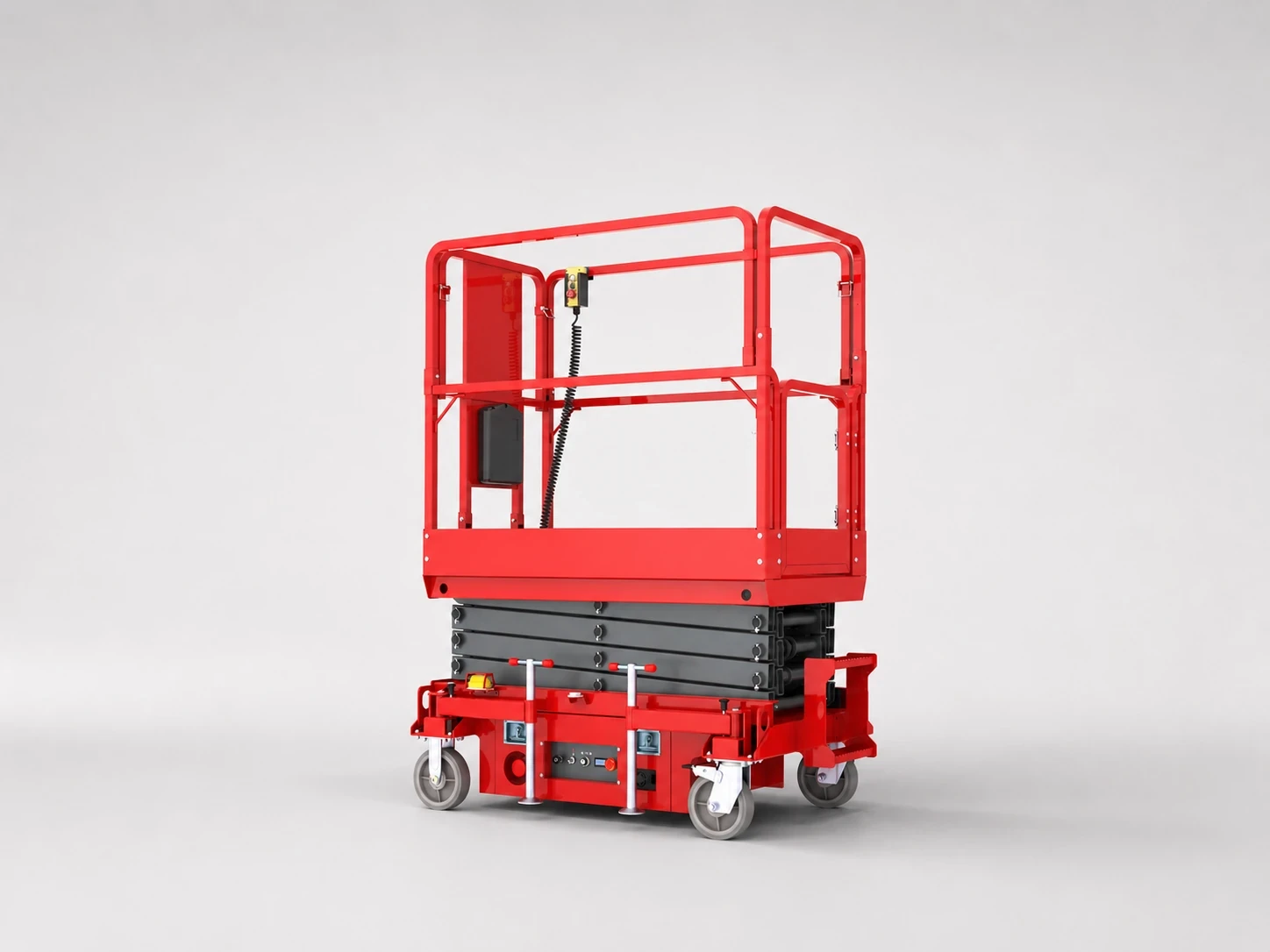
A small scissor lift is a compact vertical lifting platform designed to raise workers, tools, and light materials to elevated work areas.
The platform is raised by a crossed scissor mechanism that expands vertically.
Unlike boom lifts, which can provide horizontal outreach, scissor lifts primarily move the platform straight upward and downward.
According to OSHA, scissor lifts are work platforms used across industries such as construction, retail, entertainment, and manufacturing. OSHA also emphasizes that safe use depends on understanding the equipment's capabilities, limitations, stability, and positioning.
Small or mini scissor lifts are particularly useful where traditional full-size equipment is too large.
Typical applications include:
Warehouse maintenance
Lighting installation
Electrical work
HVAC servicing
Retail store maintenance
Supermarkets
Shopping malls
Hotels
Schools
Factories
Workshops
Data centers
Indoor construction
Ceiling installation
Inventory and facility maintenance
Why Are Small Scissor Lifts Becoming Popular?
For many low- and medium-height jobs, purchasing a large aerial platform may be unnecessary.
A compact scissor lift can offer several practical advantages.
Compact Size
Small scissor lifts are designed for areas where space is limited.
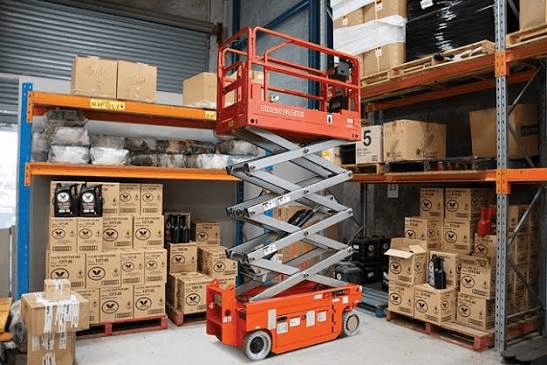
Depending on the model, they may fit through standard industrial doorways, narrow warehouse aisles, corridors, or other restricted work areas.
Easier Transportation
A smaller machine generally requires less transportation space than a large aerial work platform.
This can be especially important for contractors who frequently move equipment between worksites.
Indoor-Friendly Operation
Electric small scissor lifts are particularly suitable for indoor applications because they can operate without engine exhaust and generally produce less noise than combustion-powered equipment.
Better Access Than Ladders
For repetitive maintenance or installation tasks, a work platform provides operators with more usable workspace than a ladder.
It also allows tools and materials to remain on the platform within the manufacturer's rated capacity.
1. Start With Working Height — Not Just Platform Height
One of the most common mistakes when buying a scissor lift is confusing platform height with working height.
They are not the same specification.
Platform Height
Platform height means the maximum elevation of the platform floor.
Working Height
Working height estimates how high an operator can reach while standing on the platform.
Manufacturers commonly calculate working height as approximately:
Platform Height + 2 m
However, calculation methods can differ between manufacturers and markets, so buyers should always confirm the manufacturer's published specification.
Example
If your ceiling is approximately 6 meters high, purchasing a machine with only a 4-meter working height would obviously be insufficient.
But a machine with approximately:
4 m platform height + operator reach ≈ 6 m working height
may suit the application.
Manufacturer Insight
Do not automatically choose the tallest machine available.
Higher lifting height can also affect:
Machine weight
Overall dimensions
Cost
Stability requirements
Transportation
Battery consumption
Storage requirements
Choose the lowest model that safely provides sufficient working height for your application.
2. Check the Platform Load Capacity
The rated platform capacity must include everything carried on the platform.
That means:
Operator weight + second operator + tools + materials + equipment
For example:
Platform Load | Approximate Total |
|---|---|
Operator 1 | 80 kg |
Operator 2 | 75 kg |
Tools | 20 kg |
Materials | 30 kg |
Total | 205 kg |
In this situation, choosing a machine rated for only 200 kg would not provide sufficient rated capacity.
Never exceed the manufacturer's platform load rating. OSHA specifically identifies excessive platform loading as a potential factor in equipment instability or collapse.
Buyer Tip
If your application regularly involves tools or installation materials, leave a reasonable capacity margin rather than selecting a model that operates permanently near its maximum rated load.
3. Measure the Narrowest Part of Your Jobsite
Maximum lifting height often receives the most attention during purchasing.
For small scissor lifts, however, machine dimensions can be equally important.
Before requesting a quotation, measure:
Door width
Door height
Corridor width
Warehouse aisle width
Elevator door width
Elevator internal dimensions
Turning areas
Storage entrance
Loading dock access
Then compare those dimensions with the machine's:
Overall width × overall length × stowed height
Practical Rule
If a lift cannot reach the work area, its lifting height does not matter.
For indoor buyers, overall machine width is often one of the first specifications that should be checked.
4. Consider the Machine Weight
Compact does not necessarily mean lightweight.
Even relatively small electric scissor lifts can weigh hundreds of kilograms.
Machine weight becomes particularly important when working in:
Shopping centers
Hotels
Office buildings
Raised-floor environments
Data centers
Warehouses with mezzanine floors
Freight elevators
Finished commercial buildings
Before using a lift on an elevated floor, confirm the floor's allowable loading and relevant engineering requirements.
For elevator transportation, check both:
Elevator maximum capacity
and
Machine dimensions
A lift may physically fit inside an elevator but still exceed its rated weight capacity.
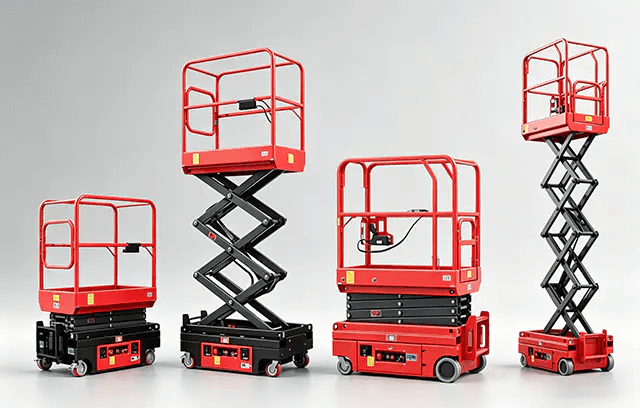
5. Manual, Semi-Electric or Self-Propelled: Which Is Better?
Small scissor lifts are available with different drive configurations.
Choosing the correct one can significantly affect productivity and purchase price.
Type | Lifting | Traveling | Best For |
|---|---|---|---|
Manual / push-around | Electric or hydraulic | Manual pushing | Occasional light-duty work |
Semi-electric | Electric | Manual pushing | Maintenance and indoor use |
Self-propelled | Electric | Powered | Frequent professional operation |
Manual or Push-Around Small Scissor Lift
A push-around lift must normally be manually moved to its next work position.
Best for:
Occasional maintenance
Small workshops
Schools
Retail facilities
Low-frequency operations
Advantages
Simple construction
Lower purchase cost
Lower maintenance complexity
Easy to understand and operate
Limitation
If the machine must be repositioned dozens of times per day, manual pushing can reduce productivity.
Semi-Electric Small Scissor Lift
A semi-electric scissor lift normally uses electric power for lifting while the machine itself is manually moved.
This creates a useful middle ground between basic push-around equipment and a fully self-propelled machine.
Best for:
Warehouse maintenance
Factory maintenance
Lighting installation
Indoor electrical work
Property maintenance
Occasional elevated access
Why Buyers Choose It
It can offer powered lifting without requiring a complete powered travel system, potentially reducing both purchase cost and mechanical complexity.
Self-Propelled Small Scissor Lift
A self-propelled scissor lift allows the operator to control machine travel using powered drive controls.
These machines are generally better suited to frequent commercial use.
Best for:
Contractors
Warehouses
Facility management companies
Construction teams
Equipment rental fleets
Large industrial facilities
Manufacturer Insight
The more often the machine must move between work positions, the stronger the argument for choosing self-propelled equipment.
For occasional work in one area, a semi-electric solution may offer better value.
6. Choose the Right Power System
Most compact indoor scissor lifts use battery-electric power.
Battery selection affects:
Working time
Charging frequency
Battery life
Maintenance
Replacement cost
Machine weight
Common battery technologies may include:
Lead-Acid Batteries
Advantages include established technology and relatively affordable replacement costs.
However, they may require more maintenance depending on battery design.
Maintenance-Free Batteries
These reduce routine battery servicing requirements and can be attractive for facility-management applications.
Lithium Batteries
Lithium systems can offer advantages such as:
Lower battery weight
Faster charging potential
Longer cycle life depending on battery design
Lower routine maintenance
However, the initial cost can be higher.
Buyer Tip
Do not ask only:
“What battery does the lift use?”
Ask:
“How many hours of normal operation can I expect from one charge under my application?”
Real operating time depends on travel frequency, lifting cycles, load, temperature, battery capacity, and operating conditions.
7. Check Platform Size and Extension
Platform size matters more than many first-time buyers expect.
A platform must accommodate:
Operator
Tools
Materials
Safe movement
Required working position
Some compact scissor lifts include an extension platform.
An extension deck can help the operator reach slightly beyond the machine's base footprint while remaining within the equipment's intended working platform.
This can be particularly useful when working around:
Shelving
Ceiling structures
Machinery
Production equipment
Building fixtures
However, extension sections may have their own rated load limits.
Always check the manufacturer's specification.
8. Determine Whether the Lift Will Be Used Indoors or Outdoors
Not every small electric scissor lift is designed for unrestricted outdoor operation.
Ask the manufacturer specifically:
Is this model approved for indoor use, outdoor use, or both?
Outdoor operation introduces additional factors including:
Wind
Uneven ground
Slopes
Surface conditions
Rain
Temperature
Ground obstacles
OSHA advises users to select firm, level surfaces and follow the manufacturer's operating instructions. Outdoor scissor-lift operation also requires particular attention to weather and wind conditions.
Never assume that a compact indoor machine can automatically be used outdoors simply because it can physically travel outside.
9. Look Beyond Maximum Height: Check Turning Radius and Maneuverability
Imagine buying a narrow scissor lift that fits through your warehouse door but cannot turn into the aisle.
That is why buyers should also examine:
Inside turning radius
Outside turning radius
Wheelbase
Steering angle
Machine length
Travel controls
For warehouses, supermarkets, hotels, and commercial buildings, maneuverability may matter almost as much as machine width.
10. Check the Safety Features Before Buying
Price comparisons are important, but safety systems should never become a secondary consideration.
Depending on the machine design and applicable market requirements, buyers should examine features such as:
Platform guardrails
Emergency stop
Emergency lowering system
Braking system
Overload protection
Tilt protection
Maintenance support device
Anti-slip platform
Gate or access protection
Warning alarms
Control-system protection
OSHA identifies fall protection, stabilization, and positioning as three major areas that must be addressed when operating scissor lifts. Operators should be trained, guardrails should be maintained, rated loads should not be exceeded, and the machine should be positioned on appropriate surfaces.
Which Small Scissor Lift Is Best for Different Applications?
There is no single “best” small scissor lift for every buyer.
The correct machine depends on the application.
Application | Recommended Priority |
|---|---|
Warehouse | Narrow width + maneuverability |
Retail store | Compact size + quiet electric operation |
Hotel | Low noise + floor compatibility |
Factory | Capacity + durability |
Electrical maintenance | Working height + platform workspace |
HVAC maintenance | Height + tools capacity |
Construction | Durability + site suitability |
Rental fleet | Reliability + serviceability |
Data center | Low weight + compact dimensions |
Facility maintenance | Ease of use + battery runtime |
Small Scissor Lift vs Ladder: Which Should You Choose?
Ladders remain suitable for many short-duration, low-height tasks.
However, a scissor lift can be more practical where workers need:
Longer working periods
Multiple tools
Frequent elevated access
A larger work platform
Repeated repositioning
More stable access to a work area
The purchasing decision should therefore consider not only equipment cost but also how frequently elevated work is performed.
For a facility performing overhead maintenance every day, productivity can become much more important than the initial purchase price difference.
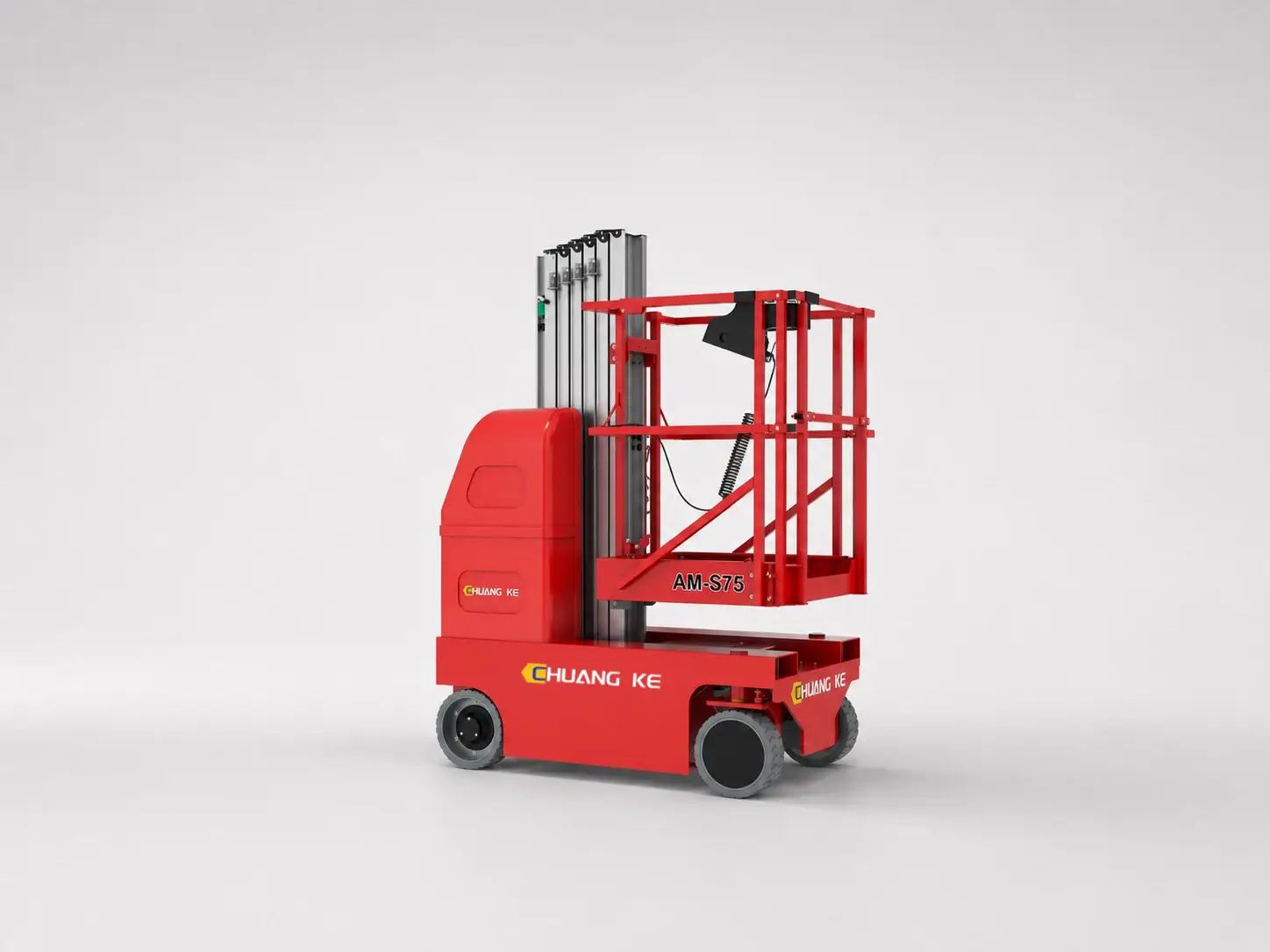
Small Scissor Lift vs Vertical Mast Lift
These two machines can sometimes serve similar low-level access applications.
However, their characteristics differ.
Feature | Small Scissor Lift | Vertical Mast Lift |
|---|---|---|
Platform size | Usually larger | Usually smaller |
Vertical access | Excellent | Excellent |
Tools/materials | More platform space | More limited |
Machine footprint | Compact | Often extremely compact |
Best use | Maintenance/installations | Very tight areas |
Platform capacity | Often higher | Usually more limited |
Choose a scissor lift when platform workspace and load capacity are priorities.
Choose a vertical mast lift when minimum machine footprint is the dominant requirement.
7 Common Mistakes When Buying a Small Scissor Lift
1. Buying Based Only on Maximum Height
The machine may be too wide, too heavy, or unsuitable for your actual workplace.
2. Confusing Platform Height and Working Height
Always verify which specification the supplier is quoting.
3. Ignoring Door Dimensions
A machine that cannot enter the work area becomes useless.
4. Ignoring Elevator Capacity
Dimensions and weight both matter.
5. Choosing Too Little Platform Capacity
Remember that rated load includes workers, tools, and materials.
6. Choosing Manual Travel for High-Frequency Work
The cheaper machine may eventually cost more in lost productivity.
7. Buying Without Considering Spare Parts
Initial machine price is only one part of total ownership cost.
Manufacturer Insight: Do Not Buy the Biggest Machine You Can Afford
A common purchasing assumption is:
Higher = better.
For compact access equipment, that is often the wrong approach.
A taller or larger machine may mean:
Higher purchase cost
Greater machine weight
Larger dimensions
More difficult transportation
Reduced access to restricted areas
The better purchasing principle is:
Choose the smallest machine that safely satisfies your required working height, capacity, and operating conditions.
That is usually more important than choosing the model with the largest specification numbers.
Small Scissor Lift Buyer Checklist
Before requesting a quotation, provide your supplier with the following information:
Jobsite
☐ Indoor or outdoor
☐ Floor condition
☐ Maximum required working height
☐ Narrowest doorway
☐ Narrowest aisle
☐ Elevator dimensions if applicable
☐ Elevator capacity if applicable
Platform
☐ Number of operators
☐ Operator weight
☐ Tool weight
☐ Material weight
☐ Required platform dimensions
☐ Platform extension required
Machine
☐ Manual or powered travel
☐ Battery preference
☐ Maximum machine width
☐ Maximum machine weight
☐ Required working frequency
☐ Transportation requirements
Purchasing
☐ Spare parts availability
☐ Warranty
☐ Technical support
☐ Operating manual
☐ Required certification
☐ Destination-country requirements
Providing these details allows the manufacturer to recommend a model based on the actual application rather than simply quoting the cheapest machine.
How to Choose a Small Scissor Lift for Warehouse Use
Warehouse buyers should pay particular attention to four specifications:
machine width, turning radius, working height, and platform capacity.
Start by measuring the narrowest aisle and doorway the lift must pass through.
Then determine the height of:
Racking
Lighting
Sprinklers
Ventilation systems
Electrical installations
Roof structures
Finally, estimate the combined weight of the operator, tools, and materials.
For larger facilities where operators constantly move between locations, a self-propelled small electric scissor lift may improve productivity.
For occasional maintenance at fixed locations, a semi-electric model may be sufficient.
How to Choose a Small Scissor Lift for Indoor Maintenance
Indoor maintenance buyers should prioritize:
Compact overall width
Low machine weight
Quiet operation
Electric power
Easy maneuverability
Suitable floor loading
Adequate battery runtime
Simple maintenance
This is particularly relevant for:
Hotels
Shopping malls
Schools
Airports
Hospitals
Offices
Retail stores
The tallest machine is rarely automatically the best choice for these environments.
What Should You Ask a Small Scissor Lift Manufacturer?
Before placing an order, ask the supplier:
What is the maximum working height?
What is the maximum platform height?
What is the rated platform capacity?
What are the overall machine dimensions?
What is the total machine weight?
Can it pass through my doorway?
Can it be transported in my elevator?
Is it approved for indoor or outdoor use?
What battery system does it use?
How long does charging take?
What safety systems are included?
Which certification is available?
What spare parts are supplied?
What warranty and technical support are available?
A professional supplier should be able to answer these questions clearly before an order is confirmed.
Why Work With WIZPLUS for Scissor Lift Solutions?
Choosing the right access equipment should begin with the application rather than simply selecting a model from a catalogue.
For buyers comparing small scissor lifts, semi-electric scissor lifts, and other lifting equipment, WIZPLUS can help evaluate important purchasing factors including:
Required working height
Platform capacity
Machine dimensions
Operating environment
Indoor access
Power configuration
Application requirements
For distributors, contractors, warehouse operators, facility managers, and equipment buyers, providing detailed jobsite requirements before ordering can help identify a more suitable machine configuration.
Need help selecting a small scissor lift?
Send WIZPLUS your required working height, load capacity, doorway width, application, and destination country to request a recommended model and quotation.
Frequently Asked Questions About Small Scissor Lifts
What is the smallest type of scissor lift?
The smallest machines are often described as mini scissor lifts, micro scissor lifts, compact scissor lifts, or low-level access scissor lifts. Their exact dimensions and working heights vary considerably between manufacturers.
What is the best small scissor lift for indoor use?
For indoor work, look for an electric model with a compact width, low machine weight, suitable floor loading, good maneuverability, and sufficient battery runtime.
The best model depends on your doorway width, required working height, platform capacity, and operating frequency.
How high can a small scissor lift go?
Maximum height varies by model.
When comparing machines, make sure you distinguish between platform height and working height.
Always use the manufacturer's rated specification rather than estimating reach solely from the platform height.
How much weight can a small scissor lift hold?
Capacity varies between models.
The rated load must include the combined weight of:
workers + tools + materials + equipment.
Never exceed the manufacturer's maximum rated platform capacity.
Can a small scissor lift fit through a standard doorway?
Some compact models are designed to pass through relatively narrow doorways, but this should never be assumed.
Measure your actual doorway and compare it with the manufacturer's overall machine width and stowed height before purchasing.
Can you use a small scissor lift outdoors?
Only if the specific model is designed and approved for the intended outdoor application.
Wind, slope, ground conditions, weather, and stability must be considered. Follow the manufacturer's operating instructions and applicable workplace safety requirements.
Is a small scissor lift better than a ladder?
It depends on the task.
For quick, low-height work, a ladder may be sufficient.
For frequent elevated work involving tools, materials, or longer working periods, a scissor lift can provide a larger and more practical working platform.
Should I buy a semi-electric or self-propelled scissor lift?
Choose semi-electric if the machine is used occasionally and manual repositioning is acceptable.
Choose self-propelled when the machine will be moved frequently during daily operations and productivity is a higher priority.
Final Thoughts
The best small scissor lift is not necessarily the tallest, most powerful, or most expensive machine.
It is the machine that fits your workplace and completes the required task efficiently.
Before buying, focus on five questions:
How high do you need to work?
How much weight must the platform carry?
How narrow is the work area?
Will the machine be moved frequently?
Will it operate indoors, outdoors, or both?
Answering those questions first can quickly narrow your options and help you avoid purchasing an oversized, undersized, or unsuitable machine.
For buyers comparing a small scissor lift for warehouse maintenance, indoor facilities, construction, retail, or industrial applications, WIZPLUS can help match machine specifications to your actual operating requirements.
Other Blogs