Can One Person Operate a Scissor Lift Alone?
Published
Category
Small Scissor Lift
One trained operator is enough under OSHA and ANSI rules, but some tasks still need a second person. Here is how to tell the difference before you plan the job.
Can one person operate a scissor lift alone?
Yes. Nothing in the standards requires a second operator, and a large share of the machines sold today are designed for exactly one person on the platform. A trained operator can drive, position, raise, work from and lower a scissor lift without anyone else present.
The question that actually matters is narrower and harder: can one person safely complete this task alone, in this location, with this material? Those are two different questions, and most of the accidents that get filed under "solo operation" are really answers to the second one.
This guide separates the two: what the rules actually say, which tasks genuinely need a second person, what changes when you work alone, and how to decide between a single-occupant machine and a two-person deck.
What the Standards Require for One Person on a Scissor Lift
The short version: training and authorisation, not a headcount.
OSHA and ANSI: a trained operator, not a minimum crew
US rules for aerial work platforms are built around who is allowed to operate, not how many people must be present. OSHA's scissor lift safety requirements focus on familiarisation, pre-shift inspection, fall protection where required, and keeping the platform within its rated load.
ANSI's MEWP safe-use standard follows the same logic: the operator must be trained on that class of machine, and the entity supervising the work must ensure the task is planned. Neither document says "two people minimum".
Manufacturer instructions and the data plate
Where a hard number does exist, it is on the machine. The data plate states rated load and, on many models, an occupant limit. Those two are separate constraints and both bind.
A machine rated for one occupant is not made legal by the fact that the weight allowance has room for two. And a machine rated for two is not an instruction to bring a second person along.
The practical consequence is that the data plate answers "how many may ride" while the task answers "how many should". On most facility work the two answers are the same. On a handful of tasks they are not, and the gap is where incidents live.
Two further points get read past. First, an occupant limit is not negotiable by weight: two light operators on a one-occupant machine still breach the manufacturer's conditions of use. Second, the plate describes the machine as built — a machine that has been modified, repaired with non-standard parts or fitted with a non-original extension deck may no longer match the plate, and that is a documentation problem before it is a capacity problem.
Where a second person is effectively required
No rule says so outright, but several situations make solo work impractical or unsafe in ways an inspector will notice after the fact.
Situation | Solo workable? | Why |
|---|---|---|
Routine indoor work at height, short duration | Usually yes | No traffic, stable ground, simple tools |
Work over a live traffic route or walkway | No | Someone must control the ground, redirect people and act if the machine is struck |
Long or flexible materials overhead | No | Two hands on the load leaves none for the control or the guardrail |
Rescue after a fall or a medical event | No | A suspended or injured operator cannot lower themselves |
Blind corners, racking aisles, congested plant rooms | Rarely | Spotting and communication matter more than driving skill |
Tasks That Genuinely Need a Second Person
These are not convention. Each one has a physical reason.
Overhead work with long materials
Duct sections, pipe, cable tray and ceiling grid all need one hand to hold and one to fix. On a platform with a single operator, that is one hand short — which is how people end up leaning on the guardrail to stabilise a load.
Work near traffic or pedestrians
A scissor lift that is struck from below is worse than one that is bumped at ground level: the operator has no way to brace. Ground control is a second pair of eyes, not a luxury.
Confined or blind areas
In racking aisles and plant rooms, the operator's view of the machine's extremities is limited by the platform itself. A spotter at floor level resolves that in seconds; a solo operator resolves it by getting out and looking, over and over.
Client rules and site inductions
Many sites impose a second-person requirement that no standard does. Data centres, live retail floors, hospitals and anything under a permit-to-work system routinely require a ground person for any elevated work, and the requirement arrives as a condition of access rather than a discussion.
That matters commercially: a solo crew that turns up and cannot start is a lost day, and the rule is rarely discoverable until the induction. Asking the client's permit office two questions — "do you require a spotter for MEWP work?" and "who signs for rescue arrangements?" — costs five minutes and prevents the most expensive kind of delay.
Two people on the deck means more than more weight
If the answer to "does this need two" is yes, the next question is whether the deck is actually sized for it. Two operators with tool bags need shoulder room and a place to put things down, so platform space for two workers is a separate calculation from the rated load.
Rescue and emergency planning
Every MEWP use requires a rescue plan. That plan can be "call the fire service", but if nobody is on site to call, the plan is theoretical. Solo work at height is acceptable only where someone knows you are there and knows when you are due down.
The machine side of that plan is worth checking before the first solo job: most scissor lifts have a ground-level lowering function, and the operator should know where it is and how it is used before it is needed. If the only route down is through the platform controls, the rescue plan depends entirely on the operator still being conscious — which is the one thing a fall guarantees it cannot assume.
What Changes When One Person Works Alone
Access and egress at height
Getting on and off the platform at height — onto a mezzanine, a roof edge or a rack — is the moment a second person earns their place. Without one, the transfer needs a handhold that was designed for it, or it does not happen.
Tool handling and material staging
Solo work means every trip up carries everything you need. The practical limit is what you can lift while stepping through the gate, and the weight still counts against the platform rating — load capacity covers operators, tools and material together, not operators alone.
Communication and calling for help
A phone in a pocket is not a communication plan. At height, with gloves on and a tool in each hand, reaching it takes long enough to matter.
Where solo work is routine, the practical answer is a check-in schedule rather than a device: a named person, a time, and a protocol for what happens if the check-in is missed. That protocol is what turns "someone probably knows" into a plan an auditor will accept.
Fatigue and task duration
Working alone removes the natural pause of handing something to someone. Long solo sessions produce more leaning, more reaching and more shortcuts around the guardrail — which is exactly when the platform edge becomes the risk.
There is also a scheduling effect. A solo operator who needs a second trip for a forgotten tool loses ten minutes; one who decides not to make the trip works around the gap instead. Over a four-hour session that is a slow drift into improvisation, and improvisation at height is what the guardrail rules exist to prevent.
Standing out on the extension deck
Roll-out sections tempt a solo operator to reach one more metre without moving the machine. Those decks usually carry a lower allowance than the main platform, so extension deck capacity and standing rules need checking before the machine is positioned, not after.
Single-Person Machines vs Shared Platforms
The machine class should follow the task, not the other way round.
Machine class | Rated occupants | Typical solo use |
|---|---|---|
Single mast / vertical lift | 1 | Maintenance calls, ceiling work, door-height access |
Compact electric scissor lift | 1–2 | Fit-out, lighting, signage, short-duration indoor tasks |
Standard scissor lift | 2 | Two-person work, material handling on the deck |
Large deck / rough terrain | 2–4 | Site work, multiple trades, outdoor surfaces |
Single man lifts and vertical mast lifts
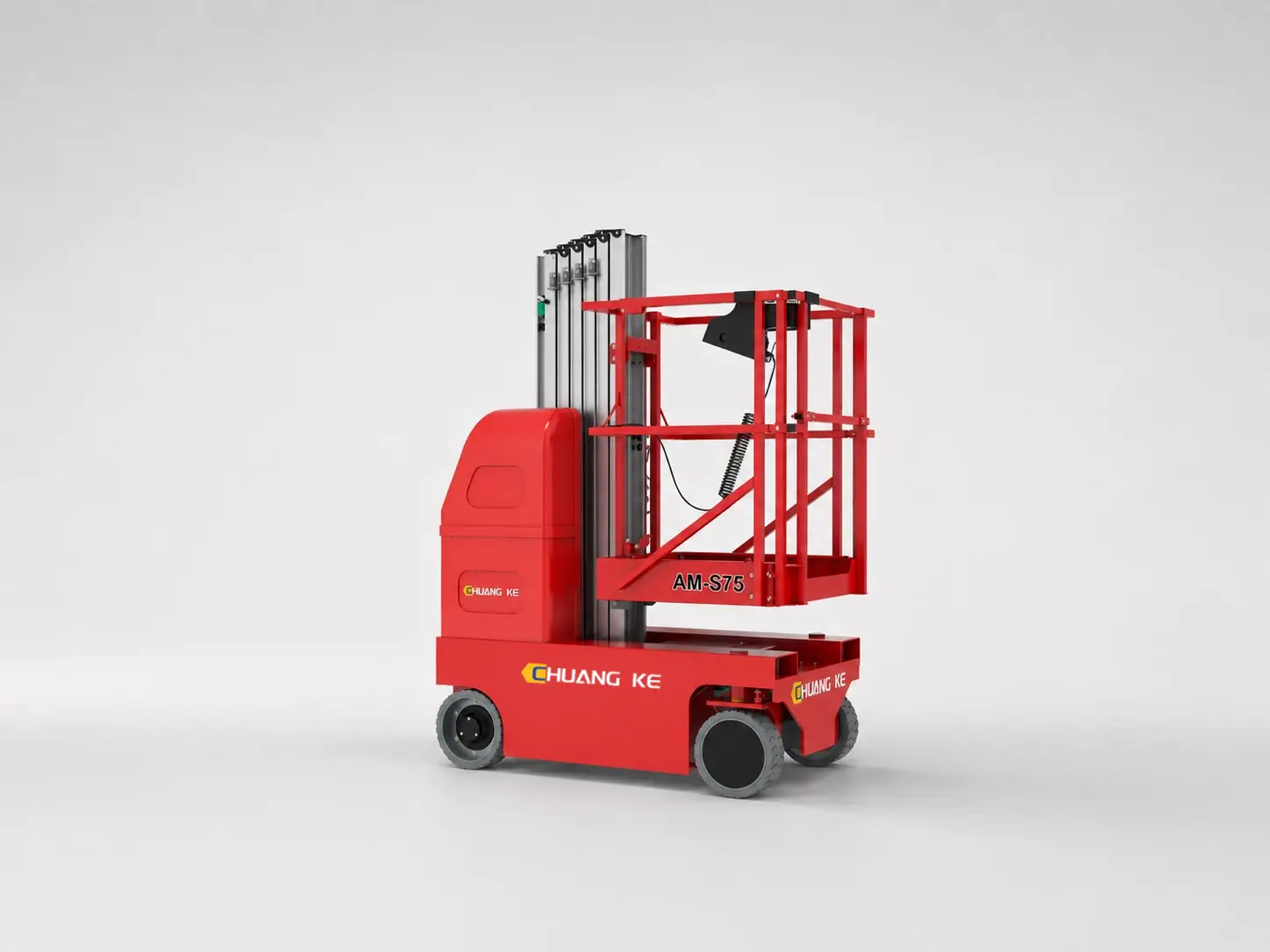
These are built around one occupant in a small basket. They reach faster, fit through doors a scissor lift cannot, and are the right answer for maintenance calls where the job is "get me to that light fitting". Single man lifts and scissor lifts differ in deck area before they differ in height.
Small scissor lifts rated for one occupant
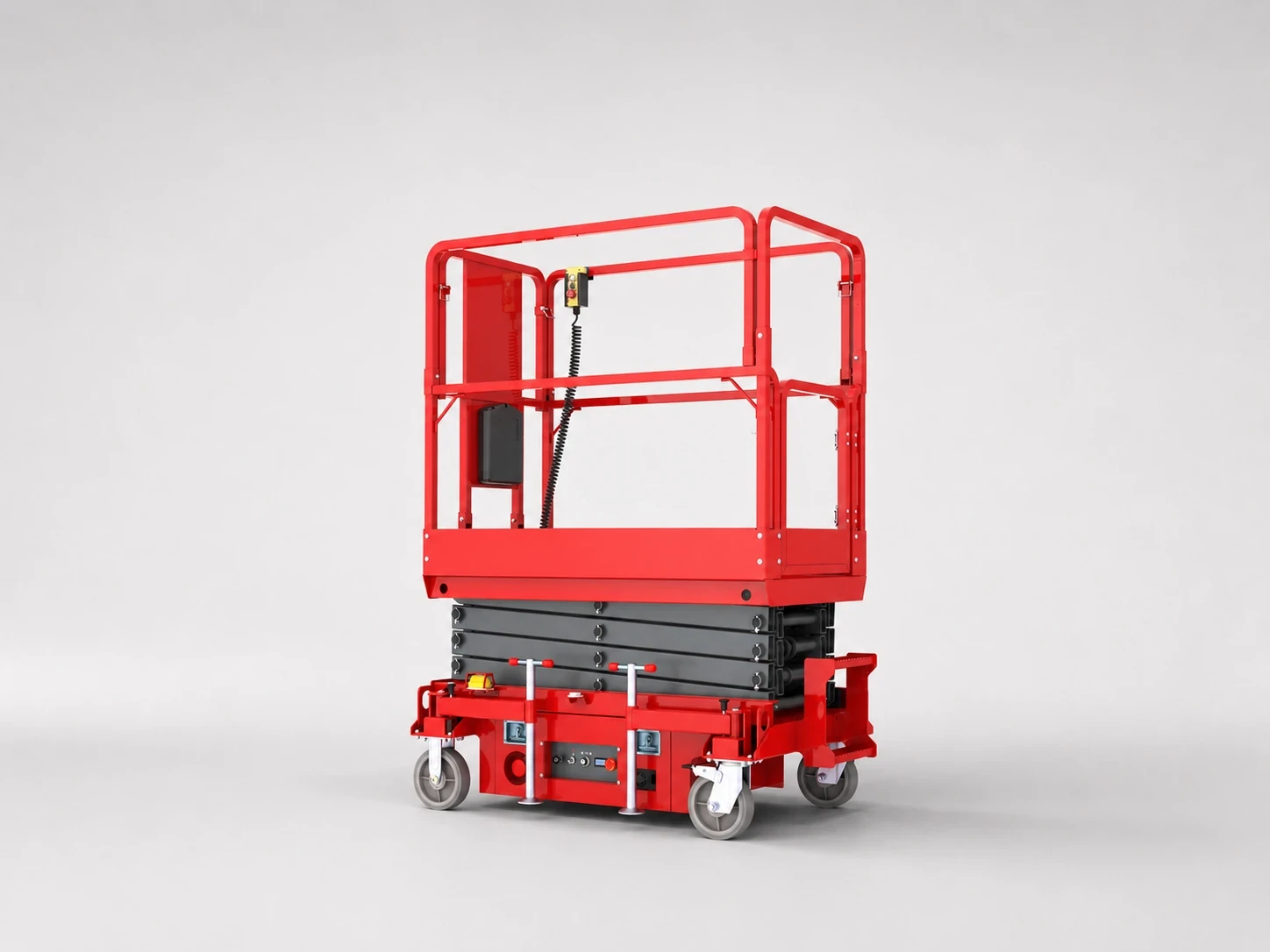
Compact electric scissor lifts with a single-entry deck are common in facilities work. They are stable, cheap to run and easy to move — but their decks are sized for one, and the guardrail geometry often makes adding a second person pointless even where the weight allows it.
When a two-person deck is still the right buy
If more than a third of your work involves a second pair of hands, a wider deck pays for itself in fewer trips. Deck width also changes where you can use the machine: a two-person platform is harder to fit through a 900 mm opening, which is why scissor lift types split into narrow and standard chassis families.
A Practical Single-Operator Checklist
Before treating a task as a one-person job, all eight should be true.
The machine is rated for one occupant and the task fits within the rated load including tools.
Ground conditions are stable and the route has been walked, not assumed.
No traffic, pedestrians or overhead operations share the footprint.
The task needs one pair of hands, not two, at every stage.
Someone knows you are on the machine, where, and when you are due down.
There is a rescue plan that does not depend on you acting after a fall.
The platform has a handhold for any transfer at height, or the transfer is not needed.
You can reach a phone without leaving the platform or removing both hands from the work.
Frequently Asked Questions
Can one person operate a scissor lift alone?
Yes. There is no legal minimum crew for a scissor lift, and single-occupant machines are designed for exactly this. The operator must be trained and authorised, and the task must be planned for one person.
Does OSHA require two people to operate a scissor lift?
No. OSHA's aerial lift rules address training, inspection, fall protection and rated load rather than headcount. Manufacturer instructions and the machine's data plate govern how many occupants are permitted.
Is a spotter required when working alone?
Not by rule in most situations, but a spotter is effectively required where the operator cannot see the machine's path or where pedestrians or vehicles share the area. That is a task judgement, not a legal one.
Can two people ride a scissor lift rated for one?
No. The occupant limit is separate from the load rating, and exceeding it invalidates the manufacturer's conditions of use regardless of total weight.
What if the operator is injured at height while alone?
That is the scenario a rescue plan exists for. Solo work should only proceed where someone on site knows the operator is at height and can raise the alarm, and where the machine can be lowered from the ground if necessary.
Do I need a second person to move the machine?
For self-propelled machines, no. For push-around or semi-electric models on sloped ground, a second person is often sensible, and some sites require it as a local rule.
Is solo work more dangerous than working in pairs?
The machine risk is the same. What changes is the recovery path: with one person on site, there is nobody to lower the platform, control the ground or call for help.
Does a two-person machine require two operators?
No. A two-occupant rating is a maximum, not a minimum. The second seat is there when the task needs it.
Conclusion: One Operator Is Fine — One Person Alone at Height Is a Decision
Operating a scissor lift alone is normal, legal and often the most efficient way to get the job done. The standards do not stand in the way; they only require that the person on the platform is trained, that the machine is within its rating, and that someone has thought about what happens if things go wrong.
What separates a safe solo job from a risky one is rarely the driving. It is the ground control you did not have, the material you could not hold, the transfer you improvised, or the fact that nobody knew you were up there.
Where the task needs a second pair of hands, the honest answer is usually a wider deck rather than a second trip. WIZPLUSLIFT supplies single-mast lifts such as the AM-S self-propelled single mast platform and scissor platforms for facility, warehouse and construction work, and can confirm occupant ratings and deck dimensions for the model you are considering.
For the capacity side of the same decision, start with how many people can fit on an electric scissor lift, and for deck-level detail see the companion pieces on platform space for two workers and extension deck loading rules.