Blog
Scissor Lift Working Height vs Platform Height: What’s the Difference?
Published
Category
Scissor Lift
Learn the difference between scissor lift working height and platform height, how each is measured, and how to choose the right height for your application.
Why Small Scissor Lift Height Specifications Can Be Confusing
When comparing scissor lifts, buyers often see specifications such as platform height, working height, overall height and lowered height.
These measurements describe different aspects of the machine.
Confusing them can result in purchasing equipment that does not provide enough practical access or is unnecessarily large for the application.
For example, a buyer may know that work needs to be performed approximately 6 meters above the floor. However, that does not necessarily mean a scissor lift with a 6-meter platform height is required.
The operator's working position, the height of the platform and the actual point where the task must be performed all need to be considered.
This distinction becomes particularly important when comparing equipment from different manufacturers because specifications may be presented using different terminology.
What Is Small Scissor Lift Platform Height?
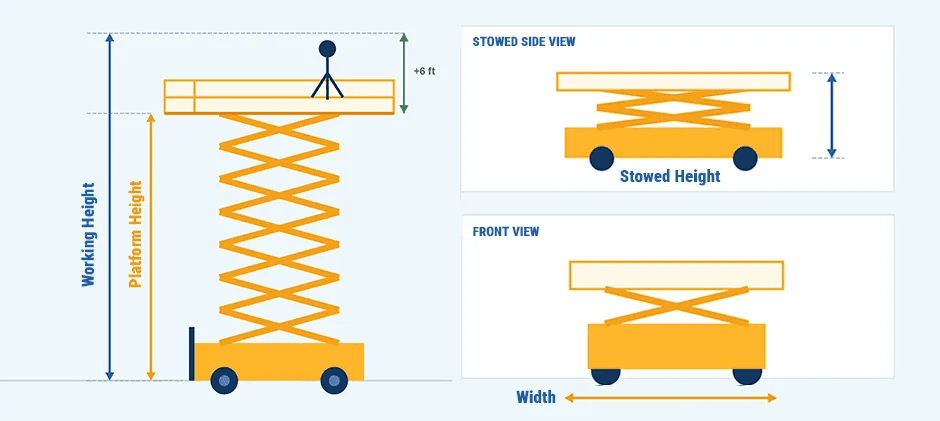
Platform height refers to the vertical distance between the ground or supporting surface and the working platform when the platform is raised to a specified position.
It describes where the operator is standing, rather than the highest point the operator can reach.
For example, if a scissor lift has a platform height of 4.8 meters, the working platform itself is positioned approximately 4.8 meters above the supporting surface at its rated maximum platform height.
The operator's hands and tools can naturally reach higher than the platform surface.
This is why platform height should not automatically be treated as the same measurement as working height.
What Is Small Scissor Lift Working Height?
Working height describes the approximate maximum height at which an operator can perform work from the elevated platform.
Unlike platform height, working height considers the operator's practical reach above the platform.
The exact method used to determine working height can vary between manufacturers, so buyers should always review the manufacturer's technical documentation rather than assuming that every supplier uses exactly the same calculation.
For equipment procurement, the important question is not simply:
"How high does the platform go?"
The more useful question is:
"How high does the operator actually need to work?"
That distinction can prevent both under-specification and unnecessary oversizing.
Platform Height vs Working Height
Specification | What It Describes | Why It Matters |
|---|---|---|
Platform Height | Height of the working platform above the ground | Determines the operator's elevated position |
Working Height | Approximate height at which the operator can perform work | Helps determine whether the machine can reach the task |
Overall Height | Height of the machine or platform/guardrail configuration | Important for transport, storage and clearance |
Lowered Height | Machine height when the platform is fully lowered | Important for doorways, storage and transportation |
These measurements should be reviewed together.
A machine may have an appropriate working height but still be unsuitable because its lowered height does not fit through the facility's doors.
Likewise, a machine may have sufficient platform height but be too wide for the intended aisle.
Why the Difference Matters When Choosing a Scissor Lift
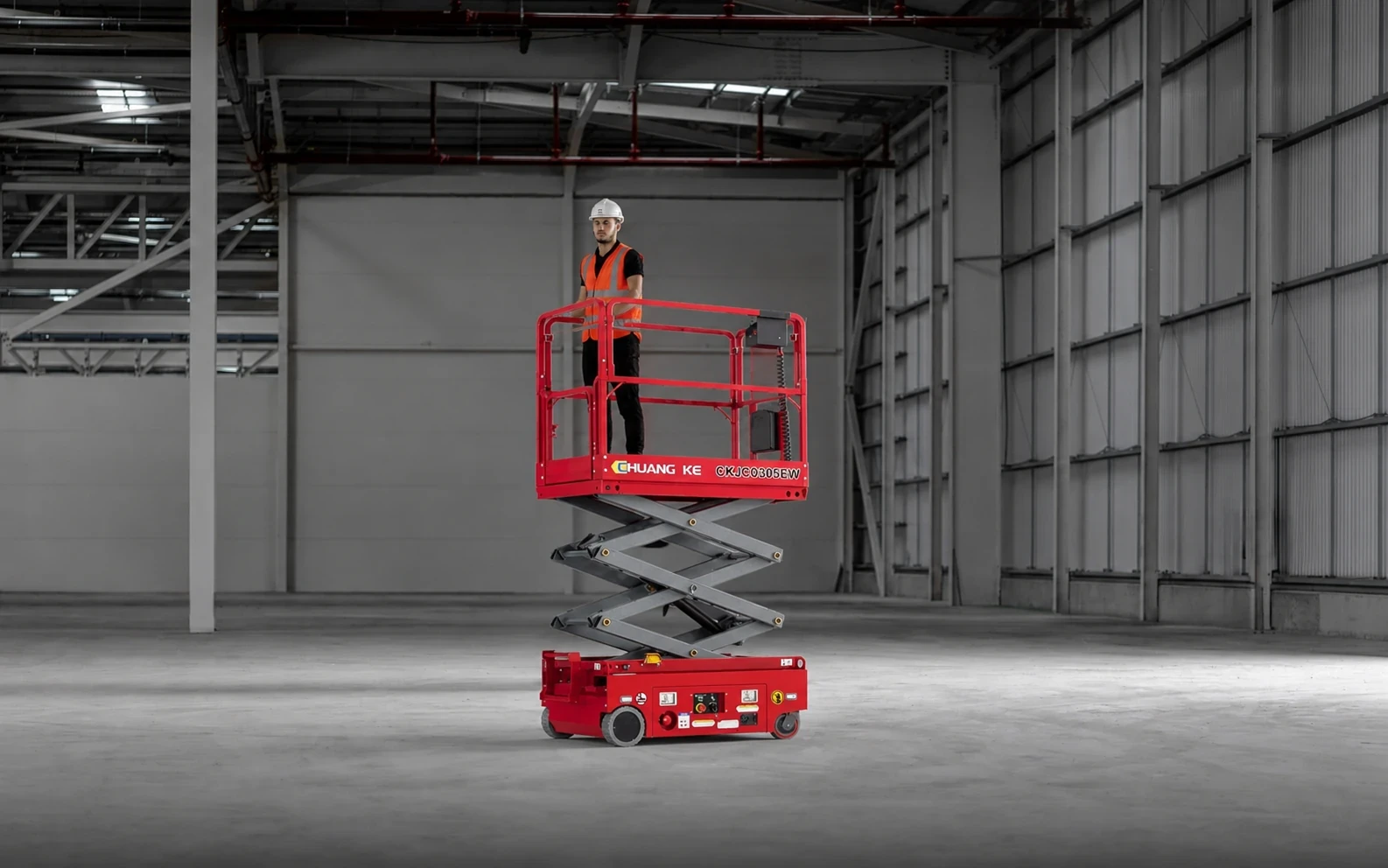
The required height should be determined from the actual task rather than from a general assumption.
Consider a warehouse maintenance task where a technician needs to replace lighting installed several meters above the floor.
The buyer should determine:
Height of the work surface
Height of the equipment or fixture
Required operator reach
Required tool position
Available floor space
Overhead clearance
The objective is to provide enough working height without selecting a machine significantly larger than necessary.
Oversizing equipment can affect:
Purchase cost
Transportation
Storage
Machine weight
Maneuverability
Access through doors and aisles
How Working Height Should Be Evaluated in Practice
A useful way to evaluate working height is to start from the task rather than from the equipment.
Step 1: Measure the Work Location
Determine the approximate height of the point where work will actually be performed.
For example:
A lighting fixture is installed at approximately 6 meters above the floor.
That does not automatically mean the platform needs to reach 6 meters.
Step 2: Determine Where the Operator Needs to Stand
Consider the operator's position while performing the task.
If the operator needs to work directly below the fixture, the required platform height may be lower than the fixture height.
Step 3: Consider Tools and Materials
The operator may need to hold:
Hand tools
Electrical equipment
Replacement components
Installation materials
The required working position should allow the operator to perform the task without unsafe stretching or overreaching.
Step 4: Check the Manufacturer's Working Height
Once the practical requirement has been established, compare it with the manufacturer's rated working height.
Do not calculate equipment capability solely from an assumed operator reach.
Use the manufacturer's published specification for the final equipment comparison.
A Practical WIZPLUS Example
The WIZPLUS CKJC-Y series provides a useful example of why platform height and working height should be considered separately.
The series includes different configurations, with platform heights and maximum working heights varying by model.
For example, the higher configuration is specified with a 4.8 m platform height and 6.8 m maximum working height.
This does not mean the platform itself reaches 6.8 m.
Instead, the two specifications describe different measurements of the machine's operating capability.
This distinction is particularly useful for buyers comparing several scissor lift models.
WIZPLUS CKJC-Y Semi-Electric Scissor Lift Platform
Important: Buyers should always verify the exact specification of the selected model because platform height and working height can vary between configurations.
How High Can a Small Scissor Lift Reach?
There is no single maximum height for all scissor lifts.
Working height varies according to:
Machine design
Number and geometry of scissor stages
Platform configuration
Rated capacity
Base dimensions
Intended operating environment
Compact indoor scissor lifts may be designed for relatively low working heights, while larger machines can provide significantly greater vertical access.
When comparing models, do not look only at the maximum height.
A better comparison includes:
Working height + platform height + load capacity + machine dimensions + operating environment.
A machine that reaches higher but cannot fit the intended workspace is not necessarily the better solution.
What Other Height Specifications Should Buyers Check?
Working height is only one part of the selection process.
Lowered Height
Lowered height determines how compact the machine is when not elevated.
This can affect:
Door access
Transportation
Storage
Loading
For indoor facilities, this specification can be particularly important.
Overall Height
Overall height should be checked when the machine needs to pass beneath:
Doorways
Beams
Ceiling structures
Warehouse entrances
Overhead clearance should always be considered before moving or positioning lifting equipment.
Platform Height
Platform height determines the elevation of the operator's working position.
It is especially useful when comparing equipment intended for specific maintenance or installation tasks.
Working Height Is Not the Only Factor in Equipment Selection
A common purchasing mistake is choosing a machine based entirely on height.
In practice, several specifications need to work together.
Load Capacity
Consider the combined weight of the operator, tools and materials permitted on the platform.
Never assume that a higher machine can automatically carry the same load as another model.
Platform Dimensions
A larger platform may provide more room for tools and materials, but it can also increase the machine's overall footprint.
Overall Width
Width is critical for:
Warehouse aisles
Doorways
Factory production areas
Storage spaces
Machine Weight
Machine weight can affect:
Floor loading
Transportation
Loading equipment
Site access
Power System
Electric, semi-electric, hydraulic and other configurations can have different operating characteristics.
The power system should be evaluated according to the intended application.
Common Mistakes When Comparing Scissor Lift Heights
Mistake 1: Treating Platform Height as Working Height
These measurements describe different things.
Always check the manufacturer's definitions.
Mistake 2: Choosing the Highest Machine Available
More height is not necessarily better.
A machine should provide sufficient access for the task while remaining practical for the operating environment.
Mistake 3: Ignoring Lowered Height
A machine that cannot pass through the facility's entrance cannot be useful, regardless of its working height.
Mistake 4: Ignoring Load Capacity
A height specification should never be evaluated independently from the machine's rated capacity.
Mistake 5: Ignoring Floor and Site Conditions
The appropriate machine depends on where it will operate.
OSHA guidance emphasizes evaluating the worksite, equipment capabilities and limitations, including stability and positioning conditions, before selecting and using scissor lifts.
How to Choose the Right Scissor Lift Height
A practical selection process is:
1. Identify the highest work point.
2. Determine where the operator needs to stand.
3. Estimate the required working height.
4. Check the manufacturer's rated working height.
5. Confirm platform height.
6. Check lowered and overall machine height.
7. Confirm load capacity.
8. Check machine width and floor conditions.
9. Consider battery and operating requirements.
10. Compare the complete specification rather than one number.
This approach is more reliable than choosing equipment based on maximum height alone.
What Information Should You Give a Scissor Lift Manufacturer?
When requesting a quotation, provide more than:
"I need a 6-meter scissor lift."
A manufacturer will be able to recommend equipment more accurately if you provide:
Required working height
Actual work height
Maximum load
Platform requirements
Aisle width
Door dimensions
Indoor or outdoor application
Floor conditions
Daily operating hours
Required quantity
Destination country
Photos or a simple layout of the working area can also help clarify the application.
For B2B projects, this information can prevent an unsuitable model from being selected simply because its headline working height appears correct.
Frequently Asked Questions
Is working height the same as platform height?
No. Platform height describes the height of the working platform, while working height describes the approximate height at which the operator can perform work. Always check the manufacturer's definitions when comparing models.
How is scissor lift working height calculated?
Working height generally relates to the platform's elevated position plus the operator's practical working reach. However, calculation methods and published specifications can vary, so buyers should use the manufacturer's stated working height for equipment selection.
How high can a scissor lift reach?
There is no single maximum height for all scissor lifts. Working height varies by model, platform design, lifting mechanism, capacity and intended application.
What platform height do I need for a 6-meter working height?
The required platform height depends on the manufacturer's stated working-height specification and the actual task. It is better to compare the manufacturer's rated working height rather than simply subtracting an assumed operator reach from 6 meters.
Why do scissor lifts have both platform height and working height?
They are different measurements. Platform height identifies the position of the platform, while working height helps buyers understand the approximate height at which work can be performed.
What other specifications should I compare with working height?
Compare working height with platform height, load capacity, platform dimensions, overall width, lowered height, machine weight, power system and operating environment.
Choosing the Right Height for Your Application
Selecting the correct scissor lift is not simply a matter of choosing the highest available machine.
The right approach is to start with the work that needs to be performed and then match the equipment to the actual requirements.
For a warehouse maintenance project, this may mean determining the height of the lighting or HVAC equipment, the operator's required working position and the available aisle and doorway dimensions.
For an industrial installation project, load capacity, platform size and operating duration may be equally important.
For an indoor facility, lowered height and overall width can be critical because the machine must move through existing infrastructure.
The most useful question is therefore not:
"How high can the scissor lift go?"
It is:
"What working height do I actually need, and what machine configuration can provide it safely and efficiently?"
That approach helps buyers avoid both under-specifying and over-specifying their equipment.
Other Blogs